
Chain-Reaction accidents can cause individuals to fear the future and not know what necessary steps to take moving forward. These accidents are usually caused when multiple drivers come in contact with each other at the same time, causing a sequence of accidents. These types of vehicle collisions are dangerous, and liability may sometimes be difficult to determine.
Chain-reaction accidents may cause serious or sometimes life-threatening injuries such as traumatic brain injuries, spinal cord injuries, knee and back injuries, and shoulder injuries. These may require serious medical care and treatment moving forward. Understanding the importance of getting treatment and seeking legal guidance after suffering injuries from a chain-reaction accident is crucial the next time you get on the road.
A chain-reaction accident often happens when an initial accident causes additional hits involving other vehicles. These accidents usually occur on highways, at intersections, and in heavy traffic, where vehicles travel close together.
However, not every chain-reaction accident follows the same pattern. Some involve multiple drivers who fail to stop, while others begin when a vehicle suddenly changes lanes or loses control. Common contributing factors may include, but are not limited to, the following.
Identifying these factors is an important part of determining whether one or several drivers contributed to the accident.
Responsibility in a chain-reaction accident depends on the specific events rather than simply identifying the driver who struck another vehicle from behind. California negligence law often requires evaluating whether a driver failed to exercise reasonable care and whether that failure contributed to another person's injuries or property damage. Investigators and insurance companies must evaluate the timing and circumstances of each car accident before determining who may be at fault.
Rear-end collisions are often associated with following too closely or keeping an unsafe stopping distance. However, California law does not automatically assign responsibility to the rear driver in every accident.
Under California Vehicle Code § 21703, drivers must avoid following another vehicle more closely than is reasonable and prudent, considering traffic speed, roadway conditions, and surrounding circumstances. A driver who violates this requirement may be found negligent if the violation contributes to a collision.
However, mechanical failures, roadway hazards, and the conduct of other motorists may also require consideration. Each driver's actions must be evaluated individually rather than assuming that the last vehicle in the accident is automatically liable for every injury.
California follows a pure comparative negligence system, allowing responsibility for an accident to be divided among multiple parties and individuals. Under this approach, an injured person's compensation may be reduced according to their percentage of fault. The same principle can apply when several drivers contribute to a chain-reaction collision.
Since several impacts may occur almost at the same time, drivers and passengers on the road may have different ideas of what happened. Evidence that may help clarify responsibility may include, but is not limited to, the following.
When multiple drivers contribute to an accident, determining liability involves identifying each person's overall behavior and the steps they may have taken before the collision. California law allows responsibility to be distributed among multiple responsible parties based on the evidence and information provided. This is crucial when determining who may be held liable moving forward.
After a chain-reaction accident, it may be important to seek legal counsel to better understand your personal injury case moving forward. These types of vehicle collisions may cause serious injuries and present unique legal challenges for victims and their loved ones. Understanding the necessary steps to take after a chain-reaction accident may help individuals get on the road to recovery.
The legal team at KAASS LAW is ready to help victims who have suffered injuries from a chain-reaction accident. Our qualified attorneys may review the specific facts of your case, speak to insurance companies on your behalf, and determine potentially liable parties moving forward. Call KAASS LAW today to learn more.
Car accidents are very common, especially on freeways, highways, and busy intersections. Many drivers are rushing to and from work or may be distracted by other hazards on the road. Vehicle recalls contribute to car accidents and can cause serious injuries to individuals and their families. It is important to understand the necessary steps to take when your vehicle becomes recalled to help reduce the risk of a serious accident occurring.
A vehicle recall occurs when a manufacturer or the National Highway Traffic Safety Administration (NHTSA) identifies a safety-related defect or determines that a vehicle or component fails to comply with applicable federal motor vehicle safety standards.
Recalls may involve an entire vehicle model or specific components, including braking systems, airbags, electrical equipment, and tires. It is important to understand that manufacturers usually must notify the owners of these affected vehicles and provide an appropriate solution, such as a repair, replacement, or refund, without charge when required by applicable recall provisions.
Dog bites can happen unexpectedly, including when an animal escapes from a parked or moving vehicle. Pedestrians who get bitten by dogs may suffer injuries requiring medical treatment. California law provides several possible avenues for addressing dog bite injuries. However, determining whether uninsured motorist coverage applies requires examining the circumstances of the incident, the relationship between the vehicle and the injury, and the language of the applicable insurance policy.
Under California Insurance Code § 11580.2, uninsured motorist (UM) coverage usually protects insured individuals who suffer bodily injuries caused by the owner or operator of an uninsured motor vehicle, subject to statutory requirements and policy provisions.
This coverage often applies when an uninsured driver causes a vehicle collision. However, injuries involving motor vehicles do not always result from direct accidents. It is important to understand that injuries may occur when someone is entering or exiting a vehicle, unloading objects, or interacting with a vehicle during transportation-related activities. The major question is whether the injury falls within the statutory and contractual requirements for uninsured motorist coverage.
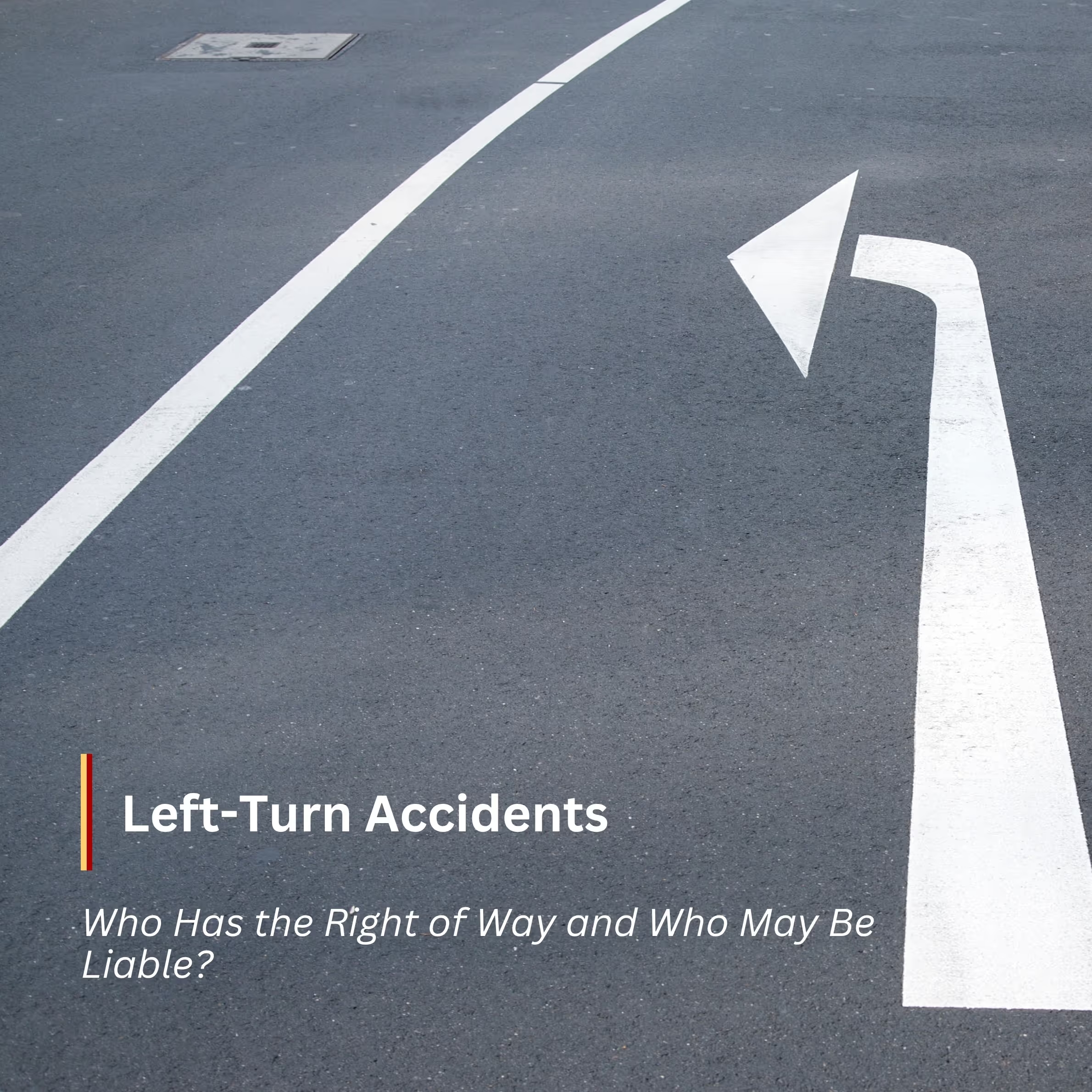
Left-turn accidents are one of the most common types of intersection collisions. They often happen when a driver attempts to turn across oncoming traffic and misjudges another vehicle's speed, distance, or right of way. Understanding the safety concerns of left-turn accidents and the necessary steps to take to prevent one is crucial for the safety of yourself and those around you.
A driver trying to turn left or make a U-turn must yield the right of way to vehicles approaching from the opposite direction that are close enough to cause harm. Before turning, drivers must ensure they can complete the motion with reasonable safety.
Once a driver has properly yielded and begun a proper left turn, approaching drivers must yield to the turning vehicle. However, having the right of way does not eliminate a driver's responsibility to exercise reasonable care. All drivers must remain attentive, follow traffic signals, and take reasonable precautions to avoid collisions.
Left-turn vehicle collisions can happen for several reasons, often involving a combination of driver behavior and roadway conditions.
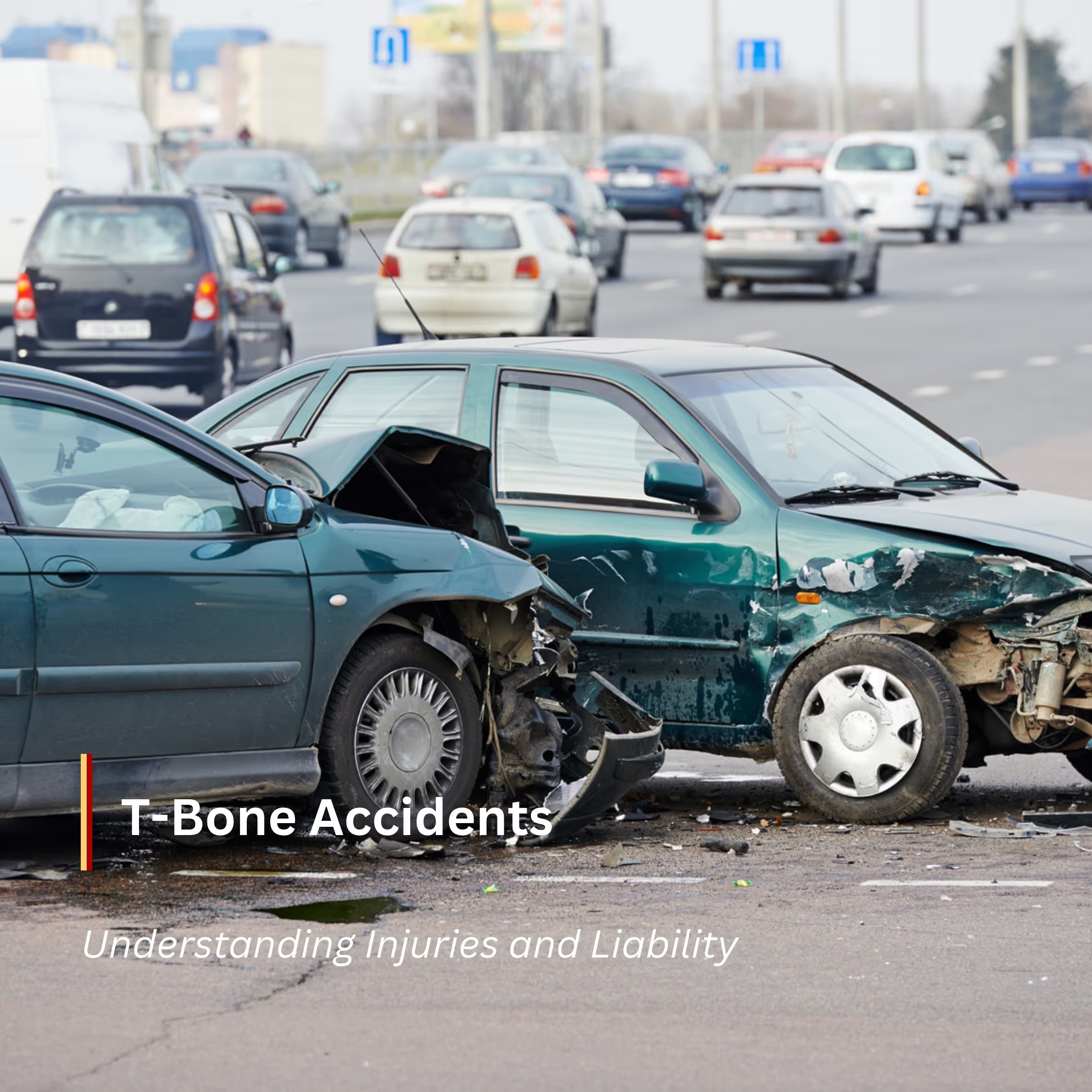
T-bone accidents can happen in seconds, often leaving drivers and passengers with serious injuries, vehicle damage, and questions about who may be responsible. These collisions often occur at intersections when the front of one vehicle strikes the side of another. Understanding how these accidents occur, the types of injuries they can cause, and how liability is determined can help injured individuals make informed decisions about their next steps.
A T-bone accident, also known as a side-impact vehicle collision, occurs when the front of one vehicle crashes into the side of another. These accidents often happen at intersections, parking lot entrances, and locations where vehicles cross traffic. The severity of a T-bone collision depends on several factors, including but not limited to vehicle speed, the point of impact, vehicle size, and available safety features.
T-bone accidents usually involve circumstances in which one driver fails to recognize or respond appropriately to another vehicle's right of way.
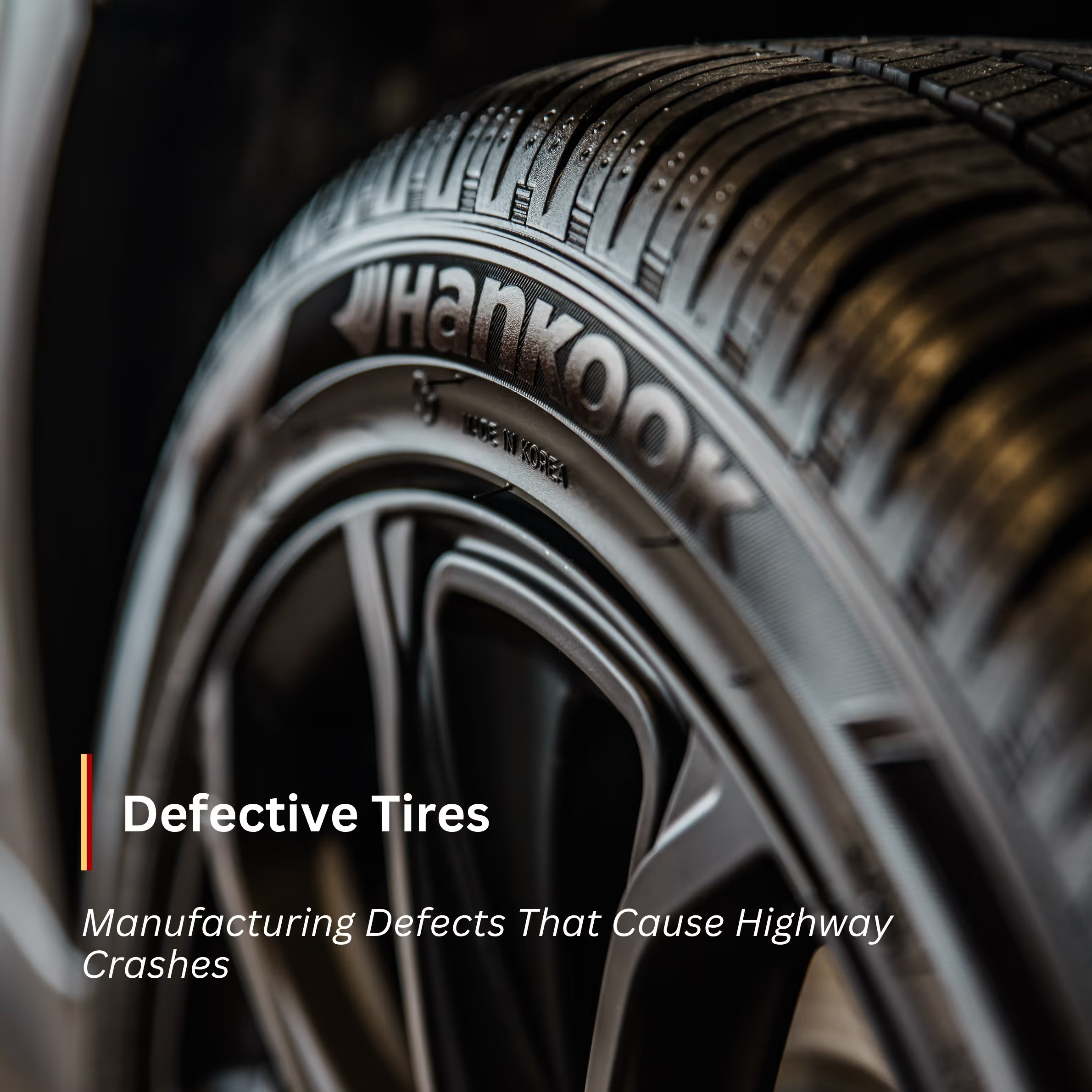
A tire failure on the highway can turn an ordinary drive into a dangerous situation within seconds. When a tire suddenly separates, bursts, or loses its structural integrity, a driver may struggle to maintain control of the vehicle. At highway speeds, these incidents can lead to rollovers, collisions with surrounding traffic, and serious injuries. Understanding how defective tires contribute to highway accidents, who may be responsible, and what legal options are available can help injured individuals make informed decisions after a vehicle collision.
A defective tire is one that has a flaw affecting its safety or performance. Tire defects often fall into three categories. These may include the following.
A manufacturing defect occurs when something goes wrong during production, causing a specific tire to be different from its planned design. Even when the overall tire design meets applicable safety standards, errors in materials and production can create weaknesses. Examples of potential manufacturing defects may include, but are not limited to, the following.
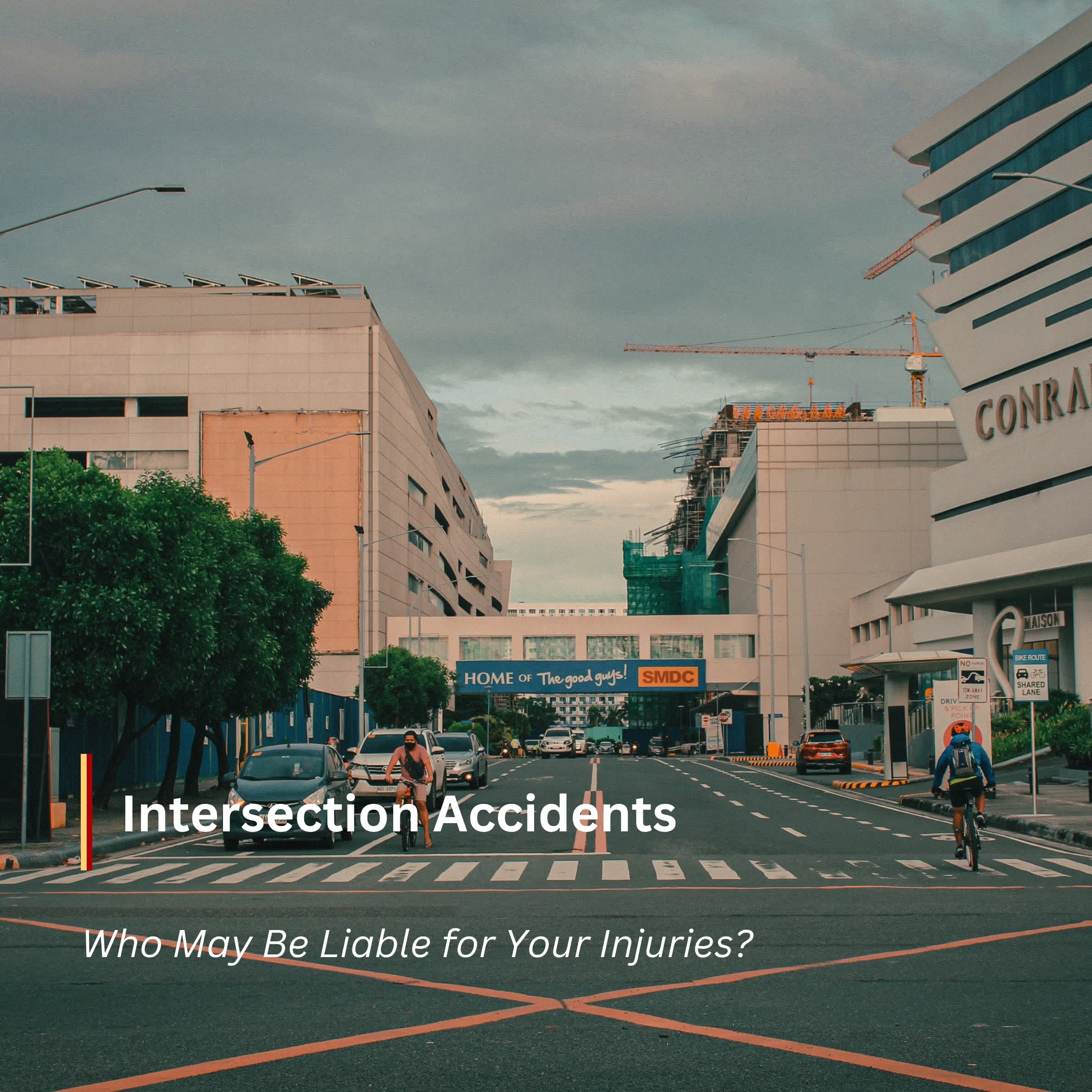
Intersections are among the most challenging areas of the road for drivers, pedestrians, and cyclists. Drivers who may be distracted or speed through intersections can cause significant harm to themselves and those around them. Understanding how fault is evaluated can help injured individuals make informed decisions about their legal rights and available options.
Some common causes of an intersection accident may include but are not limited to the following.
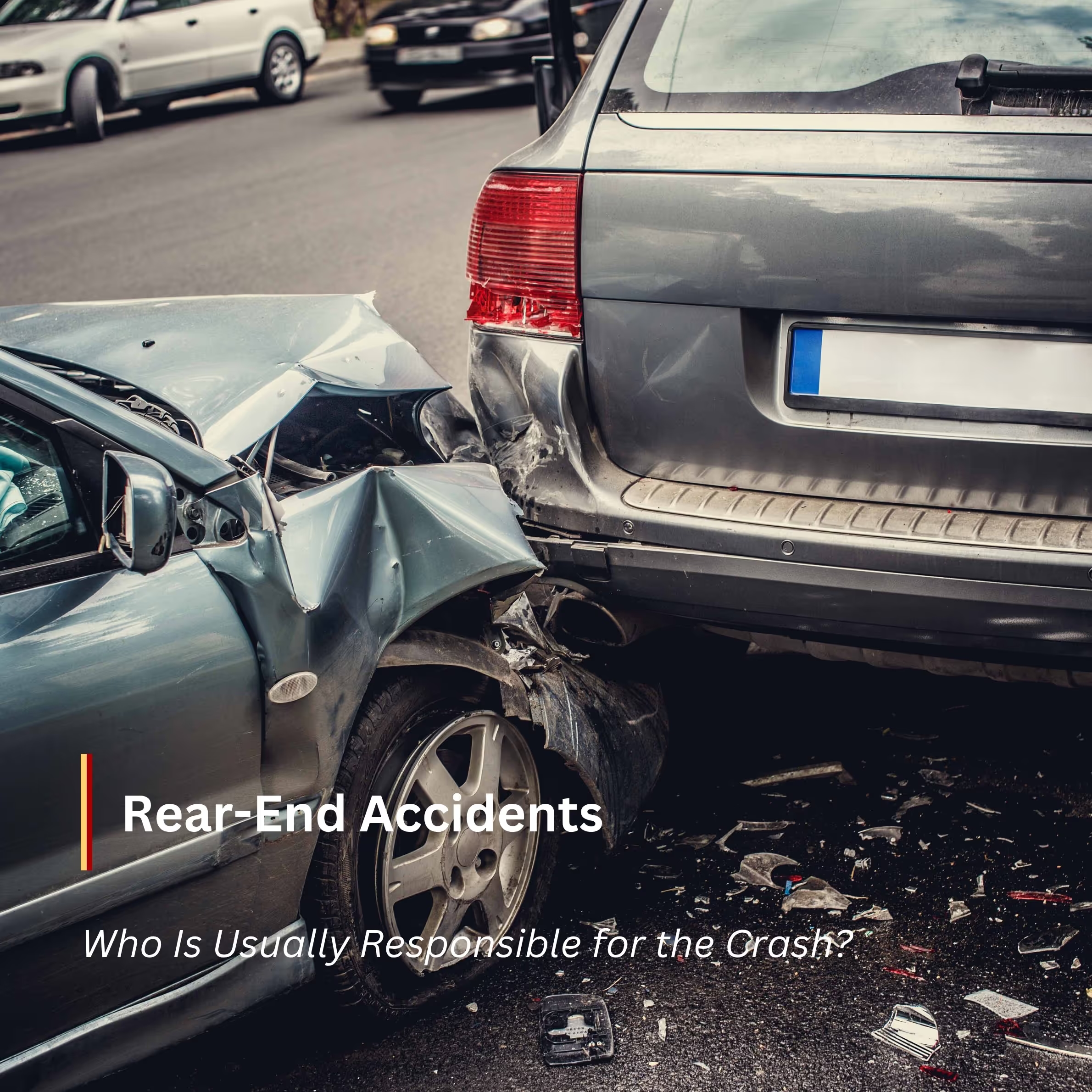
Rear-end accidents are one of the most common types of traffic collisions in California. They can happen at busy intersections, on crowded freeways, in parking lots, or during sudden traffic slowdowns. While some rear-end collisions result in minor vehicle damage, others can lead to serious injuries, costly repairs, and unexpected disruptions to daily life. Understanding how fault is determined in rear-end accidents can help injured drivers better understand their rights and the steps they may consider after a collision.
In many rear-end accidents, the driver who strikes the vehicle ahead may be considered negligent for failing to maintain a safe following distance or respond appropriately to changing traffic conditions.
Under California Vehicle Code Section 21703, drivers must not follow another vehicle more closely than is reasonable and prudent, considering factors such as speed, traffic, and roadway conditions.
Drivers are usually expected to maintain enough distance to slow down or stop safely when traffic changes. When a driver follows too closely, becomes distracted, or fails to brake in time, a rear-end collision may occur. Common behaviors that contribute to rear-end accidents include:
Parking lots may seem safer than busy streets because vehicles usually travel at lower speeds. However, parking lots create their own set of hazards. Drivers may be backing out of spaces, searching for parking, turning through narrow lanes, or watching for pedestrians at the same time. Limited visibility and vehicles moving in multiple directions can quickly lead to a collision. Understanding common parking lot accident scenarios can help drivers know what information may be important after a collision.
Fault in a parking lot accident usually depends on the specific circumstances surrounding the collision. Investigators, insurance companies, and attorneys may consider where each vehicle was located, which direction each vehicle was traveling, whether either vehicle was backing up, and whether traffic signs or pavement markings were present. In addition, drivers have a responsibility to operate their vehicles with reasonable care. Even when a driver has the right-of-way, that does not necessarily eliminate the responsibility to use reasonable care to avoid a collision.
Parking lot collisions can happen in many different ways. Some of the most common situations may include, but are not limited to, the following.
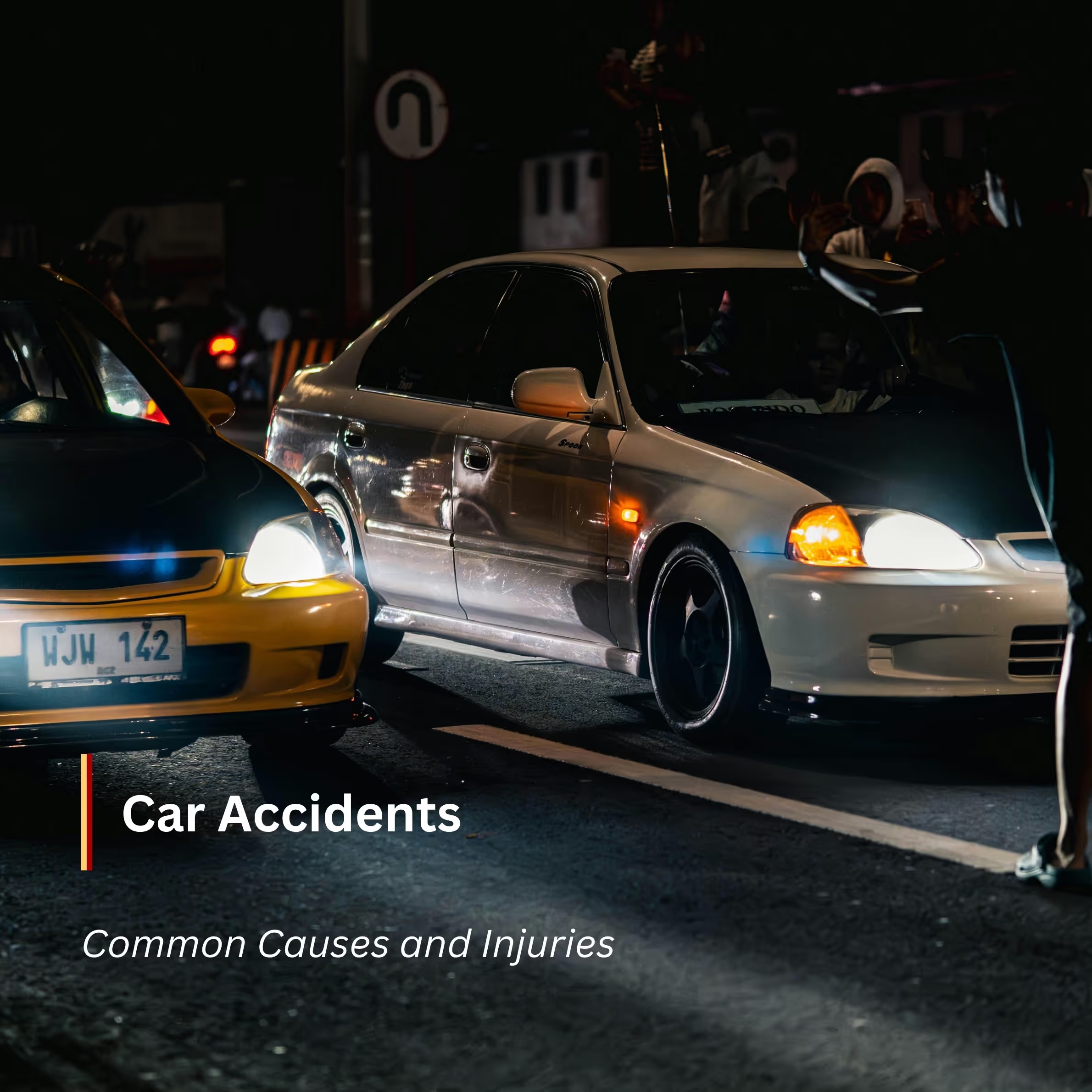
Car accidents can happen in a matter of seconds, but their effects may last long after the vehicles leave the scene. A collision may result in physical injuries, vehicle damage, medical expenses, time away from work, and questions about insurance and legal responsibility. Even accidents that initially appear minor can sometimes lead to symptoms that become noticeable hours or days later. Understanding the common causes of car accidents and the types of injuries associated with them can help drivers recognize hazards on the road and make informed decisions after a collision.
Car accidents occur for many reasons, and more than one factor may contribute to a collision. The California Department of Motor Vehicles identifies driver distraction, unsafe speed, improper turns, failure to follow right-of-way rules, failure to obey traffic signals and signs, driving on the wrong side of the road, and traveling at a speed inconsistent with the flow of traffic among common causes of collisions.
Distracted driving happens when a driver's attention is taken away from safely operating the vehicle. Texting, using a phone, adjusting navigation, eating, and interacting with passengers can all reduce a driver's ability to react to changing traffic conditions.
The following defects are common and may cause vehicle collisions and serious injuries.
If a braking defect contributes to a rear-end collision or intersection accident, investigators may examine whether the malfunction prevented the driver from responding appropriately.
Depending on the circumstances, steering failures may contribute to roadway departures, collisions with other vehicles, or crashes involving objects.
An airbag defect may not cause the initial collision but could contribute to the severity of the resulting injuries.
California law recognizes product liability claims involving defective products, including motor vehicles and automotive components. Depending on the facts, a claim may involve three general categories of product defects.
It is important to understand that a manufacturer is not automatically responsible simply because a product was involved in an accident. A recall may help establish that a manufacturer identified a safety concern affecting a specific vehicle or part. However, an injured person usually must demonstrate that the defect existed and contributed to the accident.
An unresolved recall may complicate an accident claim, especially if the vehicle owner received notice and had a reasonable opportunity to obtain the recommended repair. Whether an unrepaired recall affects liability depends on several considerations, including whether the owner received notice, whether a repair was available, and whether the failure to obtain the repair caused the injuries and damage.
Depending on the evidence, potentially responsible parties may include, but are not limited to, the following individuals.
A repair facility may face a separate negligence claim if improper maintenance contributed to a mechanical failure.
Another driver may also share responsibility if unsafe driving contributed to the collision. California's comparative fault principles may become important when multiple parties contributed to an accident, although the allocation of responsibility depends on the type of claim and applicable legal rules.
Preserving evidence is especially important when a suspected mechanical failure contributed to a car accident. Potentially relevant evidence may include, but is not limited to, the following.
Vehicle owners should avoid getting rid of or altering potentially defective components before appropriate documentation or inspection. Preserving the vehicle may help investigators determine whether a defect existed and how it affected the accident.
A legal professional may be able to explain a vehicle recall to victims and their loved ones after an accident occurs. This may be important when you become injured from a collision and are unaware of the necessary steps to take afterward. Legal guidance and support can minimize the additional challenges that may follow an accident relating to a vehicle recall.
The qualified personal injury attorneys at KAASS LAW want to help victims and their families understand their rights and responsibilities when being involved in a vehicle collision due to a vehicle recall. Our legal team may review the facts of your case, speak to insurance companies, and help determine potentially liable parties moving forward. Don’t wait. Call KAASS LAW today to learn more.
Although the dog emerged from a vehicle, the injury resulted directly from the animal's actions. Under California Insurance Code § 11580.2, uninsured motorist coverage usually requires that the injuries arise from the ownership, maintenance, or use of an uninsured motor vehicle and satisfy the statute's applicable liability and coverage requirements. Understanding what to do if a dog jumps out of a vehicle is crucial for the safety of yourself and those around you.
Even when uninsured motorist coverage does not apply, an injured pedestrian may have a separate legal claim against the dog's owner. Under California Civil Code § 3342, dog owners are usually strictly liable for damages when their dogs bite someone in a public place or while the injured person is lawfully on private property.
Strict liability means the injured person often does not need to prove that the dog previously displayed aggressive behavior or that the owner knew the animal was dangerous. If a dog escapes from a parked vehicle and bites a pedestrian walking legally on a sidewalk, the dog's owner may be liable for the injuries that occur as a result. California's dog bite statute focuses on the responsibility of the animal's owner, regardless of whether a motor vehicle was involved.
An uninsured dog owner may still be legally responsible for injuries caused by their animal. However, receiving compensation can become more complicated when insurance coverage is unavailable. Depending on the circumstances, potential sources of recovery may include, but are not limited to, the following.
The absence of automobile insurance does not eliminate the possibility of pursuing a dog bite claim under California law.
California uninsured motorist coverage is not necessarily limited to injuries suffered while driving. Depending on the policy and applicable law, insured individuals may qualify for protection while walking, cycling, or participating in other activities.
However, pedestrian status alone does not establish coverage. The injury must still meet the legal requirements governing uninsured motorist claims. For a dog bite involving a vehicle, an insurer may examine whether the injury resulted from the use of an uninsured motor vehicle or from an independent act involving the animal. An injured pedestrian should therefore avoid assuming that their own uninsured motorist policy automatically covers the accident.
When a dog escapes from a vehicle and bites someone, the details surrounding the incident may become important. Relevant evidence may include but is not limited to the following.
Evidence regarding whether the vehicle was moving, parked, being unloaded, or otherwise actively used may help clarify the circumstances. Preserving this information can assist in evaluating liability and potential insurance coverage.
After a dog bite accident involving a motor vehicle, it may be important to speak to a legal professional to better understand your rights and responsibilities moving forward. An attorney may be able to explain applicable laws and guide you through the challenges that may occur throughout the claims process.
The qualified personal injury attorneys at KAASS LAW are ready to help victims understand the importance of their case moving forward. Our legal team may review the specific facts surrounding the accident, speak to insurance companies on your behalf, and preserve important evidence for the future. Call KAASS LAW today to learn more.
1. Failure to Yield
One common cause is a driver turning left without allowing enough time for an approaching vehicle to pass. Misjudging the distance or speed of oncoming traffic can lead to a collision.
2. Distracted Driving
Drivers using mobile devices, adjusting navigation systems, or switching their attention may fail to notice approaching vehicles, pedestrians, or cyclists.
3. Speeding
An approaching driver traveling above the posted speed limit may reach an intersection sooner than the turning driver anticipates.
4. Running Red Lights
Accidents may occur when a driver enters an intersection after a traffic signal has turned red. In these situations, determining which driver violated the signal may be important.
In many left-turn accidents, the turning driver may be found responsible because California law usually requires that driver to yield to oncoming traffic. However, the left-turning driver is not automatically liable for every vehicle collision. Investigators and insurance companies may examine several factors when determining fault, including but not limited to the following.
Each accident must be evaluated according to its specific circumstances. A traffic violation may be relevant to liability, but the available evidence must also establish how the violation contributed to the collision.
California follows a comparative negligence system, meaning more than one driver may share responsibility for a vehicle collision. For instance, a driver making an unsafe left turn may be partially responsible, while an approaching driver who was speeding may also share fault. Under California's comparative fault principles, an injured person's compensation may be reduced according to their percentage of responsibility.
Left-turn accidents often involve impacts to the front or side of a vehicle. Depending on the speed and angle of the collision, drivers may experience various injuries, including but not limited to the following.
Some injuries may not become immediately visible after an accident. Seeking appropriate medical attention can help identify potential injuries and establish documentation of the symptoms and treatment received.
The following steps may be important considerations after a left-turn accident.
Seeking legal guidance and care may help victims move forward during a difficult time. A legal professional may review the facts of your case, speak to insurance companies on your behalf, and determine potentially responsible parties.
The personal injury team at KAASS LAW is ready to help victims understand their rights and responsibilities after being involved in a left-turn accident. It is important to take note that these types of collisions may cause serious injuries and create various challenges for victims and their families. If you have been involved in a left-turn vehicle collision, you are not alone. Call KAASS LAW today for a confidential consultation.
Running Red Lights or Stop Signs
One common cause is a driver entering an intersection against a traffic signal or failing to stop at a posted stop sign. These actions may place vehicles traveling through the intersection directly in the path of an approaching vehicle.
Failure to Yield
Drivers making left turns or entering intersections must follow applicable right-of-way rules. A failure to yield when required can result in a side-impact collision.
Distracted Driving
Texting, adjusting navigation systems, or engaging in other distractions may prevent drivers from noticing changing traffic signals or approaching vehicles.
Speeding
Driving above the posted speed limit or too fast for road conditions can reduce the time available to react and increase the force of a collision.
Impaired Driving
Alcohol, drugs, and certain medications may affect a driver's judgment, coordination, and reaction time, potentially contributing to intersection accidents.
The following injuries may occur after a T-Bone accident.
Head and Traumatic Brain Injuries
Drivers may hit windows, doors, or other interior surfaces during a vehicle collision. In some cases, these impacts can result in concussions or traumatic brain injuries.
Neck and Spinal Injuries
Sudden lateral movement can place significant stress on the neck and spine. Injuries may include muscle strains, herniated discs, and, in severe cases, spinal cord damage.
Broken Bones
Fractures involving the ribs, arms, pelvis, or legs may occur when vehicle doors or other structures move inward during impact.
Internal Injuries
The force of a collision may cause internal bleeding or damage to organs. Some internal injuries are not immediately apparent, making prompt medical evaluation important.
Determining liability requires examining the specific circumstances surrounding the collision. Although one driver may appear responsible, fault is not always immediately clear. Under California negligence law, a driver may be held responsible when their failure to exercise reasonable care causes injury to another person.
California follows a comparative negligence system. This means an injured person may still recover damages when they are partially responsible, although the amount may be reduced according to their percentage of fault. Other potentially responsible parties may include, but are not limited to, the following.
Evidence plays an important role in evaluating how a side-impact accident occurred. The following may be important pieces of evidence and documentation that can help determine potentially liable parties after a T-Bone vehicle collision.
Preserving relevant evidence as early as reasonably possible may be helpful because footage can be overwritten, vehicles may be repaired, and physical conditions may change.
Individuals injured in T-bone accidents may be able to pursue compensation when another party is legally responsible. Depending on the circumstances, recoverable damages may include but are not limited to the following.
Compensation is not automatic, and each claim must be evaluated based on its specific circumstances.
Following a side-impact collision, safety and medical needs should come first.
Oftentimes, these types of car accidents may cause serious or life-threatening injuries that can leave victims in a state of uncertainty moving forward. Seeking legal guidance and support after a T-bone vehicle collision may be important to understand your rights and responsibilities throughout the personal injury claims process.
The qualified personal injury attorneys of KAASS LAW are determined to help victims and their loved ones understand the challenges that may come after a T-bone vehicle collision. Our legal team may review the facts of your case, speak to insurance companies on your behalf, and guide you through the legalities of the claims process. If you have been involved in a T-bone car accident, you are not alone. Call KAASS LAW today to learn more and discuss your potential options.
These problems may not be visible during routine inspections. A tire can appear to be in acceptable condition while containing internal weaknesses that increase the risk of failure.
Several types of tire failures can contribute to highway crashes. These may include, but are not limited to, the following.
Tread separation occurs when the outer tread begins separating from the underlying tire structure. This can happen when internal bonding fails or when other conditions weaken the tire. A sudden tread separation may cause severe vibration, reduced traction, or difficulty steering. In some instances, the driver may lose control and hit another vehicle or object on the road.
Tire failures can be especially dangerous in vehicles with higher centers of gravity, including certain SUVs, vans, and trucks. An abrupt tire failure, combined with steering corrections or changes in vehicle direction, may cause a rollover. However, determining whether a defective tire caused the accident usually requires an investigation of the tire, vehicle, and surrounding circumstances.
Determining liability requires examining how the tire was manufactured, distributed, installed, and maintained. Depending on the circumstances, potentially responsible parties may include but are not limited to the following.
Individuals should also understand that more than one party may be involved. Identifying the cause of the tire failure is important before determining who may be held responsible.
California law recognizes product liability claims involving manufacturing defects, defective designs, and inadequate warnings. Under California's strict product liability regulations, an injured individual may pursue a personal injury claim without necessarily proving that the manufacturer acted poorly. A manufacturing defect may exist when a product is significantly different from the manufacturer's intended specifications or other similar products in the same line. However, a tire failure alone does not automatically establish a manufacturing defect. Evidence must support the alleged defect and the injuries that occurred afterward.
Investigating a defective tire accident may involve reviewing physical evidence, maintenance records, and crash circumstances. Important evidence may include but is not limited to the following.
Preserving the failed tire can be especially important. Its condition may help investigators distinguish between a manufacturing defect, road damage, improper inflation, or ordinary wear. The National Highway Traffic Safety Administration (NHTSA) includes helpful information about tire recalls and safety concerns.
Following a highway accident involving a suspected defective tire, personal safety and medical attention should come first. If possible and safe to do so, victims should consider the following steps to recover from their injuries.
After a vehicle collision resulting from a defective tire, it may be important to seek the help of a legal professional to better understand your rights and responsibilities moving forward. A qualified attorney may be able to explain applicable laws, preserve important pieces of evidence, and speak to insurance companies on your behalf. This is crucial when dealing with serious injuries from a highway crash.
The qualified personal injury attorneys at KAASS LAW are determined to help victims and their loved ones understand their rights after being involved in a serious vehicle collision from a malfunctioning tire. We may review the specific facts of your case, determine potentially liable parties, and help maintain important pieces of documentation. Call KAASS LAW today for a confidential consultation and to discuss your potential options moving forward.
Some vehicle collisions also involve obstructed visibility, malfunctioning traffic signals, or poorly maintained roadways. Identifying the circumstances surrounding an accident is an important part of determining potential liability.
Liability usually depends on whether a person or entity acted negligently and whether that behavior contributed to the accident and injuries.
A driver who runs a red light, ignores a stop sign, or fails to yield may be responsible for an intersection collision. Violating a traffic law may be important evidence when determining negligence.
Drivers have a responsibility to operate their vehicles with reasonable care. A driver who texts while driving, travels at an unsafe speed, or fails to observe surrounding traffic may contribute to a collision. Evidence such as witness statements, available video footage, and vehicle information may help establish whether the driver's overall behavior contributed to the accident.
Some intersection accidents involve more than one negligent driver. In these situations, liability may be divided based on each party's contribution to the collision. California follows a comparative negligence system, meaning an injured person's compensation may be reduced according to their percentage of responsibility.
In certain situations, a dangerous roadway condition may contribute to an intersection accident. Examples may include malfunctioning traffic signals, obstructed visibility, or unsafe intersection designs.
Establishing fault often requires examining several types of evidence. These may include, but are not limited to, the following.
Intersection accidents can cause many types of injuries, especially when vehicles hit each other from the side or at higher speeds. Common injuries may include, but are not limited to, the following.
Individuals injured because of another party's negligence may be eligible to pursue compensation under California law. Depending on the circumstances, recoverable damages may include but are not limited to the following.
It is important to understand that the availability and amount of damages depend on factors such as the nature of the injuries, supporting evidence, and applicable insurance coverage.
Taking appropriate steps after a collision may help protect your health and preserve important information. Victims should consider the following after being involved in an intersection accident.
After an intersection accident, victims should consider speaking to a personal injury attorney to better understand their rights and responsibilities moving forward. Oftentimes, intersection vehicle collisions may present unique legal and insurance challenges that may be difficult to understand alone.
The legal team at KAASS LAW is ready to help individuals who have suffered injuries from an intersection accident. We may review the facts surrounding your case, speak to insurance companies, and preserve important pieces of evidence moving forward. If you have been involved in an intersection accident, you are not alone. Call KAASS LAW today for a confidential consultation and to discuss your potential options.
While the rear driver is often responsible, there are situations where the driver in front may contribute to a collision. For example, a front driver may unexpectedly reverse into another vehicle, make an unsafe lane change, or operate a vehicle with malfunctioning brake lights. Other situations that may affect liability include, but are not limited to, the following.
Determining responsibility often requires examining the events leading up to the collision rather than relying only on where the vehicles were damaged. Insurance companies, investigators, and attorneys may review several forms of evidence, including police reports, photographs, witness statements, vehicle damage, and available traffic camera footage. It is important to note that vehicle damage alone may not explain whether a driver was speeding, distracted, or making an unsafe move. Other factors that may be considered include weather conditions, visibility, traffic signals, roadway design, and the drivers' statements.
California follows a pure comparative negligence system. This means that more than one driver may share responsibility for an accident. This system recognizes that accidents sometimes involve multiple contributing factors rather than one person's behavior alone.
Even collisions at low speeds can cause injuries, depending on the force of impact and individual circumstances. Some injuries associated with rear-end accidents may include, but are not limited to, the following.
Some symptoms may not become noticeable until hours or days after the accident. Seeking appropriate medical attention can help identify injuries and document their progression.
The moments following a collision can be stressful, especially when injuries or significant vehicle damage are involved. Taking certain steps may help protect your safety and preserve important information.
California law does not automatically assign responsibility to the rear driver in every rear-end accident. Instead, liability generally depends on whether a driver acted negligently and whether that conduct contributed to the collision. Consulting an attorney may help individuals better understand their legal options and any relevant filing deadlines.
Rear-end accidents can leave individuals dealing with injuries, insurance communications, and uncertainty about who may be responsible. KAASS LAW may help individuals with personal injury matters, including motor vehicle accidents in California. Our legal team can review the circumstances surrounding a rear-end collision, examine available documentation, and discuss legal options based on the facts of the incident. Call KAASS LAW today for a confidential consultation.
A driver backing from a parking space should check the surrounding area and determine whether it is reasonably safe to proceed. Depending on the circumstances, a backing driver who enters the path of another vehicle may be found responsible for causing the collision.
These accidents can be more complicated because both drivers may have had a responsibility to observe their surroundings before and while backing. Evidence such as surveillance footage, witness statements, vehicle damage, and photographs may help determine how the collision occurred.
The driver entering the travel lane should look for approaching vehicles before proceeding. Additionally, a driver traveling through the parking lot should remain alert for vehicles, pedestrians, shopping carts, and other potential hazards.
Drivers should pay attention to posted signs, pavement markings, and surrounding traffic. When determining responsibility after an intersection collision, the location of the impact and the movements of both vehicles may be important.
Drivers should watch carefully for pedestrians while entering, exiting, and traveling through parking areas. Pedestrians should also remain alert because drivers may have limited visibility while backing out.
California follows a comparative negligence system, meaning responsibility for an accident may potentially be divided among multiple parties. For this reason, parking lot accident claims should be evaluated based on their individual facts rather than assuming one driver is automatically responsible.
Since parking lot collisions often involve disagreement about who moved first or who had the right-of-way, collecting evidence can be important. Useful information may include, but is not limited to, the following.
After a collision, it may be crucial to first decide whether anyone needs medical assistance. If necessary, victims should also consider contacting emergency services. When it is safe to do so, individuals should exchange contact information, driver's license, vehicle, and insurance information with the other driver. Take photographs of the vehicles before they are moved if doing so can be accomplished safely. It may also be beneficial to take photos showing where the vehicles were positioned, nearby parking spaces, traffic signs, and lane markings. If witnesses saw the collision, consider obtaining their names and contact information. When an accident results in injuries, significant property damage, or disagreement about responsibility, additional legal or insurance issues may also occur.
Although parking lot collisions often happen at relatively low speeds, injuries are still possible. Depending on the circumstances, occupants or pedestrians may experience neck or back injuries, soft-tissue injuries, fractures, head injuries, or other conditions. Some symptoms may not be immediately obvious. Anyone experiencing pain or other concerning symptoms after an accident should consider seeking appropriate medical evaluation. Medical records may also document the nature and timing of injuries associated with the collision.
A parking lot accident can involve questions about negligence, insurance coverage, property damage, injuries, and comparative fault. Determining responsibility may require reviewing more than the drivers' statements. An attorney evaluating a parking lot accident may review photographs, surveillance footage, witness statements, medical documentation, insurance information, vehicle damage, and other available evidence.
KAASS LAW can assist individuals with personal injury matters, including parking lot accidents. When evaluating a parking lot accident, the firm can review the circumstances of the collision and available evidence to help determine what legal options may be available. Call KAASS LAW today to discuss your potential options moving forward.
Driving too fast can reduce the amount of time available to respond to hazards. It can also increase the force involved in a collision. In addition, unsafe speed does not always mean exceeding the posted speed limit. Depending on the circumstances, a driver may need to travel below the posted limit because of heavy traffic, poor visibility, weather, construction, or road conditions.
Right-of-way violations may contribute to accidents at intersections, crosswalks, freeway entrances, and parking areas. A vehicle collision may occur when a driver fails to yield while making a turn, entering traffic, or approaching a pedestrian or another vehicle with the right of way.
Drivers are expected to check their surroundings before turning or changing lanes. Failing to check mirrors or blind spots, turning from the wrong lane, or changing lanes without enough space may contribute to a car accident.
Alcohol and drugs can affect judgment, coordination, reaction time, and perception. A driver whose ability to safely operate a vehicle is impaired may have difficulty staying in a lane, recognizing hazards, or responding appropriately to traffic conditions.
A tired driver may have slower reaction times and reduced concentration. Fatigue can be especially concerning during long trips, overnight driving, or situations in which a driver has not had adequate rest.
Rain, debris, poor lighting, construction, damaged pavement, and other roadway conditions can increase accident risks. Drivers usually need to adjust their speed and driving behavior for the specific conditions they come across.
The injuries associated with a car accident vary significantly depending on factors such as the direction and force of impact, vehicle type, seat belt use, airbag deployment, and the health and age of the occupants. The following injuries may occur after a vehicle collision.
Safety should be the immediate priority following a collision. If someone is injured, emergency assistance may be necessary. When circumstances permit, drivers should exchange identifying and insurance information and document relevant details about the accident. Photographs of vehicle damage, roadway conditions, traffic signs, and the surrounding area may also help document what occurred. Contact information for witnesses may be useful when there is disagreement about how the accident happened. Individuals experiencing pain or other symptoms should consider seeking appropriate medical attention.
Liability depends on the specific facts of each collision. Evidence may include, but is not limited to, the following.
In some accidents, more than one person may share responsibility. California law recognizes comparative fault principles and how the percentage of fault can affect responsibility for certain damages. California law also recognizes economic damages, such as medical expenses and lost earnings, and noneconomic damages such as pain, suffering, inconvenience, and emotional distress.
After an accident, an injured person may have questions about insurance coverage, medical expenses, vehicle repairs, lost income, or responsibility for the incident. Legal deadlines may also apply. Since the applicable deadline can depend on the parties involved and the nature of the claim, individuals with questions about their specific circumstances may wish to seek legal guidance as soon as possible.
KAASS LAW may help victims and their loved ones understand the steps to take after suffering injuries from a car accident. Our legal team is determined to help individuals understand the complexities of the claims process. We may also be able to communicate with insurance companies, preserve necessary pieces of evidence, and explain legal options that may be available under California law. If you have been involved in a car accident, you are not alone. Call KAASS LAW today for a confidential consultation and to discuss your potential options.