T-Bone Accidents: Understanding Injuries and Liability
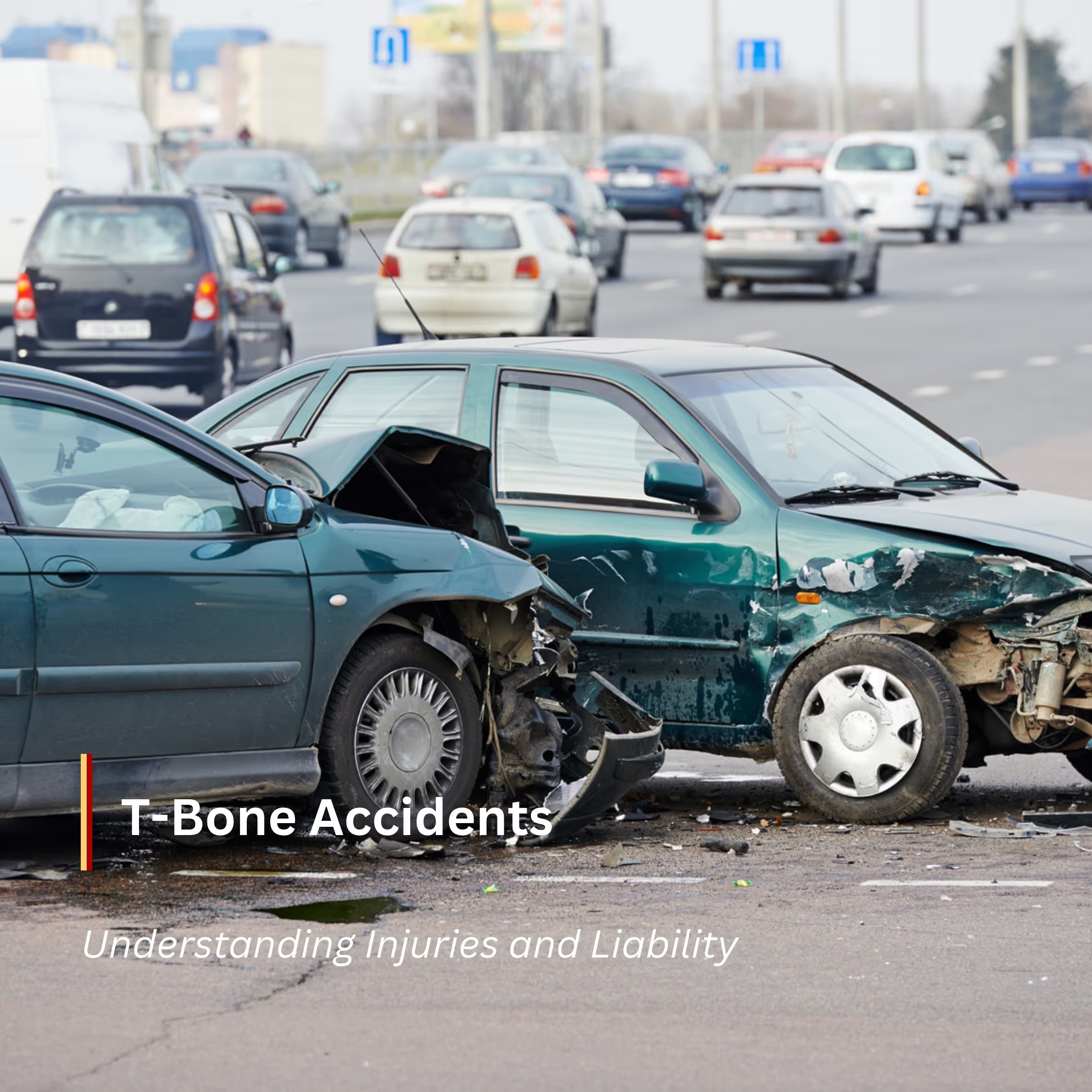
T-bone accidents can happen in seconds, often leaving drivers and passengers with serious injuries, vehicle damage, and questions about who may be responsible. These collisions often occur at intersections when the front of one vehicle strikes the side of another. Understanding how these accidents occur, the types of injuries they can cause, and how liability is determined can help injured individuals make informed decisions about their next steps.
T-Bone Accidents: An Overview
A T-bone accident, also known as a side-impact vehicle collision, occurs when the front of one vehicle crashes into the side of another. These accidents often happen at intersections, parking lot entrances, and locations where vehicles cross traffic. The severity of a T-bone collision depends on several factors, including but not limited to vehicle speed, the point of impact, vehicle size, and available safety features.
What Can Cause a T-Bone Accident
T-bone accidents usually involve circumstances in which one driver fails to recognize or respond appropriately to another vehicle's right of way.
Running Red Lights or Stop Signs
One common cause is a driver entering an intersection against a traffic signal or failing to stop at a posted stop sign. These actions may place vehicles traveling through the intersection directly in the path of an approaching vehicle.
Failure to Yield
Drivers making left turns or entering intersections must follow applicable right-of-way rules. A failure to yield when required can result in a side-impact collision.
Distracted Driving
Texting, adjusting navigation systems, or engaging in other distractions may prevent drivers from noticing changing traffic signals or approaching vehicles.
Speeding
Driving above the posted speed limit or too fast for road conditions can reduce the time available to react and increase the force of a collision.
Impaired Driving
Alcohol, drugs, and certain medications may affect a driver's judgment, coordination, and reaction time, potentially contributing to intersection accidents.
What Kinds of Injuries May Occur from a T-Bone Vehicle Collision
The following injuries may occur after a T-Bone accident.
Head and Traumatic Brain Injuries
Drivers may hit windows, doors, or other interior surfaces during a vehicle collision. In some cases, these impacts can result in concussions or traumatic brain injuries.
Neck and Spinal Injuries
Sudden lateral movement can place significant stress on the neck and spine. Injuries may include muscle strains, herniated discs, and, in severe cases, spinal cord damage.
Broken Bones
Fractures involving the ribs, arms, pelvis, or legs may occur when vehicle doors or other structures move inward during impact.
Internal Injuries
The force of a collision may cause internal bleeding or damage to organs. Some internal injuries are not immediately apparent, making prompt medical evaluation important.
Who is Responsible for a T-Bone Car Accident
Determining liability requires examining the specific circumstances surrounding the collision. Although one driver may appear responsible, fault is not always immediately clear. Under California negligence law, a driver may be held responsible when their failure to exercise reasonable care causes injury to another person.
California follows a comparative negligence system. This means an injured person may still recover damages when they are partially responsible, although the amount may be reduced according to their percentage of fault. Other potentially responsible parties may include, but are not limited to, the following.
- An employer when a driver was acting within the time of employment, or a vehicle manufacturer when a qualifying product defect contributed to the accident or injuries.
Determining Fault After a T-Bone Accident
Evidence plays an important role in evaluating how a side-impact accident occurred. The following may be important pieces of evidence and documentation that can help determine potentially liable parties after a T-Bone vehicle collision.
- Police reports
- Photographs and videos of vehicle damage, the accident scene, traffic signals, and skid marks
- Witness statements
- Available surveillance or dashcam footage
- Vehicle data
- Medical records.
Preserving relevant evidence as early as reasonably possible may be helpful because footage can be overwritten, vehicles may be repaired, and physical conditions may change.
Types of Compensation
Individuals injured in T-bone accidents may be able to pursue compensation when another party is legally responsible. Depending on the circumstances, recoverable damages may include but are not limited to the following.
- Medical expenses, including emergency treatment and rehabilitation
- Future medical care related to the injuries
- Lost wages and reduced earning capacity
- Property damage and other documented financial losses
- Physical pain, emotional distress, and loss of enjoyment of life
Compensation is not automatic, and each claim must be evaluated based on its specific circumstances.
The Necessary Steps after a T-Bone Collision
Following a side-impact collision, safety and medical needs should come first.
- If possible, move to a safe location and contact emergency services when necessary.
- Report the accident to law enforcement when required.
- Exchange insurance information with the other involved drivers.
- Photograph the vehicles, surrounding roadway, traffic controls, and visible damage if it is safe to do so.
- Obtain witness contact information when available.
Speaking to a Legal Professional
Oftentimes, these types of car accidents may cause serious or life-threatening injuries that can leave victims in a state of uncertainty moving forward. Seeking legal guidance and support after a T-bone vehicle collision may be important to understand your rights and responsibilities throughout the personal injury claims process.
The Legal Team at KAASS LAW
The qualified personal injury attorneys of KAASS LAW are determined to help victims and their loved ones understand the challenges that may come after a T-bone vehicle collision. Our legal team may review the facts of your case, speak to insurance companies on your behalf, and guide you through the legalities of the claims process. If you have been involved in a T-bone car accident, you are not alone. Call KAASS LAW today to learn more and discuss your potential options.
Related Articles
View All Posts
Learn how defective tires can cause highway crashes, who may be liable for resulting injuries, and what legal options California drivers may have.
Learn who may be liable for intersection accidents in California, how fault is determined, and what legal options may be available.
Learn who may be responsible for rear-end accidents in California, when fault may be shared, and what injured drivers should know about liability.
