
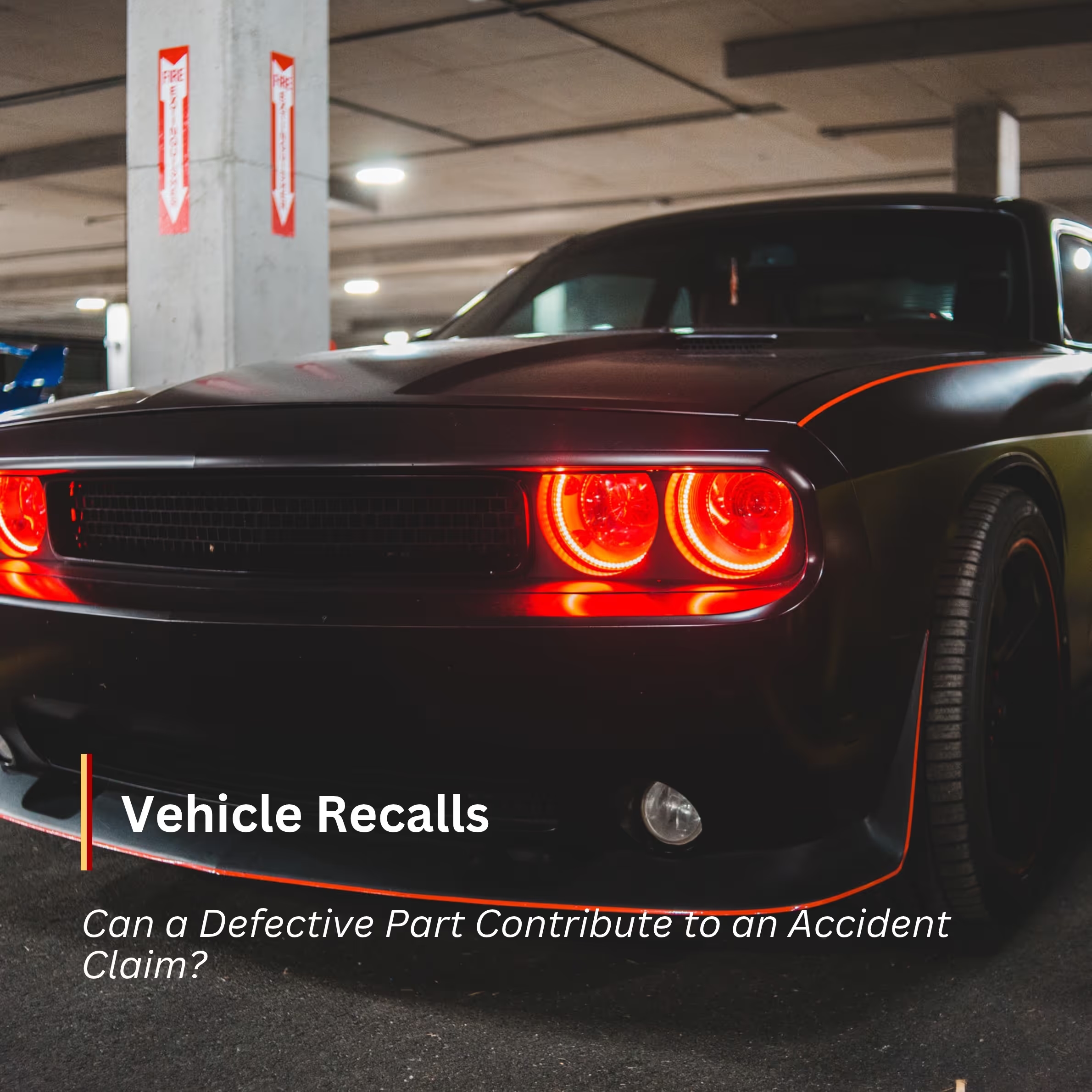
Car accidents are very common, especially on freeways, highways, and busy intersections. Many drivers are rushing to and from work or may be distracted by other hazards on the road. Vehicle recalls contribute to car accidents and can cause serious injuries to individuals and their families. It is important to understand the necessary steps to take when your vehicle becomes recalled to help reduce the risk of a serious accident occurring.
A vehicle recall occurs when a manufacturer or the National Highway Traffic Safety Administration (NHTSA) identifies a safety-related defect or determines that a vehicle or component fails to comply with applicable federal motor vehicle safety standards.
Recalls may involve an entire vehicle model or specific components, including braking systems, airbags, electrical equipment, and tires. It is important to understand that manufacturers usually must notify the owners of these affected vehicles and provide an appropriate solution, such as a repair, replacement, or refund, without charge when required by applicable recall provisions.
The following defects are common and may cause vehicle collisions and serious injuries.
If a braking defect contributes to a rear-end collision or intersection accident, investigators may examine whether the malfunction prevented the driver from responding appropriately.
Depending on the circumstances, steering failures may contribute to roadway departures, collisions with other vehicles, or crashes involving objects.
An airbag defect may not cause the initial collision but could contribute to the severity of the resulting injuries.
California law recognizes product liability claims involving defective products, including motor vehicles and automotive components. Depending on the facts, a claim may involve three general categories of product defects.
It is important to understand that a manufacturer is not automatically responsible simply because a product was involved in an accident. A recall may help establish that a manufacturer identified a safety concern affecting a specific vehicle or part. However, an injured person usually must demonstrate that the defect existed and contributed to the accident.
An unresolved recall may complicate an accident claim, especially if the vehicle owner received notice and had a reasonable opportunity to obtain the recommended repair. Whether an unrepaired recall affects liability depends on several considerations, including whether the owner received notice, whether a repair was available, and whether the failure to obtain the repair caused the injuries and damage.
Depending on the evidence, potentially responsible parties may include, but are not limited to, the following individuals.
A repair facility may face a separate negligence claim if improper maintenance contributed to a mechanical failure.
Another driver may also share responsibility if unsafe driving contributed to the collision. California's comparative fault principles may become important when multiple parties contributed to an accident, although the allocation of responsibility depends on the type of claim and applicable legal rules.
Preserving evidence is especially important when a suspected mechanical failure contributed to a car accident. Potentially relevant evidence may include, but is not limited to, the following.
Vehicle owners should avoid getting rid of or altering potentially defective components before appropriate documentation or inspection. Preserving the vehicle may help investigators determine whether a defect existed and how it affected the accident.
A legal professional may be able to explain a vehicle recall to victims and their loved ones after an accident occurs. This may be important when you become injured from a collision and are unaware of the necessary steps to take afterward. Legal guidance and support can minimize the additional challenges that may follow an accident relating to a vehicle recall.
The qualified personal injury attorneys at KAASS LAW want to help victims and their families understand their rights and responsibilities when being involved in a vehicle collision due to a vehicle recall. Our legal team may review the facts of your case, speak to insurance companies, and help determine potentially liable parties moving forward. Don’t wait. Call KAASS LAW today to learn more.
Learn about victims' legal rights after drunk driving accidents in California, including liability, compensation, insurance, and legal options.
Learn how fault is determined in California chain-reaction accidents, including shared liability, insurance claims, and available legal options.
Can uninsured motorist coverage apply when a dog escapes a car and bites someone in California? Learn about liability and insurance rights.