Rear-End Accidents: Who Is Usually Responsible for the Crash?
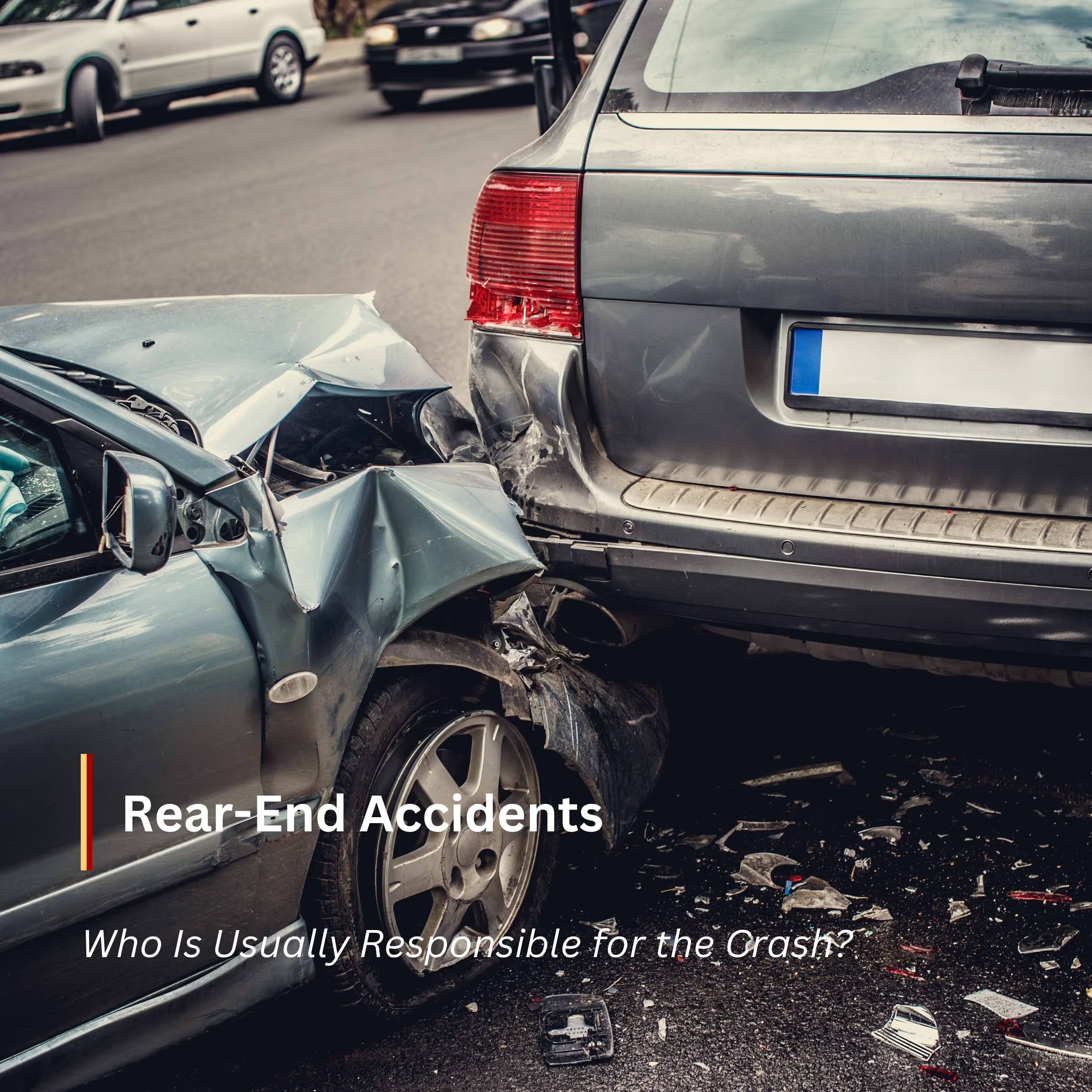
Rear-end accidents are one of the most common types of traffic collisions in California. They can happen at busy intersections, on crowded freeways, in parking lots, or during sudden traffic slowdowns. While some rear-end collisions result in minor vehicle damage, others can lead to serious injuries, costly repairs, and unexpected disruptions to daily life. Understanding how fault is determined in rear-end accidents can help injured drivers better understand their rights and the steps they may consider after a collision.
Rear Drivers and Their Responsibilities
In many rear-end accidents, the driver who strikes the vehicle ahead may be considered negligent for failing to maintain a safe following distance or respond appropriately to changing traffic conditions.
Under California Vehicle Code Section 21703, drivers must not follow another vehicle more closely than is reasonable and prudent, considering factors such as speed, traffic, and roadway conditions.
Drivers are usually expected to maintain enough distance to slow down or stop safely when traffic changes. When a driver follows too closely, becomes distracted, or fails to brake in time, a rear-end collision may occur. Common behaviors that contribute to rear-end accidents include:
- Distracted driving: Texting, adjusting navigation systems, or looking away from the road.
- Tailgating: Following another vehicle too closely to react safely.
- Speeding: Traveling too fast for traffic or roadway conditions.
- Impaired driving: Operating a vehicle while affected by alcohol, drugs, or certain medications.
- Driver fatigue: Reduced attention and slower reaction times due to tiredness.
The Driver in the Front During A Rear-End Collision
While the rear driver is often responsible, there are situations where the driver in front may contribute to a collision. For example, a front driver may unexpectedly reverse into another vehicle, make an unsafe lane change, or operate a vehicle with malfunctioning brake lights. Other situations that may affect liability include, but are not limited to, the following.
- Sudden and Unsafe Lane Changes
- Reversing Without Warning
- Malfunctioning Brake Lights
- Unnecessary or Unsafe Braking
Who Is Responsible for a Rear-End Accident?
Determining responsibility often requires examining the events leading up to the collision rather than relying only on where the vehicles were damaged. Insurance companies, investigators, and attorneys may review several forms of evidence, including police reports, photographs, witness statements, vehicle damage, and available traffic camera footage. It is important to note that vehicle damage alone may not explain whether a driver was speeding, distracted, or making an unsafe move. Other factors that may be considered include weather conditions, visibility, traffic signals, roadway design, and the drivers' statements.
California follows a pure comparative negligence system. This means that more than one driver may share responsibility for an accident. This system recognizes that accidents sometimes involve multiple contributing factors rather than one person's behavior alone.
Types of Injuries
Even collisions at low speeds can cause injuries, depending on the force of impact and individual circumstances. Some injuries associated with rear-end accidents may include, but are not limited to, the following.
- Whiplash: Sudden movement of the head and neck may strain muscles and surrounding tissues.
- Back injuries: The impact may contribute to spinal injuries, herniated discs, or persistent discomfort.
- Head injuries: Occupants may experience concussions or other traumatic injuries.
- Shoulder injuries: Seat belt restraint and sudden movement may affect the shoulders.
- Soft tissue injuries: Muscles, ligaments, and tendons may be injured during the collision.
Some symptoms may not become noticeable until hours or days after the accident. Seeking appropriate medical attention can help identify injuries and document their progression.
The Necessary Steps to Take after an Accident
The moments following a collision can be stressful, especially when injuries or significant vehicle damage are involved. Taking certain steps may help protect your safety and preserve important information.
- Victims should check for injuries and contact emergency services when necessary. If it is safe and appropriate, move vehicles away from active traffic to reduce the risk of another collision.
- Exchange contact, driver's license, vehicle registration, and insurance information with the other drivers involved.
- Photographs of vehicle damage, road conditions, traffic signs, and the surrounding area may also provide useful documentation.
- If witnesses observed the accident, consider requesting their contact information.
Speaking to a Legal Professional
California law does not automatically assign responsibility to the rear driver in every rear-end accident. Instead, liability generally depends on whether a driver acted negligently and whether that conduct contributed to the collision. Consulting an attorney may help individuals better understand their legal options and any relevant filing deadlines.
The Legal Team at KAASS LAW
Rear-end accidents can leave individuals dealing with injuries, insurance communications, and uncertainty about who may be responsible. KAASS LAW may help individuals with personal injury matters, including motor vehicle accidents in California. Our legal team can review the circumstances surrounding a rear-end collision, examine available documentation, and discuss legal options based on the facts of the incident. Call KAASS LAW today for a confidential consultation.
Related Articles
View All Posts
Learn who may be responsible for parking lot accidents in California, how fault is determined, and what evidence may help after a collision.
Learn about common causes of car accidents, frequently reported injuries, and legal considerations for people injured in California crashes.
Learn about common causes of distracted driving accidents, potential injuries, liability issues, and legal options available in California.