
Product liability is a common cause of wrongful death. The loss of a child can be a tragedy beyond comprehension for the parents who must go through it. Toys for kids are a constant source of damage and health concerns. The carelessness of toy producers, distributors, and retailers results in kids' injuries every year. No matter how old your child is, an accident brought on by a hazardous or defective toy can have long-lasting effects. According to a child psychologist, such an encounter may negatively affect a youngster's behavior and associations with various things and situations.
Among the injuries brought on by product liability are:
Kids regularly throw toys, stuff them in their mouths, and mistreat them in general. Because of this, toy producers and merchants need to handle children's toys carefully. Unfortunately, businesses produce dangerous toys all too frequently, which can lead to lead paint exposure and choking concerns. Then they fail to give parents enough caution. Children may consequently sustain critical injuries or possibly pass away.
In general, three types of flaws can result in a product liability claim:
Toy designers and producers must abide by industry guidelines while creating new toys. These parties may be held accountable for injuries caused when they fall short of acceptable standards.
Allegations of present flaws may be supported by documentation of past defects and injuries. This data can also demonstrate that the manufacturer was aware of potential issues and risks.
Age recommendations help consumers to determine when they should use them. When buying toys for their children, parents rely on these rules. Improper categorization can put younger children at risk. Types of paints and chemicals used in manufacturing Younger kids, in particular, frequently put items in their mouths.
Toys come with warning labels, instructions, and age designations to help parents. When these guidelines are insufficient, kids could damage themselves by using the toy in an unsafe way.
Some toys that are simple to disassemble can be hazardous. The toy's little bits pose a risk of choking. Electric burns or shocks can also result from small electronic components.
A toy may have a flaw at any point during its development, production, or marketing. Anyone involved in the supply chain could potentially be held accountable if a child is killed in an accident brought on by a defective product, including:
Our wrongful death lawyers at KAASS Law are devoted to ensuring that you get the compensation you deserve. You might be entitled to compensation for the following damages if you file a claim with our legal firm:
Helping our clients acquire the financial means required to pay for medical care and rehabilitation services is a top concern for our lawyers. Through conversations with your child's doctor or other medical experts, we will learn about your child's medical requirements and pursue financial compensation for all additional economic and noneconomic damages in addition to medical costs. Call us now at (310) 943-1171
When you buy a product made by a corporation, you anticipate it to function in a particular way. The directions on the product label and the ads for the product are typically the foundation for this assumption. When a product does not perform as the instructions direct it to and results in a fatality, a wrongful death case may begin with the help of a wrongful death attorney. A wrongful death lawsuit in this case would be based on the theory of product liability. Understanding how the law works and when a situation like this might be brought under it is crucial.
According to California law, depending on the kind of product's flaws, it is normally possible to launch three different forms of product liability claims. Take a peek at these now.
If a manufacturing error was a cause of death, you can file a lawsuit against the manufacturer. An example of that is car breaks. They might have not properly made and failed to bring a car to a full stop. Liability will be on the manufacturer if that happens. A wrongful death lawsuit based on manufacturing defects must demonstrate that the defect directly caused the incident or injury that resulted in the fatality. It must be proven that no other factors contributed or that the other contributing factors were not as significant as the defect itself.
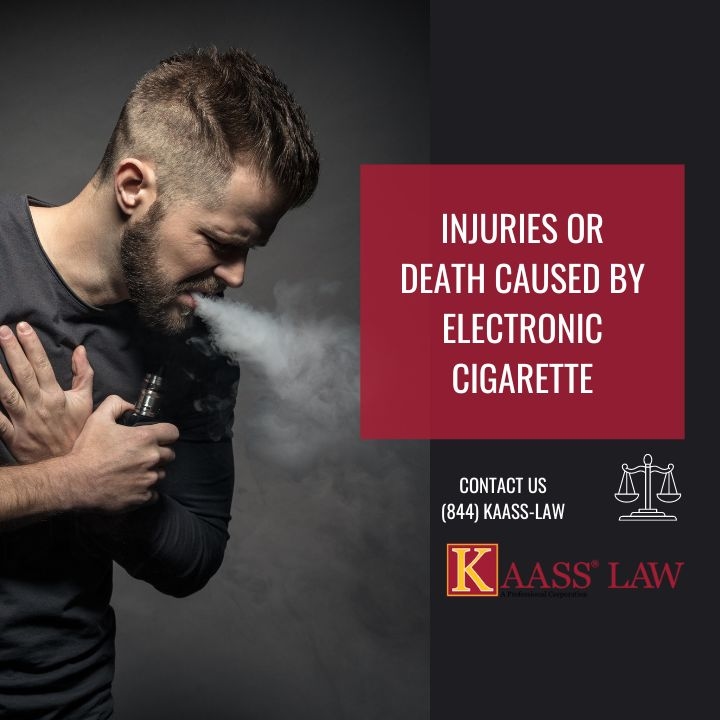
People use battery-operated electronic cigarettes to heat liquid into a vapor that may be inhaled. Vapes, e-cigs, or e-cigarettes are alternative names for them. Young people who use nicotine run the danger of long-term health consequences. Nicotine impacts the brain circuits that control attention and learning. Injuries or death caused by electronic cigarette is relatively new and arising issue,
E-cigarettes simulate the experience of traditional smoking, and they do this by releasing vapor. Particularly, the liquid vapor boils by a heating element inside the e-cigarette and the issues arise when the heating process causes the electrolytes to expand and overheat. This can cause serious injuries to the user of e-cigarettes.
There are various causes of injuries by e-cigarettes. For example, the explosion of e-cigarettes in the user’s mouth causing different degrees of burns to the face, and injury of fingers, which even lead to their amputation. Most e-cigarettes contain nicotine. , which lasts into the early to mid-20s, and is extremely addictive. Future cigarette smoking may be more likely among young people who use e-cigarettes. Additionally, breathing difficulties may occur through the use of e-cigarettes which can lead to death earlier. The brain in the human body can be harmed severely if an individual intends on smoking traditionally. Additionally, illnesses and difficulties with self-control may become more likely. Additionally, nicotine use may have an impact on a young person's attention and learning-related brain regions.
Gym injury lawsuits in California are not uncommon. Some of the most injuries happen in fitness centers. How can we prevent these injuries? This article will inform you of what steps to take if you or someone you know has been injured at a fitness center. In most cases, fitness center injuries are the result of carelessness.
Anyone injured in a fitness center accident may file a personal injury lawsuit against those responsible under personal injury law. Members of a gym may also be able to file a product defect lawsuit against an equipment manufacturer for injuries sustained while using defective equipment.
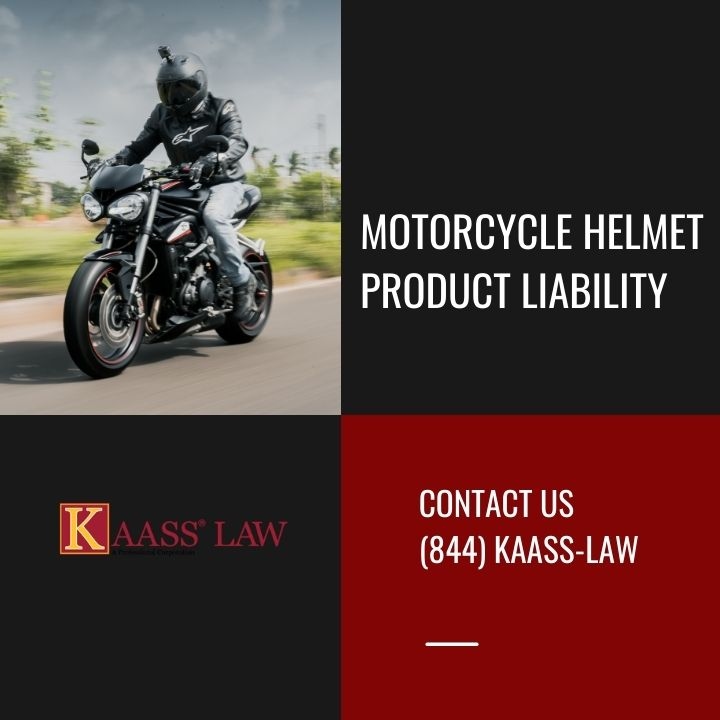
Treatise: Motorcycle Helmet Product Liability in California Product liability lawsuits frequently arise as a result of motorcycle accidents, and a common product at issue is the rider’s motorcycle helmet. For instance, in California, manufacturers, distributers, and retailers of motorcycle head gear can liable for injuries and damages that occur as a result of defective protective gear.
In California, lawsuits brought under the theory of products liability are strict liability cases, meaning the plaintiff does not have to show negligence on the part of the manufacturer or seller in order to prevail on a claim of defective product. The basis for strict products liability is grounded on the public policy considerations that parties involved in the commercial enterprise who make a profit by placing defective products into the marketplace should bear the responsibility of the injuries caused to consumers by those products. V 61 C.2d 256 (Ca. 1964). In order for a plaintiff to prevail and be awarded damages under the theory of products liability the plaintiff must show: (1) there was a defect in the manufacture or design of the helmet or the helmet’s product warning was defective or did not exist; (2) the defect was the cause of the plaintiff’s injury; and (3) injury did in fact occur. , 137 Cal.App.4th 292, (Ca. Ct. App. 2006).
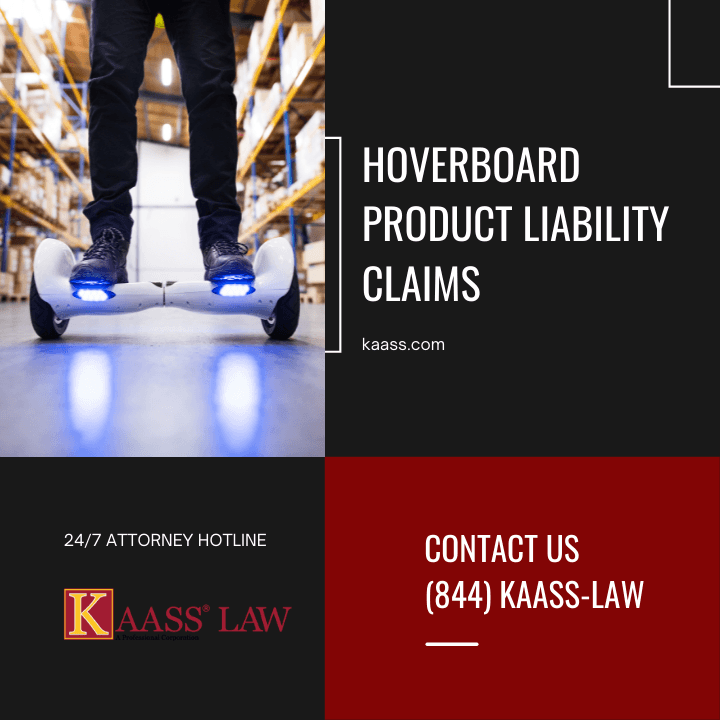
Started back in 2013, hoverboards have been in public for some time now . They began to quickly gain fame as most teenagers started purchasing the product. However, many problems arose during that time. Let's discuss Hoverboard Product Liability Claims.
A hoverboard is a way of portable transport, made to ride with only feet. There is a common term for them, which is "self-riding scooters." Hoverboards came to be the "next big thing" at the time of their release. With it being technologically so active, there came along a variety of issues with the product.
With the hoverboard being the new portable way of transit, technological reliability is highly dependent on during the use of this product. An example of a defect in technology included the hoverboard coming to an immediate stop. Now, this may not sound so bad, however, the damages it led to have been far more serious. With further elaboration, let's discuss how the hoverboard is driven. Riding a hoverboard, you must place your two feet in the two given spots. Being able to move the hoverboard forward or backward, you must lean forward and backwards, respectfully. To turn in direction, the body weight must transfer to one leg while the other maneuvers the opposite leg to start turning. This applies to both sides while you are turning. So, if someone were to be riding the hoverboard and going in a forward motion and suddenly the hoverboard comes to an immediate stop, there are a countless number of physical damages that may arise in the midst of this accident. Technology crashing may also lead to a loss of control.

Typically, dermal fillers are injected into the face, such as the forehead and lips. Dermal fillers are also used as a way to help diminish facial lines and restore volume and fullness in the face. The injection of dermal fillers has grown popular within the past few years. According to the American Society of Plastic Surgeons, there has been approximately 2.6 million dermal filler injections in 2018 alone. Unfortunately, if these injections don't go proceed as follows, they are at risk of a Products Liability Defective Dermal Filler.
According to www.fda.gov, the FDA is responsible for protecting public health by ensuring the safety, efficiency, and security of human drugs as well as medical devices that ensure the safety of the nation’s food and cosmetic supply.
Some of the more common dermal fillers include the following: calcium hydroxyapatite, hyaluronic acid, polyalkylimide, polylactic acid, and polymethyl-methacrylate microspheres.
Dermal fillers such as Injectable silicone is not approved for any aesthetic procedure. Silicone injections can lead to long-term pain and injuries such as infections, scarring, permanent disfigurement, stroke, and death.
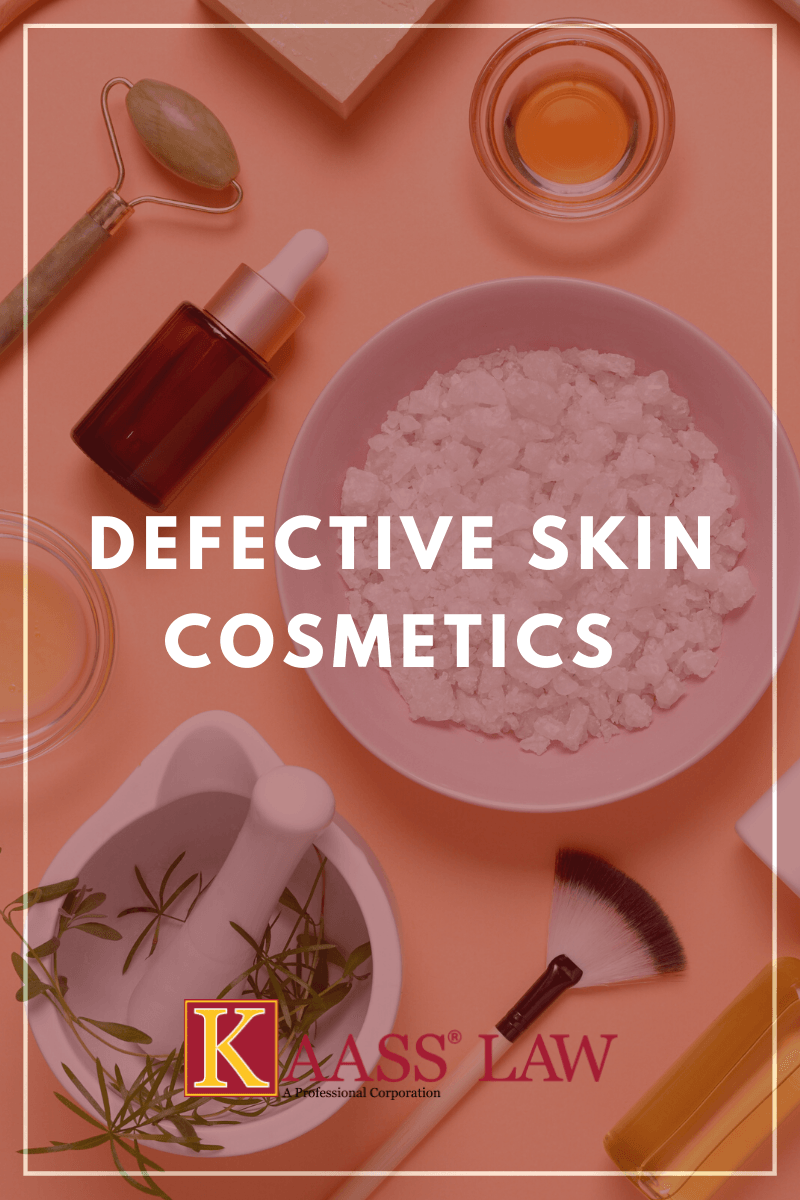
Cosmetics is a broad spectrum, covering anything from facial cleansers, moisturizers, or makeup. The two most important laws pertaining to the cosmetics market in the United States are the Federal Food and Drug Administration and the Fair Packaging and Labeling Act. However, it is unfortunate, yet it is a real thing that these products can have defective skin products.
According to www.fda.gov, the FDA is responsible for protecting public health by ensuring the safety, efficacy, and security that includes cosmetics.
According to www.fda.gov, FPLA directs the Federal Trade Commission and the Food and Drug Administration to issue regulations requiring all produced and manufacturers to include the net contents, identity of commodity, and the name and place of business of the product’s manufacturer, packer, or distributor. The disclosure of this information prevents consumer deception as to what ingredients usage in the products sold to the public.
Products become defective when there is something wrong with them, which can cause unwanted side effects or illnesses. Defects in cosmetics can lead to extremely serious reactions to the face, such as permanent scaring and infection to the eyes.
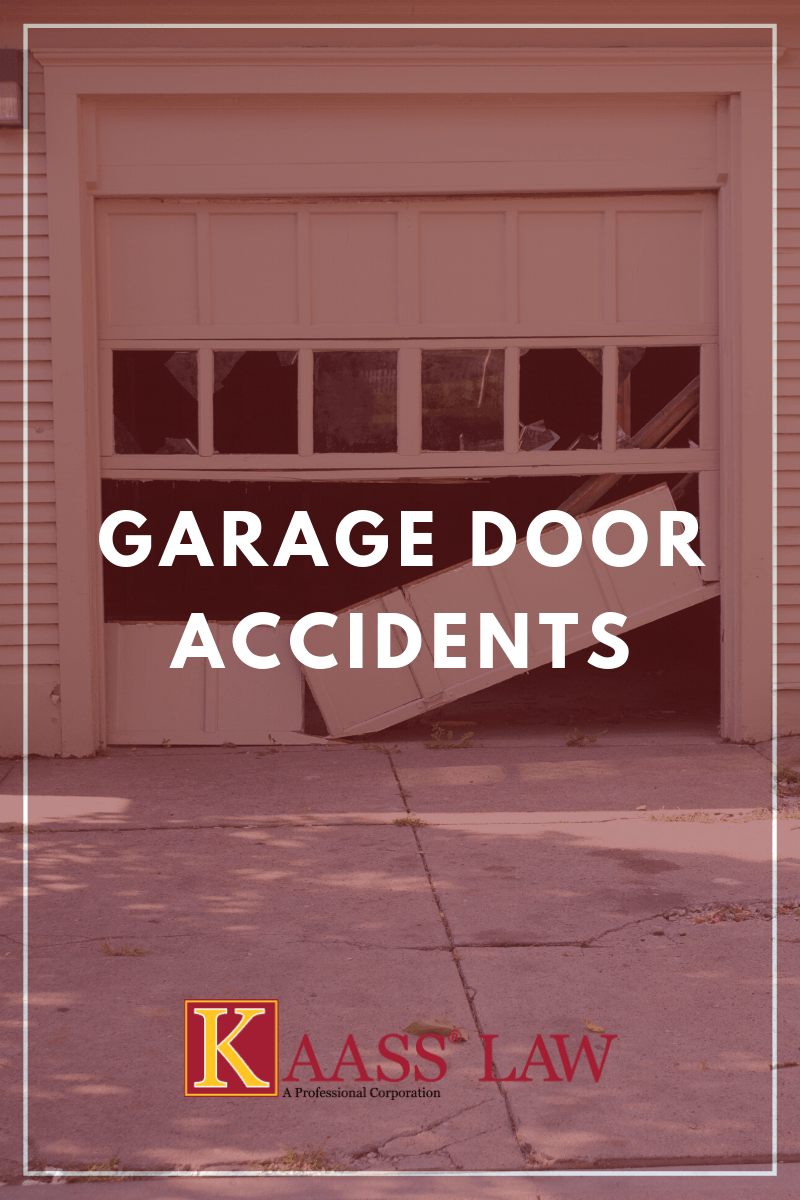
Garage door accidents are not uncommon but they can still occur due to poor installation and lack of maintenance. Whether the accident happens inside your own home, someone else’s home, or a public place, a garage door accident can be very serious. Some common garage door accidents include:
A garage door malfunctioning can cause any number of serious injuries, depending on the severity of the accident. Injuries that can be a cause by a garage door accident include:
One of the most common types of product liability claims in this state is, California failure to warn laws, cases. According to the law, a manufacturer, distributor, and other parties involved in the distribution chain of distribution are required to provide adequate warnings on a product.
The plaintiff must prove the following element to establish the failure to warn claim in California
The plaintiff must be able to prove that he used the product was something the manufacturer could have predicted but failed to warn about the potential harm of using the product in such a way. In addition to that, it is important to prove that the risks of this particular use were not obvious to you as a consumer.
To file a lawsuit for design defect you need to provide evidence that the product is defective. To file a wrongful death lawsuit the accident has to result in death. Liability will be on the manufacturer if that happens. You will need to demonstrate that the flaws were big enough for the person to be in danger. Examples of Design Flaws Include:
California law requires businesses to make any potentially hazardous components of a consumer product explicit. A product liability lawsuit can be filed if a company fails to clearly warn consumers about any harmful components.
If a manufacturer or business may be liable for punitive damages. That is if it is aware of the dangerous flaws in a product and continues to sell it. These damages are in addition to any personal injury or wrongful death damages sought for the harm caused by the product. It is best to consult with an experienced wrongful death attorney. They can help determine whether punitive damages are appropriate in your product liability lawsuit.
A wrongful death lawsuit stemming from product liability issues can be legally complex. If you have lost a loved one as a result of a defective product, do not wait to contact us. You should contact a qualified lawyer as soon as possible. At Kaass Law, we assist you in gathering the necessary evidence to support your product liability claims. We also work with you to ensure that the responsible company pays the full extent of your tragic loss. Contact our office for assistance at 310.943.1171 or visit our website for other practices.
When the user exhales this vapor into the air, bystanders can also breathe it in. By heating a liquid that typically contains nicotine, flavorings, and other compounds, e-cigarettes create the vapor which is then inhaled by users.
California product liability regulations allow us to sue manufacturers/designers as they shall be liable for any damage which the item causes to the user (in case the issues with this item functioning arose because of the manufacturer and not as a result of the negligent use by the person). However, attempting to sue the manufacturer is not always a smart option since it can be difficult to track down the producer. As a result, it would be difficult to obtain damages because third-world nations like China generally make electronic cigarettes. That's why many attorneys try to find the distributor of the e-cigarettes and file a lawsuit against him. It is crucial to demonstrate that the defendant owed you as a customer a duty of care and that this responsibility was carelessly broken, before you may file a claim.
Vapor-related product liability claims can result in seeking compensation commonly for:
If the exposure to e-cigarettes leads to the death of your family member, you are entitled to recover compensation for:
Thus, when e-cigarettes are used by a usual consumer, they shall not explode and cause serious injuries. Therefore, when such a situation happens due to injuries or death caused by electronic cigarette, you shall contact a personal injury lawyer as soon as it is possible. If you or someone you know have an injury because of an e-cigarette accident, we invite you to contact KAASS Law firm at (310) 943-1171 for a consultation on your case and further assistance.
Fitness center injuries are common and can cause serious damage to the victim. Injuries may be caused by a defect in the equipment, faulty construction, or even improper maintenance. Gym injuries are frequently caused by the following factors:
Victims of injuries sustained at a gym or fitness center can frequently recover monetary damages. You can file a personal injury lawsuit to seek compensation for your injuries. If you suffer injuries in a gym-related accident, you may recover compensation for the following:
Under California's negligence laws, a negligent party is liable for any injuries caused to another. You may not know what caused a fitness center injury accident or who was at fault. There could have been a number of factors that contributed to the accident that were not apparent at the time. Investigators may need to determine who was at fault so the injured victim can pursue compensation.
After a fitness center injury, anyone who was partially responsible for the injury may be held liable for damages. This could include anyone who directly caused the injury or anyone who failed to follow proper safety procedures. Even if you did nothing wrong, you may still face liability. You should still pursue damages if someone else contributed to your injuries. After a gym injury accident, you may hold the following parties responsible:
Many gym injuries involve trauma to the neck, spine, back, or head. These injuries can be difficult to identify, however. You may not experience severe pain after the injury and believe that nothing is wrong. Some people are also tempted to "tough it out" or "walk it off." However, you should not take any chances with serious head, neck, or back injuries that could result in long-term problems. You should seek medical attention immediately following a gym injury. Even if you are unsure whether you require medical attention, you should consult with your doctor. There are many ways to prevent these injuries from happening including wearing supportive shoes for any type of exercise, getting proper instruction on how to use machines before using them alone, stretching before exercising to reduce soreness later on in the day and warming up with a five-minute jog or walking session before beginning an intense workout. Following a gym injury, you may want to obtain contact information from anyone who witnessed the accident. If there was an equipment malfunction, ask the gym to preserve the faulty equipment so an expert can inspect it during the investigation. Be sure to take photos of the area around the accident, including any obstacles or conditions that may have contributed to your injury. Pictures will be of benefit to your case.
If you or someone you know has been involved in a personal injury at a fitness center, please feel free to contact KAASS Law by calling 310.943.1171. Our team of experienced attorneys will be sure to get you the compensation you need for the severity of your case.
Product defects can determine by: (1) manufacturing defect; (2) design defect; or (3) warning defect. The mere fact that a plaintiff suffered an injury from the normal use of a product does not itself establish that the product was defective. Hennigan v. White, 199 Ca.App.4th 395 (Ca. Ct. App. 2011). For example, a plaintiff who suffers a head injury while wearing a motorcycle helmet in its normal use is not, by itself, sufficient to establish a claim for products liability. Instead, there has to be some kind of legal defect in the motorcycle helmet.
Manufacturing defects are most common. Strict products liability for a manufacturing defect can be found in two scenarios: (1) when the product left the manufacturer’s control, it differed from the manufacturer’s intended result or (2) when the product left the manufacturer’s control, it differed from apparently identical products of the same manufacturer. Barker v. Lull Engineering Co., Inc., 20 Ca.3d 413 (Ca. 1978). Additionally, the defective product must have been used in a manner reasonably foreseeable by the manufacturer and yet still caused the plaintiff’s injury. Id. The following scenario highlights the “reasonably foreseeable use” element of a manufacturing defect claim: Plaintiff wears her motorcycle helmet on backwards, shorty thereafter gets into a collision due to her vision obstruction. A defect in the face shield of the helmet causes injury to the back of her head. Plaintiff would not be able to maintain a products liability case against a motorcycle helmet manufacturer because, even though the face shield was defective, she was not using the helmet in a manner that would be reasonably foreseeable by the manufacturer. California’s Civil Jury Instructions require that in order for a plaintiff to establish a claim for manufacturing defect, all of the following must be proven: (1) that the defendant manufactured or sold the product at issue; (2) that the product contained a manufacturing defect when it left the defendant’s possession; (3) that the plaintiff was harmed; and (4) that the product defect was a substantial factor in causing the plaintiff’s harm. CACI No. 1201. “A product will be considered as containing a manufacturing defect if the product differs from the manufacturer’s design or specifications or from other typical units of the same product.” CACI No. 1202.
In terms of analyzing a plaintiff’s claim under the consumer expectation test, a jury will be instructed that the following elements must be proven before judgment can be awarded in favor of the plaintiff: (1) that the defendant manufactured or sold the product (2) that the product did not perform as safely as an ordinary consumer would have expected it to perform when used or misused in an intended or reasonably foreseeable way; (3) that the plaintiff was harmed and; (4) that the product’s failure to perform safely was a substantial factor in causing the plaintiff’s harm. CACI No. 1203. Alternatively, when reviewing a claim for design defect under the risk-benefit test, a plaintiff must prove: (1) that the defendant manufactured or sold the product; (2) that the plaintiff was harmed and; (3) that the product’s design was a substantial factor in causing the plaintiff’s harm. CACI No. 1204. If a plaintiff can prove these three facts, then the jury is instructed to decide in favor of the plaintiff unless the defendant can prove that the benefits of the product’s design outweigh the risks of the design. Id. In deciding whether the benefits outweigh the risks, the jury is instructed to consider the following factors: (1) The gravity of the potential harm resulting from the use of the product; (2) The likelihood that the harm would occur; (3) The feasibility of an alternative design at the time of manufacture; (4) The cost of an alternative design; (5) The disadvantages of an alternative design; and (6) Any other relevant factors. Id.
A plaintiff must prove all of the following to establish a claim for warning defect: (1) that the defendant manufactured or sold the product; (2) that the product has potential risks or side effects that were known or knowable in light of scientific or medical knowledge at the time of manufacture or sale; (3) that the potential risks or side effects presented a substantial danger when the product is used or misused in an intended or reasonably foreseeable way; (4) that ordinary consumers would not have recognized the potential risks or side effects; (5) that the defendant failed to adequately warn or instruct of the potential risks or side effects; (6) that the plaintiff was harmed and; (7) that the lack of sufficient instructions or warnings was a substantial factor in causing the plaintiff’s harm. CACI No. 1205.
The defective product must have actually caused the plaintiff’s resulting injury. Horn v. General Motors Corp., 17 Cal.3d 359 (Ca. 1976). It is not enough that the defect played some role in causing the injury, however, the defect must have been a substantial factor that lead to the plaintiff’s injury. Soule at 572. In fact, a defect is considered legally and factually irrelevant if it played no part in bringing about the injury. Id. (Holding that if the external force of a vehicle accident was so severe that it would have caused identical injuries in spite of the defect in the vehicle’s collision safety, then the defect cannot be considered a substantial factor in bringing about the plaintiff’s injury.) Practically, in cases of motorcycle helmet product liability, this would mean that if a plaintiff suffered a head injury during a motorcycle crash such that was so severe the outcome would have been the same regardless of whether or not the plaintiff was wearing a helmet, then a claim cannot be made for products liability even if the helmet was found to be defective.
Injury must occur. In terms of products liability, a defendant can be strictly liable for physical injuries which connects to persons or property. As the old saying goes, "No harm no foul." However, it is important to note that a plaintiff cannot prevail on a claim of strict liability for purely economic loss. Absent a claim of personal injury or damage to other property, there is no strict liability for loss of value, cost of repair, or replacements of the defective product. Jimenez v. Superior Court, 29 Cal.4th 473 (Ca. 2002). Additionally, California courts have held that the injury suffered by plaintiff must have actually occurred, meaning it is insufficient to claim only the likely potential for injury. KB Home v. Superior Court, 112 Cal.App.4th (Ca. Ct. App. 2003).
A broad range of plaintiffs may recover under the theory of product liability. Recovery from injury is not limited to the first purchaser of the product, but rather to anyone whose injury was reasonably foreseeable. Elmore v. American Motors Corp., 70 C2d 578 (Ca. 1969). This can include innocent bystanders injured by defective automobiles or employees injured by defective equipment owned by their employers. See Elmore v. American Motors Corp., supra, 70 Ca.2d 586 (Ca. 1969). See Barker v. Lull Engineering Co., Inc., 20 Cal.3d 413 (Ca. 1978). A practical example of this concept in a motorcycle helmet product liability case can is as follows: Biker Son purchases a motorcycle helmet for Biker Dad’s birthday. Biker Dad has a motorcycle accident while wearing the helmet and suffers a brain injury as the result of a design defect in the helmet. Although Biker Dad was not the direct purchaser of the helmet, he is a proper plaintiff who can bring suit against the helmet manufacturer.
In instances of product liability, the manufacturer is normally the most obvious defendant, but they are far from the only defendant available. Originally, the doctrine of strict liability only applied to the manufacturers of defective products. Greenman v. Yuba Power Products, Inc., 59 Cal.2d 57 (Ca. 1963). However, over time, California courts have expanded the doctrine to reach parties involved in the commercial chain of distribution of the defective product. Peterson v. Superior Court, 10 Cal.4th 1185 (Ca. 1995). This means that not only the manufacturer of a defective motorcycle helmet can be liable in a claim of products liability, but also the distributor and the retailer can be liable as well.
Although there are several potential defendants available to the plaintiff in a motorcycle helmet products liability action, not everyone can be under the doctrine of a lawsuit. You will note that manufacturers, distributors, and retailers have one common theme that exists between them – they are all involved in the chain of custody of a product. One party that cannot hold liability under the doctrine of products liability is a party who provides a service. Strict products liability will always involve a tangible product that places into the stream of commerce, so if the potential defendant is offering a service, rather than a product to the plaintiff, the plaintiff cannot bring suit against the service provider under the theory of products liability.Gagne v. Bertran, 43 Cal.2d 481 (Ca. 1954). For example, a plaintiff would most likely not be able to bring a products liability suit against a business that provides motorcycle riding lessons, even if the business provided the plaintiff with a defective helmet to use during the lesson. The plaintiff may be able to sue under another legal theory, but not products liability. In some cases there may be a dispute over whether the business is providing a product or services, and in those instances, the court must determine whether the dominant role of the defendant should identify as a service or a sale. Murphy v. E.R. Squibb & Sons, Inc., 40 Cal.3d 672 (Ca. 1985).
Product liability among defendants is joint and several, meaning that any defendant established by the plaintiff as involved in the stream of commerce of the defective product is responsible for all of plaintiff’s damages.
Below is a list of various California jury verdicts and settlements for cases regarding product liability connection to a defective motorcycle helmet:
• Esposto v. City and County of San Francisco; State of California; Shoei Helmet Corporation; Paulson Manufacturing Company; David Golden Motorcycles, Inc., JVR No. 43984 Superior Court, San Francisco County (1986). A plaintiff in his mid-30s is a victim in motorcycle accident, resulting in becoming a quadriplegic. The plaintiff sued the city of San Francisco and State of California arguing that poor road conditions contributed to his accident. Additionally, the plaintiff sued the motorcycle manufacturer and retailer and claimed that the bike, helmet and visor were defective. The manufacturer and retailer maintained that the products were not defective. The plaintiff eventually settled for a total amount of $865,000. The city and county paid the large bulk of the settlement.
• Sheryl Suglia v. Nexl Sports Products, LLC, Lifestyle Custom Cycles, Gilbert J. Williams and Mark Skolnick Jr., 2009 WL 3260089, Superior Court, Los Angeles County (2009). Plaintiff and her late husband got into a collision with their motorcycles, head-on, by a drunk driver, resulting Plaintiff having severe injuries the passing of her husband .At the time of the crash, plaintiff and her husband were wearing “beanie” type helmets manufactured by Nexl Sports Products and sold by retailer Lifestyle Cycles.The particular "beanie" type helmets did a recall in 2003 for failing to pass Department of Transportation penetration and impact-absorption tests. The plaintiff sued the manufacturer and retailer under the theory of strict products liability and negligence, claiming that both defendants should have made her aware of the product recall. Plaintiff sought more than $2 million in economic damages. The jury found in favor of the defense, reasoning that the impact between the car and motorcycle was so major that no helmet could have prevented the resulting injuries.
• Sally Doe v. Daytona Helmets Inc.; Jeffrey McKinley; Big Dawg Custom Cycles & Rodney Chatwin, individually, 2006 WL 4589449, Superior Court, Alameda County (2006). Plaintiff is dealing with head injuries due to a motorcycle accident. One of the claims brought by plaintiff was for products liability against the motorcycle helmet manufacturer. The crux of plaintiff’s argument was that the helmet failed to meet DOT safety requirements, despite the fact that it displayed a DOT compliant sticker. The parties reached a settlement agreement and the plaintiff received approximately $1 million from the helmet manufacturer and an additional $1 million from the remaining defendants.
• Grant Thor and Sara Guerrero v. Kerr Leathers, Inc., Sunright International and Visalia Harley-Davidson, 2007 WL 2872337, Superior Court, Tulare County (2007). Plaintiff's late father received severe head injuries due to an motorcycle accident, resulting his late fathering from passing away. Plaintiff brought a products liability suit against the manufacturer. The retailer of the helmet claiming that it was defective after it failed a “retention” test by the Federal Government. The defendants recalled the helmet, but there was no evidence of the plaintiff’s father ever receiving notice of the recall. Plaintiff settled for approximately $2 million.
• Riley v. Grandon, 5 Trials Digest 17th 7, Superior Court, Riverside County (2013). The Decedent was a motorcycle passenger when the bike struck a speedbump, lost control, and crashed. Unfortunately, the Decedent fractured her skull and died as a result of her injuries. The Decedent’s estate brought suit against the driver of the motorcycle under a theory of negligence and also alleged strict product liability against the manufacturer and retailer of the helmet the Decedent was wearing at the time of the accident. At the end, the plaintiff claimed that the helmet did not meet motorcycle safety standards. Plaintiff reached a $1 million settlement with the helmet retailer. THIS ARTICLE IS FOR EDUCATIONAL PURPOSES ONLY, NO ATTORNEY CLIENT PRIVLIGE, CONSULT, OR ADVICE. PLEASE CONSULT WITH A PROFESSIONAL. Contact KAASS Law for further assistance and representation!
Some issues with the hoverboard include:
There are several possible hoverboard product defects that can exist causing injury. There are 3 theories that a product liability lawsuit can be brought under. The 3 product liability theories include:
California hoverboard or electrically motorized board riders should be aware that there are California laws that govern its use. Some of these California hoverboard laws include but are not limited to:
If you or someone you know has been injured and think this can potentially be a Hoverboard Product Liability Claim, don’t hesitate to contact our Los Angeles personal injury attorney today at (310) 943-1171 for a free consultation and case review.
Products become defective when there is something wrong with them, which can cause unwanted side effects or illnesses. Defects in dermal fillers can lead to extremely serious reactions to the face, such as blindness, stroke, and vision abnormalities. Furthermore, the risks associated with unapproved uses of dermal fillers by the FDA or unapproved products may be more severe.
Individuals can protect themselves from potential injuries by not purchasing dermal filler products online. Oftentimes, such products can be counterfeit or not approved for use in the United States. In some cases, the FDA may not have reviewed and or approved the use of certain dermal fillers to be used for all locations of the body.
If you have been hurt by a dermal filler and would like to seek legal representation, contact our Los Angeles personal injury attorney at (310) 943-1171 for a consultation. Our attorneys evaluate the details of your case and will let you know what to expect and how you can proceed forward. https://youtu.be/FHdO-1AqecM
Cosmetic companies can be hold accountable should they not adhere to product liability standards in producing and manufacturing their products. Should a company fail to use a reasonable standard of care, a case against them may be brought.
If you have been hurt by a cosmetic product and would like to seek legal representation, contact our California products liability attorneys at (310) 943-1171 for a consultation. Our attorneys evaluate the details of your case and let you know what to expect and how you can proceed.
When a plaintiff is injured by the use of cosmetics, he or she may be able to file a product liability lawsuit. In California, the law provides several grounds for filing such a lawsuit. 1. Design defect. A manufacturer can be held liable if a cosmetic product:
This is especially true if the ingredients have not been adequately tested. Also when used in concentrations that exceed safe limits established by FDA standards. 2. Manufacturing Defect. Even if a product has a proper design, a manufacturing error can still lead to a lawsuit.
Also considered manufacturing defects. 3. Inadequate warning. Cosmetic companies have a duty to warn of potential side effects. This is especially true when ingredients may cause reactions in people with sensitive skin or allergies. Inadequate warnings on packaging can lead to a lawsuit for failure to warn. Such cases are particularly relevant to the use of:
Injuries from defective cosmetics can be quite severe. For example:
Some of these effects may require long-term treatment by:
If the damage has affected quality of life or caused emotional distress.
The following parties can be liable for defective cosmetics:
Affected consumers may seek compensation for:
In order to successfully file a claim, it is important to gather evidence:
If possible, get witnesses to confirm the use of the product and the consequences.
If you and or someone you know have been injured by substandard cosmetics, it is important to seek qualified legal help as soon as possible. Please contact KAASS LAW today! We can help:
We fight to make sure injured victims receive full compensation for their injuries. Call (310) 943-1171 for a free consultation with an experienced product liability attorney.
To figure out who is liable in a garage door accident, it is crucial to know what caused the accident or any malfunction of the garage door. Among those that can be a consideration in a liable party include:
If you file a lawsuit after a garage door accident injury, then compensations are applicable for damages or losses due to the accident. For instance, these include both economic and non-economic damages, including:
To file a lawsuit for a garage door accident, a plaintiff must prove that the injury occurred as a result of:
In such cases, both negligence and strict liability may apply. If improper installation caused the accident, the property owner may face liability.
Under California law, property owners have a duty to maintain their property in a safe condition. This includes ensuring that garage doors are in working and safe condition. If an owner was aware of a defective gate and failed to repair it, he or she may be found guilty of negligence. Liability can also arise if the victim was on the property with permission. For example, as a guest.
In cases where the accident was caused by a defect in the design or mechanism of a garage door, the manufacturer or seller may be held liable. California law provides for strict liability for defective products. This means that a plaintiff does not have to prove that the manufacturer was negligent. He or she need only prove the existence of the defect and the causal connection between the defect and the injury. In addition, distributors and retailers may also be liable under certain circumstances.
To increase the chances of a successful case, it is important to gather and preserve as much evidence as possible. This includes:
The more complete the information provided, the greater the likelihood of a successful claim.
The statute of limitations under California law should be considered. Typically, an injured person has two years from the date of injury to file a personal injury lawsuit. If the product has a defect, the time frame may change. Missing the statute of limitations may result in the loss of your right to recover damages, so it is important to act in a timely manner.
Because garage door injury cases can involve multiple sides of a cause of action, legal assistance is crucial. The attorneys at KAASS LAW are experienced in handling these types of cases and will help determine the best strategy to protect the injured party's interests.
If you or a loved one have been injured in a garage door accident, we invite you to contact our office at (310) 943-1171 for a free consultation with a Los Angeles garage door personal injury lawyer. Our attorneys will help you determine the liable party and proceed accordingly.
Under California product liability laws, the warning of harm or risk of injury must be:
The manufacturer/distributor is under a duty to stay informed about its product and he can't escape legal liability for a failure to warn just because he was uninformed of the risk. In case the manufacturer/distributor could have discovered the risk through investigation, research, or testing he will be liable for failing to warn the consumer about a risk he should have reasonably known about. Furthermore, if any new information is discovered, it is also the manufacturer's responsibility to warn consumers that have already purchased a product about the new risks.
Under California’s statute of limitations, the plaintiff generally has two years from the date of the injury to bring the claim against the manufacturer/distributor. This period can be extended in case:
The plaintiff can be able to recover the following:
https://www.youtube.com/watch?v=V6GTQa0qmH0&ab_channel=KaassLaw