Boating Accidents: Operator Negligence and Equipment Failures
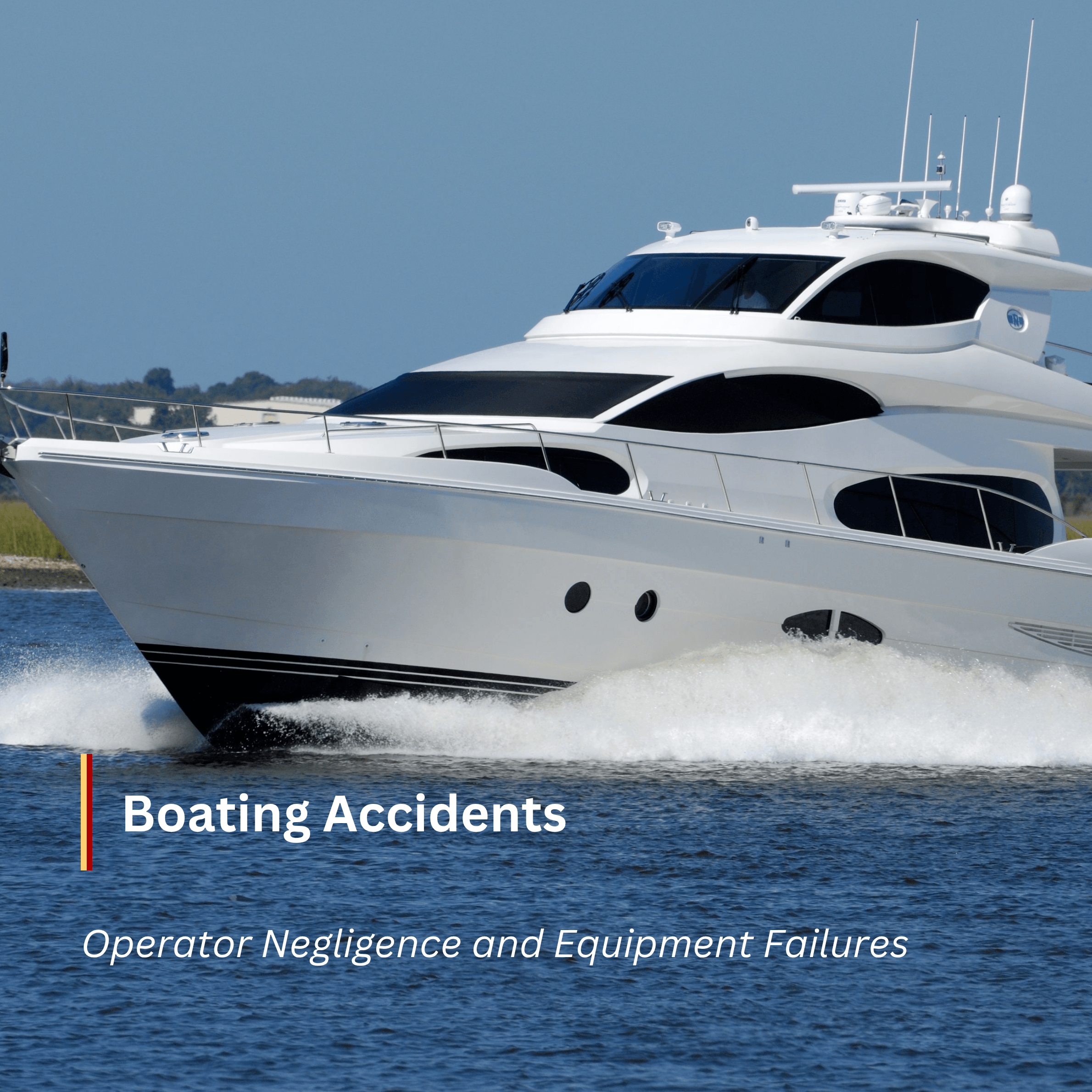
Boating is meant to be a fun and exciting experience for families, friends, and surrounding community members. However, when inadequate equipment and proper safety precautions are not taken, hazards and injuries may occur. Understanding the dangers of poor boating practices and the steps to take to reduce the risk of injuries is important in maintaining one’s safety and the safety of others the next time you are on the water.
Understanding Boating Accidents
Boating accidents can happen for many reasons. Some involve collisions between vessels, while others involve passengers falling overboard, boats striking docks or fixed objects, fires, flooding, capsizing, or injuries involving propellers. Potential contributing factors may include, but are not limited to, the following.
- Operator inattention
- Excessive speed
- Alcohol or drug impairment
- Inexperienced operation
- Failure to maintain a proper lookout
- Unsafe turns or navigation
- Failure to follow boating rules
- Poor weather or water conditions
- Mechanical failure
- Defective boat components
- Inadequate maintenance
- Missing or improperly maintained safety equipment
The circumstances surrounding each accident are different. In some cases, more than one person or company may have contributed to the incident.
Negligent Behaviors
Boat operators usually have a responsibility to operate their vessels with reasonable care under the given circumstances. This includes paying attention to surrounding vessels, maintaining an appropriate speed, following applicable navigation requirements, and responding appropriately to changing conditions. Alcohol can also become an important factor in boating accident investigations. Alcohol may affect judgment, coordination, reaction time, and the ability to safely navigate a vessel.
Whether an operator was legally negligent depends on the specific facts of the incident. Evidence such as witness statements, photographs, law enforcement reports, vessel data, and boating records may help investigators understand what happened.
Awareness of your Surroundings
Maintaining awareness of the surrounding environment is an important part of safe boating. Operators should watch for other boats, swimmers, personal watercraft, docks, floating objects, and changing water conditions. Distractions may include mobile phones, conversations with passengers, adjusting onboard equipment, or other activities that take the operator's attention away from navigation.
Inadequate Equipment
Not every boating accident results from operator conduct. Sometimes the vessel or one of its components may malfunction. Potential equipment problems may involve the following.
- Steering systems
- Engines
- Fuel systems
- Electrical components
- Throttle controls
- Propellers
- Bilge pumps
- Navigation lights
- Fire suppression equipment
- Safety equipment
Determining why equipment failed often requires more than simply identifying the damaged component. The investigation may need to consider whether the equipment was defective when manufactured, improperly installed, inadequately repaired, or poorly maintained.
Product Liability
Some boating accidents may involve questions of product liability. A manufacturer, distributor, or another party associated with a product may potentially face liability when a defective product contributes to an injury, depending on the circumstances and applicable law. Potential defects can involve the design of a product, the manufacturing process, or warnings and instructions provided with the product.
As a result, preserving the boat and damaged components after an accident can be important. Repairing, modifying, or disposing of the vessel too quickly may make it more difficult to determine whether a mechanical or product-related problem contributed to the incident.
Maintenance
Mechanical failure does not necessarily mean that a product was defective. Boats require regular inspection and maintenance. Engines, fuel lines, steering systems, batteries, electrical systems, and safety equipment may deteriorate over time.
If an owner knew or reasonably should have known about a mechanical problem but continued using the vessel without addressing it, maintenance practices may become relevant to the liability analysis. Maintenance records, repair invoices, inspection reports, and prior complaints involving the vessel may help determine whether a known problem existed before the accident.
Who Will Be Held Accountable?
Liability following a boating accident depends on the facts and applicable law. Potentially responsible parties may include but are not limited to the following individuals.
- A boat operator
- A vessel owner
- A rental company
- A maintenance provider
- A manufacturer
- Distributor
California also follows comparative fault principles, which may affect how responsibility and damages are distributed when multiple parties contributed to an incident.
Legal Support
Victims may benefit from seeking legal guidance and support after suffering injuries from a boating accident as a way to better understand their rights and legal options moving forward. Often, these types of water accidents may present significant dangers and cause serious injuries. A qualified attorney may be able to review the specific facts of your case and provide you with the support you need to get back on the road to recovery.
How the KAASS LAW Attorneys Can Help
The professional personal injury attorneys at KAASS LAW are ready and determined to help victims and family members understand the crucial steps to take after being involved in a boating accident. Our legal team wants to make sure you are aware of your rights and applicable laws that may be beneficial to you throughout the claims process. Call KAASS LAW today for a confidential consultation.
Related Articles
View All Posts
Learn about shopping mall accidents, property owner liability, injured visitors' rights, and legal options available under California law.
Learn who may be responsible for elevator accidents caused by poor maintenance, how liability is determined, and what injured passengers can do next.

Learn who may be responsible for injuries caused by uneven sidewalks in California and how liability may depend on property control and local laws.