Defective Helmets: When Safety Equipment Fails to Protect
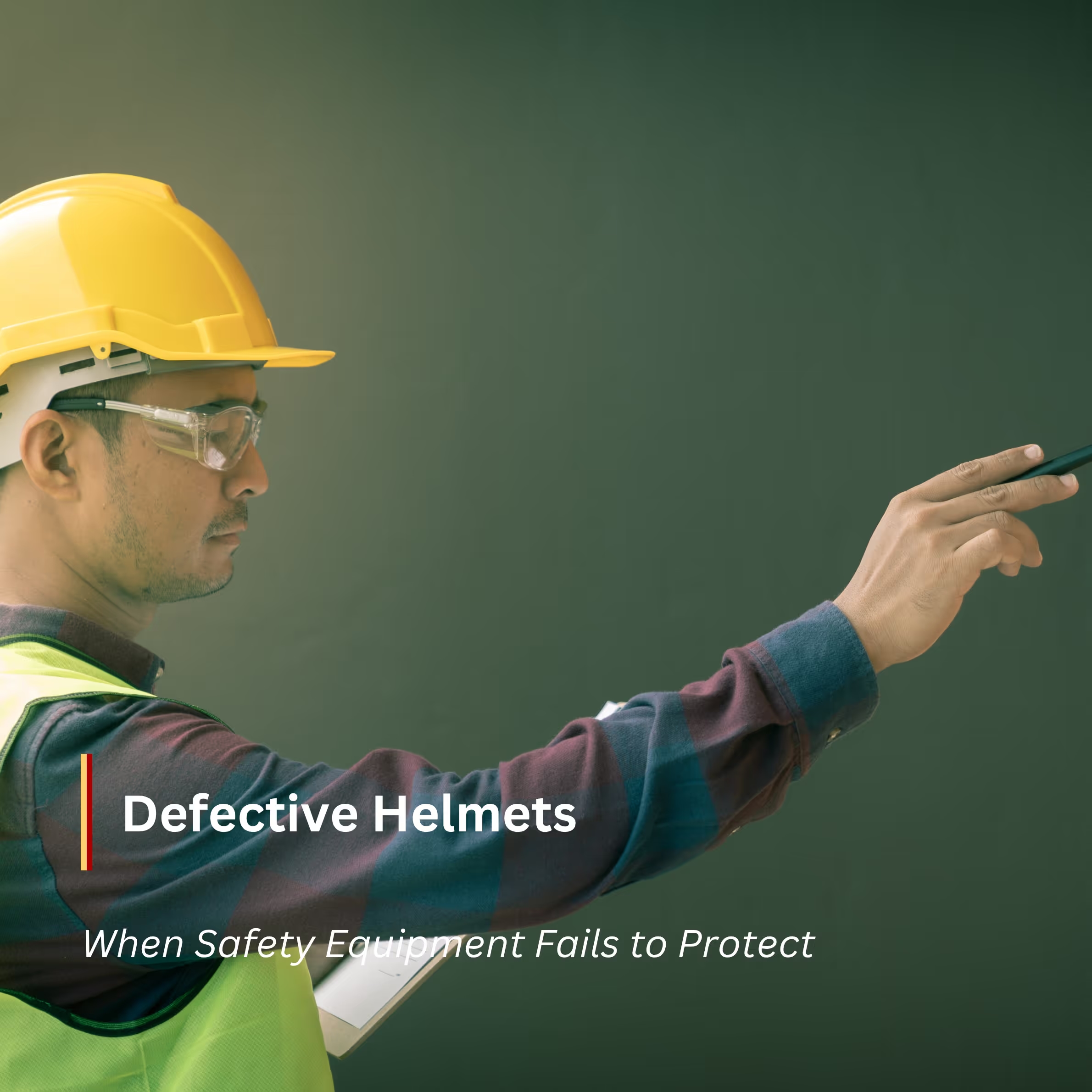
Helmets are meant to provide a sense of safety and security for individuals, especially children. However, when helmets malfunction or are not properly maintained, serious injuries may occur. Understanding your rights and the necessary steps to take to work towards recovery is crucial to maintaining your safety the next time you need to wear a helmet.
Defective Helmets
A helmet can potentially be defective in several ways. California product liability claims generally examine whether a product had a manufacturing defect, design defect, or inadequate warnings or instructions.
Manufacturing Defects
A manufacturing defect occurs when an individual product does not conform to its intended design or is very different from other properly manufactured products in the same line.
Design Defects
In some cases, the issue may involve the helmet's underlying design rather than a mistake during manufacturing. Potential concerns could include the following.
- Improper protection
- A retention system that does not keep the helmet securely positioned
- Structural weaknesses
- Design characteristics that affect how impact forces are absorbed or distributed
Whether a particular design is legally defective depends on the facts and circumstances of the case and may require evaluation by engineers or other qualified professionals.
Inadequate Warnings or Instructions
Manufacturers and sellers may also have responsibilities regarding warnings and instructions for reasonably possible risks associated with their products. Helmet instructions may address issues such as proper sizing, correct positioning, strap adjustment, replacement after an impact, maintenance, and limitations on the types of activities for which the helmet was designed. If important safety information was missed, failure-to-warn issues may become relevant to a product liability investigation.
Potential Issues
Potential helmet defects can involve numerous components. Examples may include the following.
- Chin straps or retention systems that break or release unexpectedly
- Buckles that fail to remain secured
- Protective foam that cracks, separates, or does not perform as intended
- Shell materials that fracture unexpectedly
- Improperly attached interior components
- Defective adhesives or bonding materials
- Sizing or fit systems that do not operate properly
- Missing or inadequate safety instructions
- Products that do not perform consistently with applicable representations or specifications
The existence of one of these issues does not automatically establish legal liability. A product defect usually must also have contributed to the person's injury.
Types of Injuries
When a helmet does not provide its intended level of protection, the individual wearing it may experience significant injuries. Depending on the circumstances and severity of the accident, these may include, but are not limited to, the following.
- Concussions
- Traumatic brain injuries
- Skull fractures
- Facial injuries
- Dental injuries
- Other forms of physical trauma
In addition, an injury occurring while someone was wearing a helmet does not necessarily mean the helmet was defective. As a result, a product liability investigation may examine both the accident itself and the condition and performance of the helmet.
Who is Liable?
After a defective helmet accident, potentially liable parties may include the following individuals.
- Helmet manufacturers
- Distributors
- Retailers
- Importers
- Other parties involved in producing or supplying the product
California product liability law recognizes several theories under which manufacturers or sellers may potentially be held responsible for injuries caused by defective products. Determining which parties may have legal responsibility requires an examination of how the helmet was designed, manufactured, distributed, sold, and used.
Preserving Evidence
Preserving evidence can be especially important after an accident involving safety equipment. If possible, an injured person should avoid throwing away, repairing, modifying, or continuing to use the helmet involved in the accident. The helmet itself may become important evidence for evaluating whether a component broke, separated, deteriorated, or failed completely. Other potentially relevant evidence may include, but is not limited to, the following.
- Photographs of the helmet and the accident scene
- Purchase receipts and serial numbers
- Instruction manuals
- Medical records
- Witness information
- Records regarding prior recalls or safety notices
In addition, qualified experts may be able to inspect the helmet and evaluate its materials, construction, design, or performance.
When an Item is Recalled
A product recall may provide relevant information about known safety concerns, but a recall does not automatically establish liability in every individual case. In addition, the absence of a recall does not necessarily mean that a specific helmet could not have been defective.
Individuals can check federal safety agencies and manufacturer notices to determine whether a specific helmet model has been associated with a recall or safety warning. If a recall applies, documentation identifying the specific model, production date, lot number, or serial number may be useful when investigating the circumstances surrounding an injury.
Speaking to a Legal Professional
It may be beneficial to speak to a legal professional after suffering injuries from a defective helmet accident in order to understand your rights and responsibilities moving forward. Oftentimes, these types of accidents may cause serious injuries, leaving individuals in a state of fear. Legal support may minimize that fear and provide a sense of security for the future.
The Legal Team At KAASS LAW
The qualified personal injury attorneys at KAASS LAW are ready to help victims understand their rights and responsibilities for their personal injury claims. Our legal team may be able to review the specific facts of your case, speak to insurance companies, and help you understand the legalities throughout the claims process. Call KAASS LAW today for a confidential consultation.
Related Articles
View All Posts
Learn who may be responsible for elevator accidents caused by poor maintenance, how liability is determined, and what injured passengers can do next.

Learn who may be responsible for injuries caused by uneven sidewalks in California and how liability may depend on property control and local laws.
Learn common causes of bike lane accidents, who may be liable, and what legal options may be available to injured California bicyclists.