

Cosmetics is a broad spectrum, covering anything from facial cleansers, moisturizers, or makeup. The two most important laws pertaining to the cosmetics market in the United States are the Federal Food and Drug Administration and the Fair Packaging and Labeling Act. However, it is unfortunate, yet it is a real thing that these products can have defective skin products.
According to www.fda.gov, the FDA is responsible for protecting public health by ensuring the safety, efficacy, and security that includes cosmetics.
According to www.fda.gov, FPLA directs the Federal Trade Commission and the Food and Drug Administration to issue regulations requiring all produced and manufacturers to include the net contents, identity of commodity, and the name and place of business of the product’s manufacturer, packer, or distributor. The disclosure of this information prevents consumer deception as to what ingredients usage in the products sold to the public.
Products become defective when there is something wrong with them, which can cause unwanted side effects or illnesses. Defects in cosmetics can lead to extremely serious reactions to the face, such as permanent scaring and infection to the eyes.
Cosmetic companies can be hold accountable should they not adhere to product liability standards in producing and manufacturing their products. Should a company fail to use a reasonable standard of care, a case against them may be brought.
If you have been hurt by a cosmetic product and would like to seek legal representation, contact our California products liability attorneys at (310) 943-1171 for a consultation. Our attorneys evaluate the details of your case and let you know what to expect and how you can proceed.
When a plaintiff is injured by the use of cosmetics, he or she may be able to file a product liability lawsuit. In California, the law provides several grounds for filing such a lawsuit. 1. Design defect. A manufacturer can be held liable if a cosmetic product:
This is especially true if the ingredients have not been adequately tested. Also when used in concentrations that exceed safe limits established by FDA standards. 2. Manufacturing Defect. Even if a product has a proper design, a manufacturing error can still lead to a lawsuit.
Also considered manufacturing defects. 3. Inadequate warning. Cosmetic companies have a duty to warn of potential side effects. This is especially true when ingredients may cause reactions in people with sensitive skin or allergies. Inadequate warnings on packaging can lead to a lawsuit for failure to warn. Such cases are particularly relevant to the use of:
Injuries from defective cosmetics can be quite severe. For example:
Some of these effects may require long-term treatment by:
If the damage has affected quality of life or caused emotional distress.
The following parties can be liable for defective cosmetics:
Affected consumers may seek compensation for:
In order to successfully file a claim, it is important to gather evidence:
If possible, get witnesses to confirm the use of the product and the consequences.
If you and or someone you know have been injured by substandard cosmetics, it is important to seek qualified legal help as soon as possible. Please contact KAASS LAW today! We can help:
We fight to make sure injured victims receive full compensation for their injuries. Call (310) 943-1171 for a free consultation with an experienced product liability attorney.
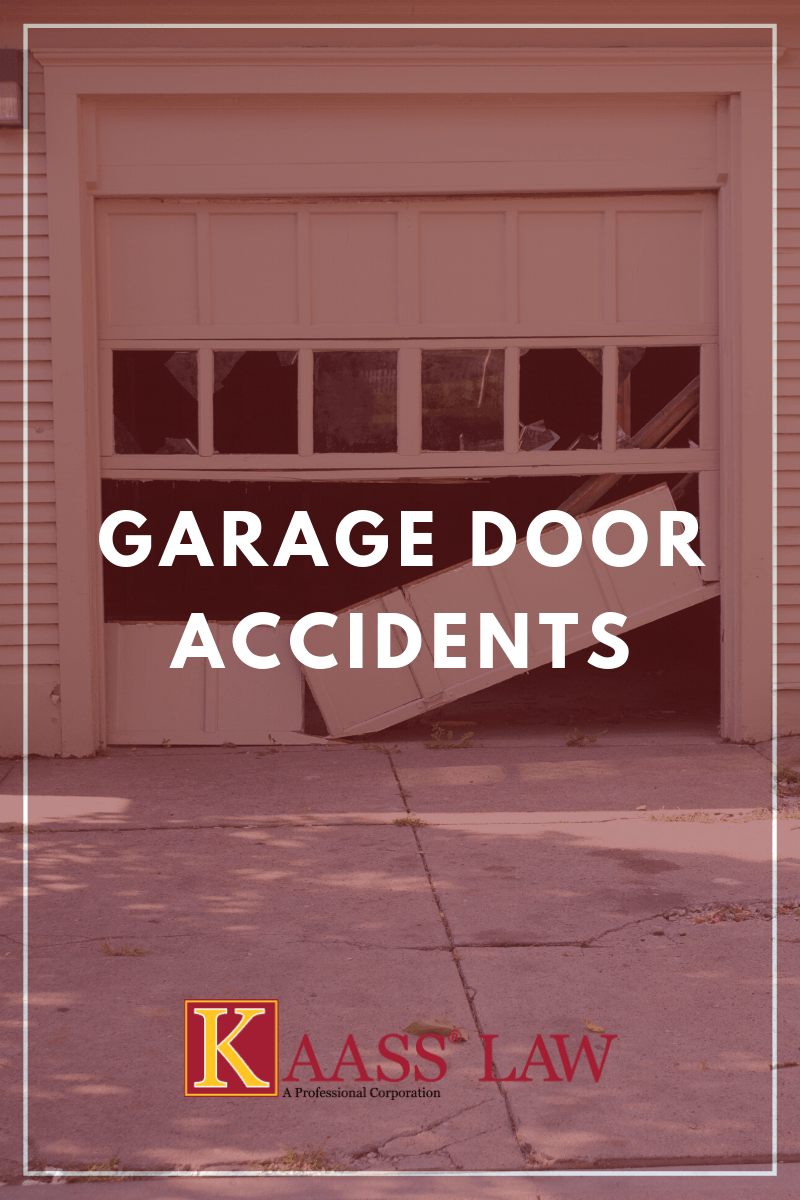
Garage door accidents are not uncommon but they can still occur due to poor installation and lack of maintenance. Whether the accident happens inside your own home, someone else’s home, or a public place, a garage door accident can be very serious. Some common garage door accidents include:
A garage door malfunctioning can cause any number of serious injuries, depending on the severity of the accident. Injuries that can be a cause by a garage door accident include:
One of the most common types of product liability claims in this state is, California failure to warn laws, cases. According to the law, a manufacturer, distributor, and other parties involved in the distribution chain of distribution are required to provide adequate warnings on a product.
The plaintiff must prove the following element to establish the failure to warn claim in California
The plaintiff must be able to prove that he used the product was something the manufacturer could have predicted but failed to warn about the potential harm of using the product in such a way. In addition to that, it is important to prove that the risks of this particular use were not obvious to you as a consumer.

Exercise Equipment Product Liability is based on equipment that are very prone to causing injuries that result from their defects. Whether the accident happened at a gym, or at your own home, those involving exercise equipment can result in some of the most devastating injuries that arise from their defects, due to the nature of these products. These products cause tens of thousands of injuries every year, and some specific types of exercise equipment, such as treadmills, are among the most recalled products in America. https://www.youtube.com/watch?v=Jk41OYNcWV4&feature=youtu.be
Creators of defective exercise equipment are liable for the damages when it is clear that the injuries or other damages arose directly due to the product defect. These damages can be to property that you own, or bodily damages in the form of injuries.
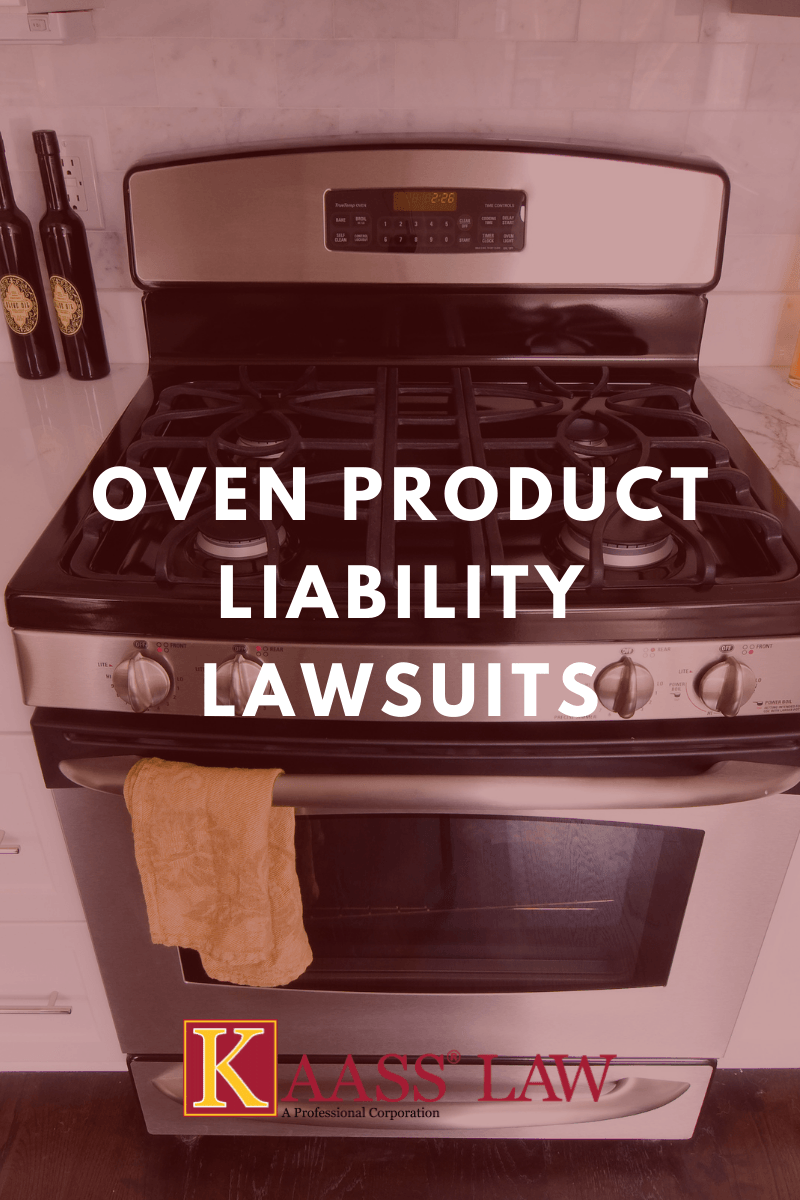
Ovens are among the most common kitchen pieces to contain defects that are significant enough to result in oven product liability lawsuits. These defects can merely be ones that don’t allow it to properly function, but they can also be dangerous, causing devastating damage to your belongings and even yourself and others. Some of these defects in oven product liability include:
If a defect in an oven led to damage to yourself, your family, or your property, there are several channels you can use to pursue compensation. When you gain legal representation and eventually sue the company based on their liability for the damage caused, your attorney can decide to sue based on several basis of defects, including:
An individual's injuries as a result of a defective product are the focus of a product liability action. A medication, a toy, an electronic device, or anything else could be the product. The most important thing is that the product is defective or malfunctioning in some way, and that the flaw or malfunction injures someone. Every year, thousands of people in the United States are wounded as a result of defective or harmful products. As a result, there are laws in place to provide legal recourse. According to California Product Liability Laws, any person who designs, produces, or sells a defective product is strictly liable for the product's damages, even in case the person or company was not negligent.
Generally, a plaintiff must be able to establish the following elements, to prevail on a claim for products liability in California,
When we purchase a product, we expect it to be safe and function as intended. Unfortunately, defective products can cause serious injuries, property damage, and even death. California law provides a framework for holding manufacturers, distributors, and retailers accountable for the harm caused by defective products. At KAASS LAW, we are dedicated to protecting consumers and ensuring they receive the compensation they deserve for injuries caused by defective products. The following explores the intricacies of product liability lawsuits in California. Furthermore, this will be explaining the types of defects, the legal theories involved, and the steps you can take! KAASS LAW, we dedicate in protecting consumers and ensuring they receive the compensation they deserve for injuries caused by defective products. This blog post explores the intricacies of product liability lawsuits in California, explaining the types of defects, the legal theories involved, and the steps you can take to seek justice. The harms a person sustains as a result of a defective product are the focus of a product liability case. A medication, toy, electronic gadget, or anything else could be the product. The crucial factor is that the product must be faulty or malfunction in some way, causing harm to someone. There are regulations in place to give people legal remedies because unsafe and defective items injure thousands of people every year.
To win a case for product liability in California, the plaintiff has to be able to prove the following elements:
This post contains some basic information about skateboard product liability in California and the laws involved with riding skateboards. Skateboard laws are a general regulation for the locals and can change at any time so please make sure to consult with a professional near you for the most recent updates. Many US states enacted legislation that limits the liability of government entities and their employees for skateboard injuries. Recently, skateboarding in California was classified as a “hazardous recreational activity,” and as a result, it is more difficult to win lawsuits against the government for injuries suffered on public property.
In California, local authorities have the ability to adopt their own skateboarding laws. According to California Vehicle Code Section, 21212, skateboarders under the age of 18 must wear federally approved helmets. Riders 18 years old and older are allowed to ride without wearing helmets, though this can result in comparative fault for injuries in a case. In most cities, it is legal for skateboarders to ride on the bikeways, streets, and public bicycle paths as long as they avoid business districts and ride non-motorized skateboards.
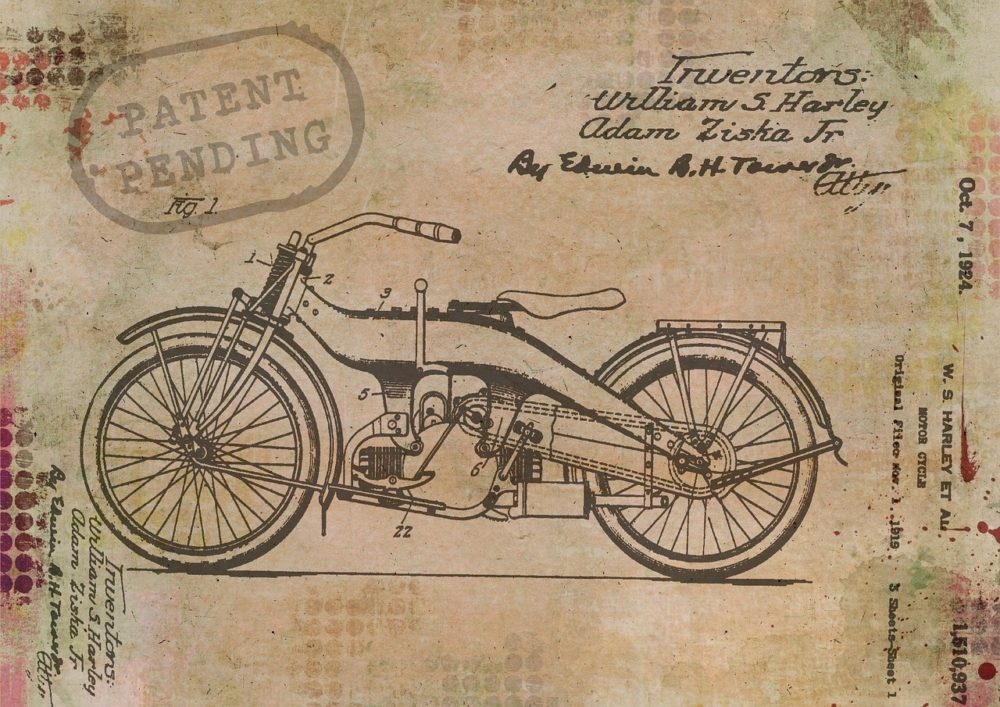
According to California Product Liability Laws, any person who designs, produces or sells a defective product is strictly liable for the damages by the product. This will further explain the following in motorcycle parts product liability.
Generally, a plaintiff must be able to establish the following elements, to prevail on a claim for products liability in California,
Under the strict liability law, it is not a requirement for the plaintiff to demonstrate the defendant’s negligence. Under the law, if the plaintiff got any injuries as a result of the defendant, then the defendant is labile for the injuries, with or without negligence.
To figure out who is liable in a garage door accident, it is crucial to know what caused the accident or any malfunction of the garage door. Among those that can be a consideration in a liable party include:
If you file a lawsuit after a garage door accident injury, then compensations are applicable for damages or losses due to the accident. For instance, these include both economic and non-economic damages, including:
To file a lawsuit for a garage door accident, a plaintiff must prove that the injury occurred as a result of:
In such cases, both negligence and strict liability may apply. If improper installation caused the accident, the property owner may face liability.
Under California law, property owners have a duty to maintain their property in a safe condition. This includes ensuring that garage doors are in working and safe condition. If an owner was aware of a defective gate and failed to repair it, he or she may be found guilty of negligence. Liability can also arise if the victim was on the property with permission. For example, as a guest.
In cases where the accident was caused by a defect in the design or mechanism of a garage door, the manufacturer or seller may be held liable. California law provides for strict liability for defective products. This means that a plaintiff does not have to prove that the manufacturer was negligent. He or she need only prove the existence of the defect and the causal connection between the defect and the injury. In addition, distributors and retailers may also be liable under certain circumstances.
To increase the chances of a successful case, it is important to gather and preserve as much evidence as possible. This includes:
The more complete the information provided, the greater the likelihood of a successful claim.
The statute of limitations under California law should be considered. Typically, an injured person has two years from the date of injury to file a personal injury lawsuit. If the product has a defect, the time frame may change. Missing the statute of limitations may result in the loss of your right to recover damages, so it is important to act in a timely manner.
Because garage door injury cases can involve multiple sides of a cause of action, legal assistance is crucial. The attorneys at KAASS LAW are experienced in handling these types of cases and will help determine the best strategy to protect the injured party's interests.
If you or a loved one have been injured in a garage door accident, we invite you to contact our office at (310) 943-1171 for a free consultation with a Los Angeles garage door personal injury lawyer. Our attorneys will help you determine the liable party and proceed accordingly.
Under California product liability laws, the warning of harm or risk of injury must be:
The manufacturer/distributor is under a duty to stay informed about its product and he can't escape legal liability for a failure to warn just because he was uninformed of the risk. In case the manufacturer/distributor could have discovered the risk through investigation, research, or testing he will be liable for failing to warn the consumer about a risk he should have reasonably known about. Furthermore, if any new information is discovered, it is also the manufacturer's responsibility to warn consumers that have already purchased a product about the new risks.
Under California’s statute of limitations, the plaintiff generally has two years from the date of the injury to bring the claim against the manufacturer/distributor. This period can be extended in case:
The plaintiff can be able to recover the following:
https://www.youtube.com/watch?v=V6GTQa0qmH0&ab_channel=KaassLaw
Here are some examples of situations where a manufacture would likely have to compensate the victim for damages:
There are plenty of possible defenses to a product liability lawsuit, but generally, all of these defenses espouse the same 3 things. They are:
Let’s apply these to our earlier examples:
See also: Injuries Caused by Defective Products Product Liability Oven Defects Motorcycle Part Defects Motorcycle Accidents Personal Injury Facebook
If a faulty oven causes damage to your dwelling, your items inside the property, or even yourself and the people you live with, you have a claim to recovery for all of these damages and any pain and suffering that the damages may have been the cause. The first step to getting compensation is to gain legal representation and open a claim with the company who made the faulty product. You must do so within 2 years of the accident in California in order to be eligible for compensation. As mentioned before, you are entitled to compensation for damages to physical property and people. There are ways, however, that companies may try to avoid having to pay you. Here are some common defenses to product liability lawsuits:
If you or a loved one has been injured due to a oven product defect we invite you to contact our Los Angeles products liability attorney today at (310) 943-1171 today for a free consultation and case review. https://www.youtube.com/watch?v=aauCQGrjBB0&ab_channel=KaassLaw
A defendant must usually have done (or failed to do) anything with negligence, gross negligence, recklessness, or the intent to cause harm in order to be liable for a plaintiff's injuries. However, in exceptional cases, a defendant may be accountable for a plaintiff's injuries despite the fact that the defendant did nothing wrong. Whoever creates, manufactures, or distributes a defective product that is more dangerous than it should be. As a result, it is solely responsible for any harm that the product can cause.
Liability claims for defective products uses a basis of negligence, strict liability, or a breach of the warranty of fitness. Because there is no federal product liability legislation, jurisdiction decides where the claim is submitted. Because of this lack of consistency, the US Department of Commerce published the Model Uniform Products Liability Act (MUPLA). This tries to develop standardized procedures for the products liability tort. There are essentially three types of claims under strict product liability:
In manufacturing defects claims, the plaintiff asserts that a specific product was defectively manufactured as compared to products in the same line, and the particular units of the product were defectively manufactured. So, the product presented harm which actually was a result of the manufacturing defects.
A lawsuit based on a product's poor design is the first sort of product liability claim. In a legal case based on defective design, the plaintiff claims that the product is inherently unsafe due to its design rather than a manufacturing error. To asses defective design product liability claims California this using two tests:
According to this test, after the plaintiff shows that the defective product design caused the injuries. The defendant now has the entire burden of proof. The defendant must prove that the utility of the defective product design outweighs the risk of the design. If he fails to do that, then the plaintiff will win the case.
According to this test, a product’s design will be defective in case it fails to perform as safely as an ordinary consumer would expect it to perform.
According to California's strict product liability, a defendant who is aware that the consumer is using the product in a reasonably foreseeable manner. That exposes him to a risk of injuries is under obligation to warn the consumer of the risk of injury or harm. The defendant can be liable for a failure to warn when such failure could have altered the outcome. So, in case a typical consumer would have become aware of the risk of injuries or harm on his own, then the defendant can’t be liable for failing to warn of an already-known hazard.
If you or a loved one has been harmed as the of defective product, then you may be entitled to compensation. If that is the case, contact our Glendale personal injury lawyer today for a consultation and case review. Please feel free to give our office a call at 310.943.1171. [embed]https://www.youtube.com/watch?v=QAfPxXwzc2E[/embed]
Usually, a defendant must have acted (or omitted to act) with gross negligence, recklessness, or malice in order to be held accountable for a plaintiff's injuries. However, in some cases, a defendant could be strictly accountable for the plaintiff's injuries, even though they were not their fault. Anyone who produces or sells a product that is riskier than it ought to be is in violation of California law. Strict liability exists for any injuries of using the product in a manner that is reasonably foreseeable. Alternatively, or that fails to provide adequate warnings.
Liability claims for defective products can occur on the basis of negligence, strict liability, or a breach of the warranty of fitness. Because there is no federal product liability legislation, this will usually depend on the jurisdiction. Because of this lack of consistency, the US Department of Commerce published the Model Uniform Products Liability Act (MUPLA), which attempts to promote uniform processes for the products liability tort. There are essentially three types of claims under strict product liability:
In manufacturing defects claims, the plaintiff asserts that a specific product was defectively manufactured as compared to products in the same line. So, the product presented harm which actually was a result of the manufacturing defects.
A lawsuit based on a product's poor design is the first sort of product liability claim. In a legal case based on defective design, the plaintiff claims that the product is inherently unsafe due to its design rather than a manufacturing error. In California, there are two tests used in assessing defective design product liability claims:
According to the Risk-Benefit Test, after the plaintiff shows that the defective product design caused the injuries, the burden of proof completely shifts to the defendant. The defendant must prove that the utility of the defective product design outweighs the risk of the design. If he fails to do that, then the plaintiff will win the case.
According to this test, a product's design will be defective in case it fails to perform as safely as an ordinary consumer would expect it to perform.
According to California's strict product liability, a defendant is aware that the consumer is using the product in a reasonably foreseeable manner. Will be eligible to warn the consumer of the risk of injury or harm if exposed to a risk of injury is eligible to warn the consumer of the risk of injury or harm. The defendant can be liable for a failure to warn when such failure could have a different outcome. So, if a typical consumer becomes aware of the risk of injuries or harm on his own, then the defendant can't be liable for failing to warn of an already-known hazard.
Contact our Glendale personal injury lawyer today for a consultation and case review. Please feel free to give our office a call at 310.943.1171. [embed]https://www.youtube.com/watch?v=QAfPxXwzc2E[/embed]
There are the following rules to operate an electric skateboard in California:
There are three basic types of skateboard product liability claims:
Design defect creates a predictable risk of harm which could have been reduced or avoided by another reasonable design. In California law, a product is considered defectively designed if it fails the “consumer expectation test.” This means that the product must be as safe as a consumer would expect it to be when using it reasonably. Another way of having a product fall into it being a defect is when the product's harm outweighs its design in the first place.
Manufacturing defect takes place when a product departs from its intended design, even though all possible care could have been taken in the product’s manufacture and promotion.
In California, a person injured by a defective product has a right to sue anyone in the chain of production and supply, from the manufacturer through the retailer. A wholesaler or distributor can also be at risk regardless of his actual responsibility for the product’s defect. Thus, skateboard retailers and manufacturers can all be responsible for defective skateboards.
Would you like to file a product liability lawsuit in California? Our product liability lawyers at KAASS Law can look into your situation, and provide you with a free consultation. Get in touch with us now at 310-943-1171.
California law doesn’t directly require a person who wants to use an electronic scooter to purchase insurance. Though, since in California, all electric scooter operators must have a valid driver’s license, and drivers’ licenses require auto insurance, then an e-scooter user will likely have an auto insurance policy. It is worth mentioning that California does not require registration, plate display, or insurance for privately owned electric scooters.
In case an electric scooter operator unlawfully crosses an intersection or mounts and causes injures to a cyclist, pedestrian, or anyone else, the scooter operator can face liability for the incident and inappropriate use of an electric scooter.
An injured electronic scooter rider can be eligible for damage recovery in case he can establish that someone else’s negligence caused or contributed to the accident. This burden of proof takes establishing:
If a person rents an electric scooter from a rideshare service, the company can be legally responsible for any injuries. In case the company fails to properly service a defective or damaged e-scooter or didn’t give proper instructions for use or safety warnings, it can face liability for an injured scooter operator’s damages. If an e-scooter manufacturer released an unreasonably defective or dangerous device that caused injuries to a person, the injured consumer can bring a product liability claim against the manufacturer. In case a vehicle driver negligently hits an electric scooter then the case follows a standard framework to other personal injury claims. [embed]https://www.youtube.com/watch?v=6fl-Gw4mXHE[/embed] Have you been hurt due to a defective electric scooter or a rideshare company’s negligence? If so, we invite you to contact our experienced product liability lawyers in Los Angeles to discuss the details of your situation. Our dedicated attorneys will do everything in our power to help you out!
There are essentially three types of claims under strict product liability:
In manufacturing defect claims, if you can compare the product in question with another product in the same line within the manufacturer, the product falls into manufacturing defect claim. So, the product presented a harm which actually was a result of the manufacturing defects.
If the plaintiff asserts that the defect is in all the same product line, then it falls under design defect claims. In California, there are two test in defective design product liability claims:
According to this test, after the plaintiff shows that the defective product design caused the injuries, the burden of proof completely shifts to the defendant. The defendant must prove that the utility of the defective product design outweighs the risk of the design and in case he fails to do that, then the plaintiff will win the case.
According to this test a product’s design will be considered defective in case it fails to perform as safely as an ordinary consumer would expect it to perform.
According to California strict product liability, a defendant who is aware that the consumer is using the product in a reasonably foreseeable manner that exposes him to a risk of injuries is obliged to warn the consumer of the risk of injury or harm. The defendant can be liable for a failure to warn when such failure to change the outcome. So, in case a typical consumer is aware of the risk of injuries or harm on his own, then the defendant can’t be found liable for failing to warn of an already-known hazard. Get in touch with our Los Angeles motorcycle accident attorneys for more information and a free consultation! [contact-form][contact-field label="Name" type="name" required="true" /][contact-field label="Email" type="email" required="true" /][contact-field label="Website" type="url" /][contact-field label="Message" type="textarea" /][/contact-form]