
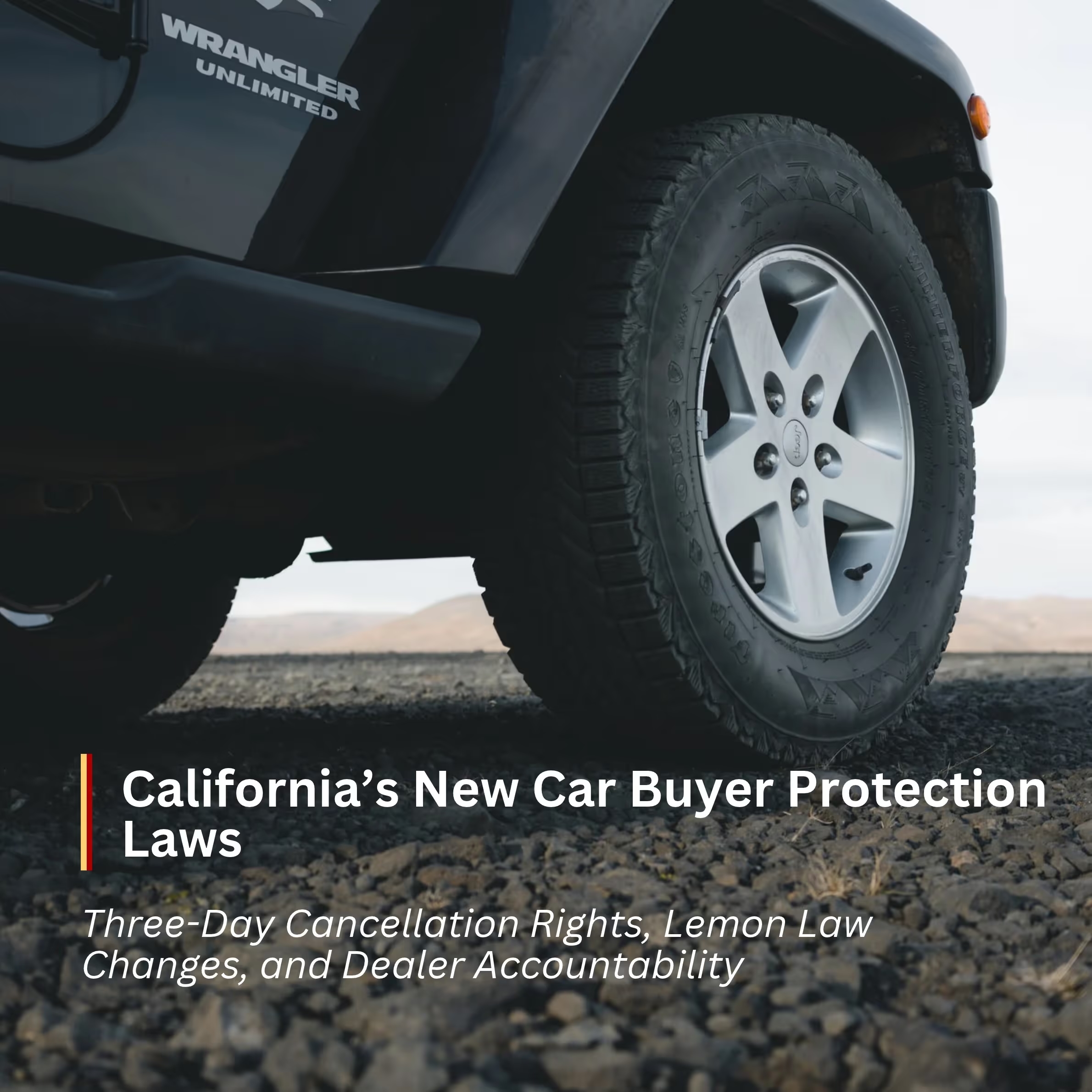
Buying a car is a major financial decision, and discovering unexpected charges or mechanical problems shortly afterward can be extremely frustrating for individuals and their family members. California has introduced new consumer protections meant to make vehicle purchases more transparent and provide additional options when disputes arise. Understanding these laws can help consumers recognize potential problems, preserve important documents, and determine when legal guidance may be appropriate.
One of the most significant changes under the CARS Act, enacted through Senate Bill 766, is the right to cancel qualifying used vehicle purchases or leases within three calendar days.
Previously, California generally required dealers to offer an optional two-day cancellation agreement for certain used vehicles. The new law establishes a cancellation right without requiring consumers to purchase that option.
For qualifying transactions, individuals may cancel for any reason, even if the vehicle has no mechanical defects. However, several conditions may apply, including but not limited to the following.
The three-day period often begins the calendar day after the contract is signed. If the final day falls on a day the dealership is closed to the public, the deadline extends to the next day the dealership is open. Consumers should review their cancellation disclosure carefully and act as soon as possible if they want to return a qualifying vehicle.
Beyond cancellation rights, the CARS Act establishes additional requirements intended to reduce misleading vehicle sales practices. Dealerships must provide clearer pricing information and avoid material misrepresentations involving vehicle availability, financing, trade-ins, and optional products.
The CARS Act also addresses optional add-on products, including service contracts and other dealership offerings. Dealers must disclose that these products are optional and comply with restrictions involving products that provide no meaningful consumer benefit. These requirements are meant to give consumers a clearer understanding of what they are purchasing and how much they are agreeing to pay. Not every unexpected charge allows for a legal violation. The applicable contract, disclosures, and circumstances surrounding the transaction must be reviewed.
California's Lemon Law, primarily governed by the Song-Beverly Consumer Warranty Act, provides potential remedies when qualifying vehicles experience warranty-covered defects that cannot be repaired after a reasonable number of attempts.
AB 1755, signed in September 2024, and SB 26, signed in April 2025, introduced procedural changes intended to improve how certain manufacturer warranty disputes are handled. The new procedures do not apply identically to every manufacturer. California allows manufacturers to elect the procedures established under AB 1755 and SB 26, making it important to determine which rules apply to a specific claim.
Under the applicable new procedures, consumers seeking certain Lemon Law remedies may need to provide written notice to the manufacturer before filing a lawsuit.
For manufacturers participating in the new framework, a consumer seeking a repurchase or replacement must generally provide written notice at least 30 days before initiating litigation to satisfy the relevant statutory requirements. After receiving a qualifying demand, the manufacturer must follow specified response and resolution deadlines. These include offering restitution or replacement within 30 days and completing the applicable remedy within 60 days when statutory conditions are satisfied. The framework also establishes requirements involving acknowledgments, documentation, and the handling of agreed settlements. These deadlines are important because failing to follow applicable procedures may affect a consumer's available remedies or the progress of a legal claim. As a result, it may be important to speak to a legal professional moving forward.
After discovering an issue, consumers should consider taking the following steps.
For mechanical problems, repair orders should determine the reported defect, the dealership's findings, the repairs performed, and the dates the vehicle was unavailable.
Individuals should speak to a legal professional to understand whether their vehicle qualifies under California lemon laws. Understanding the three-day cancellation rights, lemon law changes, and dealer accountability are important factors to maintain your overall safety on the road. Legal guidance and support may help individuals and their loved ones become aware of these protection laws moving forward.
The qualified personal injury attorneys at KAASS LAW want to help individuals understand new laws and regulations to ensure the safety of themselves and others on the road. Our legal team may review the facts surrounding your case and make sure you understand your rights throughout the claims process. Don't wait; call KAASS LAW today for a confidential consultation
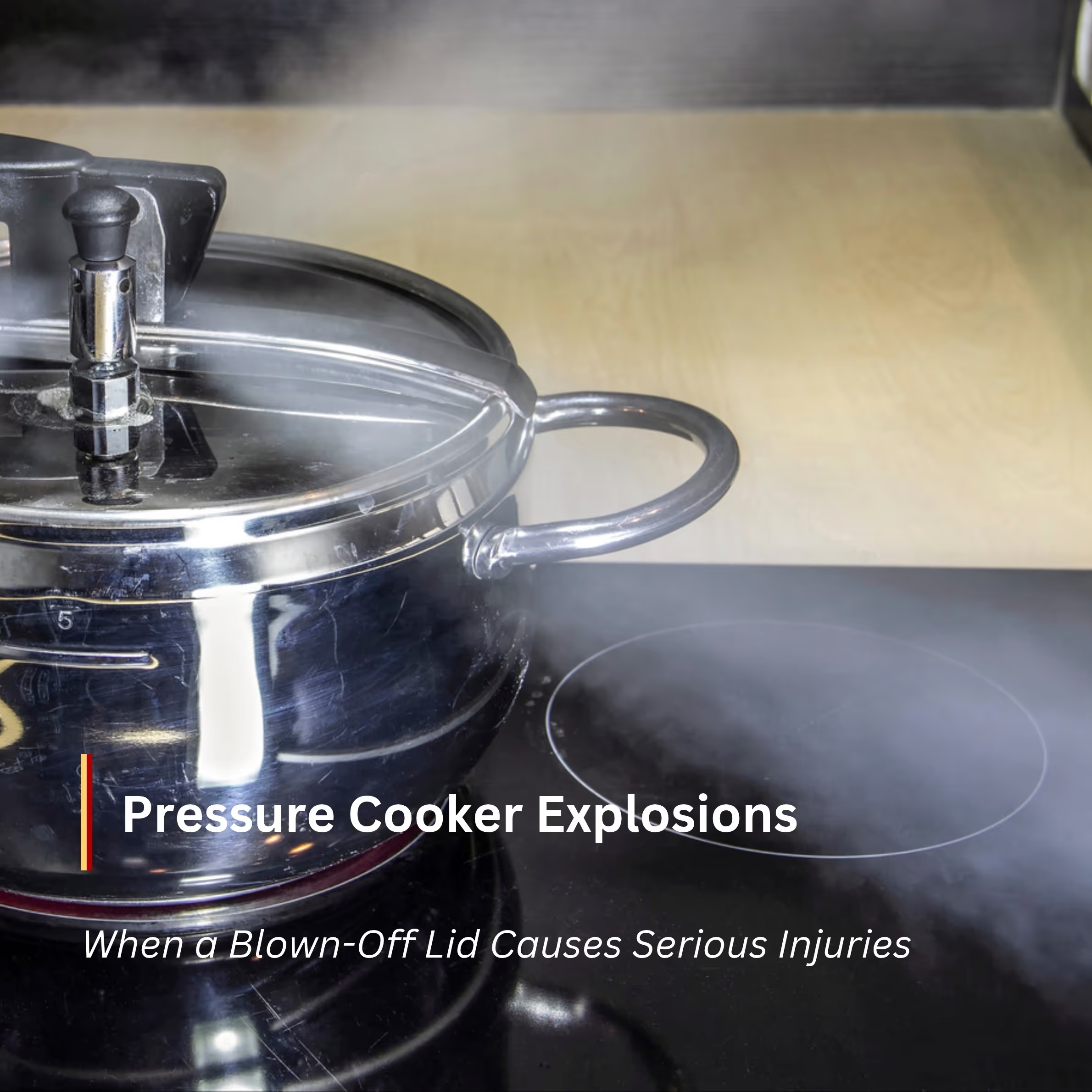
Pressure cookers are often used in households and commercial kitchens because they prepare meals quickly and efficiently. However, when a pressure cooker malfunctions, the consequences can be serious. When a pressure cooker explosion causes an injury, determining responsibility may involve examining the appliance's design, manufacturing process, safety warnings, and the circumstances surrounding the incident. Understanding these accidents and the necessary steps to take moving forward is crucial for your health and well-being.
Pressure cookers work by trapping steam inside a sealed container, allowing internal pressure and temperature to rise. Several factors may cause a pressure cooker to explode. These may include, but are not limited to:
Many pressure cookers contain locking systems designed to prevent the lid from opening while the appliance remains pressurized. If a locking mechanism fails, the lid may become detached unexpectedly, releasing hot contents toward anyone nearby.
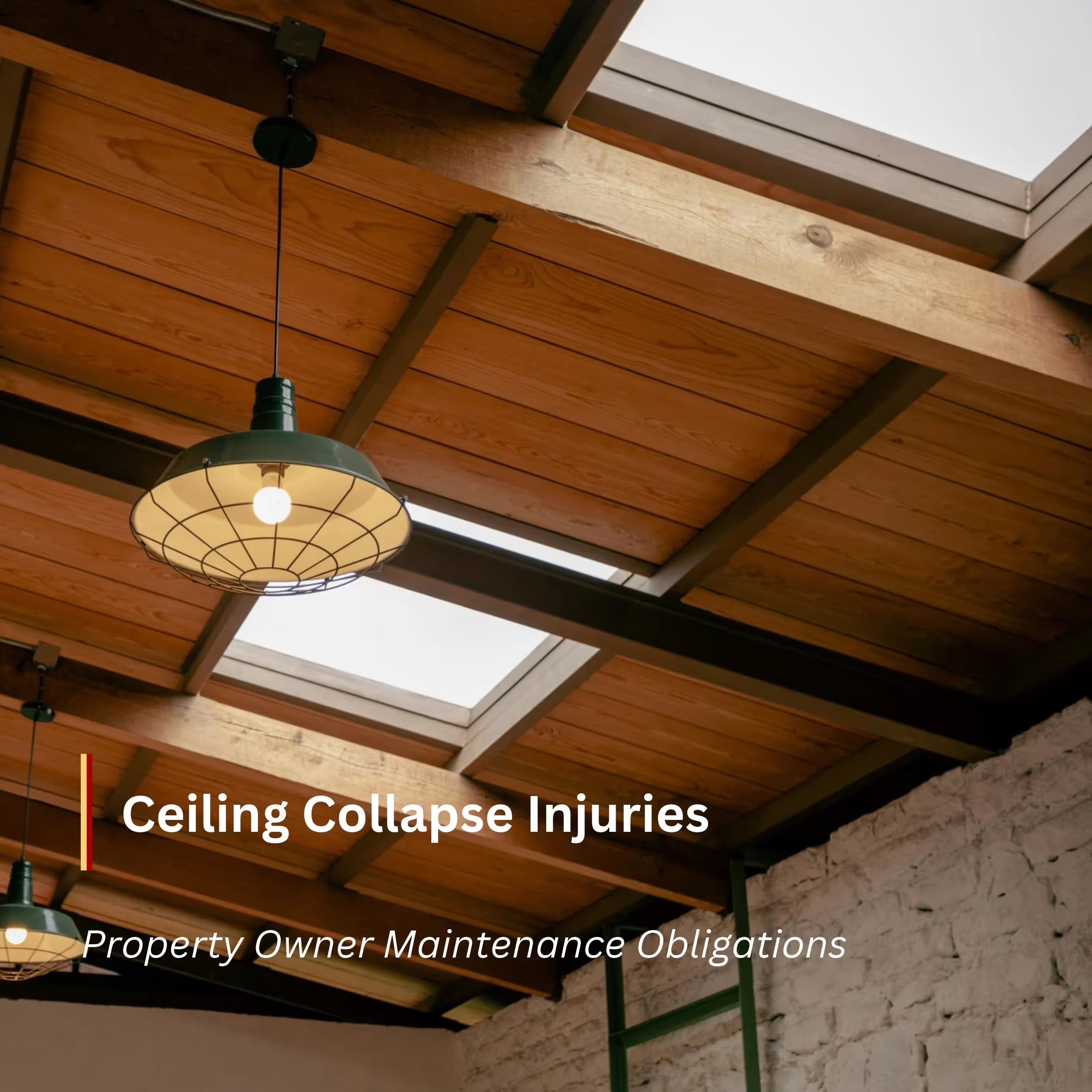
A ceiling collapse can happen without warning, turning an ordinary day at home, work, or a public establishment into a dangerous situation. Falling drywall, plaster, ceiling tiles, insulation, and structural materials can cause significant injuries to anyone beneath them. Understanding the causes of ceiling collapses, the maintenance obligations of property owners, and the legal protections available under California law can help injured individuals evaluate their circumstances and determine appropriate next steps.
Ceiling collapses can occur from several structural and environmental conditions. Some problems develop gradually, while others arise from sudden events.
Water Damage and Plumbing Leaks
Water intrusion is a common factor that causes ceiling deterioration. Leaking pipes, damaged roofing, and malfunctioning HVAC systems can allow moisture to accumulate above ceiling surfaces. Over time, water may weaken drywall, corrode fasteners, and damage supporting materials. Visible water stains, sagging surfaces, peeling paint, and recurring leaks may indicate an underlying maintenance problem requiring investigation.
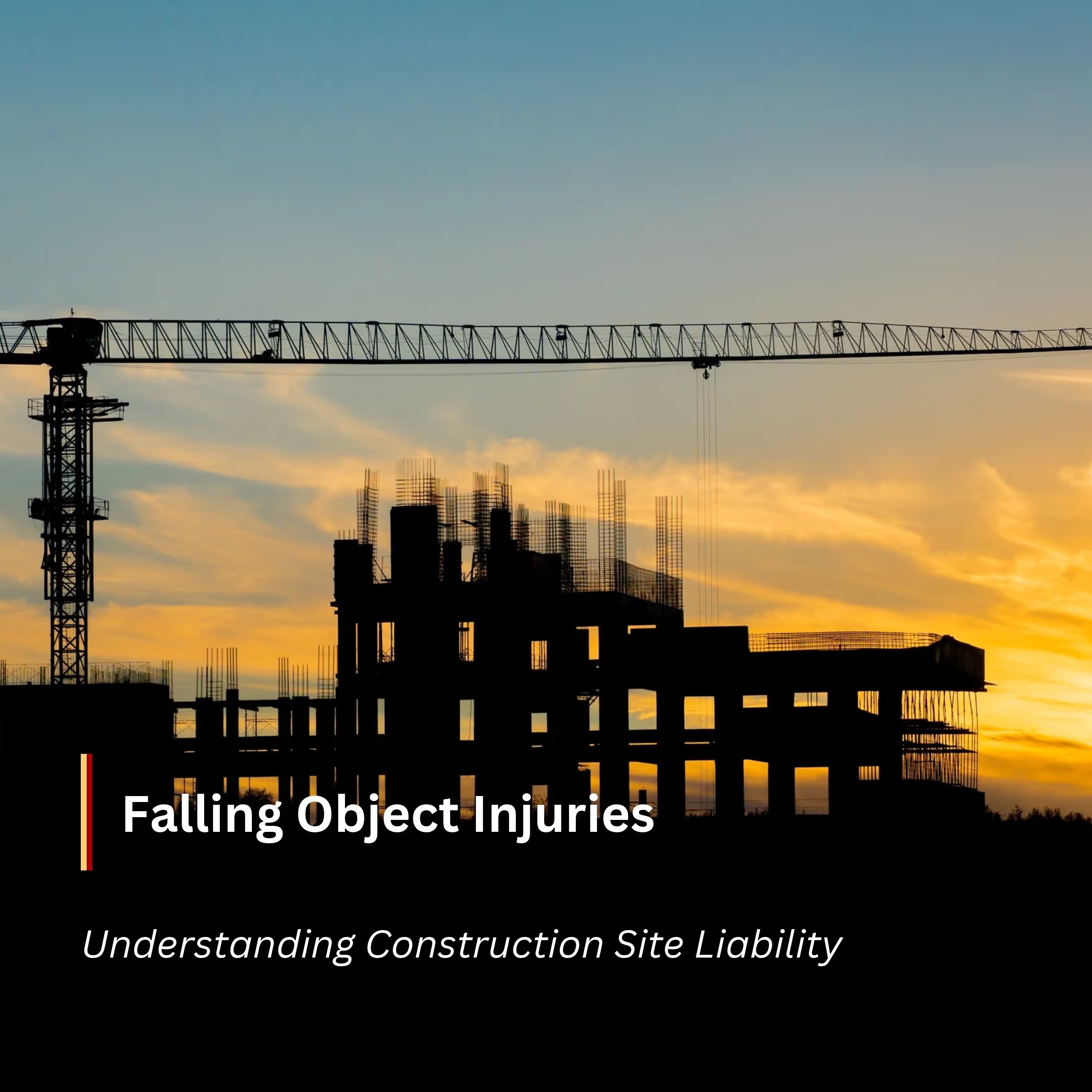
Construction sites are busy environments where workers operate heavy machinery, transport materials, and perform tasks at significant heights. Although construction is essential to infrastructure and development, these activities can create serious safety hazards. One dangerous risk involves objects falling from elevated work areas.
When these accidents happen, determining responsibility can be complicated. Understanding how liability works under California law can help injured individuals evaluate their legal options.
Falling object accidents can happen for several reasons, including improper material storage, inadequate safety precautions, and equipment failures. Some common causes may include, but are not limited to, the following.
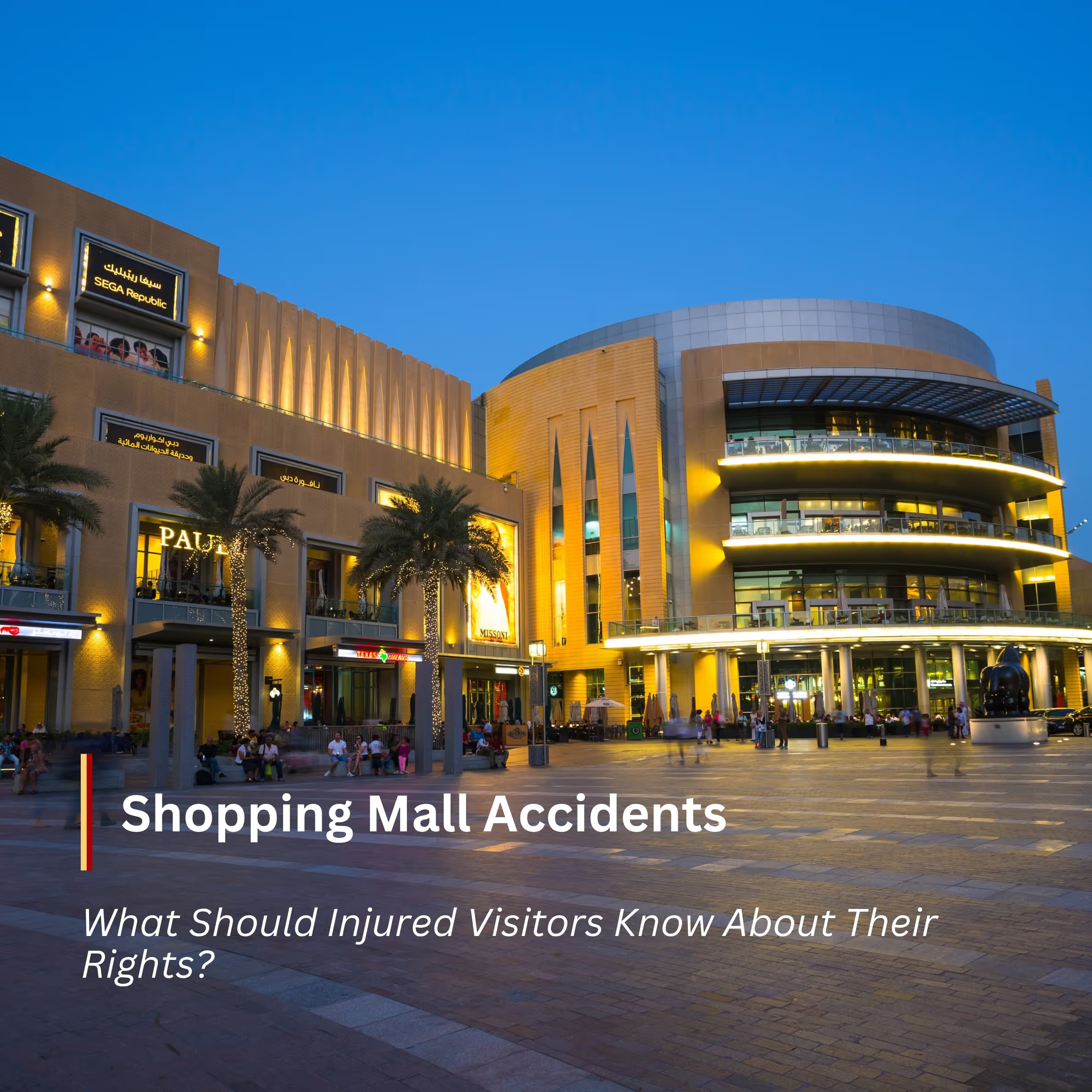
Shopping malls are popular destinations for shopping, dining, entertainment, and social gatherings. Visitors generally expect these spaces to be reasonably safe, whether they are walking through a department store, using an escalator, or navigating a parking structure. However, accidents can happen when hazardous conditions, inadequate maintenance, or other safety concerns put visitors at risk. Understanding the rights of injured visitors under California law can help individuals make informed decisions about medical care, documenting an accident, and exploring potential legal options.
Shopping malls contain numerous areas where accidents may occur. Some incidents result from unexpected circumstances, while others may involve conditions that could have been addressed through reasonable safety precautions. Common shopping mall accidents include, but are not limited to, the following.
Elevators are part of everyday life in apartment buildings, hotels, shopping centers, hospitals, and office buildings. Most people step into an elevator without thinking twice about its safety. However, when an elevator malfunctions, passengers may face unexpected and sometimes serious injuries. Understanding how elevator accidents happen and who may be legally responsible can help injured individuals evaluate their options under California personal injury law.
Elevators contain complex mechanical and electrical systems that require regular maintenance and inspections. When these systems are not properly maintained, potentially dangerous conditions can develop. Some common causes of elevator accidents may include, but are not limited to, the following.
An everyday walk can quickly turn into a painful accident when a sidewalk is cracked, raised, broken, or uneven. Tree roots, aging concrete, poor maintenance, construction activity, and weather conditions can all create changes in sidewalk elevation that may be difficult for pedestrians to notice. When someone trips and falls because of an uneven sidewalk, determining who may be legally responsible is not always straightforward. Depending on where the accident occurred and what caused the dangerous condition, responsibility may involve a city or other public entity, a private property owner, a business, a homeowners association, or another party. Understanding how sidewalk responsibility works can help an injured individual determine what steps may be appropriate after an accident.
Sidewalks can deteriorate or shift for many reasons. One of the most common causes is tree-root growth. Other conditions may include, but are not limited to, the following.
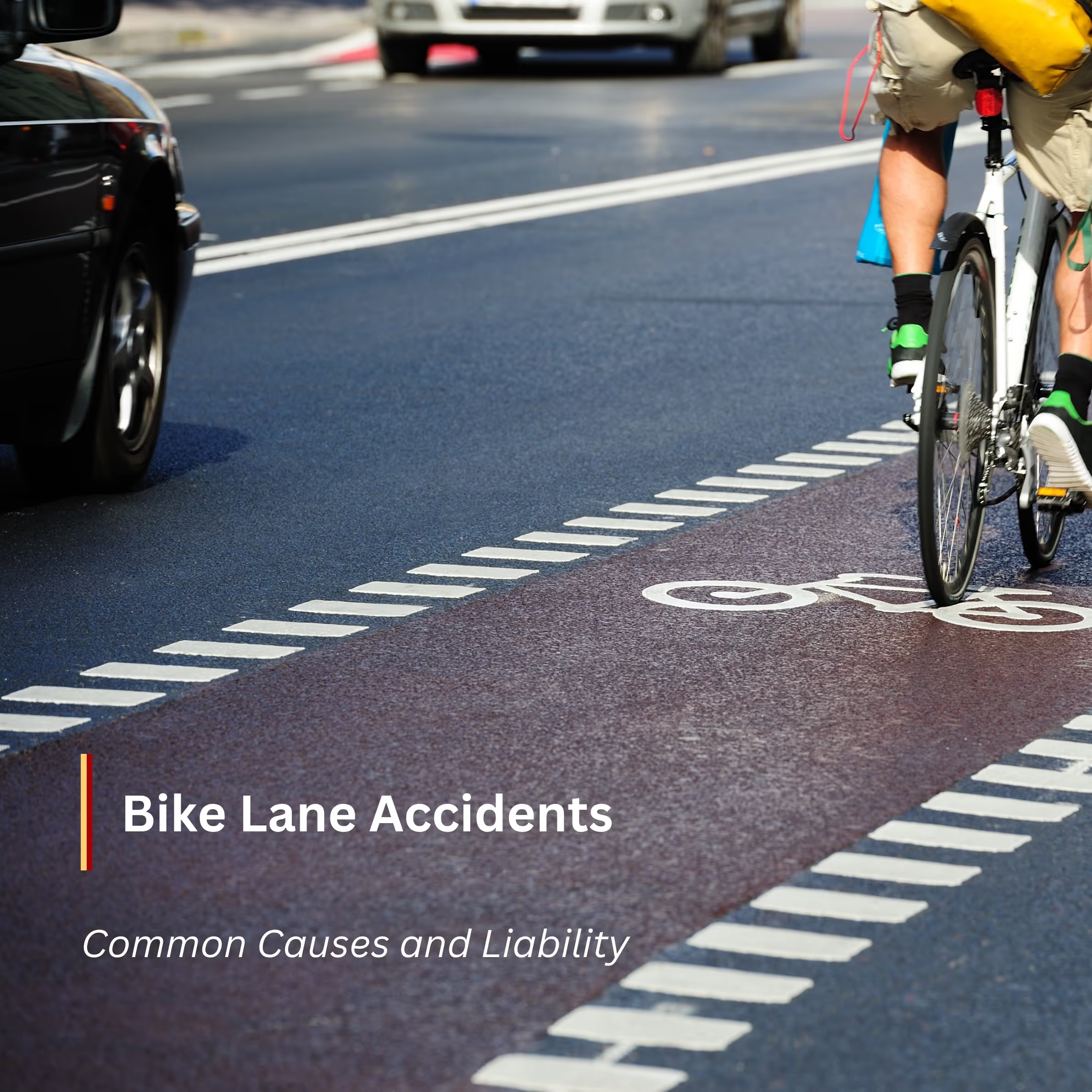
Bike lanes are designed to provide bicyclists with a designated area to travel and to help separate bicycle traffic from motor vehicles. However, cyclists may still encounter turning vehicles, opening car doors, distracted drivers, road hazards, and vehicles improperly entering or blocking bicycle lanes. Understanding common causes of bike lane accidents and California bicycle laws can help injured cyclists better understand their legal options.
Under California law, bicyclists usually have many of the same rights and responsibilities as drivers of motor vehicles when traveling on public roads. California Vehicle Code Section 21208 addresses the use of designated bicycle lanes. When a bike lane is available, a bicyclist traveling slower than the normal speed of traffic generally must use it. However, the law recognizes several circumstances in which a cyclist may leave the bike lane, including when passing another bicycle, vehicle, or pedestrian, preparing for a left turn, avoiding debris or hazardous conditions, or approaching an area where a right turn is permitted. These rules can become important when determining how and why a bike lane collision occurred.
Swimming pools are a common feature at private homes, apartment complexes, hotels, recreation centers, and other properties throughout California. While pools offer opportunities for recreation and relaxation, they can also present serious safety risks when the surrounding property is not properly maintained or appropriate precautions are not taken. Drownings, near-drownings, slip-and-fall incidents, diving injuries, and accidents involving pool equipment can result in significant injuries. When a swimming pool accident occurs because of a potentially unsafe property condition, California premises liability law may become important. Understanding these laws and the necessary steps to take after an accident is important for your safety moving forward.
Premises liability usually involves the legal responsibilities of those who own, occupy, lease, or control property. When dealing with a swimming pool, reasonable care can involve inspecting and maintaining the pool and surrounding areas, addressing hazards, and taking appropriate precautions based on the circumstances. Additionally, the event of an accident does not automatically establish premises liability. Determining responsibility requires examining the specific facts, including the condition of the pool, what the responsible party knew or reasonably should have known, and how the accident occurred.
Crosswalks are meant to provide pedestrians with a designated place to cross the road, but they do not eliminate the risk of an accident. A pedestrian may be struck by a vehicle when a driver fails to yield, turns through a crosswalk without checking for people, becomes distracted, or travels too fast for surrounding conditions. California law establishes responsibilities for both motorists and pedestrians when using crosswalks. Understanding these rules may help an injured pedestrian determine what happened, what evidence may be relevant, and what legal options may be available after a crosswalk accident.
Drivers approaching a crosswalk should remain alert and exercise appropriate care. A motorist may create a dangerous situation by failing to notice a pedestrian who has entered the crosswalk or by attempting to pass through before the pedestrian has safely cleared the vehicle's path. Common driver behaviors that may contribute to crosswalk accidents include, but are not limited to, the following.
Pressure-release valves help regulate internal pressure. A defective or obstructed valve may interfere with proper pressure control, potentially increasing the risk of a dangerous malfunction.
Manufacturing problems may affect the integrity of components such as seals, gaskets, locking pins, or pressure sensors.
Overfilling the appliance, using damaged components, or failing to follow operating instructions may also cause a pressure cooker to explode.
When a pressure cooker lid separates unexpectedly, the sudden release of steam and heated contents can cause significant injuries. Common injuries may include, but are not limited to, the following.
The severity of an injury depends on factors such as the temperature of the contents, the distance from the appliance, and the nature of the defect. In addition, seeking medical treatment as soon as possible is crucial to prevent the risk of further damage and harm.
Under California law, several parties may be held potentially liable for injuries involving a defective pressure cooker. These may include but are not limited to:
Manufacturers may face product liability claims when an appliance contains a design or manufacturing defect that contributes to an injury. California often recognizes strict product liability for qualifying product defects, meaning an injured person may not need to establish that the manufacturer acted negligently. However, the injured person must still establish the applicable legal elements, including defect, causation, and the actual injury itself.
Businesses involved in distributing or selling a defective pressure cooker may also be held responsible when damages occur. Whether a specific business may be held liable often depends on its role in the product's distribution and the circumstances of the case.
In some situations, responsibility may involve a repair provider, replacement-part manufacturer, or another party whose conduct contributed to the malfunction. Determining liability often requires examining the appliance, relevant documentation, and available technical evidence.
Depending on the circumstances and evidence, an injured person may be able to seek compensation for losses associated with a defective pressure cooker. Potential damages may include but are not limited to the following.
The availability and amount of damages depend on the injuries, applicable law, evidence, and other case-specific factors.
After an accident, victims should consider taking the following steps to help protect their health and well-being moving forward. These may include, but are not limited to:
After a pressure cooker explosion, victims should consider speaking to a legal professional who may explain applicable laws, review the specific facts of your case, and help you understand your rights moving forward. This is crucial, especially when injuries are severe.
Our legal team at KAASS LAW is determined to help victims make their way back to recovery after a pressure cooker explosion has occurred. These types of accidents can create serious injuries, leaving victims in a state of fear and shock. The qualified personal injury attorneys at KAASS LAW may preserve important pieces of information and determine potentially liable parties. Don’t wait. Call KAASS LAW today to learn more.
Structural Deterioration
Older buildings may experience deterioration involving ceiling supports, framing, or attachment systems. When building components weaken, the ceiling may become unstable. Regular inspections and timely repairs can help identify conditions that might otherwise remain unnoticed.
Improper Construction or Renovation
Defective installation, inadequate support, or improper modifications may contribute to ceiling failures. In certain circumstances, contractors, builders, or other parties involved in construction or renovation may share responsibility.
Neglected Maintenance
A ceiling showing signs of cracking, sagging, or repeated water damage may require professional evaluation. When property owners or managers fail to investigate reported problems, preventable hazards may continue developing.
Property owners may have responsibilities that include identifying dangerous conditions, performing reasonable inspections, addressing maintenance problems, and warning occupants about hazards that cannot immediately be corrected. In ceiling collapse cases, relevant considerations may include the following.
California courts have recognized that landlords may have a duty to inspect for dangerous conditions even when they lack actual knowledge of a defect. However, the circumstances determine whether a specific inspection or repair was reasonably required.
Ceiling collapse injuries can range from minor bruising to conditions requiring extensive medical treatment. Depending on the weight of the falling materials and the circumstances of the incident, injuries may include:
Who is Responsible?
Responsibility for ceiling collapse injuries depends on the root cause of the issue and the parties involved in maintaining the property.
Property Owners and Landlords
Owners or landlords may face liability when their failure to exercise reasonable care contributes to a dangerous ceiling condition and resulting injuries.
Property Management Companies
A management company responsible for inspections, maintenance coordination, or repairs may also be subject to liability when its negligent conduct contributes to the incident.
Contractors and Construction Companies
If improper construction, defective installation, or negligent renovation work caused the collapse, contractors or other construction professionals may be responsible.
Other Potentially Responsible Parties
Depending on the circumstances, responsibility may also involve maintenance providers or manufacturers of defective building components. Identifying the appropriate parties often requires the following.
A person pursuing a California premises liability claim usually must establish the following.
After a ceiling collapse, victims should take the following safety precautions.
Immediate documentation may also be very important because damaged building materials are often removed during emergency repairs.
When negligence is established, injured individuals may be eligible to seek compensation for certain losses. Depending on the circumstances, recoverable damages may include, but are not limited to, the following.
Property damage and other documented financial losses may also be important to understand. The availability and amount of compensation depend on the evidence, applicable law, and individual circumstances.
After a ceiling collapse accident, seeking the help of a legal professional may be important for one’s safety and well-being. A qualified professional may be able to review the facts surrounding your case, preserve important information, and determine who may be held responsible for the damage.
The legal team at KAASS LAW is ready to help victims and their loved ones recover after suffering injuries from a ceiling collapse accident. Oftentimes, these types of incidents may present various legal and insurance challenges, leaving individuals scared of the next steps. Don’t wait. Call KAASS LAW today to learn more.
Not every falling object accident occurs from negligence. However, an investigation may help the court understand whether reasonable precautions were taken to reduce certain risks.
The following injuries may occur after a falling object accident. Understanding the necessary steps and safety precautions to take after suffering injuries from these types of accidents is crucial for the health and well-being of yourself and others moving forward.
Determining liability requires examining the circumstances surrounding the accident and identifying which parties had responsibility for the activity or condition that caused the injury. Depending on the facts, several parties may be involved. These individuals may include, but are not limited to:
Contractors and subcontractors often have responsibilities related to the safety of their operations. If negligent handling or storage of equipment causes an object to fall, the responsible contractor may be held accountable for the injuries and damage caused.
Property owners may have legal responsibilities concerning dangerous conditions on their premises. However, ownership alone does not automatically establish liability for a construction accident. California courts recognize important limitations on claims brought by independent contractors and their employees against parties that hired them.
In some instances, accidents from falling objects may be caused by defective cranes, lifting mechanisms, or other construction equipment. When a product defect contributes to an injury, the manufacturer or another party in the distribution chain may face potential product liability claims.
California construction sites are subject to workplace safety requirements designed to reduce occupational hazards. California's Division of Occupational Safety and Health, often known as Cal/OSHA, enforces workplace safety standards relevant and important to construction activities.
Federal OSHA regulations also provide important guidance regarding falling object protection. Depending on the circumstances, these measures may include, but are not limited to, the following.
California employers must comply with applicable Cal/OSHA requirements, which may be different from federal standards. A safety violation may provide relevant evidence in a negligence investigation, but it does not automatically establish civil liability.
Pedestrians, delivery drivers, nearby residents, and visitors may suffer injuries when objects fall beyond designated work areas. Unlike employees covered by workers' compensation, injured pedestrians may pursue ordinary personal injury claims against parties whose negligence caused their injuries. A negligence claim usually requires establishing a legal duty, breach of that duty, causation, and resulting damages.
Individuals injured by falling objects may be eligible to pursue compensation through an applicable personal injury claim. Depending on the evidence and circumstances, recoverable damages may include but are not limited to the following.
The damages available through workers' compensation may be different from those recoverable in a civil personal injury lawsuit. The existence and amount of any recovery usually depends on the applicable law, evidence, and specific findings.
After a falling object accident, you should consider seeking legal guidance and support from a professional to ensure you are made aware of your rights and responsibilities moving forward in the legal process. This is crucial to understand the necessary steps to take in order to recover from your injuries.
Our legal team may be able to help individuals who have suffered injuries from a falling object. We understand that these types of incidents can present various challenges that many individuals may not understand on their own. Our professional team may review the specific circumstances surrounding your case, determine potentially responsible parties, and preserve necessary pieces of evidence moving forward. Call KAASS LAW today to learn more and discuss your potential options.
Each accident involves different circumstances. The existence of a dangerous condition does not automatically establish that a property owner or business is legally responsible.
Determining responsibility for shopping mall accidents often requires examining who owned, occupied, maintained, or controlled the area where the injury occurred. Shopping malls usually involve multiple businesses and property management arrangements. Depending on the circumstances, potentially responsible parties may include, but are not limited to, the following.
Shopping Mall Property Owners
Mall owners may have responsibilities regarding common areas such as corridors, entrances, parking facilities, and shared walkways. Their legal duties depend on the extent of their control and the circumstances surrounding the hazard.
Individual Store Operators
A retailer may be responsible for certain unsafe conditions within its leased premises. For example, a store employee's failure to address a known spill could become relevant if a visitor slips and becomes injured.
Property Management Companies
Management companies may oversee inspections, repairs, maintenance, and safety procedures. Their contractual responsibilities and actual control over the property can be important when evaluating potential liability.
Maintenance Contractors and Other Third Parties
Cleaning companies, elevator maintenance providers, security contractors, or other service providers may be involved when their negligent conduct contributes to an accident. More than one party may share responsibility, depending on the available evidence and applicable California law.
California premises liability law usually requires property owners and others responsible for maintaining property to exercise reasonable care under the circumstances. In evaluating a shopping mall accident, relevant questions may include but are not limited to the following.
It is important to note that not every accident establishes negligence. Liability depends on the specific facts, the applicable duty of care, and the evidence connecting the alleged negligence to the injury.
The steps taken after an accident may affect both a person's recovery and the availability of evidence. The following steps may be important to get back on the road to recovery.
Medical care should be a priority following an injury. Some conditions, including concussions and certain soft-tissue injuries, may not show symptoms immediately. Medical records can also help document the nature and timing of injuries.
Notify mall security, property management, or the store manager, depending on where the incident occurred. Request that an incident report be prepared and ask how to obtain a copy.
Photographs or videos may help preserve evidence of conditions such as spilled liquids, broken flooring, damaged stairs, or inadequate lighting. Since hazardous conditions can change quickly, documenting the scene when it is safe to do so may be useful.
If anyone witnessed the incident, consider requesting their contact information. Witness accounts may help clarify how the accident occurred.
Keep medical bills, receipts, photographs, correspondence, and documents relating to missed work or other accident-related expenses. These records may become relevant when evaluating a potential claim.
Depending on the circumstances, visitors injured in shopping mall accidents may be able to pursue compensation through a premises liability or negligence claim. Potentially recoverable damages may include, but are not limited to, the following.
The availability and amount of damages depend on the evidence, the extent of the injuries, applicable legal standards, and other case-specific factors. California also follows a comparative fault system. This means an injured visitor's own behavior may be considered when determining responsibility. A person's recovery may be reduced according to their percentage of fault.
If a visitor is found partially responsible for an accident, that finding may affect the amount of damages recoverable from other responsible parties.
After a shopping mall accident, it may be helpful to seek legal guidance and support to better understand your rights throughout the legal process. Oftentimes, these types of accidents may cause serious injuries, leaving victims in a state of shock and worry. That is where we come in. Our legal team is ready to support victims and help them work towards recovery.
The qualified personal injury attorneys are determined to help victims and their families understand their rights and legal options after suffering injuries from a shopping mall accident. We may review the facts of your case, preserve important pieces of evidence, and determine potentially responsible parties. Call KAASS LAW today for a confidential consultation.
Not every elevator malfunction results from negligence. However, when an accident occurs because a responsible party failed to exercise reasonable care, liability issues may arise.
Determining responsibility for a maintenance-related elevator accident often requires reviewing maintenance records, inspection reports, repair histories, and the circumstances surrounding the incident. Depending on the facts and circumstances of the specific accident, the following individuals may share responsibility after an elevator incident.
Property owners usually have a responsibility to exercise reasonable care in maintaining their premises. This may include, but is not limited to, the following.
Many commercial and residential properties hire specialized contractors to inspect, service, and repair elevators. These contractors may be responsible for identifying worn components, performing necessary repairs, and maintaining equipment according to applicable safety requirements.
A maintenance contractor may face liability if negligent servicing, improper repairs, or failure to identify a reasonably discoverable hazard contributes to an accident.
Some elevator accidents involve defective equipment rather than improper maintenance. Manufacturers, distributors, or other parties involved in supplying elevator components may face product liability claims when a defective product causes injuries.
Potential defects may involve elevator doors, sensors, control systems, or mechanical components. Determining whether an accident occurred from defective equipment, negligent maintenance, or a combination of factors often requires technical investigation.
Elevator accidents can cause injuries ranging from relatively minor bruises to conditions requiring extensive medical treatment. Potential injuries include but are not limited to the following.
Passengers may also experience emotional distress following a frightening elevator malfunction, especially when the incident involves being trapped or a sudden mechanical failure. It is also important to understand that he severity of an injury depends on the circumstances of the accident. Medical evaluation can help identify injuries and document their effects.
California negligence law usually requires an injured person to establish that another party owed a duty of care, breached that duty, and caused legally recognized harm. In elevator accident cases, evidence may include but is not limited to the following.
California's comparative fault principles may also apply when more than one party contributed to an accident. Additionally, California regulations establish requirements relating to elevator inspections, permits, and safe operation. Whether a specific requirement was violated may be relevant to evaluating responsibility. Since elevators involve specialized equipment, some cases may require analysis by engineers or other qualified professionals.
Taking appropriate steps following an elevator accident may help protect your health and preserve important information. It may be beneficial to seek medical attention if you have been injured. Some injuries may not be immediately obvious, especially those involving the head, neck, or back. Victims should consider reporting the incident to the building owner, property manager, or appropriate personnel. Additionally, taking photographs of the elevator, floor alignment, damaged components, or surrounding area may also be useful. If witnesses observed the accident, their contact information may help establish what happened. Victims should also avoid trying to inspect or repair malfunctioning elevator equipment yourself.
Seeking legal guidance and care may be extremely important after suffering injuries from an elevator accident. This is crucial as a legal professional may be able to explain applicable deadlines, review the facts of your case, and help you understand your rights moving forward.
Our qualified personal injury attorneys are determined to help victims and their loved ones recover from an elevator accident. Our legal team may explain the options you may have, preserve important pieces of evidence, and determine potentially liable parties. Call KAASS LAW today for a confidential consultation.
Even relatively small differences in sidewalk height may cause someone to lose their balance, especially when visibility is limited or the defect is difficult to recognize while walking.
Responsibility for a sidewalk accident depends heavily on the location, applicable local laws, control over the sidewalk, and how the dangerous condition developed. In California, property owners usually have a duty to avoid creating unsafe conditions on surrounding public streets or sidewalks.
Many sidewalks are located on public property and may fall under the responsibility of a city, county, or another governmental entity. A public party may be held liable when a dangerous condition of public property contributes to an injury and the legal requirements for a claim are satisfied. These cases can involve questions such as whether the condition created a substantial risk of injury, whether the public entity had actual or constructive notice of the condition, and whether there was enough time to address it.
When a sidewalk or walkway is part of privately owned commercial property, the person or entity that owns, occupies, or controls the property may have responsibilities regarding its condition. Whether a property owner or business may be responsible for an accident can depend on factors including control of the area, knowledge of the condition, inspection practices, maintenance responsibilities, and whether reasonable measures were taken to address a known hazard.
In condominiums or townhouses, a homeowners association (HOA) may be responsible for maintaining certain common areas, including private sidewalks and pedestrian pathways. Determining responsibility may require reviewing governing documents, maintenance agreements, property boundaries, and the specific circumstances surrounding the accident.
An uneven sidewalk does not automatically establish liability. Several factors may need to be examined when evaluating what happened. One important question is whether the sidewalk condition presented an unreasonable risk of harm. Other important factors may include but are not limited to the following.
A sudden trip can cause a pedestrian to fall forward or sideways without enough time to protect themselves. Depending on the circumstances, resulting injuries may include but are not limited to the following.
Medical evaluation following a serious fall can help identify injuries that may not be immediately apparent and creates documentation of the person's condition following the accident.
The following safety precautions may be important after an uneven sidewalk accident. These may include but are not limited to:
Seeking the support of a legal professional after suffering injuries from an uneven sidewalk accident may be helpful for victims and their loved ones. Oftentimes, these types of accidents may present unique legal challenges that may be difficult to understand on your own. That is why legal guidance may be useful.
After a sidewalk trip-and-fall accident, identifying the potentially responsible party may require reviewing property records, maintenance responsibilities, photographs, witness information, and other available evidence. KAASS LAW can review the circumstances surrounding a sidewalk accident and explain legal options that may be available under California law. Call KAASS LAW today to learn more.
Bike lane accidents can happen in many different ways. In some cases, a driver's actions may contribute to the collision. In others, roadway conditions, parked vehicles, cyclists, or multiple factors may be involved.
A driver making a right turn may need to cross a bicycle lane and may fail to notice a cyclist traveling alongside the vehicle. Drivers should check mirrors, look for approaching cyclists, signal appropriately, and make turns with reasonable care. A collision may occur when a driver turns across the cyclist's path without enough time or distance for the cyclist to react.
Distracted driving can be especially dangerous around bicyclists because cyclists are smaller and may be less noticeable than other vehicles. Activities such as using a phone, adjusting navigation, eating, or focusing attention away from the roadway may prevent a driver from noticing a cyclist in or near a bike lane. Even a brief distraction can affect a driver's ability to react to changing traffic conditions.
Drivers should allow enough space when passing bicyclists. Passing too closely may cause a direct crash or force a cyclist toward parked vehicles, curbs, or roadway hazards. The circumstances of an unsafe passing accident may include the distance between the vehicle and bicycle, roadway width, traffic conditions, vehicle speed, and the actions of both the motorist and cyclist.
Not every bicycle accident involves another vehicle. Potholes, broken pavement, construction debris, loose gravel, damaged drainage covers, or other roadway conditions may cause a cyclist to lose control.
Liability depends on the specific facts surrounding the accident. There is no automatic rule that a motorist, cyclist, property owner, or government agency is responsible simply because an accident occurred. Depending on the circumstances, potentially responsible parties may include:
It is also important to note that more than one party may sometimes share responsibility for an accident.
Evidence can be especially important in bicycle accident claims because the parties may disagree about how the accident happened. Photographs or videos of the scene may document vehicle positions, bike lane markings, debris, road defects, traffic signals, skid marks, or property damage. Witness statements may provide additional information about what happened immediately before the collision. Other potentially relevant evidence may include, but is not limited to, the following.
Since some evidence may be repaired, removed, or become unavailable over time, preserving relevant information soon after an accident may be important.
The following injuries may occur after a bike lane accident.
It may be helpful to speak to a qualified personal injury attorney after suffering injuries from a bike lane accident. Victims should also document the accident scene and seek medical care as soon as possible. In addition, since each accident presents different facts, speaking with an attorney may help a person understand how California law could apply to their specific circumstances.
Bike lane accidents can involve questions about traffic laws, insurance coverage, roadway conditions, and the behaviors of multiple parties. KAASS LAW can review the circumstances surrounding a bicycle accident and discuss potential legal options based on the available facts. If you were injured in a bike lane accident in California and have questions about your legal options, you may contact KAASS LAW to discuss the circumstances of your accident with an attorney.
Swimming pool accidents can happen in many different ways. Some incidents involve the water itself, while others occur on decks, walkways, stairs, ladders, or other areas surrounding a pool. Common circumstances associated with swimming pool injuries may include the following.
Liability depends on factors such as control of the property, notice of the condition, foreseeability, causation, and the circumstances surrounding the incident.
California has specific laws addressing certain swimming pool safety measures. Depending on the property, these safety measures may include qualifying pool enclosures, removable mesh fencing with self-closing and self-latching gates, compliant safety covers, exit alarms, and certain self-closing and self-latching devices. Whether a specific safety requirement applies depends on the type of property, pool, construction history, permits, and other circumstances.
Not every swimming pool accident involves drowning. Pool decks naturally become wet, but additional conditions can sometimes increase the risk of slipping and falling. For example, deteriorated flooring, algae accumulation, damaged surfaces, poor drainage, unexpected elevation changes, or improperly maintained walkways may contribute to an accident. Falls around swimming pools can cause injuries such as fractures, head injuries, back injuries, sprains, and soft-tissue injuries.
Drowning and near-drowning accidents can have serious consequences. Lack of appropriate barriers, accessible gates, inadequate safety precautions, or certain equipment hazards may become relevant when investigating how an accident happened. Cases involving children may require especially careful evaluation of the following.
Near-drowning incidents may also cause serious medical complications, including oxygen-related brain injuries, respiratory problems, and other long-term health consequences. As a result, medical documentation can be important in understanding the nature and extent of an injury.
Responsibility for a swimming pool accident is not necessarily limited to the property's titled owner. Depending on the circumstances, potentially involved parties may include but are not limited to the following individuals.
Determining who had control of the area can be an important part of a premises liability investigation. Identifying those responsibilities may require reviewing leases, maintenance agreements, inspection records, incident reports, and other documents.
Evidence can change or disappear after an accident. Conditions may be repaired, surveillance footage may be erased, and witnesses may become more difficult to locate over time. Depending on the circumstances, potentially relevant evidence may include, but is not limited to, the following.
Individuals who become injured in a swimming pool accident may also consider documenting the location and circumstances of the incident when it is safe and reasonable to do so.
After a swimming pool accident, it may be beneficial to speak to a legal professional who can help you understand the entirety of the legal process. These types of incidents may cause additional challenges that individuals may not be able to navigate on their own.
The legal team at KAASS LAW is determined to help victims who have suffered the consequences of a swimming pool accident. Our qualified attorneys want to support individuals and their loved ones when they are going through a challenging time. Call KAASS LAW today to learn more and discuss your potential options.
Whether a driver may be legally responsible depends on the specific facts surrounding the collision.
Pedestrians have important rights, but California law also requires them to exercise reasonable care. Pedestrians should not suddenly leave a curb or other place of safety and walk or run into the path of a vehicle that is so close that it creates an immediate hazard. Pedestrians also should not unnecessarily stop or delay traffic while using a crosswalk. However, these responsibilities do not automatically excuse a driver from exercising care.
Distracted driving can contribute to pedestrian collisions. A driver looking at a phone, navigation system, passenger, or another distraction may fail to notice someone entering a crosswalk. Visibility may also play a role. Crosswalk accidents can occur at night, during poor weather, or in locations with inadequate lighting. Parked vehicles, landscaping, construction equipment, and other objects may further block a driver's view. Speed can be especially dangerous in pedestrian accidents. A driver traveling too quickly may have less time and distance available to recognize a pedestrian and respond appropriately.
The following injuries may occur after a crosswalk accident.
Establishing liability may involve determining whether someone failed to exercise reasonable care or violated an applicable traffic rule. Evidence can play an important role in this process. Depending on the accident, relevant information may include the following.
In some cases, more than one party may share responsibility. California usually follows a comparative-fault system. This means that responsibility may be distributed among the people or parties involved based on their overall percentage of fault. In addition, a pedestrian's potential contribution to an accident does not necessarily mean that the pedestrian has no ability to pursue a claim.
Medical attention should be a priority following a pedestrian collision. Some injuries may not be immediately visible, especially when a person is experiencing shock or adrenaline after an accident. When circumstances allow, pedestrians may also want to report the collision, obtain the driver's identifying and insurance information, photograph the accident location, and collect contact information from witnesses. Preserving evidence may be especially important. Video from nearby businesses, residences, traffic cameras, or dashboard cameras may help establish how an accident occurred, but some recordings are only kept for a short period of time. Individuals should also consider keeping copies of the following.
Depending on the circumstances and applicable law, an injured pedestrian may be able to seek compensation for certain losses associated with an accident. Potential damages can include but are not limited to the following.
In fatal pedestrian accidents, eligible surviving family members may have separate legal rights under California's wrongful death laws. The availability and amount of compensation depend on the evidence, insurance coverage, liability, injuries, and other circumstances. No particular outcome or amount of recovery can be guaranteed.
Speaking to a legal professional may be beneficial after dealing with a crosswalk accident! An attorney may be able to review the facts of your case and preserve necessary pieces of information that may be useful in the future.
Crosswalk accidents may cause serious or sometimes life-threatening injuries and can leave victims fearful of their future. Oftentimes, these types of accidents may also cause legal and insurance challenges, making the legal process difficult to understand on your own. That is why the KAASS LAW legal team is here to help. Call KAASS LAW today for a confidential consultation and to learn more about your rights moving forward.