Bike Lane Accidents: Common Causes and Liability
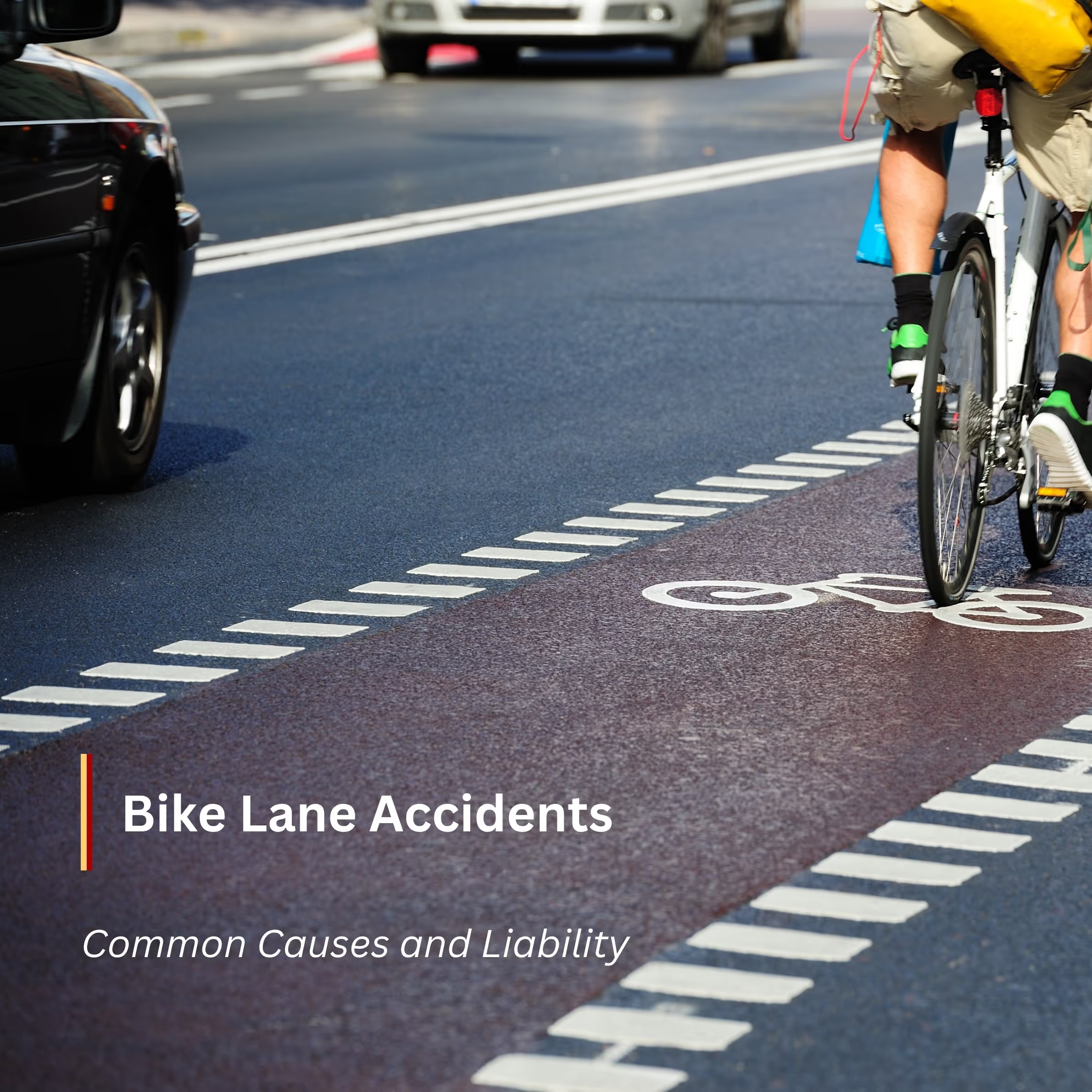
Bike lanes are designed to provide bicyclists with a designated area to travel and to help separate bicycle traffic from motor vehicles. However, cyclists may still encounter turning vehicles, opening car doors, distracted drivers, road hazards, and vehicles improperly entering or blocking bicycle lanes. Understanding common causes of bike lane accidents and California bicycle laws can help injured cyclists better understand their legal options.
California Laws Regarding Bike Lanes
Under California law, bicyclists usually have many of the same rights and responsibilities as drivers of motor vehicles when traveling on public roads. California Vehicle Code Section 21208 addresses the use of designated bicycle lanes. When a bike lane is available, a bicyclist traveling slower than the normal speed of traffic generally must use it. However, the law recognizes several circumstances in which a cyclist may leave the bike lane, including when passing another bicycle, vehicle, or pedestrian, preparing for a left turn, avoiding debris or hazardous conditions, or approaching an area where a right turn is permitted. These rules can become important when determining how and why a bike lane collision occurred.
How do Bike Lane Accidents Happen?
Bike lane accidents can happen in many different ways. In some cases, a driver's actions may contribute to the collision. In others, roadway conditions, parked vehicles, cyclists, or multiple factors may be involved.
Vehicles Turning Across Bike Lanes
A driver making a right turn may need to cross a bicycle lane and may fail to notice a cyclist traveling alongside the vehicle. Drivers should check mirrors, look for approaching cyclists, signal appropriately, and make turns with reasonable care. A collision may occur when a driver turns across the cyclist's path without enough time or distance for the cyclist to react.
Distracted Driving
Distracted driving can be especially dangerous around bicyclists because cyclists are smaller and may be less noticeable than other vehicles. Activities such as using a phone, adjusting navigation, eating, or focusing attention away from the roadway may prevent a driver from noticing a cyclist in or near a bike lane. Even a brief distraction can affect a driver's ability to react to changing traffic conditions.
Unsafe Passing
Drivers should allow enough space when passing bicyclists. Passing too closely may cause a direct crash or force a cyclist toward parked vehicles, curbs, or roadway hazards. The circumstances of an unsafe passing accident may include the distance between the vehicle and bicycle, roadway width, traffic conditions, vehicle speed, and the actions of both the motorist and cyclist.
Road Hazards and Poor Bike Lane Conditions
Not every bicycle accident involves another vehicle. Potholes, broken pavement, construction debris, loose gravel, damaged drainage covers, or other roadway conditions may cause a cyclist to lose control.
Who is Responsible?
Liability depends on the specific facts surrounding the accident. There is no automatic rule that a motorist, cyclist, property owner, or government agency is responsible simply because an accident occurred. Depending on the circumstances, potentially responsible parties may include:
- A driver who failed to yield, made an unsafe turn, drove distracted, or acted negligently
- A person who opened a vehicle door into a cyclist's path
- A public entity responsible for certain dangerous roadway conditions, depending on the circumstances and applicable law
- Another cyclist or road user whose conduct contributed to the collision
It is also important to note that more than one party may sometimes share responsibility for an accident.
Preserving Important Pieces of Evidence
Evidence can be especially important in bicycle accident claims because the parties may disagree about how the accident happened. Photographs or videos of the scene may document vehicle positions, bike lane markings, debris, road defects, traffic signals, skid marks, or property damage. Witness statements may provide additional information about what happened immediately before the collision. Other potentially relevant evidence may include, but is not limited to, the following.
- Police reports
- Surveillance footage
- Vehicle camera recordings
- Medical documentation
- Bicycle damage
- Electronic information when legally available
Since some evidence may be repaired, removed, or become unavailable over time, preserving relevant information soon after an accident may be important.
Types of Injuries
The following injuries may occur after a bike lane accident.
- Head injuries
- Facial injuries
- Road rash
- Shoulder or knee injuries
- Spinal injuries
- Soft-tissue injuries
- Fractures and other trauma
Seeking Legal Support and Guidance
It may be helpful to speak to a qualified personal injury attorney after suffering injuries from a bike lane accident. Victims should also document the accident scene and seek medical care as soon as possible. In addition, since each accident presents different facts, speaking with an attorney may help a person understand how California law could apply to their specific circumstances.
The Legal Team at KAASS LAW
Bike lane accidents can involve questions about traffic laws, insurance coverage, roadway conditions, and the behaviors of multiple parties. KAASS LAW can review the circumstances surrounding a bicycle accident and discuss potential legal options based on the available facts. If you were injured in a bike lane accident in California and have questions about your legal options, you may contact KAASS LAW to discuss the circumstances of your accident with an attorney.
Related Articles
View All Posts
Learn about shopping mall accidents, property owner liability, injured visitors' rights, and legal options available under California law.
Learn who may be responsible for elevator accidents caused by poor maintenance, how liability is determined, and what injured passengers can do next.
Learn who may be responsible for injuries caused by uneven sidewalks in California and how liability may depend on property control and local laws.