
The right to freedom of movement is a fundamental liberty that we often take for granted. However, there are situations where individuals may unlawfully restrain or confine against someone's will, leading to a violation of basic rights. This is false imprisonment, and it's a serious offense under California law. At KAASS LAW, we dedicate to protecting the rights of individuals who have been a victim of wrongful arrest and helping them seek justice for the harm they received. The following will explore the complexities of false imprisonment in California. Furthermore, this will be explaining the elements of the offense, potential defenses, and how our law firm can assist you in pursuing legal action.
False imprisonment in California is the act of intentionally taking away another person’s freedom without being legally allowing or justified to act so. This generally refers to situations when people are illegally and wrongfully under arrest by police officers for something that they did not deserve. Therefore, if someone is arrested for something that they do not deserve to be arrested for, the arresting police officers have intentionally and illegally taken that persons freedom. In these types of situations, officers can be found liable and/or guilty for false imprisonment. Bringing a lawsuit against police misconduct in California can be complex.
According to CACI 1400, the plaintiff must be able to establish the following elements to prove the claim of wrongful imprisonment:
Under California Penal Code Section 236 PC it is a crime to falsely imprison another person. But, false imprisonment is also a tort that can give rise to a civil lawsuit. The definition and elements of the tort of false imprisonment are similar to the crime under PC Section 236. A person guilty of the crime of false imprisonment will face criminal penalties. In a civil suit involving false imprisonment, a person sues another party to recover damages that false imprisonment caused.
In California police officers arrest people under the authority of Penal Code Section 836, which provides that a peace officer can make an arrest with or without a warrant when:
In case a police officer has a warrant to arrest a person, it doesn’t necessarily mean that the officer has the authority to arrest him. Illegal imprisonment can occur even if a warrant was issued before the arrest. A warrant issued as the result of a fraudulent claim made by a peace officer can lead to an unlawful arrest. The idea that an arrest warrant can be invalid is significant because it is one of the elements the plaintiff must prove to sue for false imprisonment. At the same time, it is also one of the defenses that a peace officer can possibly use. The other elements are similar to the above-mentioned elements.
An arrest without a warrant is illegal unless the arrested person has in fact committed a crime or the arresting police officer has reasonable cause to think so. There is no exact rule to determine the reasonable cause and each case has its own facts.
In California, a private citizen has the right to make another citizen’s arrest. A citizen’s arrest is legal in case the private citizen is able to prove that the perpetrator committed a crime. This also applies if a crime is about it happen. An arrest occurs when a citizen either restrains a perpetrator himself until the police arrive. Or alternatively, when a citizen calls for an officer, leading to the perpetrator’s arrest.
Here are some possible damages which the plaintiff may recover in a civil false imprisonment case:
If you or someone you know are a victim of false imprisonment, contact KAASS LAW for a consultation. We're here to help you understand your rights, navigate the legal process, and fight for the justice you deserve.

Gender discrimination happens when the company treats an employee differently because the person is a man or a woman. Gender discrimination in the workplace can be in different forms and the law applies to both women and men, though women are considered the predominant victim.
This is a federal law which prohibits employers from discriminating against several protected classes, including sex and gender. Title VII, Civil Rights Act of 1964 applies to employers who have fifty of more employees. It applies to federal, state, local governments, employment agencies public and private universities or colleges and labor organizations.
Equal Pay Act of 1963 is a federal law which expands on Title VII of the Civil Rights Act. The Act only protects against wage discrimination, unlike Title VII which covers all types of employment discriminations.

Carbon Monoxide, also known by its chemical abbreviation (CO), is a gas comprised of one part carbon and another part oxide. Carbon monoxide is a colorless and odorless gas which exposure can lead to serious illness or death. The most common causes of the wrongful death from Carbon Monoxide poisoning are improperly ventilated generators, stoves, fireplaces and water heaters. According to the California Air Resources Board carbon monoxide poisoning causes death from thirty to forty people each year
The primary law in California which protects victims from Carbon Monoxide Poisoning is California's Carbon Monoxide Poisoning Prevention Act of 2010, which requires carbon monoxide detectors to be installed in every dwelling unit intended for human occupancy. According to the Act all residential property that have a non-electric heater, non-electric appliance or have a fireplace, are required to install carbon monoxide detectors.
According to California Penal Code Section 459, burglary is the act of entering into a residential or commercial structure with the intent to commit either a theft crime or felony.
To be convicted of burglary the prosecution must prove the following elements:
California burglary law also differentiates between two forms of burglary charges which are categorized as first-degree burglary and second-degree burglary.
California first-degree burglary is burglary of a residence. A “residence” can be any of the following: inhabited house, a room within an inhabited house, inhabited floating home, inhabited hotel or motel room, inhabited trailer coach, inhabited floating home. Residence will still be considered inhabited even if the occupants left it because of a natural disaster or other type of disaster.
California Penal Code Section 503 defines embezzlement as fraudulent appropriation of property by a person to whom it has been entrusted. To commit a person in the embezzlement the prosecutor must be able to prove each of the following elements:
Embezzlement can only be proved if there is an actual evidence of trust or confidence between two parties. To “entrust” means to give a legal power to access or control the property. When a person abuses a position of trust and take or use a property which doesn’t belong to him his action are considered fraudulent. There must be a clear intent to deprive the property’s true owner of its use. This deprivation does not need to be lasting. Merely preventing the owner of the property from using or enjoying his property even for short period of time is considered enough to satisfy the intent element of embezzlement. Restoring the embezzled property will not protect you from punishment, but restoring property may help to decrease the harshness of the sentence.
California Penal Code Section 242 (PC-242) outlines the crime of battery as "any intentional and unlawful use of force or violence upon the person of another."
The following elements must be established in order to prove a charge of battery:
Battery is often discussed in connection with the criminal offense of assault. Although battery and assault are considered two completely different offenses.
Assault is described in Penal Code Section 240 as an action that may impose physical harm or unwanted touching on someone else. While, on the other hand, pursuant to Penal Code 242 battery is the actual infliction of force or violence on someone else.
In case of assault, any actual physical contact is not necessary to be present, whereas a battery cannot be accomplished without a touching of the victim. A person can be charged with battery even if no injury or pain is caused to the victim. The slightest touch is enough for a battery charge if it is done in an annoying, disrespectful or rude manner.
California Penal Code Section 187 (a) defines murder as “the unlawful killing of a human being, or a fetus with malice aforethought.”
To prove murder, the following must be present:
Under California murder law, Penal Code 187 (a), malice can be expressed or implied.
Proof of malice is enough to establish the state of mind necessary for murder. The defendant acted with express malice if there was an unlawful intention to kill the victim.
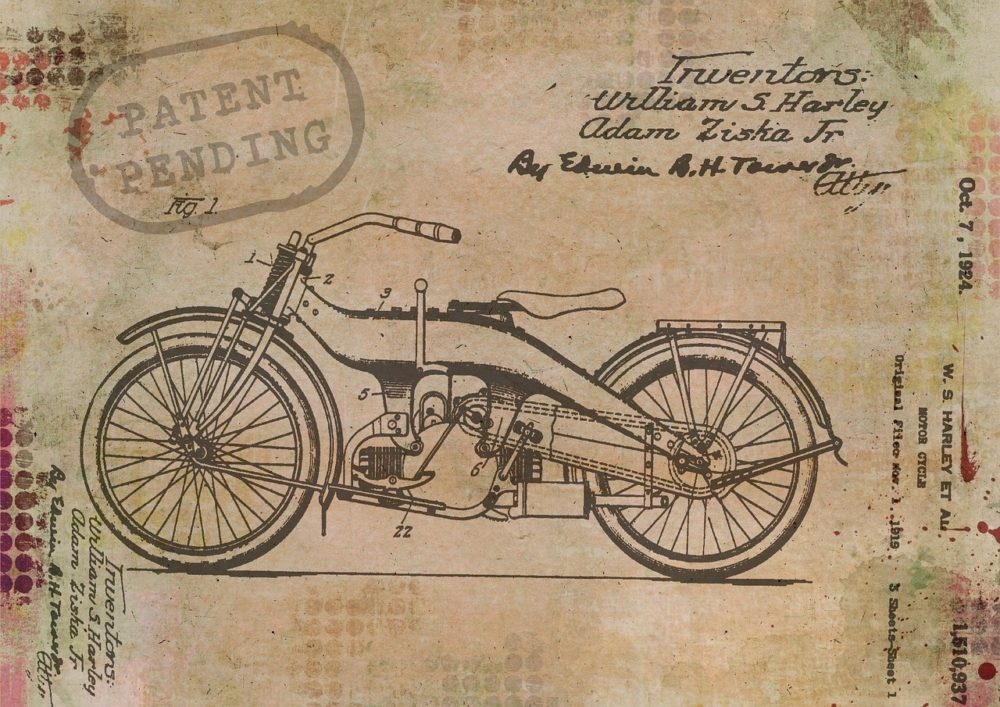
Understanding how to patent your creations is crucial because patents protect your ideas from others imitating and profiting off of your original work. The only downside to patenting your work is that the process of registering for a patent is arduous. Taking your idea from conception to patent requires a huge investment of time and energy to research and submit all of the necessary materials. However, to begin the process in the first place, you must first know what exactly a patent entails.
Put simply, a patent is a grant issued by the U.S. government which gives the creator or inventor the right to prevent all others from producing, utilizing, or selling their invention. In order to acquire a patent, either the inventor or the business for which the invention was produced must file a patent application with the U.S. Patent and Trademark Office, or USPTO for short. The exact cost of the filing fees varies depending on the type of patent application. But even before thinking of filing a patent with the USPTO, you should research already existing patents at the Trademark Depository Library and the California State Library Patent to determine whether your invention is already patented.

Intellectual property (IP) has become a bit of a buzzword in the legal world. The thing is that even though most people have some idea about the concept of intellectual property, they may not fully understand what it exactly it includes. In its simplest form, intellectual property is basically anything that is not tangible property. In other words, while tangible property would be things like your car, house, or jewelry, intellectual property instead covers art, photos, videos, poetry, inventions, music, films, designs, software, logos, graphics, designs, brands, and secrets.
Naturally, establishing ownership over those types of intangible assets is just as important as having ownership over tangible ones, if not even more valuable. As an example, take into consideration the value of the Apple logo and branding, the copyrights and respective royalties of Game of Thrones, and the many patents that go into making a new product for consumer use. All of these instances involve invaluable intellectual property that must be protected to ensure profitability and ownership. In fact, intellectual property just gets more and more crucial to our economy, especially with the boom of mobile tech and software.

A design patent acts as a form of legal protection given to an ornamental design of a functional item. In practice, what this means is that a design patent prevents others from using, selling, or copying an object with a design that is substantially similar to the design you claimed in the patent. As a result, you have exclusive rights over ownership and distribution of the design. This is a tremendous right to have, particularly since you put in a lot of hard work and effort into creating the design. Some examples of patentable designs include jewelry, furniture, containers, and computer icons.
It goes without saying that there exist different categories, or types, of patents. In the United States, there are three which occur most frequently and which offer the most utility and practicality. The first type is a utility patent, which covers new inventions and creations. The second is a plant patent, which enables an applicant to patent new strains of plants, and finally, the last type of patent is for design. This is the one you will want to apply for if what you created is a style, form factor, or design that has a practical utility to it. Fortunately, due to the vague wording regarding US patent law, there are lots of design creations that can be covered.
California’s Fair Employment and Housing Act is a state law which applies to both public and private employers, employment agencies and labor organizations. It is the most powerful anti-discrimination law in California and prohibits employers from discriminating against employees and job applicants. Individuals who are protected under this law:
Here are some examples of discrimination at the workplace based on a person’s gender.
When a person becomes the victim of gender discrimination at the workplace, he will likely experience the following:
According to the California state DFEH agency, a statute of limitations for filing an administrative charge is one year from the day of the last act of discrimination.
In California the damages available in an employment discrimination lawsuit depend on the type of discrimination involved and can include:
If you have experienced or are experiencing gender discrimination, talk to our experienced employment lawyer as soon as possible. Make sure that you do before the statute of limitations is up. KAASS Law can help you file an administrative charge and collect the right evidence to prove the claim in court. Get in touch now by giving us a call at (310) 943-1171 or by using the form below. [contact-form-7 id="5673" title="KAASS LAW Contact Form"]
CO device is designed to detect carbon monoxide and produce a distinct audible alarm. Carbon monoxide device provides a vital, low-cost and highly effective protection against carbon monoxide poisoning. It can be battery powered or plug-in devices with battery backup. The detector must be certified pursuant to the requirements of Underwriters Laboratories Inc. (UL) and the American National standards Institute (ANSI).
According to California’s Building Code Carbon Monoxide devices are required be installed outside of each separate sleeping area, however for maximum security the State Fire Marshal’s Office recommends to have a CO detector in each sleeping room. CO devices are also required to be installed in garages, basements and on each level of a multi-level home. In hotels, motels, and boarding houses the device must be placed in a sleeping unit that has a fuel-burning appliance. Because Carbon Monoxide is lighter than air and can be found with warm, rising air, detectors must be placed on a wall about five feet above the floor. The detectors can be placed on the ceiling far from a fireplace or flame-producing appliance.
Health and Safety Code Section 17926.1 particularly applies the requirements of the Act to landlords who rent dwelling units to tenants. According to the Act, CO devices shall be operable when the tenant takes possession of the unit. Landlords can enter units for purposes of maintaining or installing CO detectors with notice pursuant to California Civil Code Section 1954. Tenants are required to inform the landlords if the CO device is deactivate or is not operating properly. In case CO device or its batteries were unplugged or removed and the owner was not informed, the owner is not in violation of the law.
Violations of Carbon Monoxide Poisoning Prevention Act can lead to a maximum fine of $200. However property owners will be given a thirty-day notice to correct as a chance to avoid the fine.
California second-degree burglary occurs when if the burglary involved a commercial break in and other type of structure including stores and businesses.
Lack of Intent is a legal defense to Penal Code 459 Burglary If the defendant did not have intent to commit a theft or a felony at the time of entering the structure, he can’t be found guilty of burglary.
Factual innocence is also a legal defense to California burglary charge and occurs when an innocent defendant is accused for a charge which may include the following:
In California, first-degree burglary or residential burglary is always considered a felony. The punishment for first-degree burglary can include:
Under Penal Code Section 459 second-degree or commercial burglary is considered a wobbler. Conviction for commercial burglary carries a less harsh penalty than a conviction for first degree burglary. Depending on specific circumstances and the defendant’s criminal history this type of burglary can be charged as either a felony or a misdemeanor. Penalties for second-degree felony burglary are:
Hire the most dedicated Glendale criminal defense lawyer to the legal services you require! Our attorneys at KAASS LAW are highly dedicated to help our clients in every way possible. You can rely on our experienced lawyers in Glendale, Los Angeles, California, to carefully analyze the facts of your case to prove the facts necessary. We back all of our clients and we invite you to give us a toll free call at (310) 943-1171 to speak to our experienced Glendale criminal battery attorney today. Get in touch with us at KAASS LAW, 815 E Colorado St #220, Glendale, CA 91205, (310) 943-1171 at any time!
Embezzlement most commonly occurs in cases in connection with business, because most cases involve an employee/employer relationship. That’s why embezzlement is also called employee theft or employee fraud. Typically embezzlement involves theft which can be both grand and petty theft. However, embezzlement can also be connected to other crimes like forgery, burglary, receiving stolen property.
Defendant had a good faith belief to entitlement: Under California Penal Code 503 you might be exonerated if you had a reasonable belief that you had a right to the property you took. You have to show that:
Lack of criminal intent: Embezzlement, like all theft crimes, requires “specific intent,” so if you took property accidentally or then this defense can apply.
False accusation:False accusations are mostly common in embezzlement cases, because the injured party is almost always someone who had a preexisting business or personal relationship with the defendant.
Since California embezzlement is categorized as a theft crime, you will be faces penalties either charged under grand theft or petty theft depending on the type and value of the embezzled property. When the value of stolen property is less than $950 embezzlement is considered a form of petty theft and when the value is $950 or above embezzlement is a form of grand theft.
You will face the penalties for grand theft embezzlement if the:
In most cases grand theft embezzlement is a wobbler offense in California, thus it may be charged as either a misdemeanor or a felony. Cases involving firearms always carry felony penalties.
Penalties for misdemeanor grand theft embezzlement in California include:
Penalties for felony grand theft embezzlement in California include:
California Penal Code provides sentence enhancement in case grand theft embezzlement includes particularly large sums of money.
In California law petty theft embezzlement is a misdemeanor offense, punishable by:
Hire the most dedicated California embezzlement defense lawyer to the legal services you require! Our attorneys at KAASS LAW are highly dedicated to help our clients in every way possible. You can rely on our experienced lawyers in Glendale, Los Angeles, California, to carefully analyze the facts of your case to prove the facts necessary. We back all of our clients and we invite you to give us a toll free call at (310) 943-1171 to speak to our experienced Glendale criminal battery attorney today. Get in touch with us at KAASS LAW, 815 E Colorado St #220, Glendale, CA 91205, (310) 943-1171at any time!
You acted in self-defense or defense of another person: You cannot be convicted of battery in case you reasonably thought that you or someone else was in danger of bodily injury or death and you reasonably used force to defend against that danger.
You did not act willfully or intentionally when committing the harmful touching: You cannot be found guilty of the offense, if the battery was the result of an accident or the outcome of events.
Under California PC 242 simple battery is prosecuted as a misdemeanor.
The potential penalties for a criminal battery conviction include:
Battery causing serious bodily injury under Penal Code Section 243(d)
A defendant can be charged under California Penal Code section 243(d) if the victim of a battery suffers serious bodily injury. Battery under this section is also known as “aggravated battery.” A serious bodily injury is any serious impairment of physical condition. Aggravated battery in California law is considered a wobbler and it may be charged as either a felony or a misdemeanor, depending on the specific circumstances of criminal offense.
If convicted of a misdemeanor charge for this offense you can face up to one year in a California county jail. If it is charged as a felony you can face two, three, or four years in a California state prison.
In case the victim of a battery is a family or household member you can be charged with domestic battery. Under Penal Code section 243(e)(1) you are considered guilty of domestic battery if alleged victim is a:
Domestic battery is considered a misdemeanor and is punishable by up to one year in a California county jail and/or a fine of up to $2,000.
According to California Penal Code Section 187 the defendant faces 25-years-to-life in the California State Prison for a first-degree murder. In case the conviction is based on a “hate crime,” the defendant faces life in prison without any possibility of parole or early release. Factors that can lead to a conviction for a hate crime murder include the victim's race, sexual orientation, disability, or nationality.
Hire the most dedicated Glendale criminal defense lawyer to the legal services you require! Our attorneys at KAASS LAW are highly dedicated to help our clients in every way possible. You can rely on us to carefully analyze the facts of your case to prove the facts necessary. We back all of our clients and we invite you to give us a toll free call at (310) 943-1171 to speak to our experienced Glendale criminal battery attorney today. Get in touch with us at KAASS LAW, 815 E Colorado St #220, Glendale, CA 91205, (310) 943-1171 at any time!
According to California’s Penal Code a defendant can be convicted of first-degree murder if:
According to California Penal Code Section 187 the defendant faces 25-years-to-life in the California State Prison for a first-degree murder.
In case the conviction is based on a “hate crime,” the defendant faces life in prison without any possibility of parole or early release. Factors that can lead to a conviction for a hate crime murder include the victim's race, sexual orientation, disability, or nationality.
According to California Penal Code Section 187 the defendant faces 15 years-to-life in State prison for a second-degree murder. This sentence can increase to:
Felony murder occurs during the commission of inherently dangerous felony.
Inherently dangerous felonies are felonies that are so dangerous to human life that the likelihood of death during the commission of the crime is very high. California's felony murder rule refers to both first- and second-degree murders.
Actually it is not required that the defendant kill the victim in furtherance of the underlying felony. Any death that is reasonably connected to the felony is enough, regardless of whether it was intentional or accidental.
So, for prosecution under the felony murder rule, the following elements must be shown:
The list of such felonies includes but is not limited to the following: Burglary, Torture, Arson, Carjacking, Robbery, Rape, Kidnapping, Mayhem.
Hire a dedicated Glendale criminal defense lawyer to provide you with the legal services you require!
Our attorneys at KAASS LAW are highly dedicated to help our clients in every way possible. You can rely on our experienced lawyers in Glendale, Los Angeles, California, to carefully analyze the facts of your case to prove the facts necessary. We invite you to get in touch with us at KAASS LAW, 815 E Colorado St #220, Glendale, CA 91205, (310) 943-1171 any time!
If the invention is not patented, your next move should be to determine which type of application to file for your creation. There are three types of patents available and they are:
Prototyping an Invention While each of the aforementioned types of patents have their distinct uses, unless your innovation has to do with plants or ornamental designs, you will most likely end up filing for a utility patent as that is by far the most common type of patent to apply for. It’s also extremely beneficial for you to keep an accurate record of how you came up with the idea of your invention along with an outline of the step by step process. Those pieces of evidence will prove invaluable during the patent application process. Further, if you happen to have a prototype of your invention on hand, then you should also submit that along with the other records.
This is where it gets a bit murky, but technically, no. Ideas by themselves cannot be patented. You can only patent an invention or creation that was developed from an idea. The invention must be produced or a description of the creation must be included with your patent application for the consideration to hold any weight. It also goes without saying that in order to file for a patent, you must be the original inventor or creator, or have been assigned the invention by another person or serve as the legal representative of the original inventor. Ultimately, you may patent inventions, designs, and even plants so long as your inventions is:
How Our Los Angeles Patent Registration Attorney Can Help In order to obtain the actual patent that protects your invention or design, you need to file a non-provisional application, known as a Regular Patent Application (RPA). To get this patent approved, you will have to submit an application that demonstrates how to make and use the invention, why it is different from all other inventions, and describe what exact aspects of the invention or design should be patented. That process will require many hours of research and preparation in order to avoid having your application delayed or outright denied, both of which would significantly impede your chances of protecting your creation. We can help you to ensure your patent application has all of the necessary elements to get your creations under protection as quickly as possible. At KAASS LAW, we value originality and individuality above all else and we invite you to contact our firm to see just how easy we can make obtaining your patents and protections for your inventions and designs. Give us a toll free call at (310) 943-1171 to speak to our Trademark and Patent lawyers today. Our lawyers in Glendale, Los Angeles, CA, are fully dedicated to help you with any legal matters you may need assistance with. KAASS LAW, 815 E Colorado St #220, Glendale, CA 91205, (310) 943-1171
KAASS LAW is authorized to practice law in California. The above content is intended for California residents only. This content provides only general information which may or may not reflect current legal developments. KAASS LAW expressly disclaims all liability in respect to actions taken or not taken based on any of the contents of this website. The above content DOES NOT create an attorney-client relationship. KAASS LAW does not represent you unless you have expressly retained KAASS LAW in person at the KAASS LAW office. KAASS LAW helps clients in: Los Angeles, Burbank, Hollywood, Glendale, Van Nuys, North Hollywood, Studio City, Highland Park, Eagle Rock, Sunland, Tujunga, Sylmar, San Bernardino, La Crescenta, La Canada, Beverly Hills, Westwood, Santa Monica, Brentwood. Pacoima, Montebello, Commerce, Alhambra, Downey, Bell, Maywood, Walnut Park, Vernon, Lynwood, Echo Park, Silverlake, Mission Hills, Northridge, Woodland Hills, Encino, Canoga Park, North Hills, Porter Ranch, Chatsworth, Reseda.
If you created and own intellectual property, you’ll want to protect and profit from it. There are two primary ways of achieving that. One way is by making use of the intellectual property yourself; for example, you could manufacture a patented product or sell original copyrighted products you have ownership of. Alternatively, you can choose to license the intellectual property to another entity, effectively granting them the right to manufacture your patented product or make use of your copyrighted material in some way. That’s exactly where licenses come into play. They are basically contracts which help you regulate, manage, protect, and profit from your intellectual property and creations.
A licensing agreement permits an intellectual property rights holder (AKA the licensor) to make profit from an invention, creation, or novel work by charging a user (AKA the licensee) for the product’s use, distribution, or commercialization. Licenses also serve to protect proprietary rights in other related fields, like software development and other OS or virtual products. Importantly, you should know that you have the ability to use licenses to give someone permission to utilize your intellectual property in a certain way for a specific period of time for a particular price.
For the most part, all kinds of intellectual property that you will encounter fall nicely into one of the following four categories.
Since intellectual property law is one of the most complex areas of law, requiring tons of cross referencing with both state, federal and international law, it’s in your best interest to ensure you have an intellectual property lawyer in place to safeguard your rights and creations. Outside of that, the US Patent and Trademark Office (USPTO) and the US Copyright Office also offer invaluable information about the intellectual property registration process. A few intellectual property safety measures, such as copyrights, happen automatically in certain scenarios but even those should get formally registered with the government. Several other protective measures, like patents and trademarks, are granted by the USPTO and for those the application process is even more convoluted. As for trade secrets, those often don’t get “registered” formally at all, but they can still be subject to some protective measures in place through a variety of state and federal laws.
Despite all those intricacies, licensing agreements do not always have to be so long and hard to understand. If you think about it, an effective agreement is one that is upfront and transparent because it is more likely to be agreed upon and respected by both parties, and, ultimately, it’s more likely to be upheld and enforced by the courts. As such, there are certain terms, condition, and factors that you’ll always want to address in the majority of licensing agreements surrounding intellectual property.
The first major issue you’ll want to address is the scope of the license. For example, do you want the licensee to have unlimited use of your intellectual property, or do you want the licensee to only use your intellectual property in specific ways for a limited period of time? In this sense, you can think of licensing as assigning limited use rights for property to the leaser. The rights that the agreement provides should be broad enough so the buyer is interested in their stake in the deal, but narrow enough that you do not relinquish permanent, uncontrollable power over your valuable creation or asset. Imagine that you created a great song track that a company wants to use in the intro and outro of their latest ad campaign. You’d want to draft up a licensing agreement that limits the edits that the company can make to your original track, sets a time limit for how long the track can be utilized by the company, and ensures that the company provides credit to you somewhere in the ad or the website so that viewers can be aware of your work and your name.
Besides the scope, drafting up terms that describe and regulate the profits and revenue that your creation will generate is crucial. Some license agreements will simply work by having a one-time licensing fee, paid out in full. In this version of the deal, the licensor will immediately pay you some agreed upon amount and then they will be able to use your creation for a fixed period of time. Another way it could go down, is through recurring payments and profits such as royalties or monthly leases. In this scenario, the licensor has to pay you quarterly payments over over the course of the entire leasing period. It’s up to you to think about which of those arrangements would work best for your given needs and situation.
While the scope and revenue aspects are arguably the two most relevant parts of any licensing agreement, there is a plethora of other factors to consider mentioning as well. These can include:
Problems can always emerge in the realm of intellectual property and even after a licensing agreement is signed, sometimes the licensor may use your creation in a way that violates the terms of your agreement. They can breach the contract if they fail to compensate you fairly as per the agreed upon terms in the licensing agreement, by sub-licensing your property elsewhere against your agreement, or by any number of other means that can violate your terms. In these scenarios, you have the right to file a lawsuit against the party that committed the breach of your agreement in an attempt to enforce your intellectual property rights. You can seek remedies through damages, losses, or other harm that you may have sustained as a result of the licensee breaking your agreement.
As we have seen, intellectual property law is unfairly complex and tricky to navigate–especially on your own. This is because licensing agreements and intellectual property management requires specialized knowledge of state and federal laws pertaining to your rights as well as a strong awareness of business practices and judgements. To make sure you have the best experience with your new creation and to honor the integrity of your intellectual property, it is vital that you have access to skilled Glendale intellectual property lawyers in this particular field of law. We at KAASS LAW believe in your ability to produce meaningful novel works of art and innovation and we fight to ensure our clients receive the correct treatment and compensation for their intellectual and artistic property. If you or a loved one need legal counseling or help surrounding an issue regarding intellectual property, licensing, trademarking, or copyrighting, then do not hesitate to contact us. We invite you give us a call at (310) 943-1171 to speak to our Trademark and Patent lawyers today. KAASS LAW, 815 E Colorado St #220, Glendale, CA 91205, (310) 943-1171
KAASS LAW is authorized to practice law in California. The above content is intended for California residents only. This content provides only general information which may or may not reflect current legal developments. KAASS LAW expressly disclaims all liability in respect to actions taken or not taken based on any of the contents of this website. The above content DOES NOT create an attorney-client relationship. KAASS LAW does not represent you unless you have expressly retained KAASS LAW in person at the KAASS LAW office. KAASS LAW helps clients in: Los Angeles, Burbank, Hollywood, Glendale, Van Nuys, North Hollywood, Studio City, Highland Park, Eagle Rock, Sunland, Tujunga, Sylmar, San Bernardino, La Crescenta, La Canada, Beverly Hills, Westwood, Santa Monica, Brentwood. Pacoima, Montebello, Commerce, Alhambra, Downey, Bell, Maywood, Walnut Park, Vernon, Lynwood, Echo Park, Silverlake, Mission Hills, Northridge, Woodland Hills, Encino, Canoga Park, North Hills, Porter Ranch, Chatsworth, Reseda.
Another way that U.S. design patents stand out from others, is that they allow for the applicant’s work to remain hidden or secret. This can be particularly vital if the design is for a new, revolutionary product or software. With more and more emphasis being placed on smart technology, innovation in the field is going to rely more and more on intelligently designed products to captive consumer interest and to garner positive feedback to an ever-increasing amount of press outlets. For the competitive edge alone, having a guarantee that a design patent application will remain secret and not be published until after it is granted can be massive for both large companies and small, independent businesses and startups.
A great example of design patents playing a huge role in modern day product placement and marketing is how it can be a decisive factor in lawsuits. For example, in Apple v. Samsung, the pre-emptive design patents that Apple had applied for turned out to be the huge ace card in the dilemma, winning Apple the lawsuit and millions of dollars from Samsung. A great of relating utility and design patents is by considering Apple’s iPhone: the way it works is the result of many utility patents and the way it looks and displays information is the result of many design patents. As technology changes and adapts, the role of product design will continue to blur function and ergonomics, making novel designs more and more valuable.
Prior to thinking about how to file your design patent application, you’ll want to ensure that your design is, indeed, novel. For this, you’ll have to search through prior art and this step is one of the most grueling as the archive is very expansive and it can feel overwhelming to search through such a huge amount of patents. You’ll want to look closely for the combination of design elements that you wish to protect with your patent to make sure it hasn’t already been claimed. Even down to the font that you use can be subject to a design patent.
This is where you will need to put together all of your findings to present to the USPTO in your application. Here, you’ll want to mention what sets your design apart from others, highlighting its novel features. Further, you should include drawings and diagrams demonstrating this. Putting everything together, you’ll have everything you need to file your design patent application...but why go through all of that headache alone? At KAASS LAW, we are constantly inspired by the beautiful and innovative designs and creations of artists and visionaries. We have years of experience in filing for design patents. We work directly with you to document, record, gather, and showcase all of the novel features of your product design so that the application process is quick and successful. We invite you to give us a call at (310) 943-1171 to speak to our Trademark and Patent lawyers today. KAASS LAW, 815 E Colorado St #220, Glendale, CA 91205, (310) 943-1171
KAASS LAW is authorized to practice law in California. The above content is intended for California residents only. This content provides only general information which may or may not reflect current legal developments. KAASS LAW expressly disclaims all liability in respect to actions taken or not taken based on any of the contents of this website. The above content DOES NOT create an attorney-client relationship. KAASS LAW does not represent you unless you have expressly retained KAASS LAW in person at the KAASS LAW office. KAASS LAW helps clients in: Los Angeles, Burbank, Hollywood, Glendale, Van Nuys, North Hollywood, Studio City, Highland Park, Eagle Rock, Sunland, Tujunga, Sylmar, San Bernardino, La Crescenta, La Canada, Beverly Hills, Westwood, Santa Monica, Brentwood. Pacoima, Montebello, Commerce, Alhambra, Downey, Bell, Maywood, Walnut Park, Vernon, Lynwood, Echo Park, Silverlake, Mission Hills, Northridge, Woodland Hills, Encino, Canoga Park, North Hills, Porter Ranch, Chatsworth, Reseda.