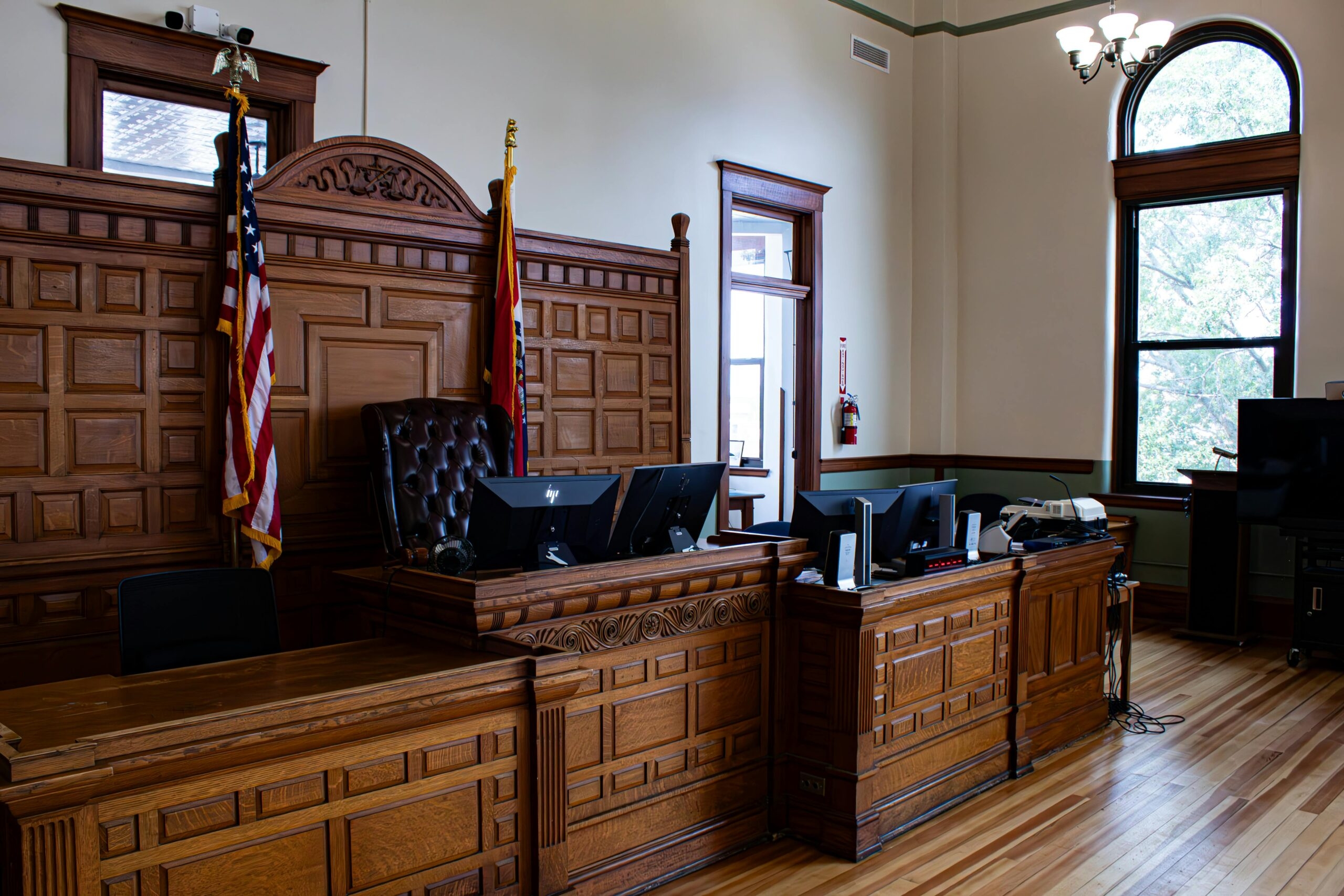
This is an overview of the elements of a Superior Court and steps of Civil Actions. But every case is going to vary.
The steps in a Civil Action
Bringing the Claim
The claimant prepares a claim report containing a clear description of the material facts on which the plaintiff relies. The court is issuing the claim statement. The claimant serves the claim statement on all defendants and files with the court an affidavit of service. If the defendant fails to defend the action, this service affidavit is necessary to obtain the default judgment from the claimant.
Defending the Claim
The defendant prepares and delivers a defensive claim on the claimant. Together, with evidence of delivery, files a copy with the court. The defendant may make a counter-claim against the claimant, cross-claim against a co-defendant, or make a claim against a non-party against a third party. Where a defendant fails to deliver a defense statement within the prescribed time, depending on the type of claim, the default judgment may obtain by the court registrar or a judge.
The Discovery
If the parties wish to obtain evidence through the discovery process, they must agree on a discovery plan. The parties expect to provide an affidavit to all other parties listing all relevant documents in the authority, possession or control of the party. At the request of a party, copies of the documents must be available. A party can serve on an opponent a notice of examination suggesting a time and place where the party needs to answer questions under oath. The exam records and transcribes upon request. Typically, for research, only parties can investigate. The maximum time period for discovery to investigate by each group is 7 hours.
When setting the Action down for the trial
By serving and/ or filing the record of the court, each party can set the case for jury. A record of the trial includes the copy of all trial pleadings and orders. The registrar puts the action on the trial register, or a judge in the assignment court will set trial dates at some sites.
The pre- trial Conference
The parties have to attend the pre-trial meeting to try to settle the dispute or to clarify the issues before a judge or court officer. The parties must arrange a pre-trial date and time with the registrar within 180 days of a case being scheduled for trial, which is appropriate to all parties. Whether the parties can not schedule a pre-trial within 180 days of the trial schedule, a pre-trial date will be scheduled by the registrar.
The Trial
The defendant and the claimant make opening remarks. The witnesses of the claimant will examine and cross-examine. The witnesses of the accused will examine and cross-examine. Closing arguments will be from the claimant and defendant. After both the sides have finished presenting the cases, a judge may give judgment in court. Though, sometimes the judge may not give the judgment immediately. However, he or she will give the judgment later (this is called the judgment reserving). For any further assistance and or seeking legal representation, contact KAASS LAW today!
The Writ of Execution: The party of whose favor judgment is given may have a written or order issued for the execution or enforcement of the judgment at any time within 10 years of its entry. If, after the judgment has been entered, the issuance of such a writ or order is retained or ordered by any judgment or court order or by the operation of law, the time during which it is so retained or ordered shall be excluded from the calculation of the 10 years within which execution or order may be issued. While the length of time the judgment obtained will continue to issue a letter of execution is ten years, according to Section 685 of the Code of Civil Procedure. Provide that a motion supported by affidavits of good cause may extend the time limit for issuance. Under the terms of the law, failure to supply the affidavits is as sufficient grounds to refuse the relief sought. The proof needed in the affidavits is sufficient where the affidavit stated that a search of county records found no property in the debtor's name. But that was the cause of the failure of the creditor to proceed under Section 681 of the Code of Civil Procedure. Likewise, where an alimony judgment creditor alleges that her failure to use Section 681 of the Code of Civil Procedure was due to being out of the state and lacking resources to pursue the assets of the defendant, it is sufficient according to this section for relief.
You have to file a form called a Notice of Appeal within a certain period of time.
How is the Notice of Appeal prepared by the Appellant?
In the judgment and/or order under appeal as well as the date of entry of judgment or order, the appellant fills in. The appellant, the appellant's lawyer, or the self-represented plaintiff who brought the appeal signs the appeal notice. Once the appellant completes the Notice of Appeal, both parties will get a copy and the original. This must submit with the division of the Superior Court of Appeals.
And what is the Service?
Paper service means, if you choose to file electronically, email, hand delivery or electronic transmission. You let the parties know what you are doing by mailing, or hand-delivering. Also, digitally submitting copies of the papers you want to file with the court. Hence in this case, the Notice of Appeal. Copies of all the papers you prepare (with the exception of a fee waiver or accommodation for disabilities) should be served on all lawyers and self-represented parties and the original lodged with the court. Only someone over the age of 18 who is not a party to the lawsuit can hand-deliver and/ or mail a document. For instance, if in an appeal you are in pro per, you can not send your notice of appeal to the parties by hand or by fax. Another, an adult who isn't a party, has to do it for you.
Guide for Using Judicial Council of California Civil Jury Instructions: Jurors' ease of understanding, without sacrificing accuracy, is the primary objective of these instructions from the Judicial Council. A secondary objective is to facilitate the use of lawyers.
Jury instructions as a statement of the law
While the instructions of the jury are not a primary source of the law, they are a statement of the law, a secondary source. The fact that the instructions are in plain English does not alter their status as an accurate legal statement.
How to use the Instructions?
The revision dates instructions: The original approval date and all revision dates are for each instruction. An instruction consider to revise if the title, instruction text or instructions for use change in a non-technical manner.
Section 262 emphasizes the importance of ministerial officers in ensuring the smooth and fair operation of the legal process. While their role is largely administrative, it is crucial for maintaining the integrity and efficiency of the court system. By understanding the key responsibilities and ethical standards outlined in Section 262, those involved in the legal process can better appreciate it. At KAASS LAW, we recognize the importance of clear legal procedures and effective administration. If you have questions about the responsibilities of ministerial officers, our team of experienced attorneys is here to assist you.
The Role of Ministerial Officers
Ministerial officers serve an important role in everyday operations in the court system. They are responsible for a variety of tasks, including, but not limited to:
Managing records
Overseeing the filing
Serving of legal documents
Maintaining court calendars
Ensuring smooth flow of cases through the judicial system.
In most legal systems, the tasks of ministerial officers are clearly there to prevent overlap with those of judicial officers. While a judge makes decisions about the merits of a case, a ministerial officer's role is handling tasks such as:
An appellate brief is an appellant's or respondent's written argument that explains why the higher court acted correctly or wrongly. It's time to prepare a brief once the record has had a compilation.
There Can Be 3 Briefs:
An opening brief of the appellant.
A brief of the respondent.
A brief of reply of the appellant.
The opening brief of the appellant tells the Court of Appeal what judgments or orders the appellant appeals.
Why the appellant believes that the higher court acted incorrectly in making those judgments or orders.
How the actions of the court hurt the appellant.
What the appellant wants the Court of Appeal to do about it.
If it finds that the higher court acted wrongly.
The brief of the respondent responds to each of the appellant's questions.
Displaying why the arguments of the appellant are incorrect and expressing support for the decision of the trial court.
The answering brief of the appellant addresses the respondent's claims.
Reveals how they do not resolve the arguments put forward in the opening brief of the appellant. In the reply summary, no new issues can be at present.
Elimination: the act of contemplating and refusing every option until only one is left. Superior and local courts deal with parts of the same case in many cases. When a matter is passed between the courts because the "lower" court level is not empowered to dispose of the whole case, the inevitable result is cost and delay. Preliminary proceedings are a prime example of criminal cases. Most criminal defendants, particularly in Los Angeles County, send their cases for a preliminary hearing transcript decision. A municipal court judge is currently conducting the preliminary hearing but is not permissible to sentence the accused because criminal sentences are not levied by the municipal court judge. The following better helps with the elimination of inefficiencies and delays in case processing.
It is important to have some clear understanding of the current legal framework before contemplating radically changing California's trial court system. Nevertheless, any brief explanation of such a complex undertaking would inevitably be somewhat oversimplified. Even so, a common factual basis from which to analyze the issue of unification is included here.
The Jurisdictional Divisions Between Trial Courts
The California Constitution places the state judiciary in the Supreme Court of California, the courts of appeal, and three levels of the superior, municipal, and judicial tribunals. Superior courts are general jurisdiction trial courts. We hear civil suits when the contentious sum reaches 15,000$, domestic partnerships, and jury problems. Superior courts handle criminal charges and juvenile cases in police divisions. Municipal and criminal courts use the same powers for all practical purposes. Once the amount of controversy is $15,000 or/ and less, including small claims cases, they are empowered to hear civil suits. Municipal and appellate courts treat misdemeanors, preliminary felony hearings, and traffic cases (both misdemeanors and offenses) on the criminal side. That county of California must set up a superior court. Counties must be split into districts for municipal and court establishment purposes. Districts with a population of over 40,000 must have a municipal court. No city could be divided into more than one division of the tribunal.
The Overall System of Administration
The Judicial Council is the California judicial system's pinnacle in principle. The Council includes the Chief Justice and another Supreme Court Justice, 3 Appeal Court Justices, 5 Superior Court Court Judges, 3 Municipal Court Judges, 2 Justice Court Judges, 4 State Bar Members, and 1 member of each Legislature House. The role of the Council is to improve the administration of justice by monitoring judicial affairs, making recommendations, carrying out demonstration projects and adapting the regulations of the court. The Administrative Office of the Courts shall have the staff of the Judicial Council to assist with its work. The Judicial Council, in addition, exercises very little administrative control over the trial court, which essentially operate as autonomous, locally based units. The main task of the Judicial Council is to provide central planning and analysis in relation to the courts of the jury.
According to Code of Civil Procedure of California (hereinafter: CCP) Section 191 of Title 3 “Persons specially invested with powers of a Judicial Nature” of Chapter 1 “Trial Jury Selection and Management Act”: The Legislature agrees that jury trial is a respected constitutional right and that jury service is a citizenship responsibility.It is the State of California's policy that all persons selected for jury service are randomly selected from the population of the area served by the court; that all qualified persons get an equal opportunity, in compliance with this chapter, to be known for jury service in the state as well as an obligation to serve as jurors when summoned for that purpose; and that it is the responsibility of the State of California.
The Types of Jury
There are three types of Juries:
Grand juries established in accordance with Part 2 of the Penal Code, Title 4 (starting with Section 888 of CCP).
Under California law, a Superior Court has jurisdiction to make judicial decisions on the custody as well as care of children within the meaning of the Federal Immigration and Nationality Act (8 U.S.C. Section 1101 et seq. and 8 C.F.R. Section 204.11), which includes, but is not limited to, the divisions of the superior court in the juvenile, probate and family courts. Pursuant to Section 1101(a) (27) (J) of Title 8 of the United States Code, these courts have authority to render the factual findings required to allow a child to apply to the United States Citizenship and Immigration Services for registration as a special immigrant juvenile.
The Order
When, pursuant to Section 1101(a) (27) (J) of Title 8 of the United States Code, an order is sought from the superior court making the necessary findings regarding the special immigrant juvenile status and there is evidence to support those findings, which may consist solely of, but is not limited to, a statement made by the child who is the subject of the petition, the court shall issue the order, whatever is the case:
One of the following was the child:
The Procedure Under the Writ
For forms, check link. An undertaking has not needed as a condition precedent to levy under the execution letter, with the exception of levies directed at bank accounts not standing alone in the name of the judgment debtor. The writing, however, is not self-execution when it publishes. The sheriff or other officer to the one who must it address to will not differ from the instructions signed by the judgment creditor or his lawyer describing the property to be levied on. It has generally held that the sheriff is becoming, by virtue of his instructions, at least as to the manner of execution, an agent for the judgment creditor.
The life of the Writ
The life/ period of the writ no longer extends 60 days. It must return to the court in which judgment enters in no less than ten days, nor more than sixty days after receipt by the officer to whom it addressses. The return shall have no bearing on the sale of the property imposed under that writ before the day of return. Any fee on that writing after that date, however, amounts to an infringement or conversion.
The Judgment Liens
In order to recognize the debt, the judgment creditor need not rely solely on execution. A certified summary of any California judgment or that of any federal court may register with the county recorder in compliance with Section 674 of the Code of Civil Procedure. If you need further assistance on this matter and seek legal interpretation or preparations, contact KAASS LAW today!
Depending on if you're delivering by mail or in person, the service provider needs to fill out the Service Evidence properly. The originals of the Appeal Report and Service Evidence are filed with the Superior Court's Appeals Division.
Can there be a charge to make an appeal?
The appellant will have to include, together with the Notice of Appeal, a $775 filing fee per check, money order, cash, credit card or electronic transfer of funds unless the appellant has a waiver of fee. The check or money order must be payable to the Executive and/or to the Clerk Officer Court of Appeal. A second check or money order for $100 must also be payable to the "Clerk of the Superior Court". This is for a deposit for the transcript of the clerk.
What could happen if you don’t pay the fees?
Whether these charges are not paid or suspended, or if the appellant's check bounces, the court must inform the appellant that he or she has 15 days to either pay or waive the charge, or the appeal might be dismissed. If the case falls under dismissal, the court can reinstate the appeal on a petition. If there is a good reason why the payment is late, the court can reinstate the appeal on a petition. When the court grants the motion to re-establish the appeal, it will give a specific time to make payment. For any further assistance and or legal representation, contact KAASS LAW today! Here are some forms in regards to making an appeal.
No new revision date by additions or changes to the Sources and Authority and Secondary Sources.
The Directions for use: The instructions include directions on how to use them. The directions alert the user of the instruction to special circumstances and may include references to other instructions that should or should not be of usage. In some situations, the guidelines contain suggestions for changes or supplementary instructions that could be of requirement. Reference should be to direct for use before using any instructions.
Authority and Sources: Each instruction identifies the primary sources presenting the basic legal principles supporting the instruction. Applicable statutes are listed together with the quoted material from cases relating to the subject of the instruction. Authorities include to support the instruction text, the burden of proof, and legal and factual matters.
Sources and Authority
Cases should always treat as a digest of relevant citations. The use of an abstract does not necessarily mean that the committee finds it a legal authority. Actually, they provide a starting point for further legal investigation into the subject.
Common Case Instructions: These instructions have been drafted for the general case form and can in many cases be used as drafted. Consumers will have to tailor the instructions to the particular case if special or complicated circumstances prevail.
The Multiple Parties: When jurors interpret instructions that refer to parties by name rather than legal terms such as "plaintiff" and "defendant" more readily, the instructions provide for add on names. The guidelines use single-party claimants and plaintiffs as models of ease of presentation. If a case involves multiple parties or cross-complaints, usually in the directions the client will need to switch the parties.
The Uncontested Elements: While certain elements might be the subject of a stipulation that the component has to prove, the instruction should set out all the elements and show those which consider to have to prove by the parties' stipulation.
The omission of uncontested elements could leave the jury with an incomplete understanding of the cause of the action and the full burden of proof of the plaintiff. It is best to include all the elements and then say that the parties have agreed to determine one or more of them and that the jury does not have to decide. Contact KAASS LAW today for any further legal assistance and or representation!
Clerical Duties: Ministerial officers often oversee the organization and maintenance of court records.
Process Serving: They may have the duty in the delivery of legal documents, such as summons, complaints, and subpoenas, to ensure proper notification of parties involved in a legal matter.
Courtroom Management: Ministerial officers are responsible for maintaining the order and schedule of proceedings within the courtroom, managing exhibits, and assisting the court.
Execution of Court Orders: Ministerial officers may have the duty to enforce court orders, such as the collection of fines or other legal directives.
Legal and Ethical Considerations
Despite their non-judicial role, they still hold high standards of conduct and must act in accordance with the law. The responsibilities outlined in Section 262 require these officers to maintain impartiality and diligence in carrying out their duties. Any errors or negligence can significantly impact the outcome of a case, and there may be legal consequences for failing to adhere to the established procedures. Ethically, ministerial officers are expected to exercise caution in the performance of their duties, ensuring that they do not overstep their authority or engage in actions that could be perceived as biased or unfair. The integrity of the judicial process depends on these officers performing their duties with accuracy, professionalism, and respect for the legal system According to Code of Civil Procedure of California (hereinafter: CCP) Section 262 of Title 4 “Ministerial officers of Courts of Justice” of Chapter 1 “Of Ministerial Officers Generally”: The guidance or jurisdiction of a party or its lawyer to a sheriff in connection with the execution or return of the proceedings or any relevant act or omission shall not be available to discharge or relieve the sheriff from any responsibility for negligence or wrongdoing, unless the party's counsel, including the signature and name of the attorney, provides written instructions The instructions may be transmitted electronically pursuant to Chapter 2 (starting with Section 263 of CCP) subject to subdivision (c) of Section 263 of CCP.
What to know about Ministerial Officers Generally?
A sheriff or other ministerial are enforcement officers or officials who are responsible for carrying out legal orders.
They have the legal right to carry out, "execute", any legal orders or processes that are properly issued.
"Regularly on their face" refers to that these orders appear to be in order and legitimate on the surface.
Even if it is mistake, sheriff or officers can still legally enforce the order.
Upon request, the officer must show the legal order or process they carrying out.
The officer must make the legal process available for viewing at their officer during regular business hours.
Any legal order or task that the sheriff didn't complete, due to death, resignation, or end of of their in office, the tasks are not forgotten or ignored.
If the sheriff, or whoever takes over after the sheriff, is selling real estate as part of a court order, he or she must do so.
The legal documents, with a signature of the sheriff or their successor, is valid and legally binding.
Sheriff can record the transfer of the real estate electronically.
In what cases can the court or judge designate a person residing in the county, called an elisor, to execute process or orders in an action or proceeding?
Someone in the county or a judge can execute the proceedings or order of appointing an elisor, in the following:
When both sides are the sheriff and the coroner.
Where either officer is a defendant and the charges are against the other party.
If there is any evidence of the officers being bias, prejudice, or unfit to act impartially. The judge can intervene the proceeding. Contact KAASS LAW for any further assistance and or legal representation. If anyway you believe there is some type of foul play, or any form of misconduct, reach us right away!
The opening brief of the appellant is due 40 days after the appellant has been informed by the Court of Appeal that the transcript of the record or reporter is filed. Whether the appellant prepared his/ her own appendix and did not request the transcript of a reporter, the opening brief and appendix of the appellant are due 70 days from the date on which the appellant filed in the superior court the election of rule 8.124. In either case the Court of Appeal shall send the appellant a notice specifying when the opening brief of the appellant is due.
The Brief of the Respondent
You will need to address the facts and legal issues raised in the opening brief of the appellant if you are the respondent. First of all, make sure
that there is a final judgment if the appeal is from a judgment or
that the order is appealable, that the appeal is from an order and
that the notice of appeal has filed on time or that the appeal has been filed on time.
If there is a problem with the appeal, you can file a motion to reject the appeal and/or argue in your respondent's brief that the appeal should have a rejection.
The Brief to Reply the Appellant
Why a brief reply from an appellant? Why is there no response to the answer? Because the appellant has the burden of proving that the trial court erred to the Court of Appeal, the defendant has the opportunity to respond to the brief of the respondent. The brief reply from the appellant is optional. No new issues can be raised in the reply as there would be no opportunity for the respondent to refute them. The appellant will explain how the respondent did not combat the statements of the appellant contained in the opening brief; answer the cases and points posed in the brief of the respondent; and respond to new questions raised in the brief by the respondent. For any further assistance and or seeking legal representation, contact KAASS LAW today!
A Superior court judge needs to read the transcript
The judge will hand down the defendant's sentence.
Since the judge of the municipal court has no authority to dispose of the case immediately after delivery of the transcript, the defendant is liable to delay in the final disposition of his case, a delay that is also costly for the trial. There seems to be little countervailing public benefit in having 2 (two) judges examine the same content, unless one assumes that sentencing is better than sentencing a municipal court judge who does not see live witnesses. Multiple other "friction costs" arise from various trial court structures getting elements of a single criminal case. Defendants must always arrange in both courts and they must name twice as indigent lawyers. Motions in both courts can set to bail, to restrict pre-trial ads, and for discovery. If a defendant pleads not guilty to a crime because of insanity. Then that component of a municipal court case has to prosecute in the higher court. There are also several points of inter-system conflict in civil cases. If a lawsuit is in a municipal court seeking less than 15,000$ (fifteen thousand USD) in damages, a cross-appeal for an amount over 15,000$ (fifteen thousand USD) allows the entire case to appeal to the Superior Court. Therefore, a cross complaint with an exaggerated claim of harm will easily deprive the defendant of his option of the Municipal Court platform. Similar problems occur when an application for declaratory relief occurs, that the municipal court can't fully grant. Any manager who sees 2 (two) separate and fairly uncoordinated service delivery systems dealing with aspects of the same problem will undoubtedly want to combine the 2 (two) systems, in the absence of extremely important countervailing considerations. This is only the little part of the problems on elimination of inefficiencies and delays in case processing. Contact KAASS LAW Today for any further legal assistance and or representation!
The underlying principle of the restructuring of the trial court is that these various, decentralized and conflicting providers of judicial services should be replaced by a framework "where the courts are structured and operated in such a way as to provide a consistent administration of justice throughout the state as nearly as possible." A basic principle of a consolidated trial court system is a greater degree of centralized administration. State trial courts will operate under similar sets of guidelines, laws and working conditions whenever possible. There are different mechanisms and models to developing a unified court system. A number of key indicators for determining the extent to which a system is consolidated include the degree to which:
the structure of a trial court has been generalized;
the judicial authority was centralized;
the administration of the court has been centralized;
the budgeting has been centralized; and
the government has accepted the funding of the courts.
In each county, one commissioner shall appoint by a majority of the judges of the superior court and shall serve at the pleasure of the county. In either county where a superior court administrator or executive officer is present, that person shall serve as the commissioner of the ex officio jury. In any court jurisdiction where, on the effective date of this section, any person other than a court administrator or clerk / administrator serves as a jury commissioner, that person shall continue to serve as such at the pleasure of the appointing court's majority of judges.
Any commissioner of the jury may appoint deputy commissioners of the jury whenever the business of the court so requires.
In accordance with the purpose and scope of the Law, the jury commissioner shall be primarily responsible for managing the jury system under the general supervision of the court. He or she will have the authority to establish the necessary policies and procedures to fulfill this responsibility.
Who is not applicable to be in Jury?
According to Law All individuals are eligible and qualified as prospective jurors of the court, with the exception of:
Persons who are not U.S. citizens.
People under the age of 18.
Individuals who are not citizens of the State of California as defined in compliance with Article 2 of Chapter 1 of Division 2 of the Election Code (starting with Section 2020).
Individuals who are not jurisdictional citizens in which they are to serve.
People accused of malfeasance in the workplace or a criminal offense and whose has no civil rights.
Individuals who do not have sufficient knowledge of the English language given that no person is considered to be incompetent. This is solely because of the loss of sight or hearing in any degree. As well as other impairment that impedes the ability of the person to interact or impedes or interferes with the mobility of the individual.
Individuals who serve in any court of this state as grand or trial jurors.
Individuals subject to conservation.
No person shall be excluded from eligibility for jury service in the State of California for any other reason than the reasons set out in Section 203 CCP. Contact KAASS LAW today for any further legal assistance and or representation.
Legally assigned to, or placed under the control of, a government agency or organization, or a court-appointed person or entity. The court shall indicate the date on which the order was for the dependency, commitment or custody.
That the child's reunification with one or both parents of the child was not to be viable under California law due to abuse, neglect, abandonment, or a similar basis. The court shall specify the date on which it was determined that reunification was not viable.
It is not in the best interests of the child to return to the previous country of nationality or country of last habitual residence of the child or of the child's parent.
What is Special Immigrant Juvenile Status?
Special Immigrant Juvenile Findings allows you to live lawfully in the U.S. You can apply for permission to work/ operate. You should apply for a green card immediately (legal permanent residency).
Who can be qualified for Special Immigrant Juvenile Status?
You can apply for Special Immigrant Juvenile status if:
You're under the age of 21,
Martial Status: Single
You're already in the U.S.
U.S. judge won't let you stay with one or both of your parents because they hurt you, didn't care about you, or left you to care for you without someone.
How can one apply for Special Immigrant Juvenile Status?
There will be two steps:
Apply for a California court order from the Special Immigrant Juvenile Status.
Register to U.S. for the Special Immigrant Juvenile Status Programs for Citizenship and Immigration.
What should someone be careful about here?
Tell an attorney as soon as possible if you are 17 years old or older!
California courts make the decisions you need after turning 18 in some cases.
Getting Special Immigrant Juvenile Status won't help you provide your parents with immigration benefits. This is valid even if one of your parents has a good relationship.
For any further legal assistance and or seeking representation, contact KAASS LAW today!