It's natural to feel stress and confusion of what to do after receiving an injury in a car accident or other type of accident. You may be coping with financial hardship in addition to the physical and emotional effects of your injury. Many people have lost income as a result of their inability to work, while also facing mounting medical expenditures. Therefore, if someone else's negligence caused the accident, you may be able to hold them liable for the financial losses.
What is the Collateral Source Rule?
It's a legal principle that's been around for centuries. Its goal is to safeguard persons who was received injures in car accidents. If a person is hurt, they are able to get all of the money they need as soon as possible. If a third party compensates said person, it should have no bearing on what the plaintiff pays. The rule performs two functions. The evidential function is the first one. Simply put, it is a rule that implicates the rules of evidence and ensures that the defendant will not be able to bring up third-party payments made to the plaintiff. The substantive function is the second. This pertains to a person's civil rights and obligations, as well as the victim's right to recover the damages. In other words, just because a victim has received compensation from a third party does not indicate that it will lessen their losses.
What is the Result of the Collateral Source Rule?
The collateral source rule states that any compensation received by an accident victim from a source other than the defendant in a personal injury case cannot be deducted from the defendant's final award. There are essentially two things that result from the collateral source rule, which are as follows:
The rule stops the defendant from bringing up payments made by a third party for the plaintiff’s injuries
The rule protects the plaintiff’s right to recover damages from the defendant.
What is an Example of Evidence that Cannot Be Used Under the Collateral Source Rule?
An example of those evidence includes:
Payments from insurance companies who reserve the right to substitute to the rights of the plaintiff;
Gratuitous sources; or
Insurance companies who are unable to recover any of the money they paid the plaintiff.
Are There Any Exceptions to the Collateral Source Rule?
Yes, there are two exceptions to the collateral source rule, which are as follows:
In a medical malpractice lawsuit, the healthcare provider can choose to introduce evidence of any amount payable as a benefit to the plaintiff as a result of the personal injury;
If an insurance company has an agreement with a healthcare provider that the insurance company shall pay a reduced fee for services rendered to the plaintiff. Therefore, the plaintiff’s damages would be reduced to the amount the insurance company actually paid on the plaintiff’s behalf.
Can a Subrogation Clauses Become an Issue for Purposes of the Collateral Source Rule?
Yes, subrogation clauses inserted in policy contracts of insurance companies may be an issue for purposes of the collateral source rule. The reason why is because a subrogation clause can help an insurance company recover the costs of the benefits it has paid the plaintiff after an accident.
Los Angeles Personal Injury Attorney
Contact our Glendale personal injury lawyer today for a consultation and case review. Please feel free to give our office a call at 310.943.1171.
Being an accessory after the fact is illegal under Penal Code 32 PC. Its definition is knowingly harboring, concealing, or assisting a felon in order to keep them from being under the arrest. This is a crime that carries a maximum sentence of three years in state prison.
Who is an “Accessory After the Fact” Under Section 32 of the California Penal Code?
Under the legal regulations, accessory after the fact means the person who “harbored, concealed or aided" the person who committed the felony to assist him to escape punishment. As a result, the presence of the following factors must be present in order to understand when one can be guilty for committing this violation:
A felony shall be committed- a person cannot be convicted in case of a misdemeanor
The person knowingly should assist the individual who committed the crime
The person should have the intention to protect the individual from punishment
The assistance should be provided after the commitment of the fact
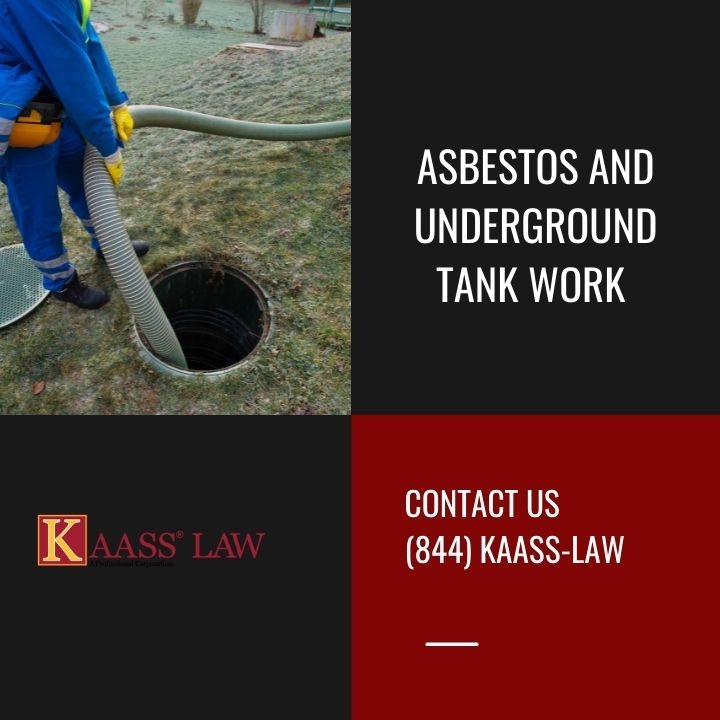
It is highly dangerous work to deal with asbestos and underground tank works, which can cause big property damages and serious health injuries if not done correctly. A person (including a licensed contractor) who performs asbestos-related work without certification, or who installs or removes an underground storage tank without certification, is in violation of California's Business and Professions Code 7028.1 BPC.
What are Asbestos and Underground Tanks?
Asbestos is a high heat resistant fibrous silicate mineral. An underground tank is "a tank and or any underground piping which is connected to the tank, and at least 90 percent of the combined volume of which is underground." Such tanks are usually used to store petroleum and other similar materials. California Business and Professional Code, with its section 7028.1, makes it a crime for a contractor to perform the following actions:
to perform or hire to perform asbestos-related works without certification
to install or hire to install underground storage tanks without certification
to remove or hire a contractor to remove underground storage tanks without certification
Cycling is a popular and eco-friendly choice in California, offering benefits like avoiding traffic, improving fitness, and reducing your carbon footprint. It also serves as an alternative for people who want to avoid the dangerous combination of alcohol or drugs with driving. While bicycles are not motor vehicles under California law, cyclists must still follow specific regulations, including those about cycling while intoxicated. Understanding these laws is crucial for anyone planning to ride their bike under the influence of alcohol or drugs.
Understanding "Cycling Intoxicated" Laws
In California’s cycling laws, a bicycle is any human-powered vehicle with one or more wheels, typically propelled by pedaling. It includes bikes powered by gears, chains, or belts. However, motorized bikes or mopeds are not considered bicycles. These bikes are subject to the same DUI laws as motor vehicles, so if you're riding one, you must follow the same alcohol and drug restrictions as drivers.
According to California Vehicle Code (CVC) Section 21200.5, a refers to any public road or street, but not freeways. Bicycles are generally not allowed on freeways. Cyclists must stay on permissible roads and avoid restricted areas like freeways.
A quitclaim deed is unlike any other deed. It's a quick and simple form that can be completed in minutes to transfer real estate properties. However, despite their numerous benefits, quitclaims are not appropriate for every real estate transaction. These deeds, however, do not guarantee that the seller has any interest in the property at all. This makes them unsuitable for regular real estate transactions.
What Are the Benefits of Quitclaim Deeds?
A quitclaim deed is a quick and easy way to transfer property ownership, but it is only recommended in certain circumstances. A quitclaim deed is a legal document that transfers real estate ownership from one person to another. Quitclaim deeds are simple forms for transferring real estate interests. They are short forms that you can fill out quickly and sign in front of a notary. All that remains is to enter the buyer's and seller's names, as well as the legal description of the property. Most states, including California, require you to sign in front of a notary.
What Are the Drawbacks of Quitclaim Deeds?
Don't be swayed by the quitclaim's ease of use and invite it into every real estate transaction. Because it transfers all of one person's interest in the property to another, a quitclaim deed is quick and simple. On the other hand, it makes no guarantees about what that interest might be. The deed transfers any claims the seller may have to the property. If the seller has no ownership interest in the property, no ownership interest is transferred. If he owns 10%, 40%, or 80% of the property, that is what is assigned to him. A quitclaim deed also makes no guarantees regarding liens, leases, or other interests that may affect the property.
Fortunately, to qualify as a criminal annoying communication, a phone call, text message, or other communication must be more than just annoying. It must use filthy language or make threats, or it must be part of a series of harassing phone calls. The bad news is that determining what form of vulgar language or threats might lead to criminal liability for irritating phone calls is not always easy. The courts in California are still attempting to figure this out as well. This means that it may be difficult for someone to know whether or not what they're doing is illegal.
Penal Code 653m PC- Are Annoying Calls Prohibited by Law?
Making annoying phone calls and communicating with people is prohibited by law. Let's examine what are the criteria to define that communication is annoying;
calls and communication shall be made by the intent to annoy
shall contain any obscene language, or threat to injure the person, his family member, or property
repeated communication shall have the intent to annoy or harass
We can conclude that there are several types of criminally annoying communication under the law;
Despite ongoing efforts across the United States to expand knife rights, California maintains strict regulations on certain types of concealed and deceptive knives. One such weapon is the air gauge knife, a rare but prohibited item under California law.
In this article, we’ll break down what an air gauge knife is, why it’s illegal, the penalties involved, and what defenses may be available if you’re facing charges related to one.
What Is an Air Gauge Knife?
According to California Penal Code Section 16140, an air gauge knife is defined as:
"An instrument that appears to be an air gauge but has concealed within it a pointed blade."
In simpler terms, this is a deceptive weapon that:
Looks like an air pressure gauge, often used in automotive or tire maintenance.
Conceals a knife inside that is hidden from plain view.
These deceptive features make it especially dangerous, as it disguises a blade in an everyday-looking object. Because of this concealment, lawmakers have criminalized the possession, manufacture, and sale of it.
No driver, unfortunately, is insured against a car accident. After a car, truck, or motorcycle accident, drivers have several options for getting their compensation for vehicle repair. While the damaged vehicle is in the process of repairing, the at-fault driver or his or her insurer is also liable for the payment of renting a similar vehicle. However, just because another driver is at fault does not guarantee that the responsible party will pay up without a fight.
Who is Responsible for Paying Your Car Repair Bills?
The negligent driver who is the "at fault" party for the car accident, shall be responsible to compensate you for the caused injuries. However, if you have collision coverage, you can decide to seek compensation from the insurer. In any case, the right option for you is to file a notification with the negligent driver as you can later decide that the best option for you is to seek compensation from him. If you have optional collision insurance, the insurer is obliged to pay the costs of repairing the vehicle, regardless of the fact who is the liable party in the accident. This kind of insurance is not mandatory under California law; however, many drivers obtain it. The insurer afterward is eligible to seek reimbursement from the other driver who is at fault of the accident. In case you do not have collision coverage, you have several options to decide on:
16028(a) VC states that “upon the demand of a peace officer...any person who drives a motor vehicle on a highway must show proof of current auto insurance for the vehicle at the time the demand is made." A ticket for not having insurance in California is a violation. Offenders will be issued a ticket and will be required to pay a fine ranging from $100 to $200.
What Are the Minimum Requirements of Insurance?
Insurances have different minimum requirements. It is important to note and understand such requirements for private passenger vehicles. The list of minimum requirements of insurance are as follows:
15,000 for a single persons injury/death
$30,000 for multiple person's injury/death
$5,000 for property damage
Note: liability insurance compensates a person for property damage and/ or personal injury, VC 16028 requirements are not satisfied by comprehensive or as well as. Also, California does not require or motorist coverage to be carried by a driver For motorists who cannot afford insurance, they may be eligible for the information can be found at mylowcostauto.com or via phone at 966-602-8861 If a person carries another state's insurance due to lower rates. If the fraud is committed, the driver license of the person may be revoked or suspended, drivers insurance will be canceled, and the driver may face time in county jail
Air pollution in scientific literature is usually defined as “releasing pollution into the air, which can be detrimental to human health and the planet as a whole. WHO data shows that air pollution kills over seven million people worldwide every year, thus it is a major threat to the health of people and the climate of the earth. This causes the USA as a whole and the states to develop legal regulations for air pollution control and punishment of air pollutants. The Clean Air Act authorizes the US Environmental Protection Agency to protect public health with the help of regulating the emissions of harmful air pollutants. In California, Health and Safety Code lists the actions which are considered unlawful from the perspective of air pollution. The appropriate sections are 2400, 42400.1, 42400.2, 42400.3, 42400.3.5, 42400.4, which will further be examined throughout this article. Any violation of a section is a misdemeanor.
Health and Safety Code 42400 HS
This section is the general provision, which considers the violation of law designed to protect the quality of the State's air by an entity as an offense. Penalties for violation of this section Under the corresponding section, the entity can be using these punishments:
Examples of Assistance to the Perpetrator
Let’s examine the following situation. In case you hide me in your house after I come and announce that I killed my colleague and lie to the police the next day that you have not seen me, you shall violate Section 32 of the California Penal Code. Other violation will be if you hide the gun by which I shot my colleague. Thus, hiding and/or destroying evidence, concealing the criminal, providing a false alibi, or any other assistance, are examples of actions that an “accessory after the fact” can commit.
Difference Between Section 32 and Aiding or Abetting the Crime.
Aider or abettor of the crime is one who participates in the crime with the perpetrator. Let’s examine the following situation. You can aider/abettor of the crime if me and you made a pact to murder a third person and you gave me a ride and also gave me the instrument of the crime. The distinction is that you were aware of the crime and had a role to play in it. In the case of Section 32 you became aware of the murder after it had occurred and aided me afterward.
Can a Person Who Failed to Reveal the Crime Also be Considered an Accessory After the Fact?
Failure to reveal the crime generally means refusing to give any information about the crime. For example, in case you did not assist me the evening when I committed the crime of killing my colleague, and in the morning refused to tell anything about the crime to the police, this will not mean that you violated Section 32. Even if you were a witness of the crime and failed to speak about it this does not make you a perpetrator-you will be a mere bystander. Thus, while failing to provide any information has no negative implications, in order to be guilty, a person must knowingly help the criminal after the latter has violated the law.
Punishment for the Crime
A prosecutor has the option of charging the accessory after the fact with either a felony or a misdemeanor. Depending on the details of the case and the individual's criminal background. In both circumstances, the maximum penalties is $5,000. If the violation is a crime, you can spend up to three years in state prison. If you commit a misdemeanor, you can spend up to a year in a country jail.
Glendale Attorneys
In case you or your friend have been convicted for violation of the above mentioned legal regulations, then you may be entitled to compensation. Contact our Glendale personal injury lawyer today for a consultation and case review. Please feel free to give our office a call at 310.943.1171.
to bid for the installation or removal of underground storage tanks without certification
According to the text of the law, it does not matter whether you are a licensed or a non-licensed contractor; you shall be certified to conduct the works mentioned above, as your license does not automatically enable you to conduct asbestos-related or underground tank works.
What are the Penalties for Violation of Section 7208.1 of the California Business and Professional Code?
The above-mentioned section is a misdemeanor. In case you commit the violation for the first time, it can result in:
imposing a penalty in the amount of 1000-3000$
If you violate the relevant section for the second or subsequent time, this can lead to:
imposing a penalty in the amount of 3000-5000$
imprisonment in a county jail for a term up to 1 year
In accordance with the aforementioned sanctions, the judge has the authority to grant probation to the defendant.
What are Related Offenses to Violation of Section 7028.1?
Under the California Business and Professional Code, among the related offenses is contracting without a license under section 7028 of the Code. The relevant section makes it a crime for the person to:
serve as a contractor without a license from the Contractors State License Board
operate with a license that has previously been suspended because of a failure to pay a civil penalty or to comply with an order of correction
The offense is a misdemeanor offense and has these charges:
imprisonment in a county jail for a term up to 6 months
imposing a fine in the amount of up to 5000$
What are Legal Defenses Against Violation of Section 7028.1 of the California Business and Professional Code?
There are several defenses you can raise to protect yourself from further penalties under the relevant section. Examples of such defenses will be if you were not a contractor while performing the forbidden actions. This means you have not entered into a contract to perform these activities. This defense may work as section 7028.1 applies only to contractors. It can also be if you have not committed the actions knowingly. For example, you touched upon asbestos in the middle of the performance of other types of work, you performed actions not understanding that you are currently dealing with the mentioned material. You can also use types of such defenses as proving that the police applied overbearing measures to coerce you into confession, with the help of which the judge may exclude the confession from other evidence. It is also possible to try to prove that you are falsely accused of violating section 7208.1 of the California Business and Professional Code.
The Importance of Proper Certification for Asbestos and Underground Tank Work
When dealing with hazardous materials such as asbestos and underground storage tanks, it’s critical to understand the legal requirements in California. The certification ensures that workers have the knowledge and skills necessary to handle these dangerous substances safely, preventing health risks and property damage. Certification also guarantees compliance with state laws, which aim to protect workers, property owners, and the environment. Without proper certification, individuals may face legal penalties, including fines or jail time. Thus, obtaining proper certification is not just a legal necessity but also an ethical responsibility to ensure safety.
How to Avoid Violations Under California Business and Professions Code 7028.1
To avoid violations under Section 7028.1, contractors must prioritize staying informed about certification requirements for asbestos and underground tank work. Ensure all employees involved in such projects are properly certified and meet the necessary safety standards. Contractors should regularly review the latest regulations and training opportunities to maintain compliance. Additionally, it’s crucial to avoid unlicensed work, as operating outside of these boundaries can lead to severe legal consequences. A proactive approach can help prevent penalties, fines, and potential jail time while ensuring safety and legal integrity in all projects.
Glendale Personal Injury Lawyer
Note that it is essential to have a good defense to mitigate or even dismiss a charge against you. Contact our Glendale personal injury lawyer today for a consultation and case review. Please feel free to give our office a call at 310.943.1171.
Yes, it is illegal to cycle intoxicated in California. This law applies if you are under the influence of alcohol, drugs, or both. Under California Vehicle Code Section 21200.5 VC, cycling while intoxicated is prohibited on public roads, trails, and highways. Cycling intoxicated is considered a misdemeanor and carries penalties.
Cycling while intoxicated can impair your ability to ride safely, just like driving under the influence. If you can’t control your bicycle or navigate traffic due to alcohol or drugs, the law considers you “under the influence” and holds you accountable for your actions.
What Are the Penalties for Cycling Intoxicated?
Cycling while intoxicated is a misdemeanor in California. If convicted, you face:
A fine: The maximum fine for this violation is $250.
No jail time: Unlike DUI convictions for motor vehicles, cyclists convicted of CUI do not face jail time.
To secure a conviction, prosecutors must prove three key elements:
You were riding a bicycle: This is a straightforward requirement.
You were riding on a highway: This includes public roads but excludes freeways.
You were under the influence: This means alcohol, drugs, or both impaired your ability to ride.
Does the Vehicle Code Apply to Bicycles?
Yes, California law treats cyclists similarly to motor vehicle drivers on public roads or highways. If you're cycling intoxicated, you face the same Driving Under the Influence (DUI) laws that apply to motor vehicles. Section 21200 of the California Vehicle Code requires people on bicycles to follow the same rules as vehicle drivers, including those prohibiting intoxicated driving.
California Vehicle Code Section 21200.5 extends this provision to cycling while intoxicated. So, cyclists must understand that riding while intoxicated carries penalties similar to a DUI for car drivers.
What Are Some of the Legal Defenses to CUI?
If you’re charged with cycling under the influence (DUI), several defenses could reduce or dismiss the charges. Some common legal defenses include:
1. You were not under the influence
You may successfully argue that you were sober at the time of the incident. Proving your sobriety can lead to the dismissal of the charges.
2. You were not on a highway
The law applies only to cyclists on public roads or highways, which excludes private property. If you were cycling on private property, the law doesn’t apply.
3. There was no probable cause for the stop
Officers need probable cause to stop and arrest you. If the officer didn’t have a valid reason or cause for the stop, this could serve as a defense to suppress evidence collected during the arrest.
What Drugs or Substances Are Involved?
California law considers any substance that impairs your ability to ride safely as intoxicating. This includes alcohol, marijuana, prescription medications, and illegal drugs like heroin or cocaine.
Unlike DUI laws, which set a clear blood alcohol concentration (BAC) limit, there is no set baseline for drugs in your system. Therefore, any substance that impairs your ability to control your bike or ride safely could lead to a CUI charge.
If you’ve been arrested for cycling under the influence in California, it’s essential to get help from an experienced attorney. A skilled lawyer can investigate your case, challenge weaknesses in the prosecution’s evidence, and protect your rights.
An attorney can argue that you were sober, that you were not on a public road, or that the officer didn’t have probable cause to stop you. These defenses can reduce or even dismiss the charges against you.
To schedule a consultation or case review, contact KAASS Law at 310.943.1171.
There are various methods for transferring real estate title. When properly sold to a third party in a typical real estate transaction, the most common type of deed is a warranty real estate deed transfer. A warranty deed guarantees that the person transferring the property owns it and has the right to sell it. It includes buyer protections such as compensation if anyone else has superior title to the property. This type of deed guarantees that no liens, such as a mortgage, tax lien, or creditor's liens, exist on the property. When a warranty deed is signed, a title search (a search of the property's past deeds and liens) is performed to ensure the seller has good title. Title insurance is typically purchased as part of the transaction to protect the new owner in the event of a problem. After being executed, warranty deeds are always filed with the county.
When the Trustee Passes Away, What Happens to the Revocable Trust?
Everyone wants to ensure that their loved ones are safe at all times. For the vast majority of people, this entails creating an estate plan. A comprehensive Estate Plan, such as a Trust-Based Estate Plan with Trust & Will, includes everything you need to protect your assets and loved ones both during your lifetime and after you die. When a Revocable Trustee dies, it is up to their Successor to settle their loved one's affairs and close the Trust. The Successor Trustee follows all assets, property, and heirlooms as specified in the Trust, as well as any special instructions. When someone is appointed as a Successor Trustee, they may be unsure where to begin in settling the Estate. In this guide, we'll go over the fundamentals of Revocable Trusts and the process of closing out a Trust when the Trust maker dies.
Contact a Los Angeles Attorney Today
For more information on what these types of deeds entail or if you have any questions about this topic please contact our office at 310.943.1171.
communication with the use of ‘’obscene’’ language,
communication which involves a threat to injure,
annoying or harassing repeated communication.
Besides the above mentioned, the law also qualifies as criminal such actions as not reaching the recipient but leaving a message to call back. In this case, when the recipient calls back and the person uses obscene language or threats in the phone conversation, this will be qualified as a violation under section 653m.
How to Distinguish Between a Simple Joke and the Use of Obscene Language or Threatening?
The most important element to criminalize the action is the presence of intent. This means that the person using this language or threatening shall have an intent to annoy or harass the recipient of the communication. For example, in case 2 friends in their usual conversations use “obscene” language. They argue, and after that one of them calls and texts again using this language. The other friend cannot claim that the use of obscene language, which has always been a usual element in their conversations, had the intent to harass him. Let’s also examine another situation. In case me and you have a common best friend and once we make a joke of calling and threatening to kill her the dog, and after several days we tell her about this joke, this will not be qualified as annoying calls and violation of the relevant section, as, there is no intent to annoy or harass our best friend.
How to Distinguish Between Business Calls and Annoying Repeated Communication?
The answer is again- the intent. For example, if every week you receive a call from an insurance company offering their new health insurance package, you cannot sue them for making annoying calls as they do not have the intent to annoy or harass you. Calling potential customers is their usual course of business.
What are the Legal Consequences for Violation of the Section?
Violation of section 653m is considered a misdemeanor. The punishment for such violation can be a conviction of up to six months in a country jail or a penalty in the amount of up to 1000 dollars. The defendant may also be sentenced to misdemeanor probation. As defense tools, it is possible to claim that the intent of communication was not to annoy or harass the person. Moreover, it is also possible to claim that the language was not really "obscene". Don't forget that anyone has a right to freedom of speech by the Constitution. Thus, sometimes, qualification of the communication as having "obscene" language can violate the constitutional right of a person.
Glendale Attorneys
Contact our Glendale attorney today for a consultation and case review. Please feel free to give our office a call at 310.943.1171.
California takes weapon safety seriously. As such, California Penal Code Section 20310 criminalizes the manufacture, import, sale, gift, loan, or possession of air gauge knives.
Additionally, Section 16590 PC lists air gauge knives among other prohibited weapons, such as:
Ballistic knives
Lipstick case knives
Cane swords
Shobi-zue
Belt buckle knives
These weapons are deemed dangerous due to their hidden nature and potential for surprise attacks. The law aims to prevent such weapons from circulating in the public, reducing the risks of harm.
Illegal Actions Involving Air Gauge Knives Under PC 20310
California Penal Code 20310 makes it illegal to:
Manufacture
Import them into the state
Sell or offer for sale
Lend or give such knives to another person
Possess them knowingly
Violation of these actions can lead to prosecution. Importantly, PC 20310 is classified as a "wobbler" offense, meaning the crime can be charged either as a misdemeanor or felony, depending on the situation and the defendant’s criminal history.
Penalties for Air Gauge Knife Violations in California
If you’re convicted of violating PC 20310, penalties can be severe.
Misdemeanor Charges:
Up to one year in county jail
Maximum fine of $1,000
Felony Charges:
Up to three years in county jail
Maximum fine of $3,000
The decision to pursue felony or misdemeanor charges often depends on factors such as prior criminal history, intent, and use of the weapon.
Legal Defenses Against Air Gauge Knife Charges
Facing charges related to an air gauge knife doesn't automatically mean a conviction. Several legal defenses may apply:
1. The Item Is Not an Air Gauge Knife
You cannot be charged under PC 20310 if the item in question doesn’t meet the legal definition provided in Section 16140. If the object does not resemble an air gauge or does not contain a hidden blade, the charge may be dropped.
2. Exempt Status – Law Enforcement
Under California law, certain professionals, such as law enforcement officers, may be exempt from PC 20310. If you are a police officer or fall under another exemption category, you may be legally allowed to possess such tools for duty purposes.
3. Lack of Knowledge
Another common defense is a lack of knowledge. If you were unaware that the object you possessed was an air gauge knife or that it had a blade inside, your attorney may argue that you lacked the criminal intent required for conviction.
4. Necessity or Emergency
In rare circumstances, one might argue that possession was necessary due to a compelling reason, such as a self-defense emergency. This defense is difficult to prove but may apply in unique cases.
Why Are These Laws Important?
Weapons like air gauge knives are intentionally deceptive and potentially deadly. They can be easily smuggled or carried without detection, making them a concern for public safety. California’s strict weapons laws aim to prevent harm by controlling access to such disguised tools.
Understanding these laws helps ensure you don’t unintentionally violate them. If you collect knives or tools resembling weapons, it’s critical to verify whether they fall into any prohibited categories under state law.
Accused of Possessing an Air Gauge Knife in California?
If you’ve been charged with violating Penal Code 20310, you need experienced legal help. The consequences of a conviction could affect your freedom, finances, and future.
At KAASS Law, our skilled Glendale criminal defense attorneys are ready to help you understand your options and defend your case. We have extensive experience handling cases involving California weapons laws and can help craft a strong defense strategy.
📞 Contact us today at (310) 943-1171 for a free consultation or visit our Criminal Defense Practice Page for more information.
Get the Legal Help Today!
Air gauge knives may appear harmless, but under California law, they are treated as dangerous concealed weapons.
Whether you’re a knife collector, seller, or have unknowingly purchased a prohibited weapon, understanding these regulations is essential. When in doubt, consult with a qualified attorney to ensure compliance with California’s strict weapons laws.
Pay for repairment yourself and seek reimbursement,
Settle the claim directly with the liable driver in case the latter does not have insurance,
Sue the liable driver and seek compensation personally.
Reporting the accident to your insurance company can be mandatory under numerous policies. Also, not reporting the accident to the California Department of Motor Vehicles can even lead to criminal liabilities.
How to Prove the Existence of Property Damages?
The best solution for proving property damages is the collection of necessary evidence. This can be:
Photos of the damaged vehicle,
Details of witnesses of the accident, if there were any,
Write everything about the accident as soon as possible to fix each and every piece of information which can be further used.
The insurance shall determine who was liable for the accident based on the photos, testimonies of witnesses, reparation estimates, police report of the accident, etc.
Your Car's Value and Repair Costs
An insurer's only legal obligation is to compensate you for damages up to the value of your vehicle. If you've received a couple of repair estimates and it appears that the cost of repairs will exceed the value of your car, your insurer may declare it a total loss. In this case, you have the right to receive:
Actual cash value of your vehicle-the reasonable amount which is necessary to replace your vehicle with a comparable used one,
Replacement cash value-the value to replace your vehicle with a comparable new one.
To get the most available amount of compensation for the damages, you will definitely need professional legal advice.
What if You Caused the Damage to Your Vehicle?
If you caused damage to your own vehicle - for example, by driving off the road or colliding with a tree or fence. You'd have to pay for it yourself or file a claim against your own collision coverage, if you have it. If the damage isn't severe, you may want to pay for repairs yourself rather than through your own policy's coverage. This could raise your car insurance premium and cost you more money in the long run.
Glendale Personal Injury Lawyer
If you or a loved one has been harmed as the result of another's negligence, then you may be entitled to compensation. If that is the case, contact our Glendale personal injury lawyer today for a consultation and case review. Please feel free to give our office a call at 310.943.1171.
For a first offense-there will be a charge between $100 and $200
For subsequent offenses-there will be a charge between $200 and $500
According to vehicle code 16028, proof of liability insurance must be carried by drivers at any given time they get behind the wheel. Proof of insurance must be displayed:
When a police officer asks
If an accident occurs
When the person registers/ renews their car
When the drivers car gets inspected
Police officers cannot stop a person just to request proof of insurance, however, they can if they have other justifications for stopping the vehicle. A person can prove they have insurance by providing the insurance card given by the insurance company, if they have an authorized letter from the California DMV stating that the driver has made a cash deposit or is self- insured, if they have a California Proof of Insurance Certificate(SR-22) , if there is evidence that the vehicle is owned or leased by a public entity, as well as if there is a Notification of Alternative Forms of responsibility(REG 5085) or a Statement of Facts(REG 256) form.
Can One Carry Insurance from Another State While Residing in California?
If you move to a different state without informing your insurer, your insurer may refuse to honor your contract because you did not follow the terms of the agreement. Auto insurance rates vary by state, and purchasing out-of-state auto insurance to receive lower rates is considered insurance fraud and is punishable by law. Many people who live in two states simply get their insurance in the state where their vehicle is registered or where they spend the most time. To register your vehicle and obtain a license plate, you will need proof of insurance.
For Further Questions Regarding your Case...
If you or someone you may know has questions regarding such topics related to this article, please feel free to give our office a call to schedule a consultation. We would be more than happy to help guide you along the right path and your benefit for the case.
Imprisonment in a county jail for not more than 6 months.
Health and Safety Code 42400.1 HS
This section regulates that it is an offense to emit any air contaminant negligently, which may violate state laws or other relevant regulations. Penalties for violation of this section Under relevant legal regulations, the committed actions shall include punishment by:
Imprisonment in a county jail for up to 9 months
Imposition of a maximum fine of not more than 25000$.
Health and Safety Code 42400.2
This section states that it is a crime for the defendant to emit an air contaminant in violation of state laws, and to commit the action knowingly. Penalties for violation of this section The violation of section 42400.2 charges the party and includes these punishments:
Imprisonment in a county jail for a term up to 1 year,
A maximum fine of 40.000$.
Health and Safety Code, 42400.3.
Under this section, it is a crime for the accused person or an entity:
To emit an air contaminant in violation of the state law,
To commit those actions willfully and intentionally (that said-on purpose).
Penalties applied for violation of this section The punishment of the violations of section 42400.3 includes :
Imprisonment in a county jail for a term up to one year
Imposition of a maximum fine of 75000$.
Health and Safety Code 42400.3.5.
Under the mentioned section, it is considered to be a crime for the defendant to:
Knowingly violate state law regarding air pollution, according to the Clean Air Act.
Penalties applied for violation of this section The punishment of the violations of the mentioned section includes:
Custody in a county jail for up to 6 months
Maximum fine of 10.000$.
Health and Safety Code 42400.4
This Section is a part of the programs of the Environmental Protection Agency of the US, namely Title V permit programs, which issue permits to the entities to help limit the emissions of air contaminants. Penalties for violation of the relevant section No imprisonment as a penalty applies to the above-mentioned section. The accused shall be subject to the imposition of a fine in the amount of not exceeding 10000$. Are there any defenses to overcome penalties imposed by the relevant regulations of law?
It is possible to use the fact that the violation was not conducted by the level of intent mentioned by the relevant section of the law. For example, as stated in section 42400.2, 42400.3 HS-knowingly, intentionally, or willfully.
You can also claim that you applied to the corrective actions mentioned in the section. For example, you commit violations of legislative regulations, however afterward you conducted actions to stop emissions.
Glendale Personal Injury Lawyer
If you have any questions, contact our Glendale personal injury lawyer today for a consultation and case review. Please feel free to give our office a call at 310.943.1171.