All California employers, regardless the number of workers they have, must provide their employees with compensation benefits and pay for compensation insurance. Employers can choose from the State Compensation Insurance Fund (SCIF) or from licensed insurers in the state.
California's Workers Compensation Act
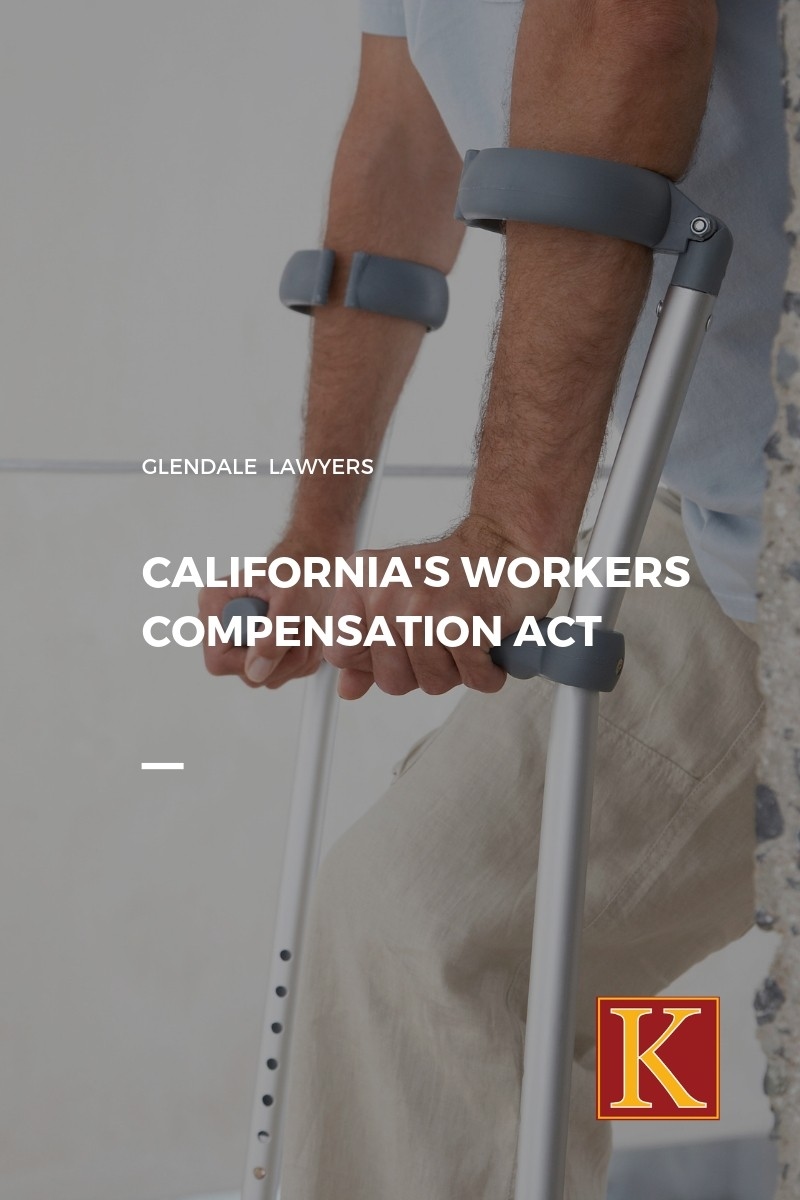
Under California's Workers Compensation Act if an employee has suffered an injury because of his job he can be entitled to benefits. If a person is an eligible employee with a work-related illness or injury, the law requires his employer to pay for medical treatment and partial wage replacement while he is recovering. If an employee wants to get workers’ comp benefits in California it’s under his responsibility to file a claim on time.
California Workers Compensation for Work-Related Injuries
In California most common work related injuries are from car or truck accidents, falls, and moving or lifting objects. Almost all injuries related to the job or caused at workplace are eligible for workers’ compensation benefits. The list of injures include:
Injuries caused by a one-time accident
Cumulative injuries, which are caused by doing the same motion over and over
Illnesses arising out the work tasks or the job environment
Situations Where Employee Would Not Be Compensated for Recovery Under California California's Workers Compensation Act
The injury was caused during the commission of a felony
The injury was caused by alcohol intoxication or other substances
The injury was self-inflicted
The injury was a reason of a fight started by the injured employee
Process of Filling the Worker’s Compensation Claim in California
Usually the process of filing a workers’ comp claim in California is the following:
Employee reports about the injury. The report must be in writing and should be signed by the injured employee or a person acting on his behalf.
Labor Code Section 5400 Reporting Employee Injury
According to Labor Code Section 5400 employee must report about the injury to his employer in writing within 30 days of its occurrence to qualify for worker’s compensation benefits. However, according to Labor Code Section 5402 in case the employer obtains information about the injury in some other way (for example from the employee’s supervisor) it is equivalent to written notice. In case the employee failed to report the employer in 30 days he will still be eligible for the recovery unless the delay caused significant negative consequence for the employer.
Employee files out California State Division of Workers’ Compensation (DWC) form 1 and give it to his employer, who within 1 day provides the claim to workers’ compensation insurance company. The form contains the following information:
Employees name
Employees address
Date and time of the injury
Address and description of the location where the injury occurred.
Sustained injury and the body part affected.
The insurance company has 90 days for accepting or denying the claim. In case they don’t’ inform the employee of anything within 90 days then the claim is presumed to be accepted.
California Compensation Claim Denials
The insurance company might deny the claim in case:
Employee’s injury isn’t work-related
Employee’s injury is due to another job
Employee’s doesn’t need medical treatment,
Employee can return to work
Appealing Workers' Compensation Denial
After learning that the claim is denied the employee is entitled to see a Qualified Medical Evaluator for getting an additional opinion. This is an impartial doctor who is reviewing workers’ compensation claims. In case after the independent evaluation the employee still disagrees with the employer or insurer about a compensation benefits decision, including the claim denial he can file a Declaration of Readiness to Proceed with the Worker’ Compensation Appeals Board (WCAB) within one year of his injury. The employee must serve this form on the insurance company and include a proof of service form. The Appeals Board will hold a hearing and make a decision on his claim.
California’s Uninsured Employer’s Benefit Trust Fund
If a worker is injured and if the employer was not properly insured about the worker’s injury, California’s Uninsured Employer’s Benefit Trust Fund (UEBTF) will step into the place of the insurance company to pay worker’s compensation insurance benefits. The UEBTF will then attempt to recover the money from the illegally uninsured employer.
On February 12, 2019, the Glendale City Council adopted Ordinance No. 5922 which extends the “Just Cause Eviction” Ordinance by adding two new programs. These new programs consist of:
“Right To Lease”, according to which landlords must offer tenants a minimum one year lease at the time of a rent increase, and
“Relocation Assistance” which gives tenants a right for relocation assistance from the landlord in case they decide to vacate a unit in response to a rent increase of more than 7% in a year period.
City of Glendale's Right to Lease Program
Right to Lease program was created for providing stability and minimizing the effects of displacement caused by extreme rent increases. Right to Lease obliges Glendale landlords to offer current or prospective tenants a written minimum 12 months lease, with an option to renew the lease with an additional year, where the rental rates and any increases during the rental term are set in the agreement. In case the Tenant rejects the offer of a written lease or does not accept the Landlord’s offer within 14 days the offer shall be deemed rejected.
Under California Penal Code Section 203 PC mayhem is defined as the act of maliciously an illegally depriving person of a member of his body; disabling, or rendering useless a member of his body; disabling or cutting his tongue; putting out his eye; slitting his nose, ear or lip.
Penal Code Section 203 PC Aggravated Mayhem
Under California Penal Code Section 205 aggravated mayhem is defined as intentional causing another person a permanent disfigurement or disability, or depriving him of a limb, organ or member.
California Criminal Jury Instruction No. 801
California’s Criminal Jury Instructions No. 801 indicates the following additional stipulations on how a person can be found guilty of mayhem:
Body part disablement must be more than temporary or slight; it must be so egregious as to significantly interfere with person’s life.
Eye injury must so significantly reduce the person’s ability to see such that it is useless for ordinary sight.
Disfigurement must be permanent
At the time of the act the victim must be alive. In case the victim dies, a more severe charge of murder can be brought.
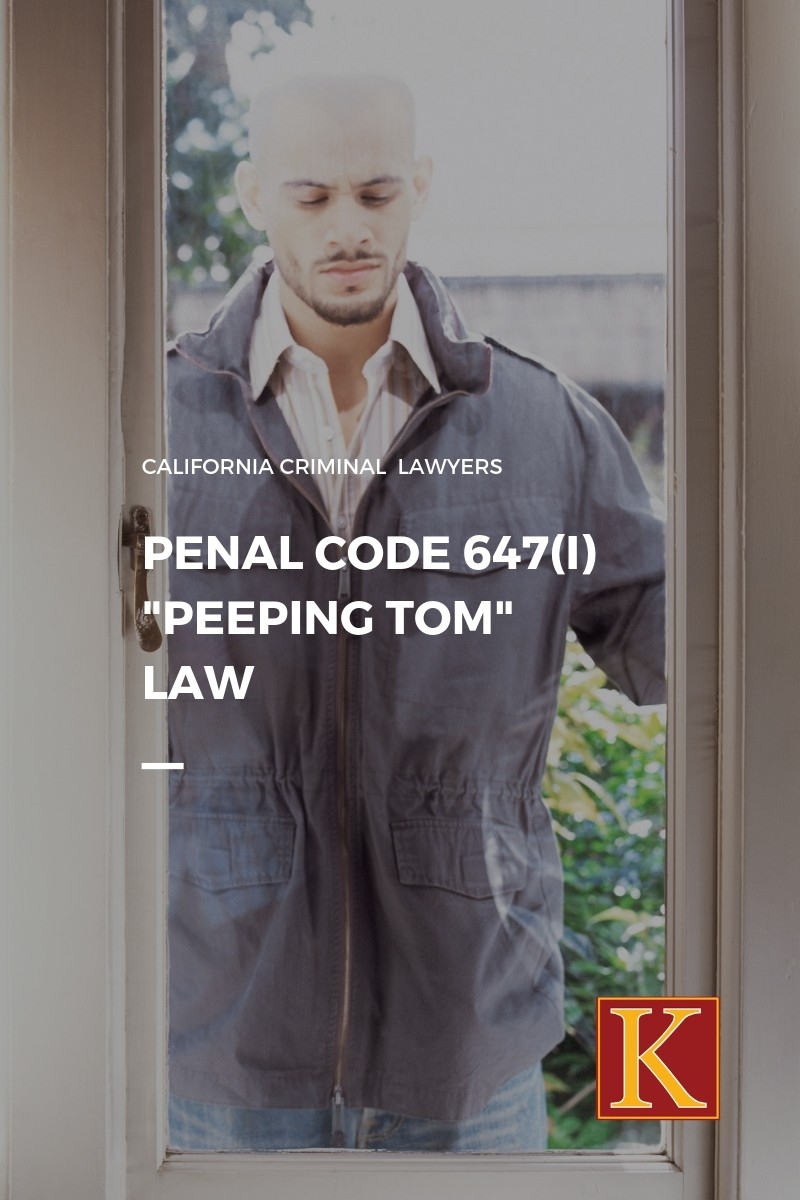
Under California Penal Code Section 647(i), also known as the “peeping Tom” law, it is illegal to peek into a door or window on someone else’s private property without the consent of the owner for observing persons who are inside.
To Be Convicted of Penal Code 657(i) Prosecutor Must Prove
The prosecutor must establish the following elements for convicting the defendant in the offense of peeking while loitering:
Defendant lingered, delayed, wandered or prowled on another person’s private property
Defendant did not have a lawful purpose for being another person’s property
Defendant peeked in the door or window of an inhabited building or structure when he was on the property
What is California Penal Code 647(i)?
Under California Penal Code 647(i) any building which is used as a residence can be considered an inhabited structure. It is not important whether someone is inside at the time of peeking or not, a person can be charged with peeking while loitering even if no one is at the property.
Is "Specific Intent" Required in Peeping Tom Penal Code 647(i) Cases?
Penal Code 647(i) doesn’t require specific intent, and it is not important why a person decided to peek into a door or window on someone else’s private property. So a person can be convicted even if he entered the property without intent to loiter or peek.
Unemployment insurance fraud occurs when an individual provides false, incomplete or misleading information, intentionally conceals facts or provides wrong identification for obtaining, increasing or denying benefits.
California Unemployment Insurance Laws and The EDD
In California the Employment Development Department (EDD), which is a combination of both state and federal programs, is managing unemployment benefits system.
California unemployment insurance assists people who become unemployed through no fault of their own to keep financial security while they seek new job. There are some circumstances under which a person can qualify for benefits.
Person is currently unemployed or have had his hours cut to below full time
Person’s last day of employment was not more than eighteen months ago
Person is ready and willing to work but is unable to find a job
Person is actively searching new employment
A person can recover a maximum of $450 per week and the program can’t last more than one year.
Types of Unemployment Insurance Fraud in California
In California both employees and employers can be accused of committing unemployment insurance fraud.
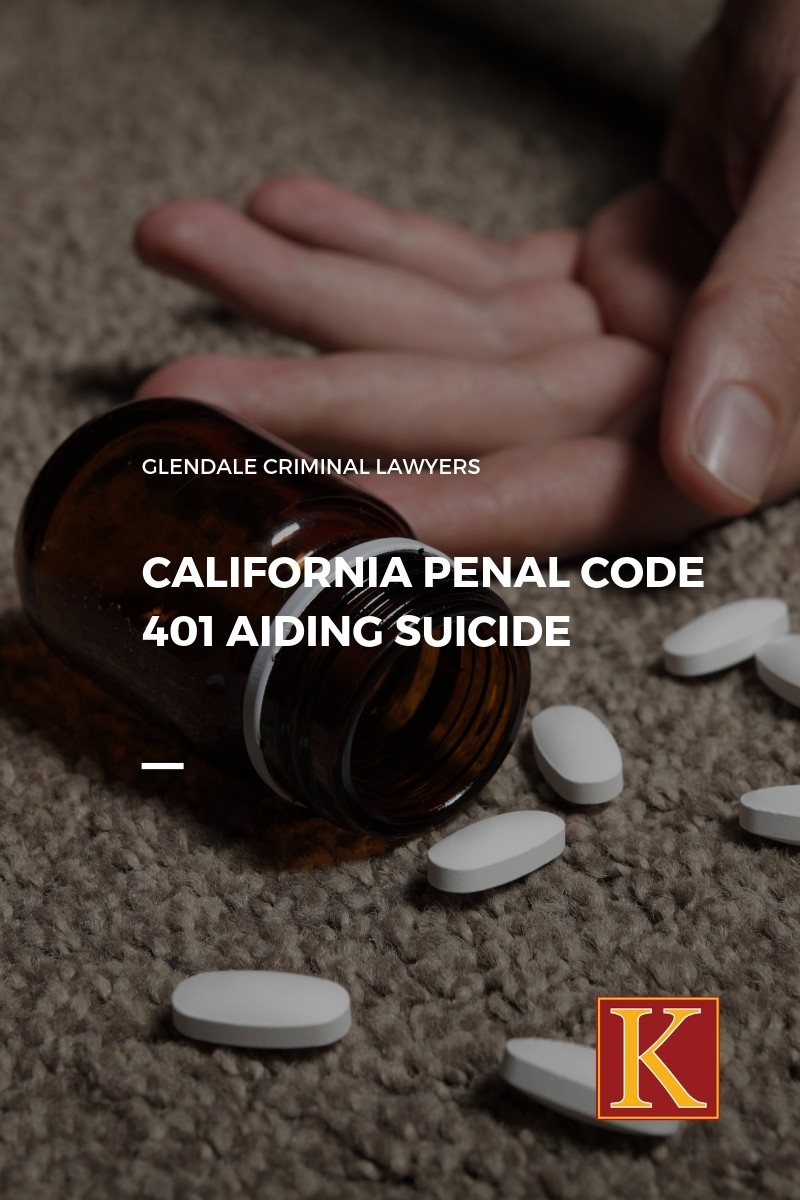
According to California Penal Code Section 401 it is prohibited to intentionally aid, advice, or encourage another person to commit suicide.
In Order to be Found Guilty for Penal Code 401 Prosecution Must Prove
Prosecutor must establish the following elements to prove that a defendant is guilty of advising or encouraging a suicide,
Person tried to commit or committed suicide
Defendant intentionally aided, advised or encouraged that person to commit suicide.
What Does “Aiding, Advising or Encouraging Suicide” Mean?
“Aiding, advising or encouraging a suicide” means the following:
Counseling, persuading or advising a person to commit suicide
Providing a person whit necessary tools, such as lethal doses of drugs, poison or a weapon with knowledge that those tools are likely to be used for committing a suicide
Even if a person survived the suicide attempt you can still be charged of assisting in suicide as a California attempt crime.
Difference Between Murder and Assisting a Suicide
If the defendant helps another person to kill himself he will be guilty under Penal Code Section 401. In case a person asked the defendant to kill him and the defendant carry out that act, then his action will be considered murder, voluntary manslaughter, or attempted murder.
Pursuant to California Penal Code Section 246.3(a) a person who willfully discharges a firearm in a grossly negligent manner which could cause injury or death is guilty of a public offense.
To Be Convicted of Penal Code 246.3 (a) Prosecutor Must Prove The Following
To convict the defendant in negligent discharge of a firearm the prosecution must prove, beyond a reasonable doubt, the following elements:
Defendant intentionally fired the firearm or BB gun
Defendant fired the gun in a grossly negligent manner
Defendant’s action could have resulted in injury or death of another person
What is Willful Intent?
A person shot the firearm intentionally when he pulled the trigger and knew that the firearm was loaded. In case the gun went off completely by accident and a person reasonable believed that the firearm was not loaded it cannot be a negligent discharge.
What is Gross Negligence?
Gross negligence is more than an ordinary negligence, it means acting so recklessly that any reasonable person can realize that the act is likely to produce great bodily injury or even death. Gross negligence shows a conscious disrespect and indifference regarding the rights and safety of other people. If a person was shooting the weapon in a place where no one was around then he won’t be guilty under Penal Code Section 246.3. Gross negligence happens when a person was shooting the weapon in an area where many people lived and there was a huge chance that his act could possibly cause injury or death.
According to California Vehicle Code Section 10853 it is unlawful for any person to intentionally deface damage or destroy the personal property of another. The law applies both to vehicles and items attached to vehicles, as mirrors, hood ornaments and license plates.
Elements Required to Be Convicted of Vehicle Code 10853 Malicious Mischief to a Vehicle
For a defendant to be convicted of Vehicle Code 10853 malicious mischief to a vehicle the prosecutor must prove the following elements beyond a reasonable doubt:
Defendant climbed into a vehicle while it was in motion or at rest, or
Defendant attempted to manipulate the starting mechanism, levers or other mechanism or device of a vehicle.
Defendant had intent to commit malicious mischief.
Malicious Mischief Damage Without Possession
Malicious mischief is type of a non-violent crime, which doesn’t involve injury to a victim or use of force and fear; instead it involves some type of property damage or economic loss to a victim. Malicious mischief of a vehicle occurs when someone damages another person’s property regardless the amount of damage. The value of the damage can be significant or minor, but the key issue in the crime is the damaging of the property. Malicious mischief does not involve taking a vehicle, but only defacing, destroying or otherwise damaging it without the owner's consent.
Under California Welfare and Institutions Code Section 10980 welfare fraud is an act of unlawfully obtaining welfare benefits from the government by intentionally submitting false information or withholding relevant information or.
Forms of Welfare Fraud Under California W&I Code 10980
According to California W&I Code 10980, defendant can commit welfare fraud in different forms, including:
Defendant deliberately misstated information for receiving benefits
Defendant failed to provide relevant information for receiving benefits
Defendant used more than one name when applied for the benefits
Defendant filed numerous applications for obtaining multiple benefits
Defendant purchased, used, transferred or possessed counterfeit food stamps
Types of California Welfare Fraud
Generally California welfare fraud can be classed to two main types: recipient welfare fraud or internal fraud.
California Penal Code Section 332, gaming fraud or gambling fraud is obtaining another person’s money or property through use of any game, device, sleight of hand, pretensions to fortune telling, trick or any instrument. Gaming or gambling fraud falls under and is considered as theft crime in California.
The California Penal Code, under section 332 establishes the elements that the prosecution must prove to a conviction someone of this crime, the main requirements are the following:
Acted with action intent to defraud another person's.
Obtain money or property.
Through "three card monte", betting, gambling or pretensions to fortune-telling.
Prosecution must prove the following elements beyond a reasonable doubt for convicting a person of fraudulent gaming:
Defendant fraudulently obtain another person's money or property;
Defendant did so by use of any game, device, sleight of hand, pretensions to fortune telling, trick or any instrument. It is not prohibited to play the games, in case a person commits a fraud and got money from other one through a game in an unlawful manner.
Rent In case the Landlord and Tenant enter into a written lease with a minimum term of one year, such lease must set forth the amount of the Rent, which may not be changed or modified during the lease year.
Just Cause Eviction Ordinance and Lease Renewal
Lease Renewal Not later than 90 days prior to the expiration of the lease the Landlord must notify the Tenant of the expiration and offer him a lease renewal with a minimum term of one year. The Landlord’s renewal offer must provide notice of Tenant’s potential eligibility for relocation benefits. Within 60 days of offer receipt, Tenant must either notify the Landlord in writing of his acceptance or reject the offer. Failure to accept the offer in writing shall be deemed a rejection
Future Offers. Any time a Tenant rejects a lease offer or lease renewal offer with a minimum term of one year, the landlord shall be required to subsequently offer a one year lease under the following circumstance: upon the first date the Landlord notices a rent increase after the first year anniversary of the Tenant’s rejection of the prior lease or lease renewal offer.
Glendale's Just Cause Eviction Ordinance
Just Cause Eviction Ordinance protects tenants from illegal eviction and provides 12 reasons when the landlord can terminate the agreement with the tenant.
The tenant has failed to pay the rent
The tenant has violated lease agreement and failed to comply after being notified
The tenant is committing a nuisance or is causing damage to the rental property or. A nuisance creates an unreasonable interference with the comfort, safety, or enjoyment of any of the other residents of the same or adjacent buildings.
The tenant is using or permitting a rental property to be used for any illegal purpose
The person in possession of the rental unit at the end of a lease term is a subtenant not approved by the landlord.
The tenant doesn’t give a landlord reasonable access to the property
The landlord seeks in good faith to recover possession so as to demolish, or perform other work on the property if the work costs at least eight times the amount of the monthly rent and the work makes the property uninhabitable for more than 30 days
The landlord seeks in good faith to recover possession of the rental unit for use and occupancy by: a) a resident manager b) the landlord or family member. c) tenants who require case management or counseling as part of the tenancy
The landlord seeks in good faith to recover possession in order to remove the rental unit permanently from rental housing use.
The landlord seeks in good faith to recover possession of the rental unit in order to comply with a governmental agency's order to vacate.
The landlord seeks in good faith to recover possession of the rental unit in order to comply with a contractual agreement relating to the qualifications of tenancy.
The tenant continues to smoke in the rental unit or in common areas where smoking is prohibited.
Situations Were Landlord Subject to Paying Tenant Relocation Assistance?
If an eviction is not caused by the Tenant’s fault it is subject to relocation assistance under the Ordinance No. 5922
Relocation Assistance
Relocation assistance can be applicable to tenants if they choose to leave after receiving a rent increase over 7 % in 12 a twelve month period. Within five business days after receiving the written notice from the tenant with the intention to leave the rental unit the Landlord must pay the first half of the relocation assistance fee. The second half must be paid not later than in five business days after the Tenant has vacated the unit.
What are the Exceptions Just Cause Eviction Ordinance?
All rental units are covered by the ordinance, except:
Single Family Homes
Condominiums or Townhomes
Duplexes
Government Subsidized Units (Section 8)
Accessory Dwelling Units (ADU)
Civil Litigation Lawyers in Glendale, CA
For more information concerning the new just cause eviction ordnance, contact our civil litigation lawyers today at (310) 943-1171.
To Be Convicted of Aggravated Mayhem Penal Code 203 PC Prosecutor Must Prove The Following
To convict a defendant of aggravated mayhem, the prosecutor must establish the following elements:
Defendant illegally and maliciously disabled or permanently disfigured another person
Defendant acted with the intent to disable or permanently disfigure
Defendant’s act showed extreme indifference to the psychological or physical condition of another person
Difference Between Mayhem and Aggravated Mayhem
In aggravated mayhem case the prosecution must prove that the defendant had the specific intent to disfigure or dismember or a person. For proving an ordinary mayhem, the prosecutor only needs to prove that the defendant committed an act maliciously and that resulted in disfigurement or dismemberment but the defendant didn’t have intent to disfigure or dismember that person.
Maliciously
Under California Penal Code 203 action acting maliciously means committing an illegal act with intent to annoy or injure someone else
Permanent Disfigurement
According to California mayhem law, a disfiguring injury can be considered permanent even if it can be repaired by medical procedures.
Penalties for PC 203 Simple Mayhem and PC 205 Aggravated Mayhem
In California law both types of mayhem are considered felonies
Penalties for California Penal Code Section 203 Simple Mayhem
Penalties for California Penal Code Section 203 Simple Mayhem include:
Two, four or eight years in California state prison;
A fine of up to $10,000
Felony probation
If the defendant knew or reasonably should have known that one of the below mentioned facts about the victim was true he will receive 1 or 2 year sentence enhancement:
The victim was sixty five years or older
The victim was under the age of fourteen
The victim was deaf or blind
The victim was developmentally disabled or paraplegic or quadriplegic
Penalties for California Penal Code Section 205 Aggravated Mayhem
Penalties for California Penal Code Section 205 aggravated mayhem include:
A fine of up to $10,000
A life sentence in state prison
In some mayhem or aggravated cases a probation sentence can be available and can include some actual jail time (not prison), work release or house arrest along with other probation terms.
Does Mayhem and Aggravated Mayhem Fall Under California Three Strike Sentencing Law?
Both mayhem and aggravated mayhem are considered violent and serious crimes under California Three Strikes Sentencing Law. The defendant will be convicted of a strike offense and suffer additional punishments such as:
While in being in prison he will earn less good time credits
He may suffer harsher punishment for future criminal convictions
In case the defendant had a lawful reason to be on property (working as contractor or was a meter reader or surveyor), he can’t be found guilty under Penal Code Section 647(i).
Defendant was not on a private property
As an essential element of this offense defendant must be on a private property. It is not unlawful to look through the window or a door of an inhabited structure while standing or being on public property or your own property.
Defendant entered an uninhabited building or structure
In case the defendant was peeked into an uninhabited structure or former inhabited dwelling he should not face a peeking while loitering conviction.
What are the Penalties for Penal Code Section 647(i) Conviction?
Under California Penal Code Section 647(i) unlawful peeking is a misdemeanor offence and the penalties are the following:
Up to six months in a county jail,
A fine of up to $1,000
Misdemeanor probation
The penalties for second or subsequent offense or a first time offense in case the person being viewed is a minor are the following:
Up to one year in a county jail,
A fine of up to $2,000
Defendant's Criminal History a Factor in Sentencing Penal Code 647(i) Conviction
Depending on the case circumstances and the defendant’s criminal history he can be sentenced to misdemeanor probation instead of the jail time. Judge may impose different conditions on that probation, such as periodic court appearances, paying restitution to the victim or staying away from the property and the victim, not committing this offense anywhere else. In case the defendant has two or more prior felony convictions, a prior felony conviction during which he was armed or a prior conviction for a serious felony he can’t be entitled to informal probation.
California Penal Code 647(i) Lawyer
For answers to any other questions you may still have about California Penal Code 657(i) charges or to discuss your case confidentially with our team of experienced California criminal defense attorneys give us a call at (310) 943-1171. Our lawyers in Glendale, Los Angeles County, CA, are highly dedicated to serving the needs of our clients.
Here are some examples of unemployment insurance fraud committed by employees:
Double dipping - collecting benefits and not reporting to the EDD.
Failing to actively seeking new job but claiming you are diligently looking for work
Failing to report other forms of compensation you are receiving such as social security, pension payments and workers comp
Collecting benefits from different states simultaneously
Lying about the reasons of becoming unemployed
Working and continuing to receive unemployment benefits
Giving wrongful information to qualify for unemployment benefits
Unemployment Insurance Fraud Committed Employers
Employers are committing unemployment insurance fraud when they try to deny benefits to a former employee for defrauding the EDD, these include:
Purposefully withholding deductions and failing to paying them to the EDD
Intentionally providing wrongful information about the unemployment claim, such as why the employee was no longer working or about the wages the he was receiving
California Unemployment Fraud Investigation Process
The California EDD collects information mostly from public fraud report hotline and their field offices that gather unemployment fraud applications.
After gathering information EDD assigns alleged cases to a special investigation unit. In case unit manages to find adequate evidence that fraud has taken place they are will file unemployment insurance fraud charges. If they don’t get enough evidence they will drop the case or work for obtaining further information.
Penalties for California Unemployment Insurance Fraud
Unemployment insurance fraud is considered a wobbler and can be charged as either a misdemeanor or a felony, based on the case circumstances, the amount of the fraud and the defendant's criminal history. Defendant can be charged either under Unemployment Insurance Code Section 2101 or California Penal Code Section 550 (PC 550).
Unemployment Insurance Code Section 2101
Pursuant to the California Unemployment Insurance Code Section 2101 (a): It is a violation of this chapter to willfully make a false statement or representation, to knowingly fail to disclose a material fact, or to use a false name, false social security number, or other false identification to obtain, increase, reduce, or defeat any benefit or payment, whether for the maker or for any other person, under any of the following statutes administered by the department:
Penalties for Misdemeanor Conviction: Unemployment Insurance Code Section 2101
Penalties for misdemeanor conviction for violating Unemployment Insurance Code Section 2101 include the following:
Up to one year in a county jail
A fine up to $20,000.
Penalties for Felony Conviction: Unemployment Insurance Code Section 2101
Penalties for felony conviction for violating Unemployment Insurance Code Section 2101 include the following:
Sixteen months, two or three years in California state prison
A fine up to $20,000
General Insurance Fraud: California Penal Code 550 (PC 550)
Penalties for Misdemeanor PC 550 Conviction
In case the total amount of the fraud is $950 or less the crime is considered a misdemeanor, punishable by:
Up to six months in a country jail
A fine up to $1,000
In case the total amount of the fraud is more than $950 the crime is considered wobbler.
Penalties for Felony PC 550 Conviction
Two, three, or five years in a country jail
A fine up to $50,000 or double the total amount of the fraud, whichever is greater
Are you in need of legal assistance as a result of being charged for unemployment insurance in California? A criminal defense attorney in your area may be able to provide you with the help that you need.
California California’s End of Life Option Act: Physician-Assisted Suicide
California’s End of Life Option Act allows a person who is diagnosed with a terminal disease to ask for an aid-in-dying drug from his physician. For receiving an approval the physician must submit detailed information to the California Department of Public Health.
What Conditions Must Be Met Under California’s End of Life Option Act?
The patient must meet the following conditions for getting help to commit a suicide under California’s End of Life Option Act:
Patient must be a California resident at least 18 years old
According to medical judgment patient must have a diagnosis of an irreversible disease which will result in death in a 6 months
Patient must be able to make medical decisions by himself and must voluntarily requested an aid-in-dying drug
Patient must be able to self-administer the drug
If the all above mentioned requirement are met the physicians cannot be prosecuted under California Penal Code Section 401 for assisting a terminally ill patient’s suicide.
Defenses to California Penal Code 401 Aiding, Advising or Encouraging Suicide
Common defenses to California Penal Code 401 Aiding, Advising or Encouraging Suicide include
Defendant didn’t have a deliberate intent to help in a suicide
In case the defendant unintentionally aided or encouraged a person to commit suicide without intent, he can’t be found guilty of this crime.
The person didn’t have intent to commit a suicide
Maybe the person who attempted or committed suicide didn’t have actual intent to kill himself. The attempt or the death may have been an accident.
California Penalties for Assisting, Aiding or Encouraging Suicide
Under California law aiding, advising or encouraging a suicide is considered a felony. The punishment depends on whether the person survived the suicide or not. Defendant can receive lighter punishment in case the person has survived.
What are the Penalties for Penal Code 401?
The possible penalties under Penal Code 401 Aiding, Advising or Encouraging Suicide” include:
Sixteen months, two or three years in California state prison; and/or
A fine of up to $10,000
Felony probation
Glendale Criminal Defense Lawyers
Our Glendale criminal defense lawyers experienced penal code 401 charges and are here to answer any questions If you or a loved one has been charged with penal code 401 and you would like to discuss your case confidentially with one of our criminal defense lawyers at (310) 943-1171.
Use of Firearm or BB Gun in Penal Code 246.3(a) Charges
A firearm is any device which is used as a weapon from which a projective is discharged. A BB gun is any instrument that expels a projectile through the force of gas pressure, air pressure or spring action. Penalties for negligent firing BB gun are lesser than for negligent discharge of a firearm.
Defenses to Penal Code 246.3(a) Charges
Common defenses to Penal Code 246.3(a) including the following:
Self-Defense
In using the self defense claim in penal code 246.3(a) charges the defendant may claim self-defense in situations where:
He had the reasonable belief that he was in imminent danger of great bodily harm
He fired the gun with the reasonable belief that he was protecting himself
He used force that was reasonably necessary to deflect that harm
In case the defendant discharged a firearm in the above mentioned circumstances he cannot be found guilty of this crime. However, defendant must have ceased from using force once the threat of danger had passed.
Defendant had a reasonable belief that the gun was not loaded
Under California Penal Code Section 246.3 firing a gun intentionally is a key element of the crime. Defendant must have known that the gun was loaded for being convicted in negligent discharge of a firearm.
Defendant’s actions didn’t cause actual danger, injury or death
Prosecution must be able to prove that defendant’s discharge of a firearm posed an actual danger to people. In case no one could have been foreseeable and reasonably hurt then the defendant cannot be found guilty of negligent discharge.
Penalties for California Penal Code 246.3(a) Conviction
In California law negligent discharge is considered a wobbler and can be charged as either a misdemeanor or a felony, based on the case circumstances the defendant's criminal history. In case the negligent discharge is done with a BB device it is always a misdemeanor.
Penalties for Misdemeanor Penal Code 246.3(a) Conviction
Penalties for Misdemeanor Penal Code 246.3(a) conviction include the following:
Up to one year in a county jail
A fine of up to $1,000
Misdemeanor probation
Penalties for Felony Penal Code 246.3(a) Conviction
Penalties for Felony Penal Code 246.3(a) conviction include the following:
Sixteen months, two or three years in a country jail under California’s realignment program
A fine of up to $10,000
Felony probation
Gang Sentencing Enhancement: California Penal Code Section 186.22
In case the defendant discharge a firearm in association with a known gang, for the benefit of the gang or at the direction of the gang with the specific intent of assisting the gang in any way he will face additional two, three or four years in prison.
California Three Strikes Enhancement
Under California's “Three Strikes” law felony negligent discharge is classified as a “serious felony”. In case a conviction for Penal Code Section 246.3 as a felony is later followed by a charge for another felony, the defendant will face punishment twice the normal sentence for the second offense. A conviction for third felony will result in a sentence of twenty-five years to life in a state prison.
Immigration Consequences for Penal Code 246.3(a) Conviction
A negligent discharge of a firearm is considered a deportable crime and can lead to severe consequences for non-citizens. In case a defendant is a non-citizen and is convicted of this crime, he can be deported or be subject to inadmissibility grounds.
California Penal Code 246.3(a) Lawyer
For answers to any other questions you may still have about California Penal Code 246.3(a) charges or to discuss your case confidentially with our team of experienced California criminal defense attorneys give us a call at (310) 943-1171. Our lawyers in Glendale, Los Angeles County, CA, are highly dedicated to serving the needs of our clients.
Common defenses to California Vehicle Code 10853 Malicious Mischief to a Vehicle include the following:
Defendant didn’t have an intent to deface, damage or destroy
Person must have a clear intent to damage, deface or destroy another person's vehicle. In case he did so accidently and without specific intent he can’t be criminally liable under California Vehicle Code Section 10853.
Wrong person has been arrested
People usually commit malicious mischief to a vehicle at night and do it very quickly. So it becomes really hard for eyewitnesses to recognize the person who has committed the crime and this can lead to false arrests.
Vehicle Code 10853 Malicious Mischief to a Vehicle Penalties
According to Vehicle Code Section 10853 malicious mischief to a vehicle is a misdemeanor level offense. The penalties for this crime are the following:
Up to six months in a county jail
A fine of up to $1,000
Probation
Consequences for a Vehicle Code 10853 Conviction
In addition to all penalties the conviction can lead to significant consequences for the defendant. The conviction is visible to landlords, employers and anyone else who conduct a criminal background searches.
Related Crimes Malicious Malicious Mischief to a Vehicle
The following crimes are related to malicious mischief to a vehicle.
California Vehicle Code Section 10851 - Driving or taking a vehicle without the owner's consent
Our Glendale criminal defense lawyers experienced with malicious mischief to a vehicle charges are here to answer any questions If you or a loved one has been charged with malicious mischief to a vehicle and you would like to discuss your case confidentially with one of our criminal defense lawyers at (310) 943-1171.
What is Considered as Recipient Fraud in California?
Recipient fraud involves any attempt to receive, secure, retain, or increase a benefit by means of submitting wrongful, incomplete or misleading information. Recipient fraud examples include:
Not reporting additional income or benefits.
Claiming a fictitious or ineligible child.
Claiming to be a single dad or mom when both parents actually live at the same residence.
Collection benefits from two states at the same time.
What is Considered as Internal Fraud in California?
Internal fraud is committed by an employee of a government welfare agency. This occurs when the workers are unlawfully disbursing welfare benefits to themselves, their family members or friends.
California Welfare Fraud Investigation Process
Prosecuting agencies in California receive welfare fraud cases from different sources, as public hotlines and websites, local agencies and any other agencies that suspect welfare fraud. Welfare fraud investigations start from gathering evidence and information in welfare fraud cases, including:
Contacting and speaking directly with welfare benefit recipients
Contacting and speaking with family members, friends, co-workers, employers
Examining welfare benefit applications and person’s income trends.
The investigator presents relevant information to a deputy district attorney who will determine whether a criminal filing is appropriate or not. District attorney can do one of the following:
File criminal charges under WIC Section 10980
Return the case to the investigator for gathering more information,
Reject the case
Penalties for Welfare and Institutions Code 10980 Conviction
According to California WIC Section 10980, welfare fraud is a wobbler and can either be filed as a misdemeanor or felony crime and the type of charges depend of the value of benefits defendant’s criminal history.
False or Misleading Statements in Welfare Fraud
In case the defendant made false or misleading statement for obtaining benefits, he will face:
Up to six months in a jail and
A fine of maximum $500
Fraudulent Application in Welfare
Defendant will be convicted for feeling fraudulent application in case:
He has filed multiple applications,
He has applied for benefits under a fake name or false identification or
He has filled application for a fictitious person
Penalties for Felony Welfare and Institutions Code 10980 Conviction
Fraudulent application can be charged as a misdemeanor or felony offense. Penalties for felony Welfare and Institutions Code 10980 conviction include:
Sixteen months, two or three years in a county jail,
A fine up to $5,000
Penalties for Misdemeanor Welfare and Institutions Code 10980 Conviction
Penalties for misdemeanor Welfare and Institutions Code 10980 conviction are the following:
Up to one year in a jail,
A fine up to $1,000
Fraudulently Obtaining or Retaining Benefits
In case the total value of the benefit is $950 or less obtaining or retaining fraudulent benefits is a misdemeanor, and is punishable by:
Up to six months in jail,
A fine up to $500
In case the total value of the benefit was more than $950, the defendant will face felony, punishable by:
Sixteen months, two or three years in a county jail,
A fine up to $5,000
California Food Stamp fraud
Selling, buying, or misusing food stamps is a misdemeanor in case the amount involved was $950 or less, punishable by
Up to six months in a jail
A fine up to $500
In case the value is more than $950 the defendant will face felony, punishable by
Sixteen months, two or three years in a jail
A fine up to $5,000
People convicted of welfare fraud may lose their professional license, job, become disqualified to receive future welfare benefits.
California Welfare Fraud Defense Lawyer
Our California welfare fraud defense lawyers are here to answer any questions If you or a loved one has been charged with Welfare and Institutions Code 10980 and you would like to discuss your case confidentially with one of our criminal defense lawyers at (310) 943-1171.
"Acting Fraudulently" in California Game or Gambling Fraud
Acting fraudulently means acting dishonestly and with bad faith, as cheating, misleading and otherwise gaining an unfair advantage for the victim. In case a person won in a game, without playing tricks he can’t be guilty of game fraud. Defendant must be involved in a game where the victim doesn’t have a chance to win as a result of the game. An important element of the legal definition of gaming/gambling fraud is that the defendant must win money or property from the victim.
What is Considered as "Property" for Purposes of California Penal Code Section 332?
California Penal Code Section 332 acknowledges that games do not always include cash, or other tangible property. Property for purposes of Section 332 includes chips, markers, tokens, or anything else which has a monetary value.
Legal Defenses to California Penal Code 332
Common legal defenses to California Penal Code 332 include the following:
Lack of intent to defraud
Prosecution shall be able to prove is that the defendant had a specific intent to defraud the victim. In case the defendant lacks of fraudulent intent, he can’t be found guilty of this offenses.
First amendment defense
If the offense was through the fortune telling or any other similar activity then a first amendment defense can be used, and the defendant can argue that he was exercising his right to free speech. Though, there can be circumstances when fortune tellers can be criminally liable under this statute in case their conduct goes beyond entertainment and actually involves fraud.
Penalties for California Penal Code Section 332 Game/Gambling Fraud
Potential penalties for California Penal Code 332 gaming or gambling fraud depend on the monetary value of the property that the defendant obtained from the victim. If the money or the total value of the stolen property is $950 or less the gaming/gambling fraud can only be charged as a misdemeanor. In case the total value of the property is more than $950 then the fraud is treated as a wobbler and can be charged as either a misdemeanor or a felony.
Penalties for California Penal Code 332 Misdemeanor Conviction
Potential penalties for misdemeanor Penal Code 332 gaming or gambling fraud conviction in California include the following:
Up to six months in a county jail in case the value of property is $950 or less,
Up to one year in a county jail in case the value of property is more than $950; and/or
Fine of up to $1,000
Misdemeanor probation
Penalties for Felony Penal Code 332 Conviction
Potential penalties for felony Penal Code 332 gaming or gambling fraud conviction in California include the following:
Sixteen months, two or three years in a county jail and/or
Fine up to $5,000 for a first offense, or up to $10,000 for a second or subsequent offenses
Felony probation
California Gambling Defense Lawyer
Our California gambling defense lawyers are here to answer any questions If you or a loved one has been charged with Penal Code 332 PC gaming or gambling fraud and you would like to discuss your case confidentially with one of our California criminal defense attorneys, do not hesitate to contact our criminal defense lawyers at (310) 943-1171.