Distracted Walking and Comparative Negligence: How Fault May Be Shared
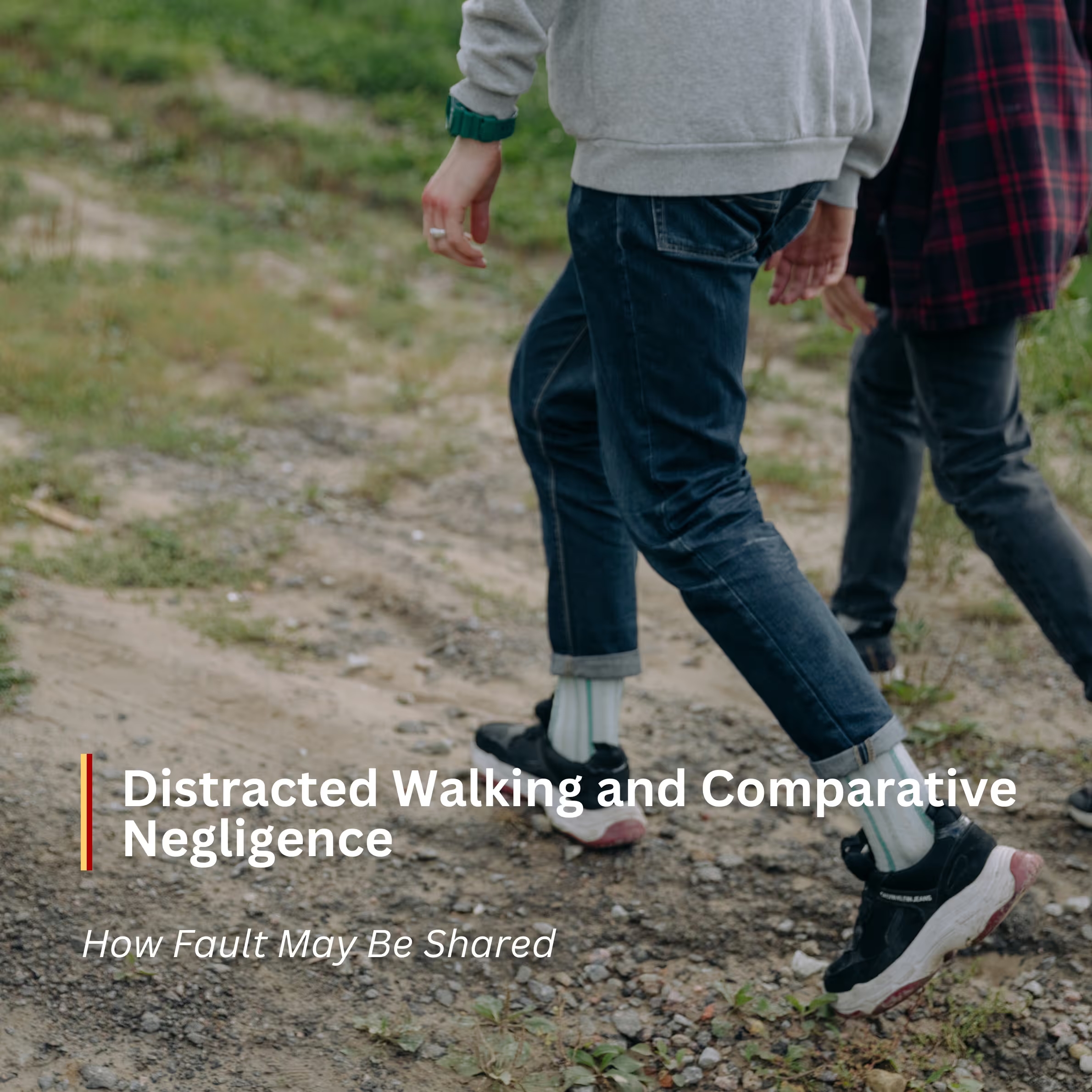
Walking around neighborhoods, communities, and hiking trails has always been a popular activity for many individuals and their families. This is a great way to get outside and spend time together, especially in the warmer months.
Pedestrian accidents are usually associated with negligent drivers. However, that is not always the case. Often, pedestrians may not follow the necessary safety steps to ensure they are not putting themselves in harm's way. Understanding distracted walking accidents and your legal considerations is crucial to ensuring your future safety and well-being.
What Is Distracted Walking?
Smartphones are one of the most common sources of distraction, but they are not the only one. Examples of distracted walking may include, but are not limited to, the following.
- Texting or reading messages while crossing a street
- Looking at social media or other content on a phone
- Watching a video while walking
- Wearing headphones that limit awareness of surrounding traffic
- Talking on the phone while entering an intersection
- Looking at a navigation app instead of surrounding conditions
- Engaging in a conversation and failing to notice traffic signals
Distraction alone does not automatically make a pedestrian legally responsible for an accident. The important question is whether the pedestrian's behavior contributed to the circumstances that caused the injury.
Drivers Still Have Responsibilities Toward Pedestrians
Drivers must remain attentive to traffic conditions and watch for pedestrians, especially around crosswalks, intersections, schools, shopping areas, and other places where pedestrians are reasonably expected to be present.
Depending on the circumstances, potentially negligent driver conduct may include speeding, distracted driving, failing to yield when required, making an unsafe turn, running a traffic signal, or driving while impaired.
For example, a pedestrian may have been looking at a phone while entering a crosswalk, while the driver may also have been speeding or failing to pay attention. In this type of situation, an investigation may examine the behaviors of both individuals rather than automatically assigning all responsibility to one person.
How Comparative Negligence Works in California
California uses a pure comparative negligence approach to personal injury claims. This ultimately means that more than one party may be assigned a percentage of responsibility for an accident. A person's potential recovery may then be reduced according to the percentage of fault attributed to that person.
Comparative negligence is especially relevant in pedestrian cases because insurers may argue that a pedestrian failed to exercise reasonable care even when a driver's conduct also contributed to the collision.
Evidence That May Affect a Comparative Negligence Claim
Since responsibility may be disputed, evidence can play an important role in determining how an accident occurred and who is to be held liable for injuries. Relevant evidence may include the following.
- Surveillance footage
- Dashcam recordings
- Photographs
- Videos
- Police reports
- Traffic signal information
- Vehicle information
- Vehicle damage
- Medical documentation
- Other electronic records
In addition, the pedestrian's location at the time of the accident can also be significant. Whether the pedestrian was inside a marked or unmarked crosswalk, walking along a roadway, crossing outside an intersection, or entering a parking lot traffic lane may affect the liability analysis.
Insurance Companies May Raise Distracted Walking as a Defense
After a pedestrian accident, an insurance company may investigate whether the injured person was distracted. An adjuster might ask whether the pedestrian was texting, wearing headphones, looking at a GPS application, or otherwise not paying attention.
These questions can be significant because an insurance provider may argue that the pedestrian should be held responsible for some percentage of the accident. As a result, pedestrians should provide truthful information about what happened. However, it may be helpful to understand the purpose of requests for statements, authorizations, or other information before responding. Statements made shortly after an accident may later become part of a liability dispute.
Common Injuries in Pedestrian Accidents
Pedestrians have little physical protection when struck by a motor vehicle. As a result, pedestrian accidents may cause injuries requiring significant medical care and treatment. Possible injuries may include but are not limited to the following.
- Fractures
- Head injuries
- Traumatic brain injuries
- Spinal cord injuries
- Internal injuries
- Soft-tissue injuries
- Cuts and lacerations
The nature and extent of injuries may vary significantly from one case to another. In addition, medical records and other documentation may be relevant when evaluating the damages associated with a claim.
Potential Damages in a Pedestrian Accident Claim
Depending on the circumstances, an injured pedestrian may seek compensation and support for legal damages associated with the accident. These may include past and future medical expenses, lost income, reduced earning capacity, pain and suffering, and other losses permitted under California law.
The amount of recoverable damages often depends on factors such as liability, insurance coverage, the severity of the injuries, medical evidence, and the specific facts of the case. Comparative negligence may affect the amount ultimately recoverable if the pedestrian is found partially responsible.
Legal Guidance After a Distracted Walking Accident
It may be important to seek legal guidance and support after a pedestrian accident near or around your neighborhood. These types of accidents are more common than many people think and can result in severe or sometimes life-threatening injuries for individuals and their families. A legal professional may be able to explain applicable laws, review the specific facts of your case, and speak to insurance companies on your behalf. This may be beneficial during a difficult time such as a pedestrian accident.
How KAASS LAW Can Help
Pedestrian accidents may involve multiple parties, challenging legal considerations, and various pieces of evidence. The personal injury attorneys of KAASS LAW are ready to help you understand your rights and the importance of maintaining evidence and documentation throughout your case. Our personal injury attorneys can help determine potentially liable parties, speak to insurance companies, and help you navigate the legal process moving forward. Call KAASS LAW today for a confidential consultation and to learn more about your case.
Related Articles
View All Posts
Injured in a pedestrian hit-and-run accident? Learn what steps to take, how to preserve evidence, and what legal options may be available.

Learn how liability may be determined after golf cart accidents on private property or public roads and what legal options may be available.
The identity of a 58-year-old man involved and killed on October 18 in Bellflower in a pedestrian accident has been made public by the coroner's office. Known as Luis Reynoso by the medical examiner's office, he was struck by a car near the intersection of Rosecrans and Woodruff avenues at 6:48 in the morning. Blunt-force trauma immediately killed Reynoso. Officials withheld any other details on the incident.
Research of Pedestrian Accidents
Even though it is virtually always the driver's responsibility to yield to pedestrians, they still face dangers on a daily basis in this nation. GHSA estimates that there will be 6,721 pedestrian fatalities in 2020. Also, an increase of 4.8% from the 6,412 fatalities reported in 2019. Most of the time, whether or not they are at a designated crosswalk, pedestrians have the right of way when crossing a street or an intersection. Now, it's essential to have an impartial investigation carried out by an experienced attorney. It is crucial to have the right tools when trying to establish fault in a pedestrian accident investigation.
Wrongful Death in Pedestrian Accidents
The family of Luis Reynoso may be eligible to file a wrongful death claim for the loss of companionship and love, depending on the findings of the investigation. The outcome of a civil action is a wrongful death lawsuit for a pedestrian accident. This indicates that the victim's family or estate filed the wrongful death action because the defendant was responsible for the victim's death as a result of a willful or negligent act. Most wrongful death lawsuits in California can be settled. This entails discussions between the insurance provider and the claimant to negotiate a fair compensation amount.
What is Wrongful Death
Wrongful death is a legal term that refers to a situation in which a person dies as the result of the negligent or intentional actions of another person or entity. Thus, the surviving family members may be able to bring a lawsuit against the responsible party. That's how they can seek the compensation they deserve. In order to succeed in a wrongful death claim, the plaintiff must prove that the defendant's actions caused the death. On the other hand, the plaintiff must prove that the death resulted in damages to the plaintiff. Damages in a wrongful death case may include financial losses such as lost wages and medical expenses. As well as non-economic losses such as pain and suffering and loss of consortium.
What To Do in Pedestrian Accidents
If you are part of a vehicle-pedestrian accident that ends in death, it is important to follow these steps:
- Stay at the scene of the accident
- Call the police
- Seek medical attention
- Document the accident
- Consult with an attorney
It is important to remember that every accident is different, and the specific steps you should take will depend on the case. If you have any doubts about what to do, it is a good idea to consult with an attorney.
Los Angeles Attorney
Wrongful death claims can arise in a variety of contexts, including motor vehicle accidents, medical malpractice, workplace accidents, and criminal behavior. The specific laws governing wrongful death claims vary by state. So, it is important to consult with an attorney who is familiar with the laws. Call us today at 310.943.1171.