Pedestrian Hit-and-Run Accidents: What Victims Should Do
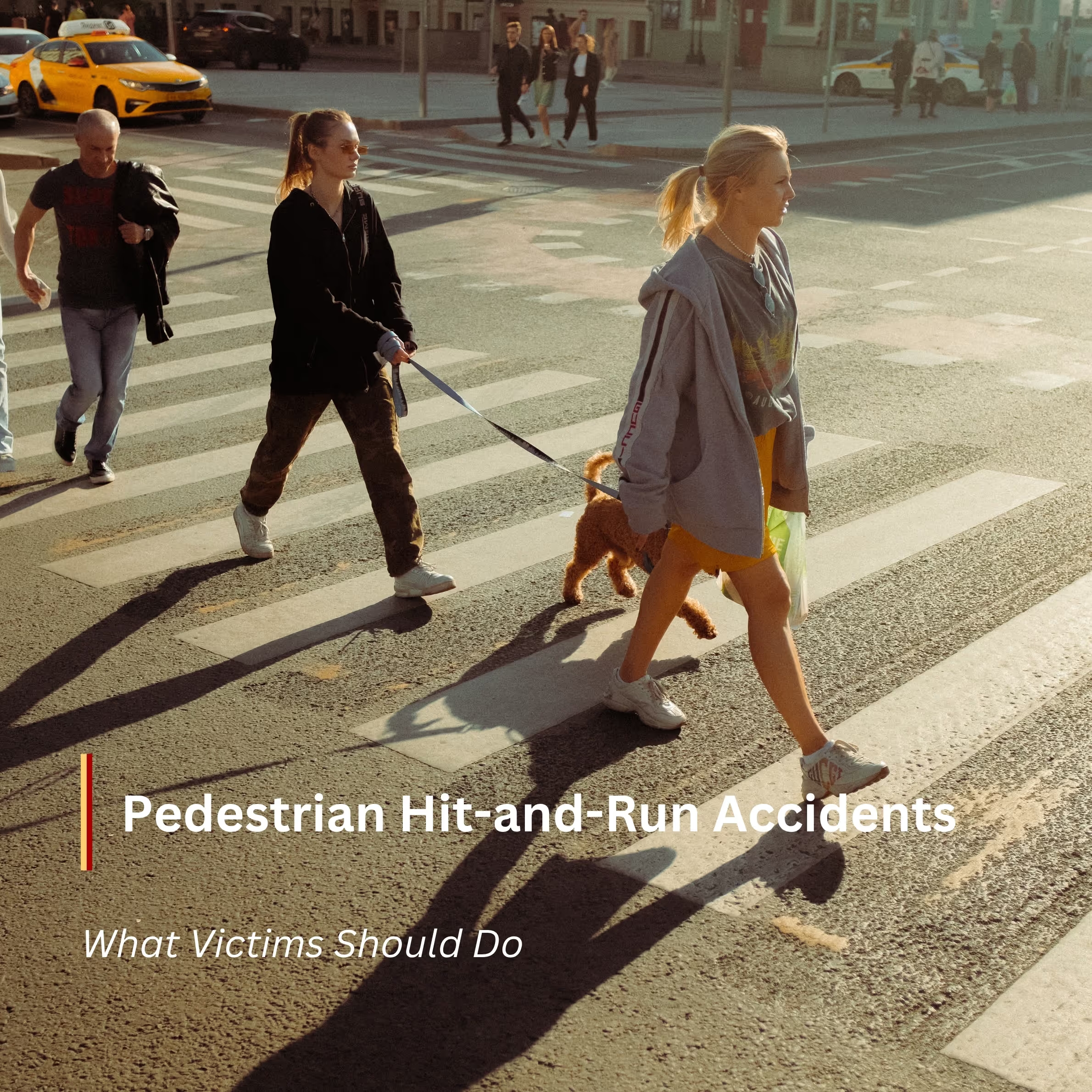
Pedestrian hit-and-run accidents can leave injured individuals facing medical treatment, financial concerns, and unanswered questions about who was responsible. Unlike a typical pedestrian collision, the driver in a hit-and-run leaves the scene without providing identifying or insurance information, which can make the situation more complicated. Understanding what to do can help preserve important information and clarify the options that may be available.
Medical Care and Treatment
The first priority after a pedestrian accident should be health and safety. If you have been struck by a vehicle, call 911 or ask someone nearby to contact emergency services. Pedestrians have little physical protection when hit by a vehicle. Even a collision that initially seems minor may result in injuries that become more noticeable later. Potential injuries may include but are not limited to, the following.
- Head and traumatic brain injuries
- Neck and back injuries
- Broken or fractured bones
- Knee, hip, or shoulder injuries
- Cuts and bruising
- Internal injuries
- Soft-tissue injuries
Seeking medical care can help identify injuries and establish medical documentation regarding your condition following the accident.
Reporting the Accident to Authorities
A pedestrian hit-and-run should usually be reported to law enforcement as soon as possible. Victims should give officers as much information as they can remember about the vehicle and the circumstances surrounding the collision. Helpful details may include the following information about the vehicle.
- Make
- Model
- Color
- Approximate year
- License plate number
- Direction of travel
- Visible damage
- Description of the driver
Collect Information at the Scene
If it is safe to do so, individuals should try to preserve information from the accident scene. Take photographs or videos of the location, your injuries, damaged personal property, roadway conditions, traffic signals, crosswalk markings, skid marks, vehicle debris, and anything else that may help document what occurred.
If witnesses saw the collision, ask for their names and contact information. A witness may have noticed details that the injured pedestrian did not see, including a license plate number or the direction the vehicle traveled.
Surveillance Footage
Video evidence can be especially helpful in pedestrian hit-and-run accidents. Businesses, apartment buildings, parking structures, homes, intersections, and other properties near the collision may have surveillance cameras that captured the vehicle before, during, or after the accident.
It can be important to identify possible video footage quickly because some surveillance systems automatically delete recordings after a certain period. Law enforcement may obtain footage during its investigation.
What Happens If the Driver Is Found?
If law enforcement identifies the driver, the circumstances of the collision may be investigated separately from the driver's decision to leave the scene. For a potential civil claim, issues such as negligence, causation, insurance coverage, and the nature and extent of the pedestrian's injuries may need to be evaluated. Leaving the scene does not by itself determine every issue involved in a civil injury claim. Each accident must be considered based on its individual facts.
What If the Hit-and-Run Driver Is Never Identified?
One of the most difficult aspects of a pedestrian hit-and-run is that the responsible driver may not always be located. However, that does not necessarily mean an injured pedestrian has no available insurance options.
Depending on the person's insurance policy and circumstances, uninsured motorist coverage may potentially apply to injuries caused by an unidentified hit-and-run driver. Since insurance policies are very different from one another, pedestrians should review their coverage carefully and consider seeking guidance regarding applicable notice requirements and deadlines.
Victims Should Keep All Records and Documentation
Following a hit-and-run accident, it may be important to maintain an organized file containing documents related to the incident. This may include, but is not limited to, the following.
- Medical bills
- Medical records
- Prescription receipts
- Photographs
- Correspondence with insurance companies
- Documentation of missed work
- Transportation expenses
- Receipts for other accident-related costs
Keeping records can make it easier to understand how the accident has affected you and provide documentation if an insurance claim or legal matter develops.
Insurance Companies
An insurance company may request information about the accident, injuries, treatment, or circumstances surrounding the collision. Before providing a recorded statement or signing documents, consider understanding what is being requested and why. Victims should not assume any facts regarding the accident and their injuries. Insurance coverage questions can become more complicated when the responsible driver is unknown, especially when uninsured motorist coverage is involved.
Seeking Legal Support
Pedestrian hit-and-run cases may involve several legal and insurance issues, including but not limited to:
- Identifying the responsible driver
- Evaluating available evidence
- Determining applicable insurance coverage
- Documenting injuries
An attorney can review the circumstances of the accident and explain which legal options may be available based on the facts. Depending on the situation, this may include reviewing police reports, evaluating insurance policies, communicating with insurers, identifying potential video evidence, or assessing whether another person or party may have legal responsibility.
The Legal Team at KAASS LAW
The qualified personal injury attorneys at KAASS LAW may be able to help victims and their loved ones after a pedestrian hit-and-run accident. Every pedestrian accident is different, and the availability and outcome of any claim will depend on the specific facts, applicable law, available evidence, insurance coverage, and other circumstances. Call KAASS LAW today to learn more.
Related Articles
View All Posts
Learn how distracted walking may affect comparative negligence, pedestrian accident liability, and potential compensation after an injury.
The identity of a 58-year-old man involved and killed on October 18 in Bellflower in a pedestrian accident has been made public by the coroner's office. Known as Luis Reynoso by the medical examiner's office, he was struck by a car near the intersection of Rosecrans and Woodruff avenues at 6:48 in the morning. Blunt-force trauma immediately killed Reynoso. Officials withheld any other details on the incident.
Research of Pedestrian Accidents
Even though it is virtually always the driver's responsibility to yield to pedestrians, they still face dangers on a daily basis in this nation. GHSA estimates that there will be 6,721 pedestrian fatalities in 2020. Also, an increase of 4.8% from the 6,412 fatalities reported in 2019. Most of the time, whether or not they are at a designated crosswalk, pedestrians have the right of way when crossing a street or an intersection. Now, it's essential to have an impartial investigation carried out by an experienced attorney. It is crucial to have the right tools when trying to establish fault in a pedestrian accident investigation.
Wrongful Death in Pedestrian Accidents
The family of Luis Reynoso may be eligible to file a wrongful death claim for the loss of companionship and love, depending on the findings of the investigation. The outcome of a civil action is a wrongful death lawsuit for a pedestrian accident. This indicates that the victim's family or estate filed the wrongful death action because the defendant was responsible for the victim's death as a result of a willful or negligent act. Most wrongful death lawsuits in California can be settled. This entails discussions between the insurance provider and the claimant to negotiate a fair compensation amount.
What is Wrongful Death
Wrongful death is a legal term that refers to a situation in which a person dies as the result of the negligent or intentional actions of another person or entity. Thus, the surviving family members may be able to bring a lawsuit against the responsible party. That's how they can seek the compensation they deserve. In order to succeed in a wrongful death claim, the plaintiff must prove that the defendant's actions caused the death. On the other hand, the plaintiff must prove that the death resulted in damages to the plaintiff. Damages in a wrongful death case may include financial losses such as lost wages and medical expenses. As well as non-economic losses such as pain and suffering and loss of consortium.
What To Do in Pedestrian Accidents
If you are part of a vehicle-pedestrian accident that ends in death, it is important to follow these steps:
- Stay at the scene of the accident
- Call the police
- Seek medical attention
- Document the accident
- Consult with an attorney
It is important to remember that every accident is different, and the specific steps you should take will depend on the case. If you have any doubts about what to do, it is a good idea to consult with an attorney.
Los Angeles Attorney
Wrongful death claims can arise in a variety of contexts, including motor vehicle accidents, medical malpractice, workplace accidents, and criminal behavior. The specific laws governing wrongful death claims vary by state. So, it is important to consult with an attorney who is familiar with the laws. Call us today at 310.943.1171.
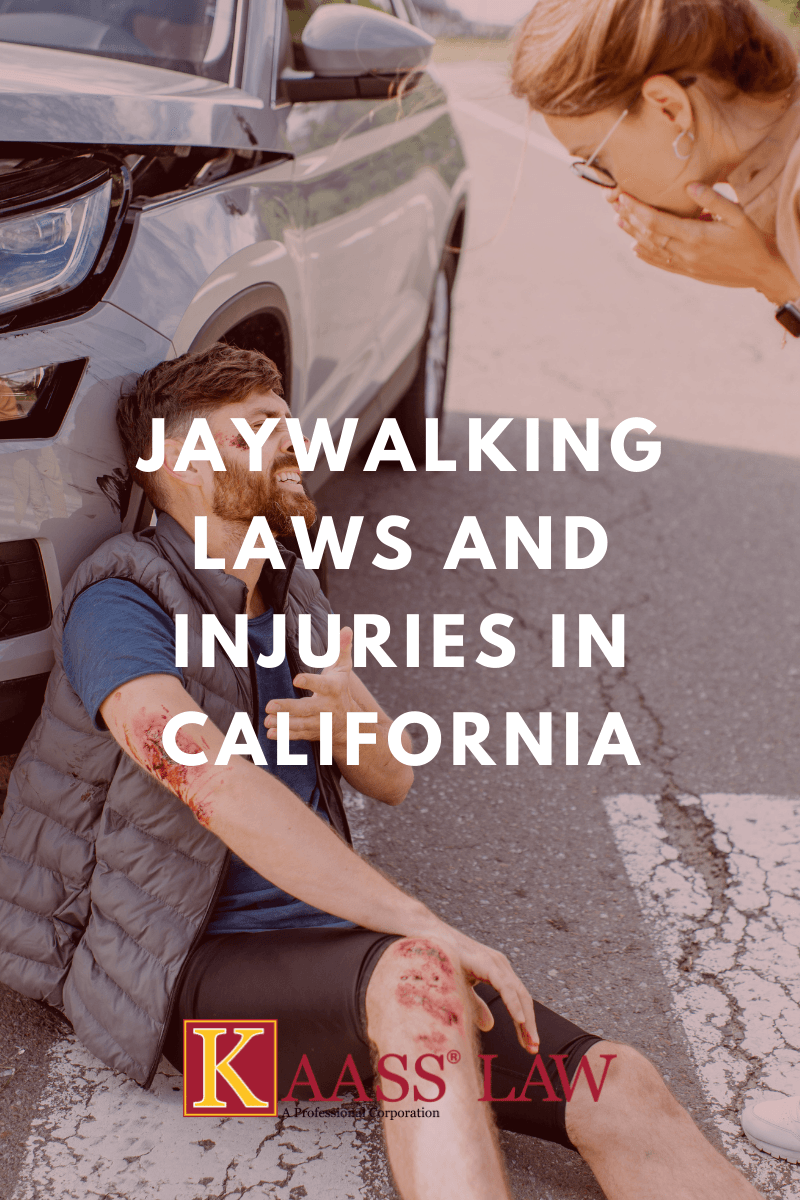
California Vehicle Code (CVC) 21955 states that “between adjacent intersections controlled by traffic control signal devices or by police officers, pedestrians shall not cross the roadway at any place except in a crosswalk.”
What are the Laws on Jaywalking in California?
Jaywalking refers to when a pedestrian crosses a road with marked crosswalks or a marked intersection but does so from a point other than the designated crosswalk. Jaywalking laws protect both pedestrians and automobile drivers from avoidable car accidents. Law enforcement officers are unlikely to arrest you for jaywalking, but they will likely issue a ticket if they see you. In California, jaywalking is an infraction, and a first offense will cost you a minimum fine of $196. The DMV will not assess points onto your driving record.
How Can I Stay Safe as a Pedestrian?
As a pedestrian, it is your duty and your responsibility to keep yourself safe. In addition to abiding by jaywalking rules, here are some safety tips you can follow to ensure your safety when walking:
- Carefully observe and obey all traffic signals
- Always fully stop and look both ways before crossing any road
- Never assume a driver will give you the right-of-way
- Wear brightly colored clothing to ensure that drivers see you; if walking at night, wear reflective clothing
- Make eye contact with drivers through the window to ensure that the driver has seen you crossing
- Pay attention to your surroundings. Do not wear headphones or look down at your phone when crossing a road
What Should I do if I am Injured While Jaywalking?
Drivers and pedestrians must share the road. They also share the responsibility for keeping themselves and each other safe by staying alert and abiding by traffic rules. If you injure yourself while jaywalking or injure someone who is jaywalking, you must determine who was at fault or more at fault for the accident.
Los Angeles Pedestrian Injury Lawyer
If you injure yourself while jaywalking, you will likely share some fault for the accident. This doesn’t mean you won’t receive compensation, but we recommend seeking help from a Los Angeles pedestrian injury lawyer to avoid full responsibility. If you or a loved one were injured while crossing the street, contact KAASS LAW (310) 943-1171 for a free consultation.