It goes without saying, but getting in a car accident is the last thing on anyone's mind. Furthermore, the situation can be more stressful when the other driver decides to flee the scene and leave you in the dust. These types of scenarios are extremely dreadful, and on behalf of KAASS LAW, we don't wish this on anyone. Committing a hit-and-run is a serious offense in California, carrying major legal penalties for the responsible driver. Additionally, leaving victims after the accident is just disgraceful. At KAASS LAW, we are dedicated to providing clarity on the legal ramifications of hit-and-run incidents and offering guidance to those who have been a victim of this unlawful act. The following will aim at the legal codes of a hit and run, steps to take after the incident, and how KAASS LAW can help.
California Vehicle Code section 16025 Hit and Run
California Vehicle Code section 16025 makes it a crime to leave the scene of an accident without providing the following information (except under special circumstances, such as being under a lot of injury):
Your name
Your address
Drivers license number
Vehicle ID number (in your registration)
Name and address of the registered owner of the vehicle
Insurance information
Can I Still Seek Compensation?
If you cannot find the driver, compensation for the damages depends on your insurance policy coverage. Furthermore, if you have collision coverage, your insurance will cover your property damage. In addition, if you have Medpay coverage, your insurance will cover any medical bills you incur. Keep in mind, however, that Medpay will only cover the direct costs of your medical bills, and it will not compensate you for lost wages, pain, suffering, or emotional distress caused by the accident. If you have uninsured (UM) coverage, your insurance will pay for your bodily injury claim, which includes future medical expenses as well as pain and suffering. Depending on your limits, your uninsured motorist coverage will be able to provide coverage for injuries sustained by you and your passengers.
What Are the Criminal Penalties for Committing a Hit and Run in California?
California Vehicle Code sections 20002 and 16025 make it illegal to flee the scene of an accident and withhold the required identification and insurance information from the other parties involved.
CVC 16025 Information Required to Disclose in an Accident
CVC 16025, requires drivers must share and exchange insurance information. A CVC 16025 offense is considered an infraction in California and is punishable by a fine of up to $250.
CVC 20002 Hit and Run
CVC 20002 makes it illegal to flee the scene of an accident where there is only damage to property and no injuries. It is considered a misdemeanor in California, however, it is common for these cases to be dropped, if the defendant pays financial restitution for the damages.
What are the Penalties for CVC 20002 Hit and Run Conviction?
The penalties for violating CVC 20002 can include:
Up to 6 months in a county jail
A maximum fine of $1,000
What are the Penalties for CVC 20001 Hit and Run With Injuries or Death Conviction?
CVC 20001 makes it a crime to flee the scene of an accident where there are injuries or death. This is a felony offense in California that is punishable by:
Up to 4 years in a state prison
A maximum fine of $10,000
What To Do
Being the victim of a hit-and-run accident can be a frightening and frustrating experience. Here are crucial steps to take to protect your safety and legal rights:
Prioritize Your Safety: If you are injured, seek immediate medical attention. If your vehicle is in a dangerous location, try to move it to a safer spot if possible.
Call the Police: Report the hit-and-run accident to law enforcement immediately. Provide them with as much detail as you can recall about the other vehicle (make, model, color, any identifying features) and the driver (if you saw them).
Gather Evidence: If it is safe to do so, document the scene with photos or videos of the damage to your vehicle and any other relevant details. Note any potential witnesses and try to obtain their contact information.
Contact Your Insurance Company: Report the accident to your own insurance provider. While the other driver is unknown, your uninsured motorist coverage (if you have it) may provide compensation for your injuries and damages.
Avoid Chasing the Other Driver: It is not worth the risk, given the already risky situation you are already in. Allow the proper authorities to do their job and look after yourself.
Seek Legal Counsel: Contact KAASS LAW right away so may further assess and address.
Contact Us
At KAASS LAW, we are here for you. The following are some of the many things we normally offer:
Investigating the Accident
Navigating Insurance Claims
Pursuing Legal Action
Protecting Your Rights
Please contact us for a free consultation so may further help!
Treatise: Motorcycle Helmet Product Liability in California Product liability lawsuits frequently arise as a result of motorcycle accidents, and a common product at issue is the rider’s motorcycle helmet. For instance, in California, manufacturers, distributers, and retailers of motorcycle head gear can liable for injuries and damages that occur as a result of defective protective gear.
I. STRICT LIABILITY: In California, Product Liability Cases do not Require Proof of Negligence.
In California, lawsuits brought under the theory of products liability are strict liability cases, meaning the plaintiff does not have to show negligence on the part of the manufacturer or seller in order to prevail on a claim of defective product. The basis for strict products liability is grounded on the public policy considerations that parties involved in the commercial enterprise who make a profit by placing defective products into the marketplace should bear the responsibility of the injuries caused to consumers by those products. V 61 C.2d 256 (Ca. 1964). In order for a plaintiff to prevail and be awarded damages under the theory of products liability the plaintiff must show: (1) there was a defect in the manufacture or design of the helmet or the helmet’s product warning was defective or did not exist; (2) the defect was the cause of the plaintiff’s injury; and (3) injury did in fact occur. , 137 Cal.App.4th 292, (Ca. Ct. App. 2006).
Carjacking is defined as seizing a motor vehicle from someone by force or fear, according to California Penal Code 215 PC. Using "force or fear" under this statute entails inflicting physical force or threatening to harm the victim. PC 215 can be charged if the victim is the driver or a passenger in the car, and they do not have to be the owner.
Is Carjacking Considered a Violent Crime in California?
In California, carjacking is considered a felony. If you are convicted of carjacking, you might face a sentence of three, five, or nine years in state prison, and you would have to serve 85 percent of your sentence. Furthermore, under California's Three Strike Laws, carjacking is a Strike offense as a serious and violent felony, and every following felony conviction would be doubled. Carjacking is considered a crime of moral turpitude, and anyone in the United States on temporary resident status, as well as anyone with a professional license, will face urgent deportation procedures. If you are convicted of this felony, the DMV will place severe restrictions on your license.
What Is The Penalty For a PC 215 Carjacking Conviction in California?
Penalties for PC 215 carjacking conviction in California carries a:
Three (3), five (5), or nice (9) year sentence without enhancements, and/or
California has enacted Senate Bill Number 2 (SB 2), a significant piece of legislation aimed at enhancing accountability and transparency within law enforcement across the state. This landmark law introduces new mechanisms for decertifying police officers who engage in misconduct, marking a substantial shift in how California addresses police accountability. At KAASS LAW, serving communities throughout California, we are committed to keeping our clients informed about crucial legal developments like SB 2 and its potential impact on individuals and law enforcement agencies alike.
The Push For Greater Accountability
For years, concerns regarding police misconduct and the need for greater accountability have been prominent in public discourse. SB 2 represents a legislative response to these concerns, seeking to create a more robust system for addressing and preventing misconduct by law enforcement officers. Prior to SB 2, the process for decertifying officers in California was often under criticism for being inconsistent and lacking the necessary teeth to hold officers accountable for serious wrongdoing.
Being a victim of a crime is devastating and can leave long-lasting trauma onto victims. Furthermore, this far beyond physical injuries and infliction onto the person. In doing so, the aftermath of the crime in questions leaves a tremendous impact on its victims that may even potentially have irreversible damages. These type can be one of many cases such as emotional distress, financial burden and a complete disruption of your everyday life. On a better note, here in California recognizes the major impact of crime on its residents. Additionally, it has made the California Victim Compensation Board (CalVCB). As a result, this will provide financial assistance to victims and their families, upon eligibility. Here at KAASS LAW, while serving communities across California, we are also dedicated to informing victims about their rights and helping them navigate the process of seeking compensation to aid in their recovery. The following will further explain the acts of a criminal offense, what CA has provided for the victims in need, and how KAASS LAW can help!
Understanding the Scope of Victim Compensation
The CalVCB provides reimbursement for a range of crime-related expenses, offering a crucial lifeline to those who have suffered harm. It's important to understand that this program is not in the intent to replace insurance or provide full restitution from the offender, but rather to help victims cover essential costs incurred as a direct result of the crime. further expands the definition of punishment if someone committed a criminal offense.
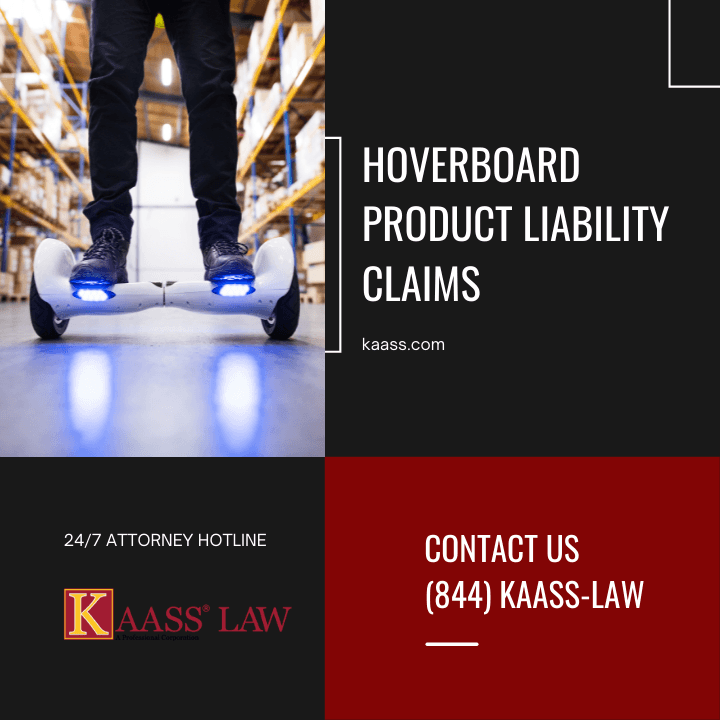
Started back in 2013, hoverboards have been in public for some time now . They began to quickly gain fame as most teenagers started purchasing the product. However, many problems arose during that time. Let's discuss Hoverboard Product Liability Claims.
What is a Hoverboard?
A hoverboard is a way of portable transport, made to ride with only feet. There is a common term for them, which is "self-riding scooters." Hoverboards came to be the "next big thing" at the time of their release. With it being technologically so active, there came along a variety of issues with the product.
Hoverboard Technology Crashing and Loss of Control
With the hoverboard being the new portable way of transit, technological reliability is highly dependent on during the use of this product. An example of a defect in technology included the hoverboard coming to an immediate stop. Now, this may not sound so bad, however, the damages it led to have been far more serious. With further elaboration, let's discuss how the hoverboard is driven. Riding a hoverboard, you must place your two feet in the two given spots. Being able to move the hoverboard forward or backward, you must lean forward and backwards, respectfully. To turn in direction, the body weight must transfer to one leg while the other maneuvers the opposite leg to start turning. This applies to both sides while you are turning. So, if someone were to be riding the hoverboard and going in a forward motion and suddenly the hoverboard comes to an immediate stop, there are a countless number of physical damages that may arise in the midst of this accident. Technology crashing may also lead to a loss of control.
Own recognizance means to be released without having to pay bail with the promise that the released individual will show up on their court date. Specifically, an individual will be required to sign an agreement stating that:
They will appear in court when ordered to do so;
Obey all conditions imposed by the court;
Not leave the state without permission.
Who Is Eligible for Own Recognizance?
The following factors are taken into consideration to determine if an individual is eligible for his own recognizance:
Whether the individual has strong roots in the community;
Whether the individual has regular employment;
The severity of the crime;
The individual’s criminal record;
Whether the individual poses a danger to the public if released
Does an Own Recognizance Require a Formal Hearing?
Yes, specific offenses require a formal adversarial hearing should such offenses fall under Penal Code 1270. These offenses include:
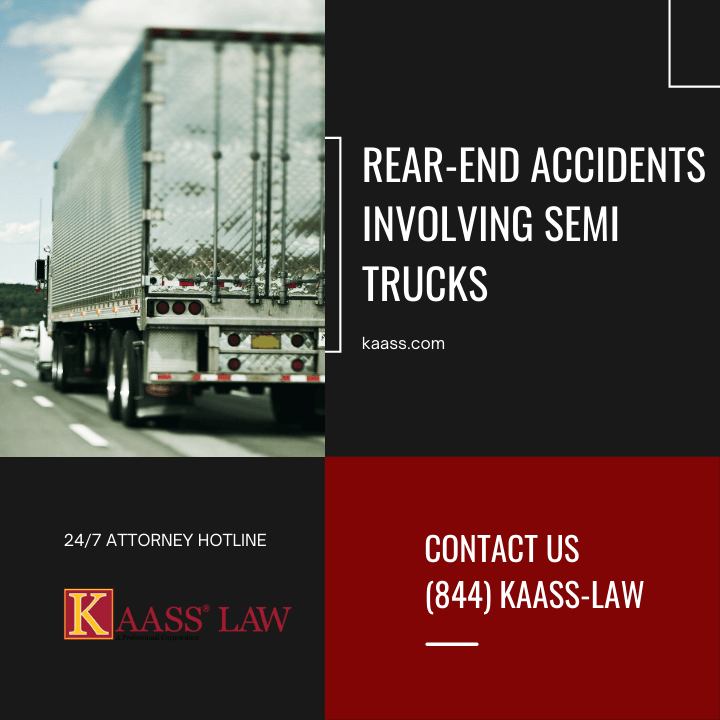
A rear-end collision between a semi-truck and a passenger vehicle is something that happens often. The first thing that comes to mind when you hear the words "rear-ended by a semi-truck" is most likely the severity of damage such an accident can cause. This is primarily due to the overwhelming size and weight of the semi-truck can pose a serious risk of catastrophic injury or wrongful death in an accident.
What are Common Causes for Semi-Truck Accidents?
There are many causes for rear-end accidents involving semi-trucks. Some common causes as to why a semi-truck driver may rear-end another vehicle include:
Is it a Crime to Possess for Sale of Controlled Substance?
Yes, under Health and Safety Code 11351, it is considered a felony in the state of California to possess controlled substances with the intent to sell them.
What is Considered a Controlled Substance Under Health and Safety Code 11351?
For purposes of Health and Safety Code 11351, a controlled substance is any drug or chemical whose manufacturing, possession, and use are regulated by the government under the Controlled Substances Act.
What is the Controlled Substance Act?
The Controlled Substance Act is a federal statute that enables the federal government to regulate the manufacturing, importation, possession, use, and distribution of certain substances. Additionally, controlled substances are placed under one of five schedules under this act. The placement is based on the following:
If you have been involved in an accident where there is a minor present in your car, then it is important that you know what to do. An accident with a child in your vehicle can be terrifying. This article will outline three steps that may be taken after being involved in an accident with a minor and how these different scenarios can play out.
3 Important Steps To Take After The Accident
Call the police - Whether the car accident was major or minor, you and your passenger(s) may have more damages than you may think. If someone is involved in an accident, they may end up in shock or produce an adrenaline rush and not feel pain at the moment. A car accident can happen at any time, to anyone. You may not think it's a big deal and the damage isn't too severe, but you should still take precautions for the people you were commuting with. It is important to check on everyone in the vehicle and make sure they are uninjured.
Visit the doctor - By visiting the doctor after the accident, you may be able to find out if there are damages to your body. Also, by the time a doctor visit is scheduled, you may be aware of some physical pain caused to your body due to the accident. Going to the doctor will be a means to a safe end to establish that you and the child are in good hands and are being monitored, that is, if there are injuries.
Contact your Los Angeles Attorney - It is important to get into contact with your attorney before reaching out to any insurance adjusters for your claim. By keeping all information confidential, the attorney's office will make sure that all communication will go through us so that nothing you say will be used against your case. After being in contact with a firm, they will then proceed to get ahold of both party insurances and be in contact with them directly until your case is closed. In the meantime, you will visit treatment as the doctors at the treating facilities request.
andermark v. Ford Motor Co.,
County of Santa Clara v. Atlantic Richfield Co.
A. Product Defect
Product defects can determine by: (1) manufacturing defect; (2) design defect; or (3) warning defect. The mere fact that a plaintiff suffered an injury from the normal use of a product does not itself establish that the product was defective. Hennigan v. White, 199 Ca.App.4th 395 (Ca. Ct. App. 2011). For example, a plaintiff who suffers a head injury while wearing a motorcycle helmet in its normal use is not, by itself, sufficient to establish a claim for products liability. Instead, there has to be some kind of legal defect in the motorcycle helmet.
(i) Manufacturing Defect
Manufacturing defects are most common. Strict products liability for a manufacturing defect can be found in two scenarios: (1) when the product left the manufacturer’s control, it differed from the manufacturer’s intended result or (2) when the product left the manufacturer’s control, it differed from apparently identical products of the same manufacturer. Barker v. Lull Engineering Co., Inc., 20 Ca.3d 413 (Ca. 1978). Additionally, the defective product must have been used in a manner reasonably foreseeable by the manufacturer and yet still caused the plaintiff’s injury. Id. The following scenario highlights the “reasonably foreseeable use” element of a manufacturing defect claim: Plaintiff wears her motorcycle helmet on backwards, shorty thereafter gets into a collision due to her vision obstruction. A defect in the face shield of the helmet causes injury to the back of her head. Plaintiff would not be able to maintain a products liability case against a motorcycle helmet manufacturer because, even though the face shield was defective, she was not using the helmet in a manner that would be reasonably foreseeable by the manufacturer. California’s Civil Jury Instructions require that in order for a plaintiff to establish a claim for manufacturing defect, all of the following must be proven: (1) that the defendant manufactured or sold the product at issue; (2) that the product contained a manufacturing defect when it left the defendant’s possession; (3) that the plaintiff was harmed; and (4) that the product defect was a substantial factor in causing the plaintiff’s harm. CACI No. 1201. “A product will be considered as containing a manufacturing defect if the product differs from the manufacturer’s design or specifications or from other typical units of the same product.” CACI No. 1202.
(ii) Design Defect
In terms of analyzing a plaintiff’s claim under the consumer expectation test, a jury will be instructed that the following elements must be proven before judgment can be awarded in favor of the plaintiff: (1) that the defendant manufactured or sold the product (2) that the product did not perform as safely as an ordinary consumer would have expected it to perform when used or misused in an intended or reasonably foreseeable way; (3) that the plaintiff was harmed and; (4) that the product’s failure to perform safely was a substantial factor in causing the plaintiff’s harm. CACI No. 1203. Alternatively, when reviewing a claim for design defect under the risk-benefit test, a plaintiff must prove: (1) that the defendant manufactured or sold the product; (2) that the plaintiff was harmed and; (3) that the product’s design was a substantial factor in causing the plaintiff’s harm. CACI No. 1204. If a plaintiff can prove these three facts, then the jury is instructed to decide in favor of the plaintiff unless the defendant can prove that the benefits of the product’s design outweigh the risks of the design. Id. In deciding whether the benefits outweigh the risks, the jury is instructed to consider the following factors: (1) The gravity of the potential harm resulting from the use of the product; (2) The likelihood that the harm would occur; (3) The feasibility of an alternative design at the time of manufacture; (4) The cost of an alternative design; (5) The disadvantages of an alternative design; and (6) Any other relevant factors. Id.
(iii) Warning Defect
A plaintiff must prove all of the following to establish a claim for warning defect: (1) that the defendant manufactured or sold the product; (2) that the product has potential risks or side effects that were known or knowable in light of scientific or medical knowledge at the time of manufacture or sale; (3) that the potential risks or side effects presented a substantial danger when the product is used or misused in an intended or reasonably foreseeable way; (4) that ordinary consumers would not have recognized the potential risks or side effects; (5) that the defendant failed to adequately warn or instruct of the potential risks or side effects; (6) that the plaintiff was harmed and; (7) that the lack of sufficient instructions or warnings was a substantial factor in causing the plaintiff’s harm. CACI No. 1205.
B. Causation
The defective product must have actually caused the plaintiff’s resulting injury. Horn v. General Motors Corp., 17 Cal.3d 359 (Ca. 1976). It is not enough that the defect played some role in causing the injury, however, the defect must have been a substantial factor that lead to the plaintiff’s injury. Soule at 572. In fact, a defect is considered legally and factually irrelevant if it played no part in bringing about the injury. Id. (Holding that if the external force of a vehicle accident was so severe that it would have caused identical injuries in spite of the defect in the vehicle’s collision safety, then the defect cannot be considered a substantial factor in bringing about the plaintiff’s injury.) Practically, in cases of motorcycle helmet product liability, this would mean that if a plaintiff suffered a head injury during a motorcycle crash such that was so severe the outcome would have been the same regardless of whether or not the plaintiff was wearing a helmet, then a claim cannot be made for products liability even if the helmet was found to be defective.
C. Injury
Injury must occur. In terms of products liability, a defendant can be strictly liable for physical injuries which connects to persons or property. As the old saying goes, "No harm no foul." However, it is important to note that a plaintiff cannot prevail on a claim of strict liability for purely economic loss. Absent a claim of personal injury or damage to other property, there is no strict liability for loss of value, cost of repair, or replacements of the defective product. Jimenez v. Superior Court, 29 Cal.4th 473 (Ca. 2002). Additionally, California courts have held that the injury suffered by plaintiff must have actually occurred, meaning it is insufficient to claim only the likely potential for injury. KB Home v. Superior Court, 112 Cal.App.4th (Ca. Ct. App. 2003).
II. PARTIES
A. Proper Plaintiffs – Who Can Bring Suit
A broad range of plaintiffs may recover under the theory of product liability. Recovery from injury is not limited to the first purchaser of the product, but rather to anyone whose injury was reasonably foreseeable. Elmore v. American Motors Corp., 70 C2d 578 (Ca. 1969). This can include innocent bystanders injured by defective automobiles or employees injured by defective equipment owned by their employers. See Elmore v. American Motors Corp., supra, 70 Ca.2d 586 (Ca. 1969). See Barker v. Lull Engineering Co., Inc., 20 Cal.3d 413 (Ca. 1978). A practical example of this concept in a motorcycle helmet product liability case can is as follows: Biker Son purchases a motorcycle helmet for Biker Dad’s birthday. Biker Dad has a motorcycle accident while wearing the helmet and suffers a brain injury as the result of a design defect in the helmet. Although Biker Dad was not the direct purchaser of the helmet, he is a proper plaintiff who can bring suit against the helmet manufacturer.
B. Proper Defendants – Who Can We Sue
In instances of product liability, the manufacturer is normally the most obvious defendant, but they are far from the only defendant available. Originally, the doctrine of strict liability only applied to the manufacturers of defective products. Greenman v. Yuba Power Products, Inc., 59 Cal.2d 57 (Ca. 1963). However, over time, California courts have expanded the doctrine to reach parties involved in the commercial chain of distribution of the defective product. Peterson v. Superior Court, 10 Cal.4th 1185 (Ca. 1995). This means that not only the manufacturer of a defective motorcycle helmet can be liable in a claim of products liability, but also the distributor and the retailer can be liable as well.
(i) Service vs. Product
Although there are several potential defendants available to the plaintiff in a motorcycle helmet products liability action, not everyone can be under the doctrine of a lawsuit. You will note that manufacturers, distributors, and retailers have one common theme that exists between them – they are all involved in the chain of custody of a product. One party that cannot hold liability under the doctrine of products liability is a party who provides a service. Strict products liability will always involve a tangible product that places into the stream of commerce, so if the potential defendant is offering a service, rather than a product to the plaintiff, the plaintiff cannot bring suit against the service provider under the theory of products liability.Gagne v. Bertran, 43 Cal.2d 481 (Ca. 1954). For example, a plaintiff would most likely not be able to bring a products liability suit against a business that provides motorcycle riding lessons, even if the business provided the plaintiff with a defective helmet to use during the lesson. The plaintiff may be able to sue under another legal theory, but not products liability. In some cases there may be a dispute over whether the business is providing a product or services, and in those instances, the court must determine whether the dominant role of the defendant should identify as a service or a sale. Murphy v. E.R. Squibb & Sons, Inc., 40 Cal.3d 672 (Ca. 1985).
(ii) Joint and Several Liability
Product liability among defendants is joint and several, meaning that any defendant established by the plaintiff as involved in the stream of commerce of the defective product is responsible for all of plaintiff’s damages.
III. Jury Verdicts/Settlements
Below is a list of various California jury verdicts and settlements for cases regarding product liability connection to a defective motorcycle helmet:
Esposto v. City and County of San Francisco;
• Esposto v. City and County of San Francisco; State of California; Shoei Helmet Corporation; Paulson Manufacturing Company; David Golden Motorcycles, Inc., JVR No. 43984 Superior Court, San Francisco County (1986). A plaintiff in his mid-30s is a victim in motorcycle accident, resulting in becoming a quadriplegic. The plaintiff sued the city of San Francisco and State of California arguing that poor road conditions contributed to his accident. Additionally, the plaintiff sued the motorcycle manufacturer and retailer and claimed that the bike, helmet and visor were defective. The manufacturer and retailer maintained that the products were not defective. The plaintiff eventually settled for a total amount of $865,000. The city and county paid the large bulk of the settlement.
Sheryl Suglia v. Nexl Sports Products
• Sheryl Suglia v. Nexl Sports Products, LLC, Lifestyle Custom Cycles, Gilbert J. Williams and Mark Skolnick Jr., 2009 WL 3260089, Superior Court, Los Angeles County (2009). Plaintiff and her late husband got into a collision with their motorcycles, head-on, by a drunk driver, resulting Plaintiff having severe injuries the passing of her husband .At the time of the crash, plaintiff and her husband were wearing “beanie” type helmets manufactured by Nexl Sports Products and sold by retailer Lifestyle Cycles.The particular "beanie" type helmets did a recall in 2003 for failing to pass Department of Transportation penetration and impact-absorption tests. The plaintiff sued the manufacturer and retailer under the theory of strict products liability and negligence, claiming that both defendants should have made her aware of the product recall. Plaintiff sought more than $2 million in economic damages. The jury found in favor of the defense, reasoning that the impact between the car and motorcycle was so major that no helmet could have prevented the resulting injuries.
Sally Doe v. Daytona Helmets Inc
• Sally Doe v. Daytona Helmets Inc.; Jeffrey McKinley; Big Dawg Custom Cycles & Rodney Chatwin, individually, 2006 WL 4589449, Superior Court, Alameda County (2006). Plaintiff is dealing with head injuries due to a motorcycle accident. One of the claims brought by plaintiff was for products liability against the motorcycle helmet manufacturer. The crux of plaintiff’s argument was that the helmet failed to meet DOT safety requirements, despite the fact that it displayed a DOT compliant sticker. The parties reached a settlement agreement and the plaintiff received approximately $1 million from the helmet manufacturer and an additional $1 million from the remaining defendants.
Grant Thor and Sara Guerrero v. Kerr Leathers
• Grant Thor and Sara Guerrero v. Kerr Leathers, Inc., Sunright International and Visalia Harley-Davidson, 2007 WL 2872337, Superior Court, Tulare County (2007). Plaintiff's late father received severe head injuries due to an motorcycle accident, resulting his late fathering from passing away. Plaintiff brought a products liability suit against the manufacturer. The retailer of the helmet claiming that it was defective after it failed a “retention” test by the Federal Government. The defendants recalled the helmet, but there was no evidence of the plaintiff’s father ever receiving notice of the recall. Plaintiff settled for approximately $2 million.
Riley v. Grandon
• Riley v. Grandon, 5 Trials Digest 17th 7, Superior Court, Riverside County (2013). The Decedent was a motorcycle passenger when the bike struck a speedbump, lost control, and crashed. Unfortunately, the Decedent fractured her skull and died as a result of her injuries. The Decedent’s estate brought suit against the driver of the motorcycle under a theory of negligence and also alleged strict product liability against the manufacturer and retailer of the helmet the Decedent was wearing at the time of the accident. At the end, the plaintiff claimed that the helmet did not meet motorcycle safety standards. Plaintiff reached a $1 million settlement with the helmet retailer. THIS ARTICLE IS FOR EDUCATIONAL PURPOSES ONLY, NO ATTORNEY CLIENT PRIVLIGE, CONSULT, OR ADVICE. PLEASE CONSULT WITH A PROFESSIONAL. Contact KAASS Law for further assistance and representation!
Compensation to each victim and fines of up to $10,000.
Carjacking Penalty Enhancements
A carjacking conviction carries harsh penalties and enhancements, as well as a "strike" under California's three-strikes rule, which can be increased if the defendant:
used a weapon;
injured the victim; and/or
committed the crime to aid street gang
Penal Code 186.22 Gang Enhancement
Under Penal Code 186.22 gang enhancement a defendant can be prosecuted under this section if they either participate in a gang while furthering a felony or carry out a crime for the benefit of a gang. As such, a 15 year to life enhancement can be applied if the theft was for the benefit of a criminal street gang.
Gun Enhancement Penal Code 12022.53
If a firearm was used during the commission of the carjacking 10 years can be added to the sentence. Although per SB620, such enhancement is left to the judge's discretion.
Other Penalty Enhancements
In the event, someone was harmed during the commission of the carjacking, three (3) to six (6) years may be added to a defendant's sentence. If a gun was discharged during the commission of the carjacking a 20-year sentence can be added.
What is the Carjacking Problem in California?
Since every vehicle theft is a severe issue for the owner, the stakes are significantly higher when the owner is still in the vehicle when the thief acts. Carjacking is defined as the act of depriving the owner of the vehicle while they are still in or near it. However, ejecting the owner is precisely the carjacking issue. Force, the fear of force, or some other form of duress or coercion is required to eject or resist the owner. Owners do not just hand over the keys to their vehicles to criminals. Carjacking is a separate felony in part because it violates the owner's safety and autonomy, as well as the potential of significant injury or worse.
If you or a loved one has been charged with carjacking under Penal Code 215 PC, we invite you to contact our Los Angeles criminal defense attorney today for a free consultation.
Under the existing law, the Tom Bane Civil Rights Act, SB 2 is the attempt of diminishing any cases of police misconduct and or police brutality. California is taking a further step into making sure its people is being properly taken care of.
What Will Senate Bill 2 Create?
Senate Bill 2 will create a system within the Commission on Peace Officer Standards and Training. Essentially, this system will be made to keep police officers accountable should there be misconduct. This includes investigating serious matters such as the following:
Excessive force;
Sexual assault;
Demonstration of bias;
Demonstration of dishonesty.
Are There Any Divisions That Will Be Made As Part of Senate Bill 2?
Yes, under Senate Bill 2, the following divisions within the Commission on Peace Officer Standards and Training will be made:
It will eliminate certain immunities granted to police officers and custodial officers, or the public entities that employ them;
It will not allow an individual who otherwise has a felony conviction from regaining eligibility to be a police officer;
It will not allow an individual from being employed as a police officer should that individual have committed certain specific crimes against public justice;
Require the Department of Justice to give the Commission disqualifying information, including felony and misdemeanor convictions on anyone who is a current or former police officer;
Give power to the Commission to investigate in order to determine the fitness of any police officer in the state.
Does California Currently Have A Process To Revoke Police Officer Certification?
No, California currently does not have a process to revoke police officer certification.
Are There Currently Any Laws Provided That Protect the Public?
Yes, there are current laws that ensure the protection of the public. However, qualified immunity in federal court also applies as well as other California laws that have interpret broadly as a way to restrict cause of action brought by the public.
Navigating The Implications Of SB 2
The implementation of SB 2 will undoubtedly have significant implications for law enforcement agencies and the communities they serve. Understanding the nuances of this legislation is crucial for both officers and individuals who may have experienced police misconduct. For law enforcement agencies, SB 2 necessitates a review of internal policies and procedures to ensure compliance with the new regulations. It also underscores the importance of thorough internal investigations and a commitment to accountability. For individuals who believe they have been victims of police misconduct, SB 2 provides a new avenue for seeking justice and accountability. Understanding the process for filing complaints and the potential for decertification is essential.
Contact Us
At KAASS LAW, we are committed to upholding the rights of individuals and promoting justice within our communities throughout California. We are closely following the implementation of SB 2 and understand its significance for police accountability in our state. If you believe you have been a victim of police misconduct, or if you have questions about your rights in interactions with law enforcement, we are here to provide guidance and support. Our experienced attorneys can:
Explain your rights and the provisions of SB 2.
Assist you in understanding the process for filing complaints of police misconduct.
Evaluate potential legal claims related to police misconduct.
Provide zealous advocacy to ensure your voice is there and your rights are under proper protection.
Senate Bill 2 represents a crucial step forward in California's efforts to reform policing and enhance accountability. As this legislation is implemented, it is vital for individuals and communities to understand its provisions. Additionally, they also need to learn how they can contribute to a more just and equitable system. Contact KAASS LAW to learn more about your rights and how we can assist you in navigating the complexities of police accountability in California. Alternatively, if you were a victim of wrongful death by police, we can help.
Can an Injured Person Seek Compensation for Damages?
When someone commits a crime, not only could they subject themselves to punishment by the state, but they are also liable to pay for any damage that they may have caused to a victim and their property. “Damages” refer to harm that may have been done in the form of:
When looking to be compensated for damages, a plaintiff must prove that the criminal was acting negligently and also that the damage was caused by the negligent actions.
What Are Some Common Examples of Crimes That Result in Injuries?
Below is a list of crimes that typically result in extensive damages to victims:
What are Defenses that a Criminal Will Use to Protect Themself from Paying for Damages Caused to a Victim?
Even if a crime was committed and police choose to convict the criminal, this does not always guarantee liability for all damages claimed. Below are the 2 most commonly used defenses from criminals:
The crime was not the cause of the damages in question
The estimate for compensation of damages is excessive
First, it may be the case that the damages were not actually a result of the crime committed. It is not enough to merely show that a crime and damages took place, you must also show that the crime was the cause of them. Let’s apply this to example 1: It is also a possibility that the criminal does not completely deny responsibility for damages, but claims that the damages in question are excessive.
The Role of Legal Counsel in Seeking Victim Compensation
While victims can apply for compensation on their own, having experienced legal counsel can significantly ease the burden and increase the likelihood of a successful outcome. At KAASS LAW, our attorneys can assist victims of crime in California by:
Evaluating Eligibility: Determining if you meet the criteria for compensation under CalVCB guidelines.
Guiding the Application Process: Helping you gather the necessary documentation and complete the application accurately and efficiently.
Communicating with CalVCB: Acting as your advocate and liaison with the California Victim Compensation Board.
Addressing Denials and Appeals: Assisting with the process of appealing denied claims.
Exploring All Legal Options: Advising you on any additional legal avenues for seeking justice and compensation.
Contact Us
The California Victim Compensation Board serves as a vital resource for those who have been harmed by crime. Understanding your rights and the availability of compensation can be a crucial step in the healing process. At KAASS LAW, we are committed to empowering victims of crime by providing them with the information and legal support they need to navigate the path to recovery and seek the justice they deserve. If you or someone you know has been a victim of a crime in California, please reach out to us for a confidential consultation. We are here to help you find a path forward. We understand the loss of someone's integrity, security, or even their well-being. Sometimes the injuries cut deeper than the injury itself. Allow us to be your voice and attempt to go after the ones that did you wrong. Contact us if you are seeking legal help and or representation.
There are several possible hoverboard product defects that can exist causing injury. There are 3 theories that a product liability lawsuit can be brought under. The 3 product liability theories include:
Design Defect: A design defect occurs when the product’s design was an initial factor causing the injury to the consumer
Manufacturing Defect: A manufacturing defect occurs when the product deviated from design specifications and that defect was a main and initial factor causing the injury to the consumer
Failure to Warn Defect: A failure to warn defect occurs when there is a risks known to the defendant but not clear to a consumer and the defendant’s failure to provide a reasonable warning or notice, which was an initial factor causing the injury to the consumer
California Laws and Regulations on Riding Hoverboards
California hoverboard or electrically motorized board riders should be aware that there are California laws that govern its use. Some of these California hoverboard laws include but are not limited to:
Hoverboard riders are permitted to ride on public highways and roadways designated at 35 mph or less;
Hoverboard riders must be at least 16 years or older to ride on public highways/roadways;
Riders are not allowed to operate hoverboards on a highway, bikeway, or any other public bicycle path, sidewalk, or trail, at speeds over 15 mph;
Hoverboard users are required to wear a helmet; and
It is illegal to operate a hoverboard while under the influence of alcoholic beverages or any drug
Personal Injury Attorney
If you or someone you know has been injured and think this can potentially be a Hoverboard Product Liability Claim, don’t hesitate to contact our Los Angeles personal injury attorney today at (310) 943-1171 for a free consultation and case review.
Serious felonies such as rape, assault with a deadly weapon or murder;
Violent felonies;
Violation of a protective order, which includes violence, serious threat of harm, or the individual goes to the home or workplace of the person whom the protective order is for;
Violation of domestic battery law;
Violation of witness intimidation laws, such that is defined under Penal Code 136.1
Are There Any Conditions Associated with an Own Recognizance?
Yes, as mentioned above, there are certain conditions that an individual must agree to should they be released on their own recognizance. These requirements are listed under Penal Code 1318. It is important to keep in mind that these conditions must remain reasonable both to the charges pending against the individual as well as taking into account the goal of public safety. Additionally, the individual may also have to agree to other conditions such as:
Attending Alcoholics Anonymous meetings;
Attending Narcotics Anonymous meetings;
Receive mental health treatment;
Receive substance abuse treatment;
Home detention;
Electronic monitoring.
Are There Consequences Connected with Own Recognizance Release?
Yes, being released on own recognizance may trigger investigators, who are court staff members, to look into an individual to determine what the individual’s character is and whether the individual has a strong connection to their community and if they are a flight risk. However, an investigation into the individual is mandatory should the individual face charges of a violent felony or driving under the influence (DUI) that resulted in great bodily injury.
Los Angeles Criminal Defense Attorney
If you or someone you know has been released on your own recognizance or is currently in jail and would like to be released, please contact our Los Angeles criminal defense attorney at (310) 943-1171 for a free consultation.
Commercial truck drivers are required to maintain a 'logbook" that records the "hours of service". In other words, this log contains the number of hours the drive has been driving. Semi-truck drivers hauling cargo have an 11-hour driving maximum after 10 consecutive hours off duty. Further, semi-truck drivers can work a maximum of 70 hours per week. A driver can then resume driving if they rest for 34 consecutive hours, including 2 nights. Furthermore, all carriers and drivers operating commercial motor vehicles (CMVs) must comply with "hours of service" regulations found in 49 CFR 395.
Semi-Trucks with Worn Out Breaks
Driving a semi-truck with unmaintained or worn-out brakes is negligent. Commercial vehicles such as tractor-trailers and semi-truck are moving fast and burdened with a heavy load and therefore generally will need a lot more time to come to a full stop than any SUV. As a result, failing to routinely maintain commercial vehicle breaks will need even more time to come to a complete halt.
Things to Do After You Were Rear-Ended By A Semi-Truck
Step 1: Firstly, if you are involved in an accident, the first and most important thing to do is call an emergency response to request medical and police assistance. Step 2: Take pictures of the damage to the vehicles, the position of the vehicles, and the entire accident scene. If there is a debate as to how the semi-truck accident occurred, the damage and positions of the vehicles will help the police and accident reconstruction experts to determine what occurred. Moreover, taking a picture of the driver's logbook logs for that day is a plus. Step 3: Attempt to locate people who may have witnessed the collision. Get their name, address, and telephone number. Additionally, exchange information with the other driver, such as insurance information and driver's license information, vehicle registration, driver's contact, and employer information. Step 4: Seek the proper and immediate medical treatment as soon as possible. Going to the emergency room to be examined will ensure there are no internal or hidden injuries, as well as document your injuries. Step 5: Lastly, contact an auto accident lawyer immediately if you have been involved in a semi-truck accident.
Suing for Injuries Sustained in a Commercial Truck Accident
A victim involved in an accident with a commercial truck can file a lawsuit against the at-fault driver and the commercial truck company. It is important to keep in mind that the tractor and trailer can have different owners. As such, it is important to ask the driver of the truck who owns the tractor and trailer.
What Type of Compensation Can an Injured Truck Accident Victim Recover?
As experienced litigators, we have successfully litigated various personal injury cases including complex personal injury matters. Above all, our attorneys possess the mastery it takes to successfully receive fair settlements during the claims stage of a personal injury case. Don’t accept low-ball offers from insurance companies. An injured truck accident victim may seek compensation for damages which includes:
If you or a loved one has been seriously injured or killed due to a negligent semi-truck driver it is crucial to seek advice from an experienced commercial truck accident attorney as soon as possible in order to preserve your claim and legal remedies. We invite you to contact our commercial truck accident attorney today at (310) 943-1171 for a free consultation.
Kaass Law will connect you with leading medical professionals in your area to diagnose and treat your injuries. If you are unable to pay for the medical treatment we can facilitate treatment on a medical lien basis. This means you pay nothing up front. As the conclusion of your case, your medical bills are paid from the settlement.
What Are Examples of Controlled Substances for Purposes of Health and Safety Code 11351?
Controlled substances for purposes of Health and Safety Code 11351 include the following:
Cocaine
LSD
Mushrooms
Peyote
Opium
Codeine
Hydro codeine
Morphine
Ecstasy
Keep in mind that possession of controlled substances such as marijuana and methamphetamine for purposes of sale are considered separate offenses not covered under Health and Safety Code 11351.
What is Considered "Possession" Under Health and Safety Code 11351?
For purposes of Health and Safety Code 11351, possession is established when an individual has direct and/or immediate control over the controlled substance. Typically, this is established when the individual possesses the controlled substance if they are carrying it on them. Possession can also be established if an individual has personal control over the substance such that the controlled substance was found near or around an area that the individual exercises control over, such as in the individual’s car or garage.
How is Intent to Sell Established Under Health and Safety Code 11351?
Under Health and Safety Code 11351, intent to sell can be established by showing the following:
The amount of the controlled substance is greater than the amount one individual would typically use;
The controlled substance has been found in separated baggies;
The controlled substance was found near or next to a weighing mechanism such as a scale; or
The location of the controlled substance is frequently visited by many individuals who temporarily come in and go out of the establishment
What are the Penalties Associated with Violating Health and Safety Code 11351?
As mentioned above, violating Health and Safety Code 11351 is considered a felony. Penalties include the following:
Up to one year in county jail and probation; or
Two, three, or four years in county jail; or
Be placed on formal probation
Pay fines of up to $20,000
Los Angeles Criminal Defense Attorney
If you or someone you know has been charged with Health and Safety Code 11351, we invite you contact KAASS LAW today at (310) 943-1171 to speak to our criminal defense attorney for a free consultation.
Common Injuries a Child Passenger May Suffer in a Car Accident
Some common injuries a child passenger may suffer in a car accident include:
Whiplash
Concussion
Bone fracture
Soft tissue
Spinal injury
Broken bones
Lacerations
If you are in a car accident, it is not just adults who can be injured. Children too may suffer injuries. The type of injury depends on the age and size of the child as well as what part of their body they were hit by or landed on. If your child was involved in an accident, it is important to seek medical attention.
Get Ahold Of A Los Angeles Car Accident Attorney
Car accidents are never easy to go through, and they can cause serious injury. For minors in the car during an accident, there may be more worries than for adults. After all, it is hard enough worrying about their own safety after an accident. Getting into accidents is unavoidable in some cases. If you have been in an accident with a child in your vehicle, you should know that you have legal options to discuss with your attorney. Give our Los Angeles Attorneys a call right now to get your case going. Please contact 310-943-1171 to reach our office. We would be pleased to assist you with your case.