The sound of a wheelchair's wheels might represent tenacity, willpower, and the human soul's unbreakable spirit. But there's a sobering truth that's frequently concealed from the general public: people who use wheelchairs can die in accidents. We will examine the heartbreaking problem of wheelchair wrongful deaths in this blog, illuminating the reasons behind them, their effects, and the pressing need for reform.
Comprehending Erroneous Deaths from Wheelchairs
A legal phrase for when someone dies as a result of the carelessness, negligence, or wrongdoing of another party is "wrongful death." Wheelchair wrongful death cases usually entail mishaps, medical errors, negligence, or insufficient care that results in the untimely death of a person who is already dealing with serious issues.
The Unseen Tragedy
Tragedies involving wheelchair-related deaths are frequently unseen and hardly talked about. Despite being less frequent than other wrongful death cases, they nonetheless have a significant emotional impact on the communities, friends, and families involved. We need to investigate the common causes and outcomes of these occurrences in order to effectively address this problem.
Typical Reasons for Wheelchair-Related Fatalities Medical negligence: One of the main causes of wheelchair user tragic fatalities is inadequate medical treatment. Errors with medications, surgical mistakes, and misdiagnoses can have disastrous results.
Falls and Accidents: People who use wheelchairs are more vulnerable to falls and accidents, which can result in serious injuries or even fatalities. These occurrences frequently happen as a result of inadequate support, inaccessibility, or bad infrastructure.
Neglect: Neglect can take many different forms, such as failing to provide basic medical care or failing to attend to the special needs of a wheelchair user. Health problems with a potential death sentence might arise from neglect.
Equipment malfunctions: In order to be mobile and independent, wheelchair users depend on their equipment. Accidents that result in death can happen when equipment malfunctions, like brake problems or structural problems. Inadequate Support Systems: Wheelchair users may be more vulnerable to accidents and mishaps due to a lack of accessible transportation, medical facilities, and social support networks.
Consequences of Wheelchair Wrongful Deaths
The ramifications of wheelchair-related wrongful deaths are severe and go well beyond the death of the victim. What families and communities are left to struggle with is:
Emotional Trauma: Wheelchair wrongful death victims' loved ones go through unfathomable grief. Many times, the emotional trauma is permanent.
Financial Hardship: Medical bills, burial costs, and the loss of the deceased's income and support can place a heavy financial load on families.
Advocacy and Awareness: Tragic deaths involving wheelchair users are frequently ignored in public conversation. In order to avert disasters in the future, advocacy for change and awareness-raising are essential.
Legal Aspects and Accountability
Determining who is at fault in a wheelchair-related wrongful death can be difficult and include several parties:
Healthcare Providers: In the event that a wrongful death results from carelessness, malpractice, or errors, physicians, nurses, and healthcare facilities may be held liable. makers: Wheelchair or associated device makers may be held liable if equipment failure was a contributing factor.
Institutions and Caregivers: In the event that a wrongful death results from negligence or insufficient care, nursing homes, rehabilitation facilities, and caregivers may be held legally liable.
Public Entities: Government agencies may be held liable for their failure to create a safe environment for wheelchair users when insufficient infrastructure or accessibility is a contributing factor.
Advocacy and Awareness
Advocacy and awareness are essential in addressing the problem of wheelchair-related wrongful deaths. Actions to take consist of:
Supporting Organizations: A large number of NGOs and advocacy groups put in endless effort to enhance the lives of wheelchair users and stop preventable deaths. Giving these groups your support can have a big impact.
Legislative Change: Encourage the creation of laws and regulations that improve the rights and safety of wheelchair users. This could entail steps to increase accessibility, education for medical professionals, and more stringent rules governing equipment.
Telling Stories: To spread awareness and push for change, invite others to share their own tales and experiences. Telling tales may give this topic a powerful voice.
Preventing Wheelchair Wrongful Deaths
In order to solve the issue of wheelchair-related wrongful deaths, advocacy and awareness are crucial. The steps to take are as follows:
Supporting Organizations: A great deal of non-governmental organizations (NGOs) and advocacy groups work tirelessly to improve the lives of wheelchair users and end avoidable deaths. Supporting these organizations can make a significant difference.
Legislative Change: Promote the enactment of rules and laws that enhance wheelchair users' safety and rights. This can mean more regulations on equipment, training for medical staff, and measures to improve accessibility.
Telling Stories: Ask people to share their personal narratives and experiences in order to raise awareness and encourage change. Narrating stories could offer this subject a strong voice.
Tragedies involving wheelchair-related deaths are silent and often ignored in society. We can contribute to averting these unfortunate incidents and creating a safer and more welcoming environment for wheelchair users by cooperating to enhance accessibility, healthcare, and support services. Let's work toward a more just and compassionate society in remembrance of the lives lost. If you have any questions please feel free to visit this link.
Winter's arrival transforms the open road into a challenging and often perilous environment for the risk of truck accidents. The cold season brings with it a unique set of hazards, significantly increasing the risk of accidents. In this blog, we delve into the specific dangers posed by winter roads and the crucial factors that contribute to the heightened likelihood of truck accidents during the colder months.
The Icy Menace as a Risk
Navigating trucks on winter roads becomes particularly challenging due to the prevalence of icy and slippery surfaces. Black ice, concealed beneath a deceptive layer of snow, poses a formidable threat, significantly diminishing traction. This treacherous condition makes it harder for trucks to come to a stop or maintain control, increasing the risk of rear-end collisions and jackknifing incidents.
Reduced Visibility as a Risk
Winter storms, unforgiving in their relentless pursuit, usher in an atmospheric metamorphosis that demands heightened vigilance from . Reduced visibility becomes more than a challenge. It transforms into a whiteout of danger, enveloping the road ahead in an opaque curtain of uncertainty. We will provide a detailed explanation of each point and give examples wherever necessary to help you understand the concept better. Additionally, we will also highlight any potential challenges or drawbacks associated with each point so that you can make an informed decision.
Freeways are the lifelines of our modern transportation system, facilitating the seamless movement of goods and people across vast distances. However, with the increasing volume of traffic on these arterial roads, the incidence of truck accidents on freeways has become a concerning issue. In this blog, we will delve into the causes, consequences, and potential solutions to address the rising tide of truck accidents on freeways.
Causes of Truck Accidents on Freeways:
Driver Fatigue. Driver weariness is one of the main factors that contribute to truck accidents. Truck drivers frequently exceed their limitations due to long hours on the road, hectic schedules, and strict delivery dates, which frequently impairs their reaction speeds and decision-making abilities.
Distracted Driving. Distracted driving has become a serious worry with the rise of cellphones and in-cab technology. Like any other drivers, truck drivers may give in to the temptation of using their phones while operating a motor vehicle, which increases the likelihood of collisions.
Mechanical Failures. A major factor in accidents might be poorly maintained trucks or technical issues. Catastrophic accidents on the freeway might result from problems with tires, brakes, or other important parts.
Speeding. Driving too fast on freeways is still a common problem, and it can have disastrous results when it involves big lorries. Because trucks are so large and heavy, they are harder to maneuver at high speeds, which increases the risk of collisions.
Weather Conditions. Road conditions and visibility can be greatly impacted by unfavorable weather conditions, such as rain, snow, or fog. In bad weather, trucks are more likely to be involved in accidents due to their greater stopping distances.
In November 1996, California voters approved Proposition 213, a measure that significantly altered the landscape of personal injury law in the state. Known officially as "The Personal Responsibility Act," this law was aimed at penalizing uninsured drivers, individuals driving under the influence (DUI), and felons, by limiting their ability to recover compensation after car accidents. This initiative reflects California's unique approach to direct democracy, allowing citizens to propose and directly vote on legislation.
Understanding Proposition 213
Proposition 213 was codified into the California Civil Code as Sections 3333.3 and 3333.4, solidifying its status as law due to voter approval. This legislation was born out of a desire to discourage irresponsible driving behaviors, including driving without insurance and committing crimes such as DUI. The proposition received strong backing from insurance companies, including major contributions from Farmers, Mercury, and State Farm, indicating the insurance industry's significant interest in its enactment.
Lorem Ipsum is simply dummy text of the printing and typesetting industry. Lorem Ipsum has been the industry's standard dummy text ever since the 1500s, when an unknown printer took a galley of type and scrambled it to make a type specimen book. It has survived not only five centuries, but also the leap into electronic typesetting, remaining essentially unchanged. It was popularised in the 1960s with the release of Letraset sheets containing Lorem Ipsum passages, and more recently with desktop publishing software like Aldus PageMaker including versions of Lorem Ipsum.
For a family to undergo a loss of a child is simply unbearable to think about. Depending on the reasoning behind the death of the child, will cause a variation of grief. For instance, if the death of their child is due to someone else's negligence, it is very difficult for a parent to deal with this pain. It might be caused by an error, a lack of quality control, or a dangerous environment. Food poisoning, product faults, slip-and-fall incidents, and automobile accidents can all harm the mother and result in the premature death of a child. These calamities are usually entirely avoidable. Several states have distinct regulations that govern whether or not you may submit a claim for the death of an unborn child. In certain places, a legal cause of action for the tragic loss of an unborn child has been founded or considerably progressed. California, however, is not one of these states. But, this does not exclude you from pursuing damages. Here is all the information you want on filing a lawsuit in California for the wrongful death of an unborn or recently-born child.
Can I Sue for My Unborn Child's Death?
California law forbids receiving compensation for the unfortunate loss of an unborn child, even if the pregnancy is "to term". A wrongful death case enables the pursuit of financial compensation when someone loses their life as a result of the careless or intentional conduct of another person or individuals. Herein lies the problem: California law does not recognize "personhood" for an unborn kid. There may be mitigating factors that permit such a claim to be made. A wrongful death claim may be appropriate, for instance, if an accident trauma causes the mother to go into early labor and the fetus is delivered alive but dies later (either at the scene of the accident or later at the hospital). To prove that the child was born alive, the claimants would need to retain a medical expert. That is, if the fetus showed any signs of life after leaving the mother's body, such as conscious movement, a beating heart, or breathing. If the is born alive, even for a little time, and subsequently perishes as a result of their injuries, you may be able to file a wrongful death claim. The main cause of maternal trauma-related fetal death is automobile accidents. Infants who survive have a range of psychological and physical conditions, including severe neurological abnormalities. A kid who was born alive but passed away soon after can get compensation in a claim for these medical expenses, lost wages while caring for the child, an estimated amount of agony and suffering, as well as funeral and burial costs.
The US has the world's largest consumer products market. Every day, people come into touch with a wide range of home items, including toys, cleaning supplies, cosmetics, appliances, and gadgets. We think that the domestic objects we use every day are safe for consumers, however, faults can make commonplace products harmful to use through no fault of your own. Household item defect wrongful deaths could be more common than you may think.
Household Item Defect: Electrical Appliances
A properly operating electric or fuel system is necessary for appliances like washing machines, ovens, and microwaves. Thus, an explosion or fire in a customer's home might result from these systems not functioning correctly. Moreover, this might lead to a claim for defective manufacture or design. The bulk of fires and fire-related injuries take place in homes. Generally, the major causes of house fires are electrical glitches or malfunctions.
Cooking utensils (ovens, cooktops, gas ranges, etc.)
Unimaginable pain and suffering can arise from truck accidents, particularly when wrongful deaths occur. By pursuing a legal claim, the grieving family may be able to get some sort of justice in some cases. Knowing when and how to apply punitive damages is a crucial part of pursuing restitution in these situations. We will discuss punitive losses in this blog article, including what they are and how they may affect a wrongful death lawsuit involving a truck accident.
Learning About Punitive Damages
Compensatory damages, additionally referred to as exemplary damages in court, are different than punitive damages. Unlike compensatory damages, which are to compensate for the victim's or their family's losses—such as lost money and medical costs punitive damages are to punish the defendant for their wrongdoing. Their aim is to keep the offender liable and prevent them from committing the same crimes in the future.
When Do Punitive Damages Get Paid?
Punitive damages are usually awarded when the defendant's actions were extremely flagrant, reckless, or severely negligent. This could include circumstances when the truck driver was under the influence of drugs or alcohol, violated hours of service laws, or engaged in willfully hazardous behavior in the context of a truck accident wrongful death case. Remembered that not every situation allows for punitive damages. Their availability and the specific requirements for granting them vary according on the jurisdiction and the event's conditions.
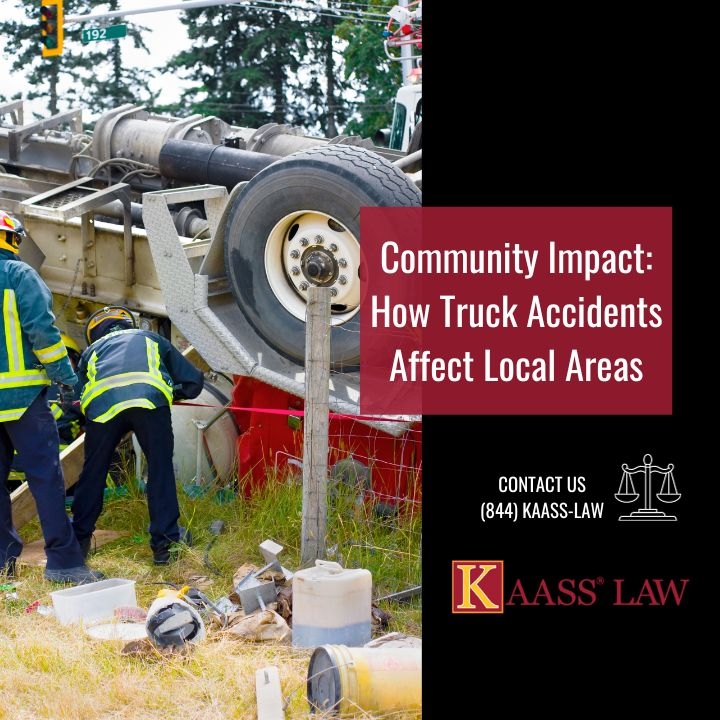
The effects of an occurrence spread far beyond the site across the huge web of interrelated communities that comprise our planet. A truck collision is one such incident that has broad ramifications. These occurrences have a long-lasting effect on the communities they affect in addition to posing an immediate risk to life and property. We will examine the community impact as a result of truck accident in this blog.
Immediate Disruption and Safety Concerns
The immediate effect of a truck collision is frequently felt in the disruption that it creates to local transportation and traffic patterns. There may be temporary closures or restrictions on highways, roads, and streets, which may cause commuter traffic bottlenecks and delays. When emergency services are called to the scene, resources from other possible emergencies are redirected. These disturbances have the potential to swiftly become serious problems for both locals and businesses in heavily populated areas. The safety risks connected to vehicle accidents are also very serious. Witnesses and community members experience trauma alongside those directly affected, facing the potential for injury or even fatalities. A community's collective memory of the aftermath of such events may remain for a while, creating a sense of vulnerability and unease.
Technology is rapidly advancing, and cars can now drive themselves. With this new technology, many questions can arise, especially after a car accident. If you lost a family member in a car accident, you might be able to seek compensation. The most important question is who is to blame for a death of a loved one in an autonomous car accident. Kaass Law, autonomous car accident attorneys, will answer your questions.
Regulations for Self-Driving Cars in California
Actual self-driving cars that do not require a human driver are illegal in California or the United States. They are currently being tested on California roads by real people driving them. Nonetheless, even under test conditions, self-driving cars have injured and killed California pedestrians and other motorists. California Vehicle Code 38750 addresses many state laws governing self-driving cars and provides additional information on who should be behind the wheel... "(2) In the event of an autonomous technology failure or another emergency, the driver shall be seated in the driver's seat, monitoring the safe operation of the autonomous vehicle, and capable of taking immediate manual control of the autonomous vehicle."
In the winter months, the battle for road safety takes a frosty turn as truckers confront a formidable adversary—freezing temperatures and the subsequent impact on their braking systems. Frozen brake components, including air lines and brake chambers, become silent assailants, compromising critical functions. It stands between a safe stop and a potential collision. As we navigate through the nuances of braking challenges in freezing temperatures, the importance of rigorous maintenance practices and proactive measures comes into sharp focus.
Snow-Covered Highways
The Struggle for Road Space Snow accumulation on highways not only diminishes traction but also narrows available road space. Snowplows work tirelessly to keep roads clear, but the battle against nature is ongoing. Trucks navigating through narrower lanes face an increased risk of sideswiping other vehicles or colliding with snowplows. The challenge of sharing reduced road space heightens the risk of accidents, particularly in areas with heavy snowfall.
The Time Crunch
Snow-covered highways transform the trucking landscape into a winter labyrinth. Therefore, each mile becomes a strategic negotiation between machine and nature. We need to discuss the challenges of dealing with heavy snowfalls. Also, we need to explore how it not only diminishes traction. So as, alters the very fabric of available road space. Despite the valiant efforts of snowplows working tirelessly to keep the paths clear, trucks threading through these narrower lanes find themselves entangled in a delicate dance with the elements. The struggle for road space becomes a focal point. This intensifies the risk of sideswiping other vehicles or colliding with snowplows as the trucking industry grapples with the unique dynamics of snow-covered routes.
Contact Us
As winter tightens its grip on the roads, the risk of truck accidents reaches a critical juncture. Acknowledging the unique challenges posed by winter conditions and taking proactive steps to enhance safety is crucial. By prioritizing vehicle readiness, providing comprehensive training, and staying vigilant in the face of changing weather patterns, the trucking industry can navigate the winter months with a heightened focus on accident prevention and road safety. Contact us today at 310-943-1171 and visit our other website for more information.
Human Toll. Truck accidents often result in severe injuries or fatalities due to the massive size and weight of these vehicles. The occupants of smaller vehicles involved in such accidents are particularly vulnerable.
Traffic Disruptions. Freeway accidents involving trucks can lead to prolonged traffic disruptions. The closure of lanes for accident investigation and cleanup can cause significant delays, affecting the smooth flow of goods and people.
Economic Impact. Beyond the immediate consequences, truck accidents have a broader economic impact. The costs associated with medical expenses, property damage, and the loss of productivity contribute to a substantial financial burden.
Environmental Impact. Hazmat spills and other environmental hazards resulting from truck accidents pose a threat to ecosystems. Contaminated soil and waterways can have long-lasting consequences on the environment.
Solutions to Mitigate Truck Accidents on Freeways:
Strict Enforcement of Regulations. Governments and regulatory bodies must rigorously enforce existing regulations related to driving hours, maintenance standards, and safety protocols. This includes regular inspections of trucks to ensure they meet safety standards.
Investment in Driver Training. Comprehensive training programs for truck drivers should be a priority. This includes education on the dangers of fatigue, the importance of adhering to speed limits, and the consequences of distracted driving.
Advanced Safety Technologies. The integration of advanced safety technologies, such as collision avoidance systems, lane departure warnings, and fatigue monitoring, can significantly reduce the likelihood of accidents. Governments and trucking companies should incentivize the adoption of these technologies.
Infrastructure Improvements. Freeway infrastructure should be continuously improved to accommodate the increasing volume of traffic. This includes widening lanes, improving signage, and implementing smart technologies that enhance traffic flow and safety.
Public Awareness Campaigns. Raising awareness among both truck drivers and the general public about the risks associated with truck accidents is crucial. Campaigns emphasizing safe driving practices, the importance of maintaining a safe following distance, and recognizing the limitations of large trucks can contribute to a safer freeway environment.
Conclusion: The increasing number of truck accidents on freeways is a complex issue that necessitates an all-encompassing and cooperative strategy. We can fight to create safer highways for everyone by addressing the underlying causes, comprehending the implications, and putting proactive solutions into place. Our ability to handle and minimize the issues posed by truck accidents on freeways will determine the sustainability of our environment, the well-being of our communities, and the effectiveness of our transportation systems.
Proposition 213 introduces several key restrictions on recovering damages in personal injury cases: Uninsured Motorists: Individuals without insurance at the time of an accident cannot recover non-economic damages, such as pain and suffering, even if the other party is at fault. However, economic damages like medical bills and lost wages remain recoverable. DUI Convictions: Drivers convicted of DUI at the time of the accident are barred from recovering non-economic damages. Fleeing Felons: Those committing a felony or fleeing from the scene of a felony and get injured cannot claim and recover non-economic damages.
Navigating the Exceptions of Proposition 213: Insights for Injury Victims
Proposition 213, a pivotal piece of legislation in California's legal landscape, imposes significant limitations on the recovery of non-economic damages by uninsured drivers, DUI offenders, and felons involved in car accidents. However, the law is nuanced and contains exceptions that may allow certain individuals to claim these damages under specific circumstances. Understanding these exceptions is crucial for anyone involved in a car accident in California, especially when seeking just compensation for their injuries.
Key Exceptions to Proposition 213
While Proposition 213 aims to encourage responsible driving and insurance compliance, it acknowledges situations where applying its restrictions might not be just. Here are the notable exceptions: ● Employer's or Governmental Uninsured Vehicle: If you're driving an uninsured vehicle owned by your employer or a governmental entity at the time of the accident, Proposition 213's limitations on recovering non-economic damages do not apply to you. ● Accidents on Private Property: Proposition 213's restrictions are primarily designed for incidents occurring on public roads. Accidents that happen on private property may fall outside the scope of these limitations, offering a potential avenue for recovering non-economic damages. ● Personal Insurance Coverage: If you were driving a car that was uninsured, but you personally have insurance coverage on another vehicle or for yourself, you might still be eligible to recover non-economic damages. This exception acknowledges the importance of personal responsibility and insurance coverage. ● DUI Conviction of the At-Fault Driver: If the driver who caused the accident is convicted of DUI in relation to the incident, you may recover non-economic damages, regardless of your insurance status at the time. This exception underscores the law’s intent to penalize severely irresponsible behavior while protecting victims of such negligence.
Legal Assistance: Your Path to Fair Compensation
Exceptions are precisely that—exceptions. They represent specific circumstances where the general rules of Proposition 213 do not apply, offering hope for just compensation to those who might otherwise be unfairly penalized by the law’s restrictions. However, navigating these exceptions and understanding their implications requires expertise and experience in personal injury law. Proposition 213 plays a significant role in personal injury claims in California, but its exceptions create opportunities for recovery that should not be overlooked. If you or a loved one has been injured in a car accident, understanding these exceptions is the first step toward securing the compensation you deserve. At KAASS LAW, our Injury Lawyers specialize in turning the complexities of Proposition 213 to our clients’ advantage. With a deep understanding of the law and a commitment to justice, our skilled personal injury team is ready to guide you through the process of receiving the maximum possible compensation for your case, through meticulous preparation and dedicated advocacy. Whether it’s leveraging an exception or finding another path to fair compensation, you can count on us to stand by your side. Contact KAASS LAW, and let our Injury Lawyers explore your options and ensure your rights are fully protected under the law.
In California, it is legal to seek compensation for intentionally causing emotional distress. Your defense team must demonstrate that the defendant's actions caused substantial emotional harm. It could be difficult to eat, sleep, focus at work, or look for oneself. The physical impacts of stress over time have received much research. Prompt medical care from a mental health care expert may strengthen your claim. If a fetus is absent, the amount of money you receive for "emotional agony" and "pain and suffering," in addition to claims for physical injuries, lost wages, and property damage, would undoubtedly increase. Allotments are provided for losses relating to "pain and suffering" or other "non-economic" damages under California law, which regulates personal injury compensation in civil disputes. You may get an unlimited quantity of these damages in their entirety.
Speak with a Lawyer
A lost child lawyer is a valuable asset in your pursuit of justice. Build a strong and convincing claim for pain and suffering related to the death of your unborn child. Kaass Law will compassionately guide you through the convoluted legal procedure. Our team will be able to assist you to get the support you need so you can process your loss. Contact our lawyers at 310.943.1171 and visit our other website for more information.
The following are some of the most typical household items implicated in electrical fires or malfunctions:
Lamps and lighting devices
Cords/plugs
Transformers
Fans
Dryers or washers
Room heaters
Air conditioning apparatus
Dishwashers
An electrical malfunction or failure is frequently the result of a manufacturing defect. Inadequate wiring, items without required safety safeguards, and flawed designs that might cause overheating are examples of safety faults.
Household Item Defect: Toys
Defects in products like strollers, cribs, and toys can cause catastrophic injury to children. In the event that a child chokes on a toy that does not show a label as a potential choking hazard, he or she may have grounds for a product liability claim due to poor labeling. Evidently, the most typical causes of toy-related injuries and fatalities are:
The most often recalled home item for the purpose of shielding the general public from goods that represent an irrational risk of harm or death is toys. Take a look at the following examples of common defects:
Sharp edges provide a danger of cuts or lacerations
Small and easily detachable parts/things enhance the danger of choking
Use of dangerous materials like lead paint
Incorrect age-appropriateness or choking danger warnings on warning labels
The vast majority of the recalled toys are still in customers' hands, however.
Defective Household Product Effects
Product defect cases can take many various forms. While sometimes the harm is insignificant, other times it can have catastrophic results. The following list identifies common causes of injury or wrongful death in a home due to household products due to either failure or misuse.
Particularly, the maker, manufacturer, distributor, and/or retailer might all be accountable for the goods. Correspondingly, two theories determine liability:
Where negligence is involved, the defendant must be shown to have had a duty of care and to have broken it, resulting in harm that required monetary compensation.
Strict responsibility, which necessitates proving that the product itself was improperly manufactured, labeled, or marketed (meaning there was a failure to warn of any possible risks).
To assess its performance and safety, every chemical meant for home use—such as toothpaste or surface cleaners—undergoes rigorous testing. Nonetheless, there are undoubtedly cases where faulty items wind up in the homes of unwary customers, and these events may make the product's producers liable.
Important Information to Know Before Filing a Wrongful Death Claim
A defendant can disprove charges that their product was faulty by demonstrating that the product was in reality not defective. Yet there are two popular strategies that you should be aware of because they are frequently used. You can assert that a product was abused if you can show that it wasn't used properly or for its original purpose. So, it is doubtful that the customer will be held liable if they become sick after using bathroom cleanser to wash their dishes notwithstanding the warning on the product label. Product modification entails alleging that the product user altered the product after it left the control of the manufacturer. For instance, if a consumer removes the safety guard from a razor blade, it may be challenging for them to get receive compensation if the razor causes them harm.
Contact Us Today
If a faulty home item left you with injuries or a loved one's death, you are entitled to financial compensation, certainly. Evidently, the professional legal team at Kaass Law has expertise helping clients get the payments they are due for their injuries or tragic deaths. Additionally, visit https://motorcyclepains.com/ for more information.
A court will take into account a number of considerations while deciding whether to grant punitive losses, including 1.Severity of Misconduct: The judge will judge the degree of extremeness and outrageousness in the defendant's actions. This might entail evaluating if the truck driver was conscious of the possible harm that their actions could produce. 2.Degree of Harm: The court will consider the severity of the victim's and their family's losses and injuries. The court will take the surviving family members' financial and emotional needs into account in wrongful death proceedings.
3.Prior Incidents: The case for punitive damages may be strengthened if the offender has a history of similar misbehavior.
4.Impact of Deterrence: The judge will assess whether the imposition of punitive penalties would deter the offender and others in similar circumstances. Discouragement of such conduct in the future is the aim.
Effect on Cases of Wrongful Deaths
Punitive losses have the potential to have a major effect on the total amount of compensation given to the bereaved family in a wrongful death lawsuit involving a truck accident. Punitive Damages: in addition to compensating for some economic and non-economic losses, punitive damages penalize the at-fault party monetarily.
Punitive damages also have the ability to convey a strong message about the seriousness of the defendant's wrongdoing. Due to the size and weight of commercial vehicles, there is a significant risk of catastrophic injuries in truck accident cases, therefore this can be especially crucial.
Contact an Attorney Now
For truck accident victims in wrongful death lawsuits, punitive damages are essential to obtaining justice. In addition to providing a way to hold wrongdoers accountable, they act as a deterrent against careless behavior. Seeking a wrongful death claim following a truck accident may be a terrible experience. It's important to speak with knowledgeable legal experts who can guide you through the legal system's intricacies and assist you avoid paying exemplary damages. Remember that each situation is different, and consulting an expert might have a big impact on how your case turns out.
Call 310.943.1171 and visit our other website for more details.
Beyond the immediate expenses of rescue efforts and property damage, truck accidents have a significant economic impact. Road closures or restricted access may negatively impact local businesses, causing financial losses. For example, supply chain disruptions can result in shortages and financial losses for small enterprises that depend on just-in-time inventory systems. In addition, truck accidents frequently lead to legal action, insurance claims, and heightened regulatory monitoring. Rising insurance costs are a result of these variables for both individuals and businesses in the impacted area. Significant long-term economic repercussions may have a huge community impact on total prosperity.
Property Damage and Environmental Consequences
Truck accidents can result in significant property damage, particularly if hazardous materials are involved. Buildings, infrastructure, and public spaces may be affected, leading to costly repairs. The environmental impact can be severe, especially if the accident involves the spillage of hazardous substances. Chemical spills or leaks from trucks can contaminate soil, water sources, and air, posing health risks to residents. The cleanup efforts required to mitigate environmental damage can be protracted and expensive, affecting the quality of life for everyone in the community. Additionally, the long-term consequences of environmental contamination may impact property values and the desirability of the affected area for residential or commercial purposes.
Community Resilience and Support Systems
When faced with such challenges, communities usually demonstrate resilience and the strength of their support systems. Local emergency services, including the police, fire department, and ambulance, must respond to truck accidents. Their actions improve the general security and welfare of the community. Assistance from volunteers, nonprofits, and neighborhood groups is also crucial for those affected by truck accidents. These groups offer a range of services to aid in the process of healing and rehabilitation, including organizing fundraising events for victims and offering counseling. The bonds that establish during trying times can strengthen communities and promote a sense of togetherness.
Preventive Measures and Community Involvement
To mitigate the community impact of truck accidents on local areas, it is essential to focus on preventive measures and community involvement. This includes stricter enforcement of safety regulations for trucking companies, regular maintenance checks for vehicles, and investments in advanced safety technologies. Education and awareness campaigns can also empower communities to be proactive in promoting road safety. Moreover, community members can actively engage in local initiatives aimed at improving infrastructure, implementing traffic management solutions, and advocating for stricter safety standards. By participating in these efforts, individuals contribute to the collective well-being of their community, creating a safer and more resilient environment.
Contact an Attorney
Truck accidents have far-reaching consequences that extend beyond the immediate scene of the incident. From disrupting daily life and commerce to causing economic setbacks and environmental damage, the community impact is significant. However, through collaborative efforts, communities can build resilience, support systems, and preventive measures to minimize the repercussions of truck accidents. As we reflect on the one-year anniversary of this blog, let us continue to prioritize safety, community engagement, and proactive measures to create safer and more resilient local areas. In addition, our firm specializes in a variety of practices aside from wrongful death. Feel free to contact our office at 310.943.1171
We know that self-driving cars are no longer a pipe dream. So, what happens if a car accident in California involves one of these driverless vehicles? Who must be responsible: the owner, the manufacturer, or a third party? The questions are difficult because each state has laws regarding these disasters. Many states have already passed laws governing the accountability of self-driving cars, while others have yet to do so. In general, they can be responsible for misconduct partly, equally, or solely under certain conditions. Fault in an auto accident involving a driverless or partially autonomous vehicle is determined by several factors, including whether one or more vehicles violated traffic laws, which caused the accident. Fault in a driverless vehicle accident typically involves one of the following:
The driver of a semi-autonomous vehicle,
The human driver of a regular car (not the driverless vehicle); or
The automakers who created or designed the driverless vehicle.
However, multiple parties can be liable for the accident. If more than one person or group is responsible for an accident, a jury can decide how much blame each party bears (up to 100%).
Determining the Driver's Responsibility
Currently, most self-driving cars operate at level 2 or 3, requiring some human assistance despite running autonomously. At these levels, cars warn their drivers about any potentially hazardous situation so that they can take precautionary measures. For example, if a licensed driver was present in the self-driving car at the time of the accident, they could be liable for failing to prevent the disaster. Even if not entirely, they may be partially liable under the law.
Determining the Manufacturer's Liability
In cases where self-driving cars fail to send a warning message to their drivers due to a software crash or malfunction, resulting in an accident, the car's manufacturer bears responsibility. Similarly, the manufacturer is liable for the California car accident if they fail to warn the driver about the potentially dangerous consequences of driving the vehicle.
Can the Family Member Bring a Wrongful Death Lawsuit?
Family members may be able to launch a wrongful death case if a person is killed in an accident using a driverless automobile to ensure that those at fault for the accident are held accountable. Only specific family members in California are eligible to bring a wrongful death case and seek damages. Under California's intestate succession laws, those entitled to the deceased's property include:
spouses
domestic partners,
children,
grandchildren
and other people
Contact Kaass Law Wrongful Death Attorneys Today!
Have you lost a loved one in a car accident? California wrongful death attorneys at Kaass Law are here to help! Call us at (310) 943-1171 to discuss your case.