The maintenance of safe working conditions is the primary obligation of any employer. However, there are types of jobs in case of which it is impossible to avoid working with hazardous materials. In these cases, it is very difficult but mandatory to ensure safety for the employees. Suppose you work in a laboratory with hazardous materials. You start to notice that you have headaches which, day by day become stronger. You visit a doctor who claims that the headaches are caused by the result of contact with hazardous materials in conditions not safe for your help. Who shall be responsible to compensate for the damages? Firstly, it is obvious to think of the opportunity to sue your employer. But, shall you prove that the employer was directly involved and guilty for the damages to your health? Of course, it will be very difficult to prove the guilt of the employer and to show that he directly does not undertake the necessary measures to ensure safety in the workplace. Besides, even if such measures have been undertaken, you can still receive compensation for injuries. That's why, under California legal regulations, you just need to prove that the damage to your health was caused because of the hazardous work conditions. Particularly, as to the example highlighted above, you shall prove that the headaches were caused because of contact with chemicals at the workplace.
What are the steps to be taken for receiving compensation?
You shall prove that you have been exposed to hazardous chemicals at work and you were injured as the result of such exposures by taking the following steps:
Report to your boss about the chemical exposure and explain the link between exposure and your health condition,
Try to understand whether any other employees are suffering from such problem who can act as witnesses,
File out a worker’s compensation claim form,
In case you are rejected, you can file the claim against your employer in court.
Can there be any third parties as defendants in the case?
It is very difficult to imagine bringing any third party to liability other than the employer. However, some scenarios can still be present. For example, if you work with some chemical materials and the manufacturer negligently has not warned you about the safety rules of working with them, you shall file a lawsuit against the manufacturer.
What damages can be compensated?
The compensation type and amount highly depend on circumstances and the impact of the exposure on your health. In any case, you can receive: -coverage for your medical expenses, -temporary or permanent disability benefits depending on the circumstances and seriousness of the injury to your health. If you have been treated but still are not able to return to work, you can be entitled to receive supplemental job displacement benefits. In case you shall pass any training to change your job, they shall be paid by the employer.
What to do if you have been injured because of chemical exposure at the workplace?
If you or a loved one has been injured contact our Los Angeles Personal Injury attorneys for a consultation. Our attorneys will evaluate the details of your case and let you know what to expect and how to proceed.
Trump Ends Deportation Protection for 500,000 Haitians
Meta Description: Discover how the Trump administration’s decision to end deportation protection for 500,000 Haitians is reshaping immigration policy, legal debates, and community lives. The key phrase “Trump Ends Deportation Protection for 500,000 Haitians” is central to this discussion.
Introduction
Background of Temporary Protected Status (TPS) for Haitians
Haitian immigrants have long relied on Temporary Protected Status (TPS) as a safeguard against deportation during times of crisis in Haiti. Originally implemented in response to humanitarian emergencies, TPS allowed vulnerable individuals to live and work in the United States while their home country struggled with instability.
Policy Decision and Its Implications
Administration’s Justification
The Trump administration has argued that TPS had evolved beyond its temporary intent. Officials claim that extending protection indefinitely undermines border security and the integrity of U.S. immigration policy. By reverting TPS to its original purpose, the administration aims to address what it views as an “automatic renewal” that no longer reflects current conditions in Haiti.
Legal Challenges and Reactions
The abrupt termination of TPS for 500,000 Haitians has sparked immediate legal debate. Many legal experts and advocacy groups are preparing to challenge the decision in court, arguing that it may violate constitutional rights and established humanitarian principles. Critics contend that this policy shift could lead to widespread injustice, given Haiti’s ongoing challenges.
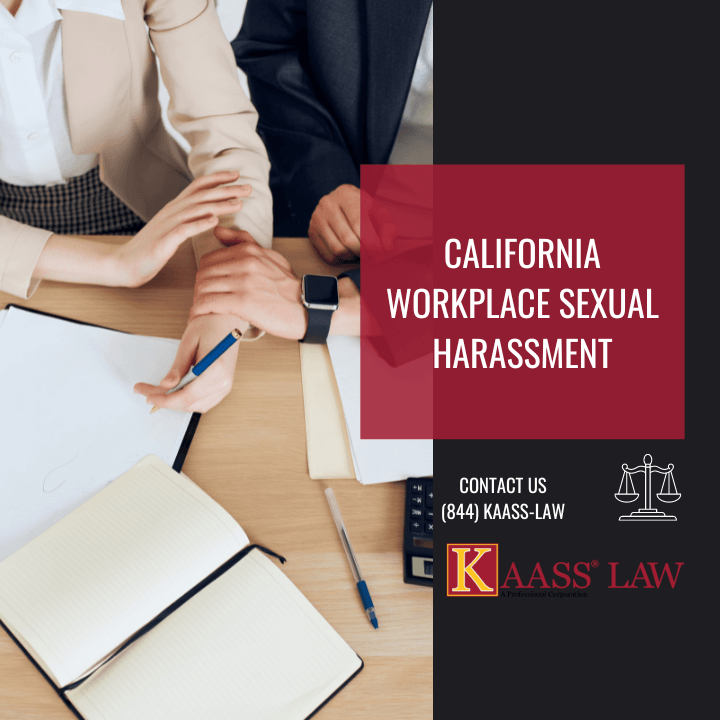
Under California Civil Code Section 51.9, in case a person was sexually harassed by another person in their business, service, or professional relationship, that person can be legally liable in action for sexual harassment. Such a relationship may exist where the opponent is the victim:
psychotherapist
physician
dentist
qualified social worker
attorney
real estate agent
investor
accountant
financial planner
loan officer
banker
trust officer
building contractor,
administrator
trustee
landlord
property manager or any other relationship that is substantially similar to the ones on this list.
A victim of sexual harassment can be a woman or man and also can be of the same sex as the harasser.
Failure to respect your clients' privacy can lead to loss of personal information, damage to your reputation, and resource waste. It increasingly has the potential to put you in legal trouble, result in significant fines, and trigger legal action. Invading privacy can lead to numerous outcomes in an unfavorable way. Additionally, invading someone's privacy is an offense that may get you into a lot of trouble, especially when you take into account the activities that are being taken in place.
The California Invasion Privacy Act
The California Privacy Act is a wiretapping law. It prohibits the recording of confidential conversations without the consent of all participants. This includes telephone conversations. Victims of illegal wiretapping may be subject to legal damages. Breaking the law is a crime. Violators may face:
Discover how a bar exam glitch is sparking lawsuits and backlash, undermining candidate trust.
Bar Exam Glitch Overview
A recent technical failure during the bar exam has sent shockwaves throughout the legal community. The bar exam glitch disrupted the exam process, causing severe delays and lost responses for numerous candidates. This malfunction not only compromised the testing conditions but also ignited a wave of legal challenges and public discontent. With thousands of aspiring lawyers affected, the incident has become a significant point of discussion for educational institutions, legal professionals, and regulatory bodies.
The exam day turned chaotic as the testing platform repeatedly malfunctioned. Candidates reported that the system froze unexpectedly, causing them to lose valuable time and, in some cases, their answers. The resulting uncertainty has led to lawsuits being filed against the examination authorities. As the legal community awaits the outcomes of these lawsuits, there is growing pressure on exam administrators to implement immediate corrective measures and ensure a fair and transparent process in the future.
Technical Details of the Bar Exam Glitch
Exam Malfunction Dynamics
On the day of the exam, technical issues began to surface within minutes. The bar exam glitch resulted in intermittent freezing and unexpected shutdowns of the digital testing platform. Candidates found themselves unable to access critical parts of the exam, and several reported that their responses were not saved properly. This malfunction was not an isolated incident; it occurred multiple times during the exam session, severely impacting test-takers’ performance.
Domestic violence is a serious problem that requires serious measures to protect victims. However, the best intentions of the law can lead to unfair consequences. California has Penal Code Section 13701. This section requires police to arrest the alleged perpetrator if probable cause of violence is established. While this law was created to protect victims, in practice, it often results in the mistaken arrest of the victims themselves. As a result, well-intended protections can sometimes have unintended consequences. One such victim was Jess Huang, a former political operative. On Valentine's Day she called the police after being attacked by her ex-partner. He was much taller than her, threatened her, and then attacked her. But it was she who was arrested by the responding officers.
How Section 13701 Works And The Problem With It.
The law, which went into effect in 1986, requires police officers to arrest one of the parties involved. In cases where there is reason to believe that domestic violence has occurred. This is to protect the potential victim. In practice, however, this law creates an environment for rash decisions. Especially when officers lack the training to properly assess the solution. The main problems with code 13701:
Police officers have to make decisions quickly. They rely on superficial data because they don't have time.
Officers do not always correctly identify the dominant aggressor. They often assess only visible injuries.
Some manipulative abusers use the law to their advantage. A true abuser may inflict minor injuries on himself to make the victim look guilty.
A recent court case in California ended in a high-profile verdict: Starbucks must pay $50 million to delivery driver Michael Garcia. In 2020, Michael suffered severe burns when a Starbucks employee handed him a hot tea that tipped over and burned his groin. Initially, Starbucks offered Garcia $3 million as a pretrial settlement, but he didn't accept. Now, after the trial, the award will exceed $60 million, including attorneys' fees. However, Starbucks plans to appeal the decision, claiming that the amount of the payout is excessive. National attention has garnered this case and raised important questions about how large corporations hold themselves accountable for the safety of their customers. Attorneys, including KAASS LAW, emphasize the importance of such court decisions in protecting consumer rights.
What Happened
On February 8, 2020, 25-year-old Michael Garcia was working as a courier for Postmates and went to a Starbucks in Los Angeles to pick up three Medicine Ball hot teas. According to his attorneys, a coffee shop employee improperly sealed one of the cups before handing it to Garcia. Seconds after receiving the order, the cup tipped over and the lid fell off, spilling boiling tea all over his groin area. Surveillance footage clearly shows the man screaming in pain. Emergency responders rushed him to the hospital, where doctors diagnosed extensive third-degree burns.
What Injuries Did Michael Garcia Suffer
As a result of the accident, Garcia suffered severe burns to his: - groin - genitals - inner highs Doctors immediately rushed him to the hospital, where they performed numerous skin grafts and surgeries to repair the damaged tissue. Doctors performed two skin graft surgeries on his genitals, as well as nerve surgery to restore some of the sensation he had lost. Despite the doctors' best efforts, Garcia still suffers from severe pain, especially with the slightest friction or touch. In addition to the physical strain, the courier also experiences post-traumatic stress disorder, which negatively affects his psychological state and daily life.
When a person is injured due to someone else's negligence, it is logical to contact a personal injury attorney. However, not all attorneys will agree to take a case. If you have been turned down, there may be reasons why. Let's look at the top five reasons why an attorney may have rejected your claim.
5 Big Reasons For Rejection.
1. Insufficient evidence.
One of the most common reasons for a dismissal is insufficient evidence. To win a case, a lawyer need convincing evidence of the other side's guilt. If that evidence is insufficient, the chances of a successful trial are diminished. How does evidence affect the outcome of a case? In personal injury cases, causation is important. You must show that your injury was a direct result of the defendant's actions. Without this, you can't prove negligence. If you have no witnesses, no video footage directly linking your injury to the incident, the lawyer may think there is little chance of winning. What can be done?
Gather as much evidence as possible: photos, videos, witness statements, medical reports.
Seek additional expert testimony.
If the evidence in insufficient, consult with another attorney. He or she may be able to suggest alternative ways to prove your case.
2. The case does not have sufficient legal merit.
Sometimes lawyers drop cases because the potential recovery is too small. Personal injury lawyers work on a contingency basis, meaning they only get paid if they win. They take a percentage of the award. If the expected recovery is too low, the lawyer may feel that it is not worth the effort to work on the case. What cases are most likely to be declined.
When filing a personal injury claim, the presence of pre-existing medical conditions can affect the case and the amount of compensation. Understanding how these conditions affect the process will help you better prepare for potential difficulties. It is important to know that having pre-existing medical conditions can complicate the process, but it does not automatically mean that compensation will be denied.
What Is A Pre-Existing Condition?
A pre-existing condition is any medical condition you had before the accident that caused your personal injury. This could be chronic back pain, depression, or any other condition that could have affected your health after the accident. Pre-existing conditions are not always the cause of an injury, but they can affect recovery, make pain worse, or cause long-term problems. For example, if you already had weakness in your knee, a fall from a car accident could make the condition much worse. Or, if you suffered from depression before the incident, the injury may worsen psycho-emotional problems.
How Do Pre-Existing Conditions Affect Personal Injury Claims?
Proving causation
One of the most important issues in these cases is establishing a causal connection between the accident and your worsening health. If you have pre-existing medical conditions, insurance companies and the at-fault party's attorneys may argue that your current problems are related to those conditions and not to the accident. This will make it difficult to prove that the accident caused your problems. To prove a connection between the injury and pre-existing conditions, a doctor must confirm that the incident significantly worsened your condition or caused new symptoms.
Okay, so you received a cease and desist letter, huh? Well, first thing’s first. Don’t panic! A cease and desist letter does not automatically mean that you’re being sued, or that a lawsuit is pending. It is merely a clear warning that you have been partaking in illegal actions and it further informs you that if you do not stop that behavior, further consequences may follow. Typically, if you receive a cease and desist letter, it means that you have infringed upon the rights and properties of someone else. Some ways that you may have violated the intellectual property of others would be to:
Plagiarize their work
Use an invention without the right to do so
Carry out illegal activity involving someone else’s work
On the other hand, if you feel someone else is doing these things against you, the first step you should take to begin addressing the issue is to send a cease and desist letter. The letter puts the person or company that is violating your rights on notice that they have engaged in illegal and unsanctioned use of property. It advises them to stop doing so immediately, otherwise further action will take place. Essentially, a cease and desist letter is a formal letter warning someone to stop their illegal activity.
How is a Cease and Desist Order Any Different?
The primary difference between a cease and desist letter and a cease and desist order is legality and authority. Letters have virtually no legal standing or backing. Order, however, most certainly do. This is because a cease and desist order is granted by a court, not an individual. It functions much like a temporary injunction. The party that gets the order must stop whatever it is that they are doing until a trial is held, at which point, a permanent injunction may get ordered. Libel and defamation are two of the most common reason why you would want to request a cease and desist order from a court of law. Libel is when you are attacked in print. Defamation is when you and your reputation are attacked verbally.
Impact on Haitian Immigrants
Community Effects and Humanitarian Concerns
For many Haitian families, TPS was more than a legal status—it was a lifeline. The loss of protection means that hundreds of thousands of individuals now face the possibility of deportation, which could result in family separations and significant social disruption. The potential for forced returns to a country still grappling with severe instability raises serious humanitarian concerns.
Responses from Advocacy Groups
Local community organizations and legal aid groups are mobilizing in response to this policy change. Many are urging immediate legal intervention and increased humanitarian support, emphasizing that deporting individuals to a nation in crisis is both impractical and inhumane. Advocacy efforts are underway to secure alternative protections for affected families.
Next Steps for Affected Individuals
Legal Options
Haitian immigrants impacted by the termination of TPS should seek immediate legal advice. Options such as applying for asylum, seeking deferred action, or exploring other immigration remedies may be available. Early intervention is crucial, as navigating the complex legal landscape requires prompt and tailored support.
Seeking Assistance
For personalized guidance, affected individuals can consult reputable resources such as our Immigration Legal Expertise page. Engaging with experienced attorneys will be key to understanding rights and securing alternative forms of relief during this tumultuous period. Additionally, external sources like Reuters{:target=”_blank”} provide ongoing coverage and analysis of these policy changes.
Conclusion
The decision to end deportation protection for 500,000 Haitians marks a pivotal moment in U.S. immigration policy. As the key phrase “Trump Ends Deportation Protection for 500,000 Haitians” underscores, this policy shift is not only a legal maneuver but also a profound humanitarian challenge. With legal battles on the horizon and significant impacts on communities, it is imperative for affected individuals to seek prompt legal counsel and for the broader debate on immigration reform to continue in both the courts and public discourse.
According to CACI 3065, to establish the claim of sexual harassment, the plaintiff must be able to establish all the following elements:
The plaintiff had a business, service, or professional relationship with the defendant
The defendant made sexual advances, solicitations, sexual requests, and demands for sexual compliance to the plaintiff or engaged in verbal, visual, or physical conduct of a sexual nature, hostile nature based on gender
Defendant's conduct was unwelcome and also severe or pervasive
The plaintiff was unable to end the relationship with the defendant easily
As a result of the defendant's illegal conduct, the plaintiff has suffered or will suffer economic loss or disadvantage, personal injury, or the violation of a statutory or constitutional right.
California Legislation on Workplace Harassment
Fair Employment and Housing Act - the law prohibiting sexual harassment at the workplace applies to all California employers.
California law protects all workers – including independent contractors, volunteers, and interns.
According to California law, employers don’t just have to respond to sexual harassment, but they are obliged to take steps to prevent it from happening. Employers are required to have a written policy on sexual harassment where the employees can find information on where and how to report or complain about sexual harassment.
California employers who have five or more employees must provide sexual harassment prevention training to the employees at least once every two years.
Quid Pro Quo Harassment
As mentioned above, sexual harassment can occur in different ways, but employment discrimination laws divide prohibited sexual harassment into two categories: quid pro quo harassment and hostile work environment. Quid pro quo harassment occurs when the victim's supervisor, either expressly or impliedly, requires him to submit to sexual advances by threatening with an adverse employment action, such as a demotion, bad review, or termination. This type of sexual harassment can only be committed by a supervisor, manager, or another employee who is eligible to undertake some tangible employment action against the victim.
What is a "Hostile Work Environment"?
A hostile work environment is unwelcome conduct that irrationally interferes with an individual’s work performance or creates an intimidating or abusive work environment. A hostile work environment exists when a reasonable employee feels abused or intimidated by pervasive or severe conduct which is based on the employee’s gender, gender identity, or sexual characteristics.
Examples of Sexual Harassment at the Workplace:
Sexual pranks, repeated sexual jokes, teasing in person or via e-mail
Verbal abuse of a sexual nature
Grabbing or touching of a sexual nature
Giving gifts or objects which are sexually suggestive
Repeatedly making sexually suggestive signs
Making or posting offensive pictures, cartoons, or other materials at the workplace;
Available Remedies
In case of a successful claim, the victim of sexual harassment can get the following remedies:
Compensation for lost wages and other economic losses in case the sexual harassment resulted in a loss of work or income
Reinstatement
Punitive damages
Make the employer change the policies and practices.
Contact Los Angeles Sexual Harassment Lawyers for Free Case Consultation Now!
If you have been sexually harassed at work, KAASS LAW sexual harassment lawyers can assist you. To find out more about your rights and potential claims, contact us by calling (310) 943-1171.
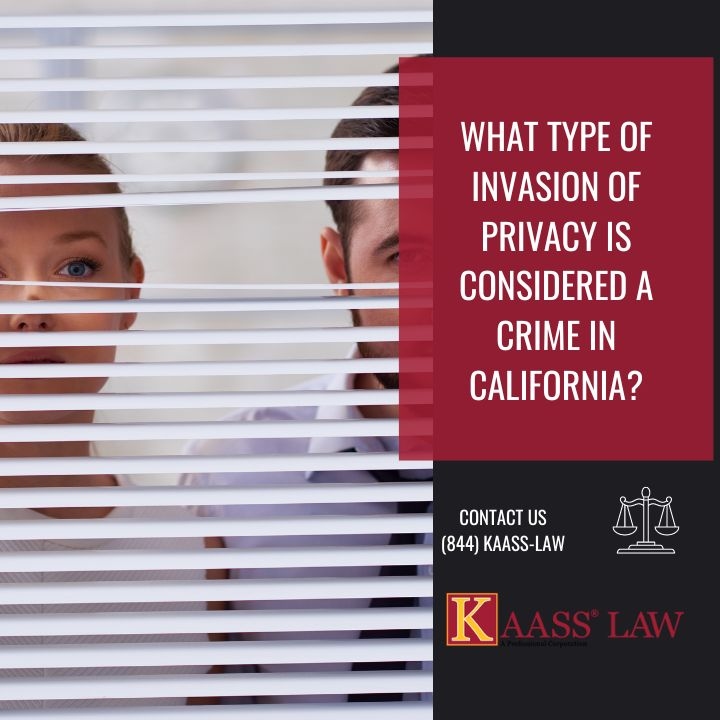
647(j) PC is a section of the California Penal Code that describes the unlawful invasion of someone's privacy as a crime.
What Are The types of Criminal Invasion of Privacy in California?
According to California Law here are types of criminal invasion of Privacy:
Secretly photographing or recording a person's body under or through clothing for the purpose of sexual arousal or gratification;
When using a device such as a telescope or binoculars to invade a person's privacy.
Secretly recording or photographing someone in a separate room to see that person's body or underwear.
However, we should remember that a defendant is only guilty if he looks or records someone, and "the victim" was in a location where she had a reasonable expectation of privacy. These types on invasions regarding someone's privacy can lead to severe consequences that are very difficult to overcome.
The following Are Examples of Common Areas or Rooms Where a Person Has a Reasonable Expectation of Privacy:
Dressing room
Bathroom,
Bed, and/or tanning booths are all available.
By reviewing the circumstances of the case, a judge or jury will evaluate whether a legitimate expectation of privacy existed.
What Is The “Punishment” For The Criminal Invasion of Privacy in California?
In California, criminal invasion/breach of privacy is classified as “disorderly conduct”. For example, it is a misdemeanor punishable by the following penalties:
An up to $1,000 fine and/or
Up to six (6) months in county prison.
When Can The Punishment Under California Penal Code 647(j) increase?
Here are the examples:
It is the defendant's second or subsequent invasion of privacy offense, or
The victim was under the age of 18 at the time of the incident.
In either of these circumstances, the penalty for violation of privacy may include:
up to 1 year in county jail, and/or
A fine of up to $2,000 is possible.
Also, if the person had previously been convicted of the same offense, the fine might be increased to $10,000, as well as 1 year in prison.
How Can Privacy Be Prevented From Being Invaded?
Due to the use of technology, privacy can be invaded through social media platforms, emails, passwords to certain platforms that have private information saved, etc. However, in order to prevent that from happening, we can be take safety precautions to be aware of the consequences that might occur.
What to do if your privacy is invaded?
The consequences of criminal invasion of your privacy are very serious. The attorneys at KAASS Law are ready to help you determine your options. Therefore, If you or someone you know is subject to privacy invasion and have further issues and/or questions, feel free to contact us at 310.943.1171 for a free consultation. Our attorneys will evaluate the details of your matter and let you know what to expect and how you can proceed.
The underlying cause appears to be a combination of software instability and inadequate pre-exam system checks. Early indicators suggested that the platform was not fully optimized to handle the high traffic on exam day. As the exam progressed, the repeated system crashes and delays led many candidates to question the reliability of the exam administration process.
System Failures During the Exam
Further investigation into the exam error revealed that the technical infrastructure supporting the exam was underprepared for peak usage. The software was unable to manage simultaneous access by thousands of candidates, leading to system overloads. In addition, the auto-save feature—designed to secure candidates’ responses—failed on multiple occasions, intensifying the disruption. These technical shortcomings have prompted questions regarding the quality control measures implemented before the exam and whether the necessary stress tests were conducted.
Legal Fallout and Lawsuits Triggered by the Glitch
The chaos caused by the bar exam glitch has not gone unnoticed in legal circles. Multiple lawsuits have been initiated by affected candidates who argue that the exam malfunction compromised their performance and, ultimately, their professional futures. Legal experts warn that these lawsuits could set important precedents for how technical failures in high-stakes testing environments are addressed.
Affected candidates claim that the glitch deprived them of a fair chance to showcase their abilities, citing lost time and data as clear evidence of negligence on the part of the exam administrators. Courts are now tasked with determining whether the malfunction constitutes a breach of duty and whether candidates are entitled to compensation or a retake of the exam. With litigation already underway, the situation remains fluid as more candidates join the legal battle.
According to reputable sources such as Reuters{:target=”_blank”} and The New York Times{:target=”_blank”}, legal experts predict that this case could reshape the standards for digital exam administration. The decisions made in these lawsuits may influence future testing protocols across the country.
Public and Professional Reactions to the Glitch
Reactions Within the Legal Community
The bar exam glitch has elicited strong reactions from legal professionals. Law professors, practicing attorneys, and bar exam experts have expressed concerns about the integrity of the testing process. Many argue that any technical error during such a high-stakes exam can severely undermine public confidence in the legal profession. Industry experts have called for immediate reforms to ensure that exam systems are robust, secure, and capable of handling large volumes of traffic.
Candidate and Public Sentiment
Social media platforms and online forums have been abuzz with reactions from affected candidates and the broader public. Many candidates shared their frustration, detailing how the glitch disrupted their concentration and jeopardized months of hard preparation. Public opinion remains divided—while some sympathize with the candidates, others understand the technical challenges inherent in managing a digital exam of such scale.
Critics argue that the incident is indicative of broader issues within the exam administration process, calling for a complete overhaul of the system. They maintain that the integrity of the legal profession is at risk if such errors are not promptly addressed. As discussions continue online, there is a growing consensus that transparency and accountability must be prioritized to restore trust in the examination process.
Reform Measures and Future Implications
Proposed Changes in Exam Administration
In response to the bar exam glitch, educational and legal institutions are actively discussing reform measures. One of the primary recommendations is the implementation of rigorous pre-exam testing protocols to ensure system stability under high load conditions. Experts advocate for independent software audits and regular stress tests to identify potential vulnerabilities before they become problematic on exam day.
Additionally, authorities are considering enhancements to the auto-save feature to prevent data loss. The introduction of redundant backup systems could serve as a safeguard against future technical failures. By adopting these measures, exam administrators aim to rebuild candidate trust and uphold the integrity of the legal certification process.
Long-Term Implications for the Legal Profession
The fallout from this incident is expected to have lasting effects on the way bar exams are conducted. The bar exam glitch has highlighted the importance of technological reliability in high-stakes testing environments. As the legal community grapples with the consequences of the malfunction, there is a clear call for systemic change. Future exams may incorporate advanced security features and more robust data recovery systems to prevent similar disruptions.
Furthermore, the current legal battles and public outcry may lead to tighter regulations governing digital exam platforms. Stakeholders, including regulatory bodies and exam providers, are under pressure to demonstrate that they can safeguard the interests of candidates and maintain the credibility of the examination process.
Guidance for Affected Candidates
Candidates impacted by the bar exam glitch should take proactive steps to secure their rights. It is crucial for affected individuals to document every instance of the malfunction. Keeping detailed records of error messages, timestamps, and any lost responses can provide valuable evidence in legal proceedings.
Affected candidates are strongly encouraged to consult with legal experts who specialize in exam-related disputes. Resources such as our Privacy Law Services{:target=”_blank”} page offer essential guidance for navigating the legal complexities of this situation. Additionally, candidates can reach out via our Contact Us{:target=”_blank”} page to connect with professionals who can help assess their individual cases and explore available remedies.
Staying informed about ongoing legal developments is also important. As the lawsuits progress, new information may emerge that could influence the resolution of the case. Affected candidates should regularly check official announcements and trusted news sources to remain up-to-date on any changes in the examination policies or legal proceedings.
Conclusion: Lessons from the Bar Exam Glitch
The bar exam glitch has become a critical turning point for exam administration in the legal field. This incident, which has sparked lawsuits and widespread public backlash, underscores the urgent need for robust, reliable testing systems. While the current legal disputes are ongoing, they have already initiated important conversations about fairness, accountability, and technological preparedness in high-stakes exams.
In summary, the technical failures witnessed during the exam have exposed vulnerabilities that must be addressed immediately. With legal experts and public opinion united in calling for reform, the future of bar exam administration will likely see significant changes. By implementing advanced technical safeguards and ensuring transparency, the legal profession can work to restore the trust of aspiring lawyers and the broader community.
The road ahead will involve a combination of legal scrutiny, technological upgrades, and systematic reforms. Ultimately, the lessons learned from this incident will pave the way for a more secure and fair examination process, ensuring that every candidate is given an equal opportunity to succeed.
This is exactly what happened to Jess Huang. Despite the obvious power disparity between her and her ex-partner, the police only considered a small cut on his finger. The police ignored her injuries and evidence of threats.
How Do Mistaken Arrests Harm Victims?
False arrests can have devastating consequences. When the true victim is put on trial, their position becomes even more vulnerable, as they must now defend themselves against the charges. This shift in focus can make it harder for them to prove their innocence and further complicates the legal process. KAASS LAW can play a key role in advocating for victims falsely arrested under Section 13701. What the consequences are:
Criminal charges. Even if they dismiss the case, the arrest leaves a mark on the database. This affects careers and reputations.
financial loss. The victim must hire attorneys, post bail, and go through lengthy court proceedings.
Psychological trauma.
Limited opportunities. Criminal records, even unwarranted ones, can affect employment.
Worst of all, such arrests only increase the fear of seeking help. Violence victims might choose to avoid police contact rather than risk charges.
Why Do Police Officers Make Mistakes?
The primary reason is lack of training. Studies show that officers often focus on the most obvious sings such as visible wounds. But in domestic violence cases, context is much more important. Abusers often use coercive and controlling tactics. They take away keys, intimidate the victim, and restrict her movements. That's exactly what happened to Jess Huang. Her ex-partner took her keys and said: "Try to get to the airport now. "Officials have ignored this gimmick, which has long been recognized as a sign of abuse." How can the situation be remedied?
Additional training for officers. They need to be more aware of manipulative tactics and controlling behavior.
Clear protocols for evaluating the situation. For example, authorities should conduct mandatory witness interviews and thoroughly review all circumstances.
Professional involvement. In some cases, authorities may need to involve a crisis counselor or social worker.
The system of protection for victims of violence should work for victims, not create additional problem for them. Code 13701, though well-intentioned, requires review and revision to prevent unintended consequences for true victims. It is important to provide additional training to police officers and implement clear protocols t properly assess domestic violence situations. KAASS LAW can be a valuable resource for victims, providing legal support and assistance in dealing with the consequences or erroneous arrests.
Throughout the legal battle, Starbucks has denied culpability. Garcia's attorneys argue that the company has its own rules requiring employees to securely fix hot drinks before handing them to a customer. On that day, however, the employee disregarded the rules, leading to the tragedy. KAASS LAW and other legal experts point out the importance of cases like this. Before the trial began, Starbucks offered Garcia $3 million, but he turned it down.
The company then upped the offer to $30 million, but Garcia insisted on an apology and a change in safety rules to prevent similar incidents in the future. Starbucks refused, and the court ordered it to pay $50 million. With court costs and interest, the amount will rise to $60 million. For a long time, Starbucks refused to release surveillance footage showing the moment they handed over the drink. Only after a court order did the company turn over the video.
Starbucks' Position: Why Is The Company Appealing The Decision
Starbucks lawyers argue that the amount of damages is too high. "We sympathize with Mr. Garcia, but we do not agree with the decision of the court, because we do not consider ourselves guilty", - said the press secretary Jacqui Anderson. Garcia's lawyers are convinced: Starbucks is trying to avoid responsibility instead of admitting mistakes and improving safety standards.
What Does The Law Say? How Do These Types Of Cases Work
Lawsuits against large companies in the U.S. happen regularly, but not all reach large payouts. KAASS LAW explains that several factors are important to consider in cases like this: 1- Was the company proven negligent? - In this case, Starbucks had clear policies that were not followed, which is negligence. 2. Did the company have the opportunity to prevent the incident?
- Yes, if the drink had been secured according to the instructions, it would not have tipped over. 3 Are the consequences of the incident really serious? - Garcia has undergone complicated surgeries, lost some sensation, and is in a great deal of pain. These points helped his lawyers argue that Starbucks should be held liable.
Why This Case Matters
The lawsuit between Starbucks and Michael Garcia has brought tremendous attention to the issue of large corporations' responsibility for customer safety. Despite Starbucks' attempts to avoid large damages, the court found them guilty and awarded them $50 million. This case demonstrates the importance of knowing your rights and defending them in court. KAASS LAW and other attorneys note that such cases help create safer standards of service and protect the interests of consumers. Call (844)-522-7752 to speak with our experienced attorney.
Minor injuries that do not require serious treatment.
Cases without significant financial loss.
Situations where the likelihood of recovery is minimal.
What can be done?
Estimate the amount of possible compensations, for example through a free consultation at KAASS LAW.
If the amount is really small, consider setting the matter on your own without going to court. In some cases, the insurance company may offer a satisfactory solution.
3. You were partially or totally at fault for the accident.
If your analysis of the case reveals that you bear a significant share of the responsibility, this may be a reason for the attorney to dismiss the case. How does comparative fault work? Some states have a comparative fault rule that reduces compensation. For example:
If you are 30% at fault, your award will be reduced by the same percentage.
If you are more than 50% at fault, you may receive no compensation at all.
What you can do.
Find out how state laws deal with cases involving the injured party's partial fault.
Try to gather additional evidence to prove that the other party was more at fault.
4. Statute of limitations.
Every personal injury case has a statute of limitations. If it has expired, there is no point in filing a lawsuit. What is the statute of limitations in the US? Statutes of limitations vary depending on the type of case and jurisdiction. For example:
In California, the statute if limitations for personal injury cases is two years from the date of injury.
In some states, the statute of limitations may be three or four years.
If the injury is discovered later, the statute of limitations runs from the date of discovery.
What can i do.
Check to see if the time limit for filing your claim has passed.
If the deadline is near, seek legal advice immediately.
5. Lawyer believes the case is unprofitable or too complex.
Some lawyers avoid complex cases that require a lot of time and resources. What type of cases are considered complex?
Medical malpractice.
Cases against large corporations.
It can be harder to prove psychological harm than physical harm.
What can you do?
Find a law firm that specialize in complex cases, such as KAASS LAW.
Consider meditation or pretrial settlement.
If your claim has been denied, it doesn't mean the case is hopeless. It is important to understand the reason for the denial and take appropriate action. Sometimes the solution is to find a more experienced attorney, and sometimes it is to gather additional evidence. What should you do if you are denied?
Evaluate the reason for the denial.
Try to improve the evidence.
Get a second opinion.
Contact a law firm with a good reputation.
If you have questions or need professional assistance, KAASS LAW is here to help. Call (844)-522-7752 to speak with our experienced attorney.
Pre-existing medical conditions may affect your compensation. If the accident has made your condition worse, you will still be entitled to compensation, but insurance companies may try to reduce the amount of compensation. They may argue that your problems are due solely to a pre-existing condition and have nothing to do with the accident. To avoid such disputes, it is important to have clear evidence to show exactly how the accident affected your condition.
insurance company tactics
Insurance companies often use tactics to reduce payouts or deny a claim. One of these tactics is to collect medical records. These records may show that your problems are not related to the incident, but are caused by pre-existing conditions. They may claim that pain or other symptoms are the result of a condition that existed before the incident. To counter these tactics, you must gather evidence that your health has worsened because of the incident. Having independent medical experts who can confirm that the incident significantly worsened your condition can make all the difference.
Honesty and Transparency
It is important to be upfront with your attorney and insurance company about all medical conditions. This will help avoid situations where information is withheld, which can lead to problems in court. Insurance companies and the at-fault party's attorneys may accuse you of withholding information, which will hurt your position. Maintain transparency in the process and keep medical professionals informed of any changes in your condition after the accident. This will help build an accurate picture and protect your interests.
Preparing for Medical Examinations
Insurance companies may require independent medical examinations. This is to verify the accuracy of your medical records. These examinations will help determine how much the accident has affected your condition. Prepare for these examinations in advance with complete information about your condition.
Recommendations for Preexisting Medical Conditions
Consult with an experienced attorney
A personal injury attorney can help you understand how your pre-existing medical conditions may affect your case. KAASS LAW is a firm that helps clients with these types of cases, ensuring reliable legal support. 2- Open Communication with Medical Professionals Communication with your doctors is critical to ensure that they accurately document any changes in your medical condition. Both before and after the accident. The more detailed they are in documenting changes, the easier it will be to prove that your injuries were caused by the accident. Having a pre-existing medical condition does not disqualify you from receiving personal injury compensation. Honesty, transparency, and working with experienced professionals like the attorneys at KAASS LAW can help you effectively navigate these complexities and obtain fair compensation.
There are many situations that may lead someone to issue a cease and desist, including:
Libel, slander, character assassination or tarnishing, and defamation
Trademark or copyright infringement
Design Patent or Utility Patent infringement
Violating a non-competition agreement
Harassment, even by debt collectors operating under the Fair Debt Collections Practices Act
Breach of Contract or Conflict of Interest
Lastly, you should be aware that a cease and desist can be used to stop contributory infringement. This is when a person knowingly contributes to infringement, but does not actively participate in it. It’s also referred to as contributory liability or secondary liability.
Protections for Copyrights, Trademarks, and Patents
As previously mentioned, the three major ways of protecting your intellectual property are to register trademarks, copyrights, and patents. Trademarks and copyrights usually come into effect the moment you create a work, or when you begin to use a specific phrase or brand in association with your professional work. It is entirely optional to file official paperwork to get them recognized by the government, however, it is worth doing so because they get far more protection when they are registered. Patents, on the other hand, must be registered for protection and the process for their registration is much more convoluted. It calls for protection for inventions, physical creations, and their processes.
Character Assassination...or Just Your Opinion?
By law, it’s illegal to say, aloud or in print, statements about other people that are untrue or that may be harmful to their reputation and ability to engage in productive activity. To be clear, you are entitled to expressing your opinion about someone, but, any accusations or allegations which are found to be false can result in legal ramifications under the law. As an example, saying something like, “I think Sam is a jerk and a bully,” is your opinion. However, saying something like, “I heard that guy does a bunch of shady business and you should be careful around him otherwise he’ll rob you blind,” is character assassination. It will apply always unless you have provable facts to back up your claims.
Legal Contracts and Agreements
As soon as you sign into a contract or agreement, you are bound to it and its limitation. The contract might require specific action from you and if you fail to follow through with that action, you are in breach of the contract. You can imagine a situation in which, for instance, you agree to sign into a contract saying that you will not work for a competing business for a certain amount of time. If you choose to go ahead and do business with a competitor within that time frame anyway, you are in breach of your agreement and you can get a cease and desist.
Harassments are Hazardous
Harassments are subject to cease and desist requests as well. It’s defined as unwanted repeated contacts or threats by others. Some situations which can be harassment are:
Someone calling you all the time
Someone showing up at your property repeatedly
Someone making mean comments about you in front of others even after you asked them to stop.
It’s important to know that debt collectors’ behavior can amount to harassment as well. For example, they might call or send letters incessantly and refuse to give you your space or leave you alone. Any harassing behavior is illegal.
Should You Send a Cease and Desist?
You’ll want to send a cease and desist notice if you want to formally warn someone to stop doing something. This includes utilizing your property, harassing you, or illegally using your content. It also serves the important role of being a step to begin further legal processes, should the need arise. Another compelling reason to send a cease and desist is that it’s a lot quicker than formal legal proceedings; oftentimes, it can stop the problematic actions and behaviors without needing to go through the long and costly process of trial.
What Should a Cease and Desist Letter Include?
To start, make sure you are clear in what it is you want to stop and include as many details of the violation as possible. You’ll want to include:
Your name and contact info
The name and contact info of the recipient
A clear statement stating what actions you are ordering cease
A demand to stop
A warning about further legal action should the violations continue
A time limit to comply, typically no more than 2 weeks
If it’s to half a collections agency, include details about the debt they are trying to collect, the account number, and any documentation you have regarding the harassments.
If it’s regarding copyright, trademark, or patent infringement, include details about:
The property
The dates and instances of violation
Proof that you are the owner of the property
The consequences of future violations of your property
If it’s to put an end to harassment, you should also state:
The date the harassment began
Specifics regarding any encounters or instances that have happened already
A date they must respond to your letter before you decide to take further action
In short, be as detailed as you can be when documenting the harassment or violation. Make sure you send your letter with delivery confirmation or require a signature upon delivery to ensure that is was safely received by the intended recipient.
Does a Cease and Desist Letter Have Any Legal Authority?
Technically, a cease and desist letter has no legal backing or authority behind it; for all intensive purposes, it is merely a letter requesting that someone stop doing something. However, it does serve an important function in the legal process. This is because it establishes that you have made the offender aware of their violation and have tried to get them to stop, which is crucial because they no longer can claim to be unaware of the violation.
Effectively, a cease and desist letter places an informal injunction on the actions of whoever is in violation of your rights, to which they can then choose to:
Stop their illegal actions and behavior
Challenge the validity of the letter or the truth of its claims
Ignore it, and face the consequences of further legal action
In the event that the letter is legitimate but gets challenged, the next step is a formal hearing to review the validity of the claims and the demands in the letter. A judge will say whether the defendant needs to stop their actions and behavior. After that, failing to comply is punishable by law.
Still Though, You Might Want to be Careful…
The catch with all of this is that sending out a cease and desist letter can backfire on the sender in some situations. For instance, if there are threats in the letter, then that can be seen as extortion, blackmail, and other crimes. Additionally, if the violations and accusations turn out to be untrue, then the party who received the letter can counter-sue for judgement and damages. They can do so by declaring that there is no violation and treat the cease and desist letter as its own defamation attempt. So, basically, just be very careful with what you are saying in your letter.
It’s worth mentioning that you can file a civil suit without ever having to write up and send a cease and desist letter. In other words, a cease and desist letter is not a prerequisite to suing someone. However, there are some key advantages to sending the letter as it can begin negotiations to settle the issue without a drawn out court battle. Also, most importantly, it puts the violator on notice. This makes it hard very for them to claim ignorance should the situation escalate to a lawsuit. It’s more difficult to sue someone for something if they were never made aware that what they were doing was illegal. By sending the letter and requiring signature upon delivery, you can at the very least demonstrate that you made attempts to reach out and inform the violator that they are infringing upon your rights.
What if I’m the One Who Received a Cease and Desist Letter?
When you get a cease and desist letter, you do still have several options, including:
Agreeing to the letter’s demands and stopping whatever problematic behavior the letter outlines
Responding with a refusal or a request for more information
Filing for a summary judgement by the courts
Ignoring it and seeing what happens (though, to be clear, this is the worst thing you could do)
Regardless of what you end up doing, here are some essential pieces of advice if you have received a cease and desist letter:
Do not speak about the letter to anyone but your lawyer. This extends to online mentions as well; not only is everything you post online admissible in court, but it’s also nearly impossible to ever erase.
Keep any evidence you have to support your side of the issue, including a copy of the letter.
Consider whether complying with the requests of the letter will hurt your business or personal transactions. In some situations, complying is better than court.
Contact your attorney immediately and provide all the information you have about the matter.
If you want to draft a response to the letter, do not do it yourself.
This last point is particularly vital because a letter that you authored directly can be used as evidence if the case goes to court, whereas a response that was written by your lawyer would be considered part of a settlement negotiation and thus wouldn’t be admissible as evidence in a court of law. Furthermore, your lawyer will know how to best write up the response and thus it is in your best interest to let them do it.
If a settlement is reached, you may still have permission to continue business as normal, or you may have to make some changes, or you may get some time to delay the execution of the cease and desist so that you can rebrand your business, or you may have to stop everything immediately. It all depends on the negotiation terms. Importantly, by keeping your lawyer in the loop, they will know how to best assess the situation and will let you know if you aren’t doing anything wrong or how to best proceed with negotiation.
To Put it Plainly, Here Are Some Key Answers
Do you need a lawyer to write a cease and desist letter?
No. You can write it yourself, since these letters aren’t legal orders. However, don’t ever send a threatening letter as that can harm your case and seek legal counsel if you have any doubts.
Do you need to have a lawyer for a cease and desist order?
Yes, although this is because a cease and desist order is the first step in a lawsuit. Thus, a court of law must grant an order and there is no one better equipped to handle that process than a lawyer.
What do you need to include in the cease and desist letter?
Every cease and desist letter has some things in common. First off, make sure you explain your rights. Then, state at length how your rights are being violated or infringed upon. Lastly, include a command to stop the specific actions which are harming you.
Do you need to file a cease and desist letter first?
Not exactly; you can just skip that step and file a lawsuit. How advisable that move is will depend on your claim. Smaller claims are best handled out of court since their cost won’t justify court fees and costs, while larger claims are usually best handled through a lawsuit. The court may also ask why you filed a lawsuit without sending a cease and desist letter first.
Why would I want to hire an attorney for any of this?
Lawsuits are incredibly complex and you probably don’t know all of the ins and outs that are associated with intellectual property and civil law. This is where an attorney is invaluable because they can pen an effective cease and desist letter as well as advising you about your claim. In short, having a good lawyer on your side greatly increases your odds of succeeding.
We Can Help
At KAASS LAW, we understand the importance of smart legal advice and action. Often, one can take steps preemptively to ensure their rights are not being infringed or violated. However, in the event that it does happen, we are always there to guide our clients. We know how to write an effective letter that will achieve its purpose, and we also know how to help our clients who have been presented with a cease and desist letter as well. If you need help getting someone to stop using your property, to stop harassing you, or to respond effectively to a letter, we invite you to give us a toll free call at (310) 943-1171 to speak to our experienced civil and intellectual property lawyers today.
KAASS LAW, 815 E Colorado St #220, Glendale, CA 91205, (310) 943-1171
KAASS LAW is authorized to practice law in California. The above content is intended for California residents only. This content provides only general information which may or may not reflect current legal developments. KAASS LAW expressly disclaims all liability in respect to actions taken or not taken based on any of the contents of this website. The above content DOES NOT create an attorney-client relationship. KAASS LAW does not represent you unless you have expressly retained KAASS LAW in person at the KAASS LAW office.
KAASS LAW helps clients in: Los Angeles, Burbank, Hollywood, Glendale, Van Nuys, North Hollywood, Studio City, Highland Park, Eagle Rock, Sunland, Tujunga, Sylmar, San Bernardino, La Crescenta, La Canada, Beverly Hills, Westwood, Santa Monica, Brentwood. Pacoima, Montebello, Commerce, Alhambra, Downey, Bell, Maywood, Walnut Park, Vernon, Lynwood, Echo Park, Silverlake, Mission Hills, Northridge, Woodland Hills, Encino, Canoga Park, North Hills, Porter Ranch, Chatsworth, Reseda.