Unsafe Property Conditions: When Owners May Be Liable
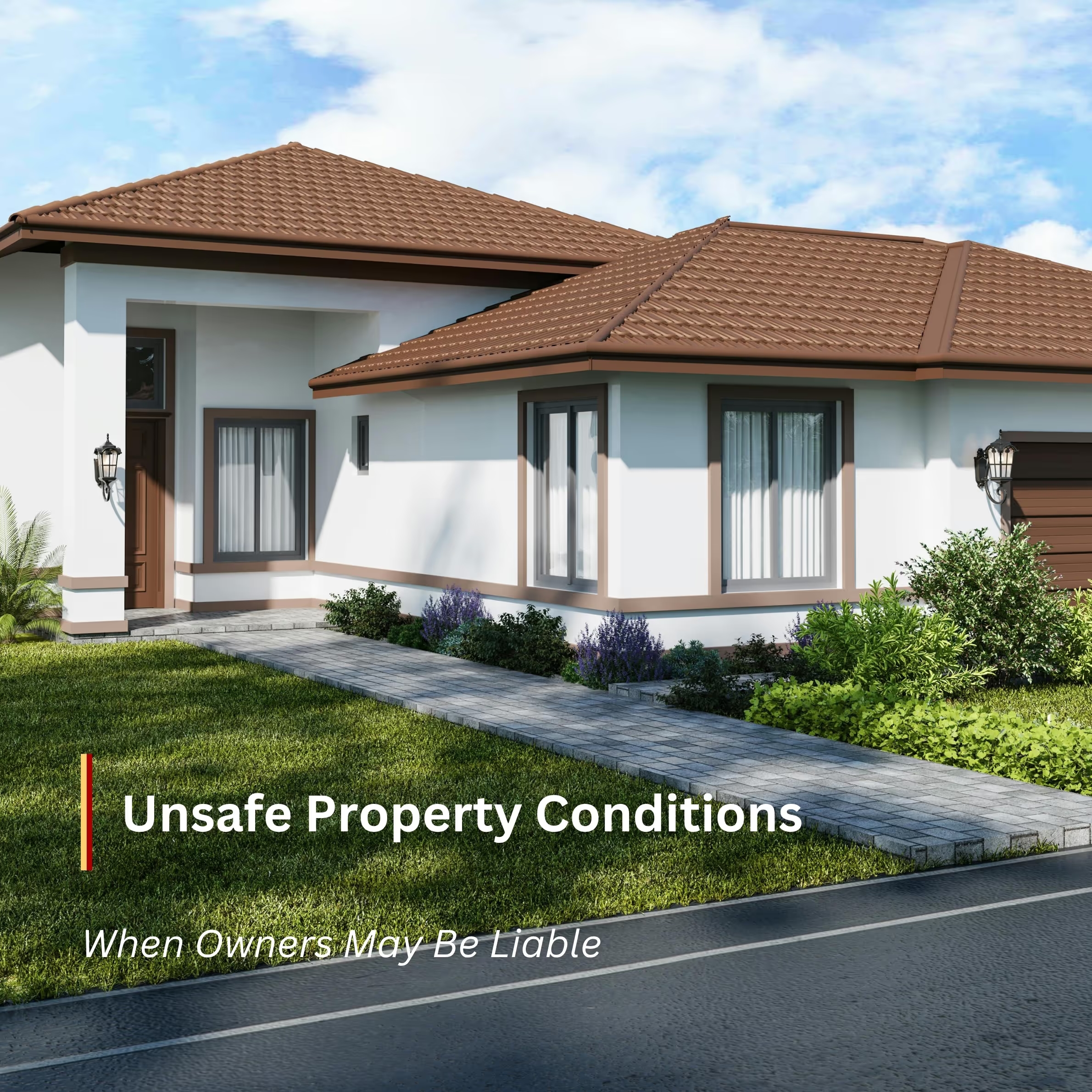
Property owners and others who control property generally have a responsibility to maintain their premises with reasonable care. When unsafe property conditions are left unaddressed, visitors, tenants, customers, and others may be exposed to preventable risks of injury. In California, premises liability often depends on the circumstances surrounding the dangerous condition, the property owner’s knowledge of the hazard, the degree of control over the property, and whether reasonable steps were taken to address the risk.
Understanding Unsafe Property Conditions?
Unsafe property conditions can take many forms. Some hazards develop suddenly, while others may exist for weeks or months before an accident occurs. Examples may include but are not limited to the following.
- Wet or slippery floors
- Broken or uneven sidewalks
- Cracked flooring
- Loose carpeting or floor mats
- Defective stairs or steps
- Missing or unstable handrails
- Poorly maintained balconies
- Inadequate lighting
- Falling merchandise
- Potholes in parking lots
- Debris or objects obstructing walkways
- Exposed electrical wiring
- Broken gates or fences
- Dangerous structural conditions
Not every defect will necessarily result in property owner liability. California law generally examines whether the condition created an unreasonable risk of harm and whether the person or entity responsible for the premises acted reasonably under the circumstances.
Property Owners Facing Liability
California premises liability is based on negligence. A person pursuing a premises liability claim usually must establish that the individual who owned, leased, occupied, or controlled the property was negligent in its use or maintenance. Property owners and others controlling premises generally have a duty to use reasonable care to keep the property in a reasonably safe condition. This can include taking reasonable steps to discover unsafe conditions and repairing them, protecting people from them, or providing an adequate warning.
Known Hazards
One important question in many unsafe property condition cases is whether the owner knew or reasonably should have known about the hazard. Actual knowledge may exist when an owner, manager, or employee was directly aware of the condition. This issue can be particularly important in stores, restaurants, apartment complexes, shopping centers, hotels, and other properties where conditions can change throughout the day.
The existence of a dangerous condition alone does not necessarily establish negligence. The circumstances surrounding how the hazard occurred and whether there was a reasonable opportunity to discover and address it may need to be examined.
Types of Injuries
Property hazards can cause injuries ranging from relatively minor to significant. Slip-and-fall accidents may result in the following injuries.
- Traumatic brain injuries
- Spinal cord injuries
- Torn ligaments
- Neck and back injuries
Medical records can be important in documenting the nature of an injury and connecting treatment to the accident. Seeking appropriate medical attention can also help identify injuries that may not be immediately apparent.
The Necessary Steps to Take After an Accident Involving an Unsafe Property Condition
Evidence can change or disappear quickly after a premises accident. A spill may be cleaned, damaged flooring may be repaired, surveillance footage may eventually be overwritten, or warning signs may be moved. When possible, an injured person should document the area where the accident happened. Photographs or videos may help show the condition of the property at the time of the incident. The accident should also be reported to the property owner, manager, landlord, or appropriate employee. If an incident report is prepared, victims should keep a copy when available.
It may also be helpful to obtain contact information from witnesses and preserve damaged shoes, clothing, or personal property related to the accident. Medical bills, treatment records, photographs, correspondence with the property owner, and other documentation should also be retained. Additionally, victims should avoid making assumptions about who is legally responsible before the circumstances have been investigated. Ownership and responsibility for maintaining a particular area are not always the same.
Who is Liable?
Depending on the circumstances, more than one person or entity may have responsibility for maintaining a property. Potentially involved parties may include but are not limited to the following individuals.
- A property owner
- Landlord
- Commercial business
- Property management company
- Maintenance company
- Another party that exercised control over the area where the accident occurred
Control can be especially important in premises liability cases. A person or company does not necessarily have to own the property to potentially have legal responsibility for its condition. Determining responsibility may require reviewing the following pieces of information.
- Leases
- Maintenance agreements
- Inspection procedures
- Repair reports
- Surveillance footage
- Incident reports
Speaking to a Legal Professional
Unsafe property conditions may cause serious injuries to victims and their loved ones. Understanding the importance of maintaining the conditions on your property is crucial to ensuring you are keeping yourself and the one’s around you safe and free of unnecessary harm. Additionally, it may be helpful to seek the help of a legal professional who can explain applicable laws, preserve documents, and help you work towards recovering from your injuries.
The Legal Team at KAASS LAW
The legal team at KAASS LAW is determined to help victims understand their rights and responsibilities throughout the personal injury process. Oftentimes, dealing with the aftermath of an accident may include additional legal and insurance challenges. That is why we are here to help. The qualified personal injury attorneys of KAASS LAW can provide support and guidance to individuals and allow them to focus on the recovery process. Contact KAASS LAW today to learn more.
Related Articles
View All Posts
Learn about shopping mall accidents, property owner liability, injured visitors' rights, and legal options available under California law.
Learn who may be responsible for elevator accidents caused by poor maintenance, how liability is determined, and what injured passengers can do next.
Learn who may be responsible for injuries caused by uneven sidewalks in California and how liability may depend on property control and local laws.