Fatigued Truck Drivers: Hours-of-Service Violations and Injury Claims
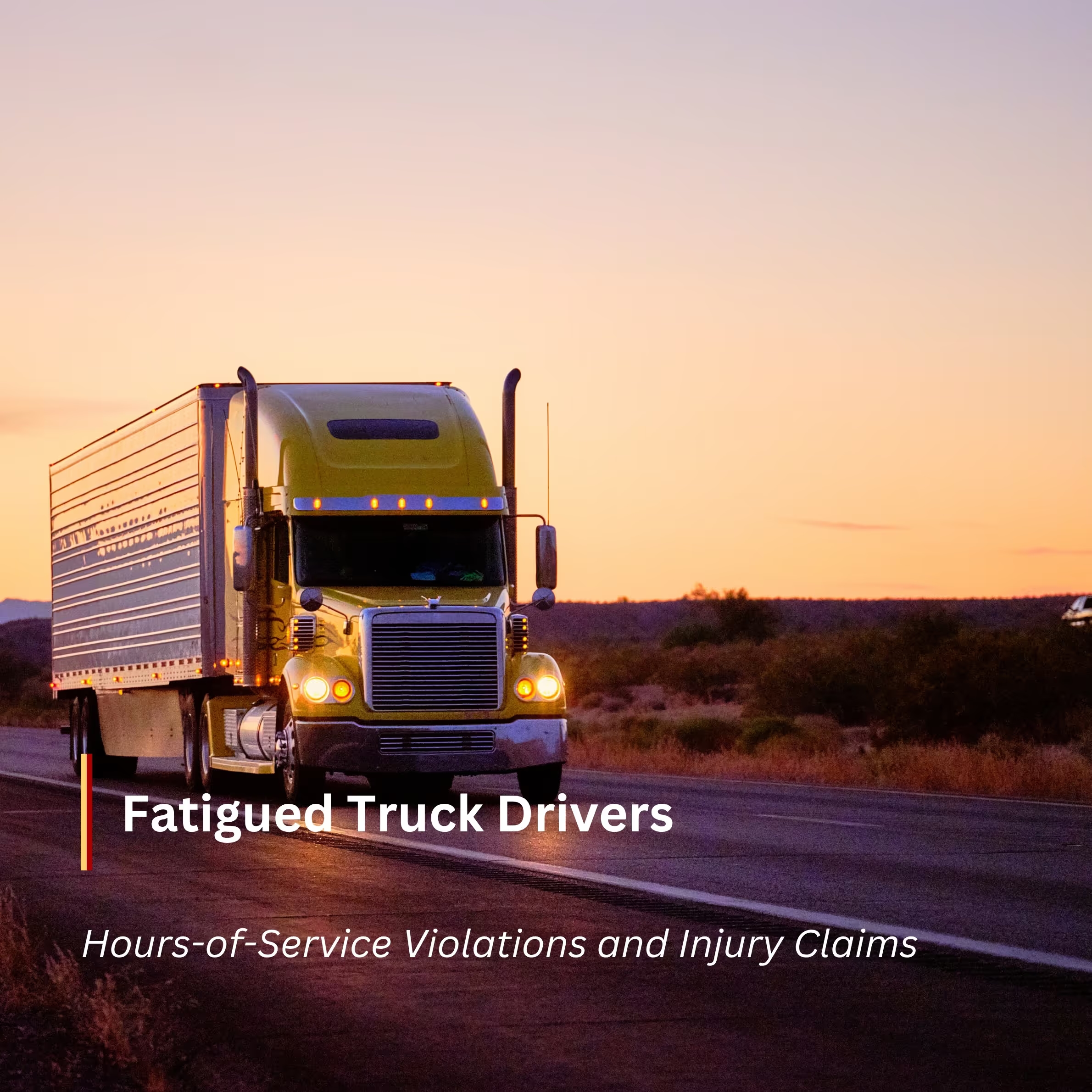
Commercial trucks play an important role in transporting goods throughout California and across the United States. However, operating a large commercial vehicle requires complete attention, quick decision-making, and physical alertness. When truck drivers become fatigued, their ability to respond safely to changing road conditions may be affected.
Fatigued truck drivers can pose serious risks to drivers, pedestrians, and other roadway users. Long driving shifts, inadequate rest, demanding delivery schedules, and overnight travel may contribute to exhaustion behind the wheel. Understanding how driver fatigue and hours-of-service violations relate to personal injury claims can help injured individuals better understand their legal options.
Understanding the Dangers of Truck Driver Fatigue
Fatigue can affect a driver's judgment, concentration, reaction time, and ability to recognize potential hazards. These effects may be especially concerning when operating commercial trucks, which often require greater stopping distances and more room to maneuver than passenger vehicles. A fatigued truck driver may experience the following.
- Delayed reactions to traffic signals or sudden braking
- Difficulty maintaining a consistent lane position
- Reduced awareness of surrounding vehicles
- Impaired judgment when changing lanes or approaching intersections
- Brief episodes of unintended sleep, sometimes called microsleeps
Truck driver fatigue does not always result from a lack of sleep alone. Irregular work schedules, prolonged driving, untreated sleep disorders, and insufficient recovery time may also contribute. When fatigue plays a role in an accident, investigators may examine the driver's recent activities, rest periods, and compliance with applicable safety regulations.
Understanding How Hours-of-Service Violations
Hours-of-service violations may occur when a driver exceeds permitted driving limits, fails to take required breaks, or maintains inaccurate driving records. For example, a driver who continues operating a truck beyond the permitted driving window may experience reduced alertness. If that driver fails to recognize stopped traffic and causes a rear-end collision, investigators may consider whether fatigue contributed to the accident.
Delivery deadlines and workplace expectations may also influence driving behavior. In some circumstances, drivers may feel pressured to continue working despite exhaustion. However, an hours-of-service violation does not automatically establish liability for an accident.
Trucking Companies and Liability When an Accident Occurs
Depending on the circumstances, trucking companies may face liability when their employees cause accidents while performing job-related duties. Potential concerns involving trucking companies include unrealistic delivery schedules, inadequate monitoring of driving hours, or practices that encourage drivers to disregard required rest periods. Employers may also face questions about their hiring, supervision, training, or safety procedures.
Determining responsibility usually requires examining the relationship between the driver and the trucking company, the circumstances surrounding the collision, and the evidence of any negligent behaviors. Other parties may also be involved depending on the facts.
Preserving Evidence and Documentation
Investigating a truck accident involving fatigue may require reviewing records that are not immediately available to injured individuals. Important pieces of evidence may include, but are not limited to, the following.
- Electronic Logging Device (ELD) Records: Data documenting driving time and duty status.
- Driver Logs: Records reflecting work schedules and rest periods.
- Dispatch Communications: Messages concerning delivery expectations and scheduling.
- GPS and Vehicle Data: Information about vehicle movements, speed, and operating periods.
- Witness Statements: Observations of the truck's movements before the collision.
- Accident Reports: Documentation prepared by responding law enforcement officers.
Federal regulations usually require electronic logging devices for covered drivers who must maintain records of duty status, subject to exceptions. These devices may provide important information when investigating possible hours-of-service violations. Preserving relevant evidence early may be important because some records may disappear or become more difficult to obtain over time.
Types of Compensation After A Truck Accident
Individuals injured in truck accidents may be able to pursue compensation when another party's inadequate behavior caused their injuries. Depending on the circumstances, recoverable damages may include but are not limited to the following.
- Medical expenses
- Lost income
- Reduced earning capacity
- Property damage
- Pain and suffering
The availability and amount of damages depend on the evidence, applicable law, and individual circumstances. California's comparative fault principles may also affect a claim when multiple parties contributed to the accident. It is also important to understand that no particular outcome or compensation amount can be guaranteed only because a driver violated hours-of-service regulations.
The Importance of Seeking Legal Guidance and Support
After a truck accident, individuals and their loved ones are often left feeling unsure about their future and the necessary steps they may need to take to recover. In addition, the injuries that happen as a result of these types of accidents can be extremely serious and sometimes life-threatening. Seeking legal guidance and support may help individuals understand their rights and responsibilities throughout the claims process.
The Legal Team at KAASS LAW
At KAASS LAW, we are determined to help those who have been involved in a truck accident due to long hours or fatigue. Our legal team understands the challenges that may arise after an accident like this occurs. That is why we are here to help. If you have been involved in a truck accident, you are not alone. Call KAASS LAW today to learn more.
Related Articles
View All Posts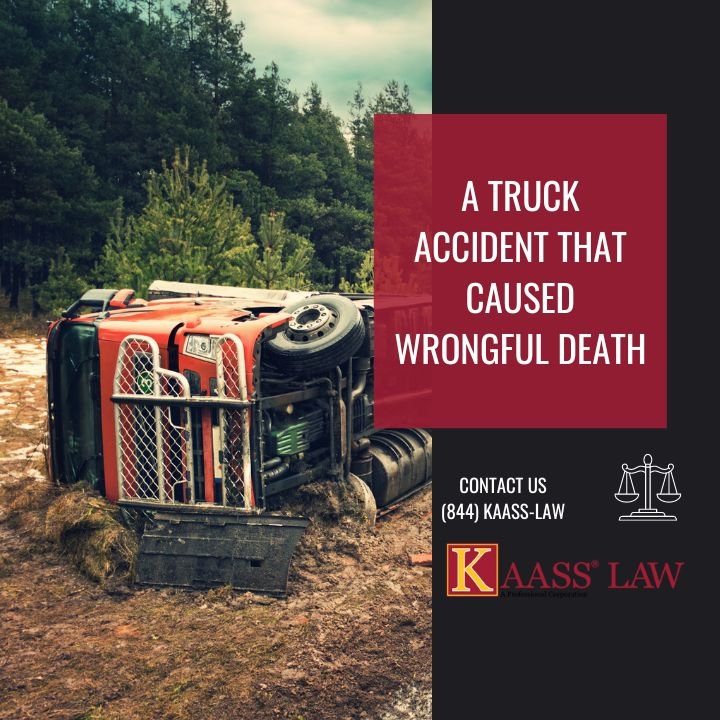
Truck accidents frequently cause fatalities and extremely serious injuries. The weight of a fully loaded commercial vehicle can reach 40 tons, which is 20 to 30 times heavier than the typical modern car. In brief, the size and weight of a tractor-trailer, semi-truck, box truck, or other large freight-bearing vehicle are just insurmountable for passenger cars. Smaller cars sometimes sustain severe injuries when they meet in an accident with a big truck or bus. It's critical to get the advice of an attorney with experience in large truck accidents. The legal team at KAASS Law Firm has decades of experience and the expertise you need to pursue justice for the deceased person.
Common Fatal Truck Accident Types
Nine percent of all heavy truck crashes involve a rollover, which accounts for more than half of all truck driver fatalities. Rollover accidents are highly dangerous for both truck drivers and other road users. Semi-trucks and tractor-trailers are more likely to topple onto their sides. For example, their heavy weight and high center of gravity, turn too rapidly or drive too fast. Blind spots on these cars can potentially result in collisions. The blind spot of a truck is the area that the driver cannot see in their mirrors or with their eyes without rotating their head and looking away from the road in front of them. Of course, the size of a vehicle's blind spot will increase with size. When attempting to merge, pass, or cut in front of traffic, blind spots make it difficult for drivers to detect smaller cars, which can result in collisions or push the smaller vehicle off the road entirely.
Large Truck Accidents and Injuries: Common Causes
Law enforcement and organizations that oversee commercial transportation may launch an investigation after a fatal commercial vehicle accident. These deadly truck accidents frequently have similar pre-accident patterns, which most likely influenced how they turned out. For example, these include:
- Driver Exhaustion
- Driver Omissions
- DUI
- Issues With Load and Freight
- Speeding
- Inadequate Vehicle Maintenance
How Is Liability Established in a Wrongful Death Case Involving a Truck?
Anyone who, through their careless or malicious behavior, led to the victim's death may be included as a defendant in a wrongful death lawsuit. Multiple defendants are frequently included in large truck accident wrongful death lawsuits, including:
- The vehicle's driver
- The transport business
- Owner of the truck
- A person who loads or manufactures freight
- Cargo owner
- Maintenance firm for trucks
- The maker of a damaged automotive component
- A tavern that provided a truck driver with excessive alcohol service
Your lawyer will handle the insurance company negotiations, the accident investigation, and the wrongful death lawsuit.
What Losses Are Covered by Commercial Vehicle Insurance?
A wrongful death lawsuit may provide for the recovery of economic, non-economic, and punitive damages. These damages cover things like the price of pre-death medical care, lost financial support, funeral and burial costs, and more. Your lawyer can propose suing for the following things if the dead was the head of the household and the other occupants depended on their wages to survive:
- Loss of future earnings projections
- Loss of advantages like health insurance or a pension plan
- Loss of inheritance as a result of a person's premature passing
Economic damages may also include the cost of products and services, such as child care, that the victim would have provided for the family if they had survived. Non-economic damages can make up for the victim's suffering before death, the survivors' emotional suffering, and loss of consortium, which is the breakdown of a relationship as a result of one party's passing.
Contact Our Wrongful Death Lawyers for Truck Accidents
To conclude, allow your lawyer to represent you. Honoring the memory of the departed by pursuing a wrongful death claim may even assist in stopping future mistakes of those responsible. Such cases are simply one of our many practices. To begin with, a free consultation, get in touch with the team at KAASS Law right away. Call us now at 310.943.1171.