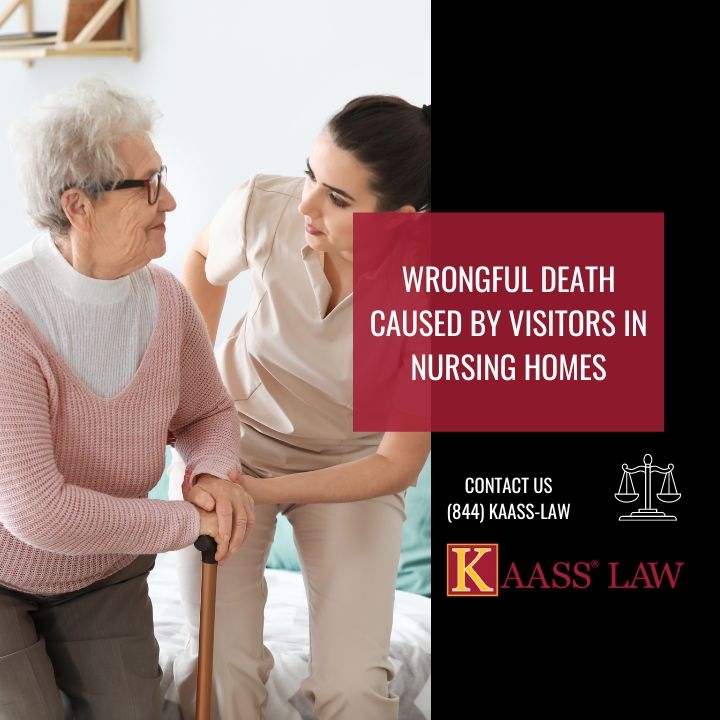
Nursing home accidents are more common than you may think. Nursing homes are designed to offer a secure and comforting setting for the elderly and individuals with disabilities. However, harmful conduct from individuals visiting these facilities can have grave consequences, even resulting in fatalities. Visitors to nursing homes can range from family members and friends to healthcare providers and other individuals who come into contact with residents. Unfortunately, visitor conduct can lead to wrongful deaths, leaving the victim's loved ones heartbroken and struggling to cope.
The Dangers of Visitors in Nursing Homes
Visitors to nursing homes can create an unsafe environment for residents in many ways. Unfortunately, some visitors engage in physical or verbal abuse, leading to serious harm. Additionally, some visitors bring in dangerous items like weapons or drugs, jeopardizing the safety of nursing home residents. Moreover, visitors can unknowingly spread contagious diseases like the flu, which can be particularly hazardous for those with weakened immune systems.
Negligent Behavior by Visitors Causing Nursing Home Accidents
In some cases, visitors to nursing homes may engage in negligent behavior that results in harm to residents. First, this can include failing to properly supervise children. Second, failing to follow infection control protocols. Lastly, failing to report abuse or neglect. When visitors engage in negligent behavior, it can result in serious harm to residents, including wrongful death.
Responsibility for Nursing Home Accidents
The nursing home may also be accountable for wrongful deaths if they didn't provide residents with the following:
Supervision of visitors
Verifying their credentials
Take other precautions to keep residents safe
The victim's family must show proof that the nursing home's or the visitor's negligence led to the victim's death in order to prove that there was a wrongful death. Recognize the possible risks posed by visits and take action. This entails making sure the nursing home has policies in place to oversee visitors and ensure the security of the patients. It is also critical to communicate any worries you may have to the personnel at the nursing home and ask them to keep an eye out for anyone who might be a danger to the residents. Visitors must follow the nursing home's infection control policies, and any violations must be reported to the staff. Additionally, if a resident's condition changes, the nursing home personnel must be notified right once.
How to Protect Your Loved Ones in Nursing Homes?
To protect your loved ones in nursing homes, it is essential to understand the risks associated with visitors and take steps to minimize these risks. For example, you can do this by:
Ensuring that the nursing home has policies in place to supervise visitors and ensure the safety of residents
Discussing any concerns you have about visitors with nursing home staff and asking them to monitor visitors who may pose a threat to residents
Making sure that visitors follow all infection control protocols and reporting any violations to nursing home staff
Paying close attention to any changes in your loved one's condition and reporting any concerns to nursing home staff
Encouraging visitors to follow all rules and regulations set by the nursing home and to refrain from engaging in any behavior that could harm residents
Contact Attorney Today
Wrongful death caused by visitors in nursing homes is a serious and preventable problem. Therefore, by taking steps to protect your loved ones and holding those responsible accountable, you can help to ensure that residents receive the high-quality care that they deserve. If you or a loved one have suffered harm due to the negligence of a visitor in a nursing home, you may be entitled to compensation for your losses. Contact an experienced attorney to discuss your options and determine the best course of action for your case. Call us at 310.943.1171 or visit our website for other practices.
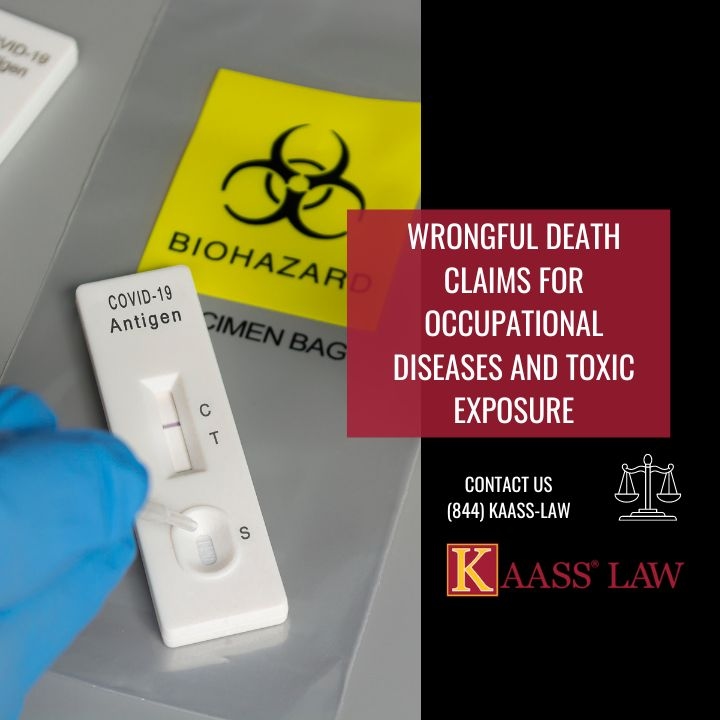
Workers who are exposed to harmful substances or occupational diseases may experience serious and long-lasting health issues. Regrettably, these disorders can result in death. When this occurs, the surviving family members might be able to sue the negligent parties for wrongful death. An overview of wrongful death claims for occupational illnesses and toxic exposure, including the causes, available legal recourse, and crucial factors to take into account before filing a claim, will be provided in this blog article.
Occupational Illnesses and Toxic Exposure Causes
Manufacturing, construction, healthcare, and agriculture are just a few of the many industries that can experience occupational disorders and hazardous exposure. Exposure to dangerous substances including asbestos, lead, benzene, and other chemicals can result in these disorders. Occupational illnesses and hazardous exposure have a number of common causes, including:
Asbestos exposure. Asbestos exposure can result in lung cancer, mesothelioma, and other respiratory illnesses.
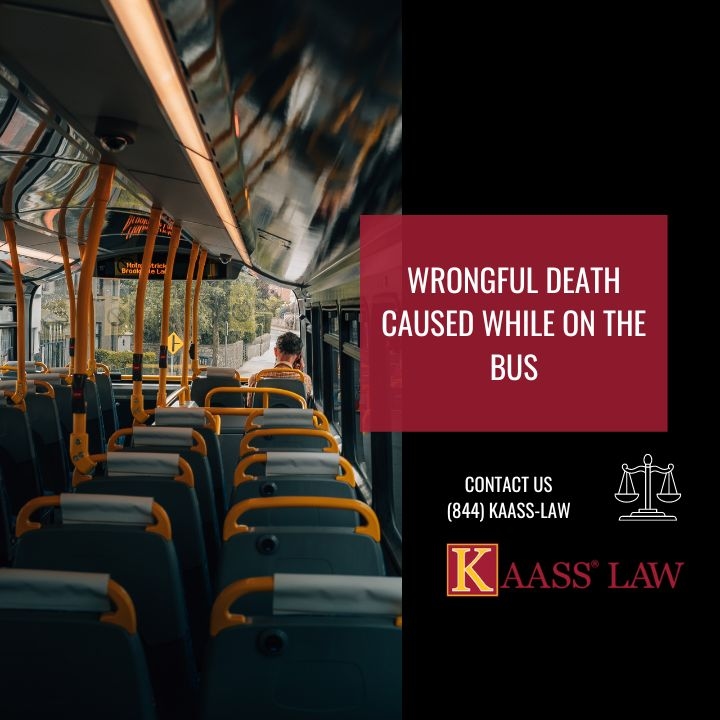
Buses are the primary way of transportation for millions of Americans each day. The convenience of traveling without a car is provided by buses. Bus wrongful death is not always a common occurrence, however, it is possible. This may be a fantastic method to cut costs and lessen your impact on the environment. Using public transit has a lot of advantages, but there are also dangers. According to the National Highway Traffic Safety Administration (NHTSA), there are roughly 300 bus wrongful-death accidents in the United States each year.
Why Do I Need a California Bus Accidents Attorney?
If you have been in a bus accident, you might be considering whether you require the services of a bus accident attorney. The situation you are in will determine the answer, according to experts. You may probably require legal counsel if you sustain serious injuries or if there is major property damage. You can navigate the convoluted legal system with the assistance of an accomplished Los Angeles bus accident lawyer, who will also fight for your rights.
What Are Bus Wrongful Death Accidents?
When a bus collides with another car, a pedestrian, or an item, it is a form of traffic accident. Several things, such as driver error, mechanical issues, bad weather, and poor road conditions, can result in bus accidents. Bus collisions can result in property damage, injuries, and even , depending on how severe the collision is.
Legally difficult and emotionally intense wrongful death claims are possible. When someone passes away as a result of someone else's carelessness family members may file a case to recover damages. In these situations, the defendant or defendants may be denying responsibility by arguing several moral and legal defenses. The burden of proof, causality, comparative negligence, and moral responsibility are some of the major points we'll be discussing.
Burden of Proof
The burden of showing that the defendant(s) caused or contributed to the death falls on the plaintiff (the party bringing the action) in a wrongful death claim. It is a requirement to show that the defendant owed the victim a duty of care and that the death was a direct or indirect result of the violation. A plaintiff can claim that a driver had a duty to respect traffic regulations. The driver broke that obligation by running a red light, and the driver's actions led to the pedestrian's death. For instance, if a driver jumps a red light and strikes a person, inflicting fatal injuries.
What Can Be the Cause?
Causation is one of the most contested issues in wrongful death lawsuits. It may be easy to demonstrate that the defendant acted carelessly, but it may be more difficult to demonstrate that their conduct resulted in the death. This is particularly valid when there were potential contributing factors to the victim's death. For example, prior medical issues or other circumstances.
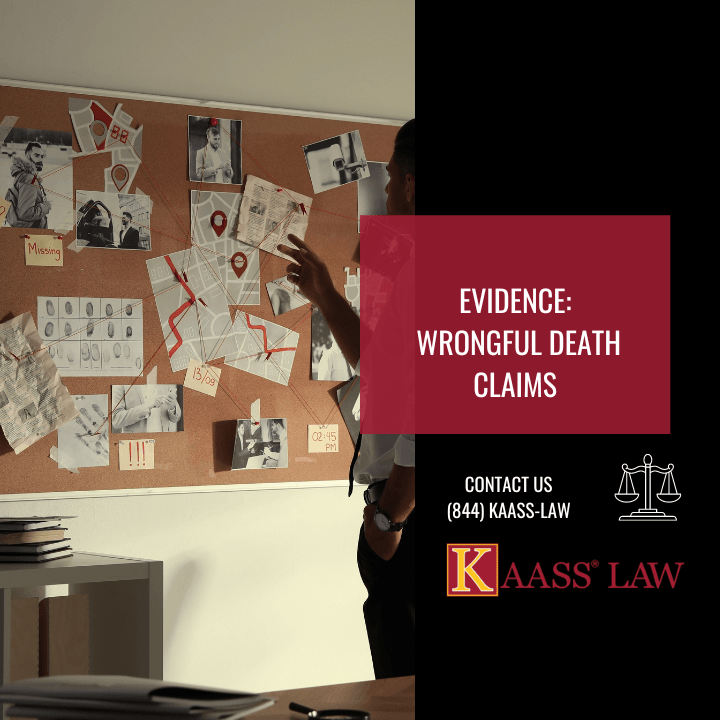
Grieving after the loss of your loved one is difficult. If the death was caused by a negligent party, you are entitled to compensation. Compensation includes financial losses recoverable to the victim's family. To file a wrongful death claim would entail procedures and legal proof to solidify your claim. An attorney would be beneficial for the hire to give you space to grieve all while concluding a successful case with sufficient evidence. Generally, to establish specific legal requirements for wrongful death, you must have facts. For instance, you must be able to demonstrate with evidence that the wrongdoing or negligence of another person brought about the death. This refers to having sufficient proof to satisfy the appropriate standard of proof.
Proving a Wrongful Death Case in California with Evidence
Correspondingly, the negligence law in California applies to wrongful death lawsuits resulting from accidents. Remember that the plaintiff must show that the defendant owed the decedent a duty and that the breach was both legally and directly responsible for the decedent's death. The following forms of evidence are useful in demonstrating wrongful death:
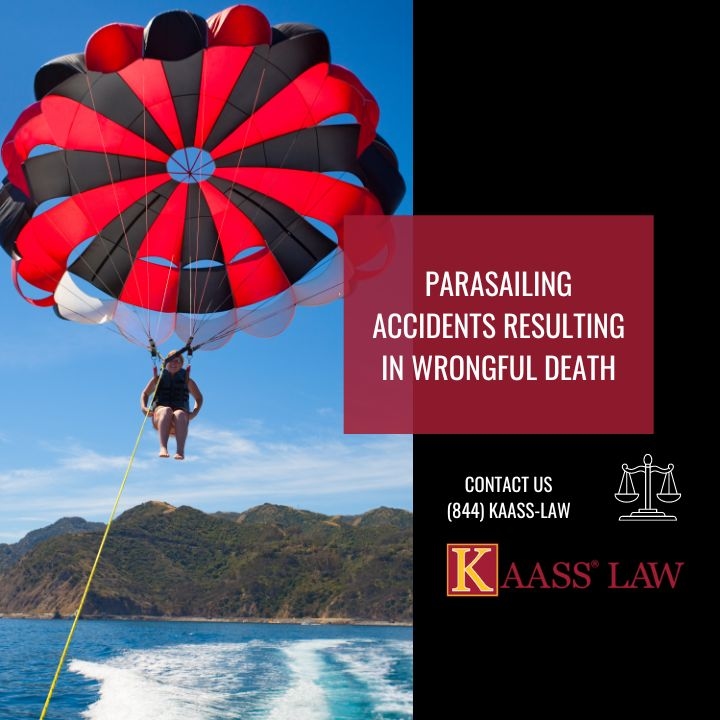
Many individuals have parasailing on their bucket list because it's an exhilarating thrill activity that lets riders soar at tremendous heights while taking in breathtaking views. Parasailing, however, has its risks. Parasailing wrongful death accidents can result from poor weather, defective equipment, and other circumstances. Contact California wrongful death attorneys at Kaass Law immediately if your loved one dies in a parasailing accident.
Common Parasailing Accidents Resulting in a Wrongful Death
Numerous possible parasailing hazards might result in catastrophic harm to passengers.
Failure of Equipment
Faulty equipment can put parasailers in grave danger. Riders may be in danger if their harness, towing line, or canopy wing is old, overused, or not up to specification. The towline rope is especially critical, and many accidents result from the line breaking, leading the rider to drift out of control. A parasailing lawsuit could be filed against a negligent operator or manufacturer in the event of an equipment failure accident.
Legal entities can file lawsuits and can also file lawsuits against them. Some businesses are being sued because they are unable to pay their bills or don't fulfill their duties. However, others may commit minor offenses or even crimes. Meanwhile, corporations are separate legal entities from their owners and agents. However, in some circumstances, the people with liabilities for the wrongdoing of the business may be responsible by the parties in question.
Liabilities of the Agents of the Corporation
The section 325 paragraph (a), (b) of the Corporate Law of Delaware defines actions against corporations directors, officers or stockholders. Corporation’s officers, directors or shareholders are legally obliged to pay the corporations debts or a portion of the latter. If this is the case, any creditor to whom they owe money may bring legal action against one or more of these individuals. The complaint shall include the details of the claim against the corporation and the ground on which the plaintiff intends to hold the defendants personally liable. However, the creditor must first acquire a judgment against the corporation for the debt and attempt to execute it in vain before taking legal action against an officer, director, or stockholder. This means that the creditor must try to collect the debt from the corporation before attempting to collect it from any individual officer, director or stockholder.
In the current economic climate, many corporations, both public and private, face financial insolvency or liquidity issues. Insolvency can have significant consequences for businesses, their shareholders, and, most notably, their employees. Understanding the legal framework surrounding insolvency is crucial for both corporate leaders and workers, especially when it comes to safeguarding employee rights.
What is Corporate Insolvency?
Corporate insolvency happens when a company cannot pay its debts or meet its financial obligations on time. It can result from various factors, including poor cash flow management, a small capital base, or mismanagement of liabilities. Insolvency often stems from long-term financial mismanagement or unforeseen economic challenges that significantly reduce a corporation's profits.
Corporations facing this may undergo bankruptcy filings or liquidation proceedings. These legal processes allow the company to restructure its debts or liquidate assets to satisfy creditors. To assess insolvency, courts typically use several tests:
The Balance Sheet Test: This test checks whether the company’s assets exceed its liabilities. If liabilities surpass assets, the corporation may be insolvent.
Article 109 of the Delaware Code sets out rules and procedures. It is for adopting, amending, and repealing bylaws in a corporation. Charters and bylaws are essential legal documents that create and regulate organizations, whether they are for-profit or nonprofit. A charter is an article of incorporation. It establishes the organization's basic purpose and structure, while bylaws set the rules for day-to-day operations. This is including board member responsibilities, decision-making, and conflict resolution. These documents work together to form the foundation of an organization's legal framework, ensuring that it operates effectively.
The Delaware Code: Subsection (a) of Article 109
Subsection (a) of Article 109 outlines the various parties who are authorized to adopt, amend, or repeal bylaws. However, it depends on the type and stage of the corporation's development. For instance, incorporators may adopt the original or other bylaws, while stockholders entitled to vote have the power to amend or repeal bylaws after a corporation has received any payment for any of its stock. The general purpose of the provision in the Delaware code is to establish a clear framework for the adoption, amendment, and repeal of a corporation's bylaws. The provision gives the initial incorporators of a corporation the power to establish the initial bylaws. This provides a foundation for the corporation's governance structure. This allows the incorporators to establish the initial procedures and rules that will guide the corporation's operations. Once a corporation has received payment for any of its stock, the provision transfers the power to amend or repeal the bylaws to the stockholders entitled to vote. This ensures that the ultimate control over the corporation's bylaws rests with those who have a financial stake in the corporation's success.
It is always tough to lose a cherished one. However, losing a loved one while expecting is even more heartbreaking. The loss of not only a family member but also the possibility of starting a new life, is a catastrophe that no one should have to go through. Unfortunately, some families must deal with unjust mortality while pregnant.
What is Wrongful Death?
Wrongful death is a legal word that refers to a death that was caused by another party's carelessness or deliberate actions. It is a legal case in which the deceased's remaining family members seek compensation for their losses. Medical expenditures, funeral costs, missed earnings, and loss of companionship are examples. A wrongful death case seeks to hold the responsible parties liable for their actions and to provide financial assistance to remaining family members. Medical malpractice, vehicle accidents, job incidents, and criminal actions are all examples of wrongful killing. To fully grasp your legal rights and choices, you should seek the advice of an experienced wrongful death attorney.
Wrongful Death of a Pregnant Woman
The wrongful death of a pregnant woman is a devastating event that can occur due to various reasons. It happens when a pregnant woman dies because of the negligence or intentional actions of someone else. The loss of a mother and the potential for a new life is a tragedy that no family should have to face. The causes of wrongful death can be medical malpractice, or accidents caused by someone else's negligence. Also, assault, or exposure to hazardous substances. It is important to contact an experienced wrongful death attorney. They can guide you through the legal process and help you recover the compensation you deserve.
Lead exposure. Lead exposure, especially in children, can lead to neurological and developmental issues.
Exposure to benzene. Exposure to benzene has been linked to leukemia and other cancers.
Other chemical exposure. Other harmful chemical exposure can result in a variety of health issues, such as skin irritability, respiratory issues, and brain damage.
Legal Recourse for Claims of Toxic Exposure Wrongful Death
The surviving family members may be able to bring a wrongful death lawsuit against the negligent parties. The goal of wrongful death claims is to hold those liable for the death and to compensate the remaining family members for their losses. The surviving family members often have to prove negligence on the side of the party at fault in order to bring a wrongful death lawsuit. Negligence can involve failing to provide sufficient safety equipment, neglecting to alert workers to potential hazards, or failing to adequately train personnel, among other things. The surviving family members may be able to seek further legal remedies, such as workers' compensation benefits, in addition to bringing a wrongful death lawsuit. Employees who suffer an injury or illness as a result of their employment are supported financially by workers' compensation benefits.
Key Factors to Take into Account While Filing a Wrongful Death Lawsuit
There are a number of crucial factors to keep in mind when deciding whether to file a wrongful death claim due to an occupational disease or toxic exposure:
Statute of limitations. The statute of limitations is the time frame within which a wrongful death claim must be filed. State-specific deadlines may apply, therefore it's crucial to see a qualified lawyer as soon as you can.
Identification of responsible parties. It's crucial to name everyone who might be to blame for the tragedy, including employers, companies that produce hazardous goods, and other third parties.
Collecting evidence. It's essential to collect proof to back up your assertion. Documentation such as witness statements, medical records, and other data may be present.
Expert witnesses. Professionals with relevant experience, such as doctors and toxicologists, can testify in favor of your claim.
Compensation. In wrongful death lawsuits, medical costs, funeral costs, lost wages, and pain and suffering are things one may receive compensation for.
Contact Attorney Today
You deserve justice. You may rely on our skilled attorneys to guide you through the process of filing a wrongful death claim. We will put in countless hours to look into the details of your loved one's passing, collect proof, and create a compelling argument on your behalf. Our aim is to make sure that those liable for your loss are responsible. Additionally, we are here to assure that you receive the compensation you are deserving of. Markedly, get the justice you deserve by contacting us today for a consultation by calling 310.943.1171.
Generally speaking, traveling the bus is a secure mode of transportation. There will, however, inevitably be accidents involving buses that could cause serious harm and lasting effects. Injuries that you might have suffered if you were a driver or passenger in a bus collision include the ones listed below.
Broken bones. Passengers or pedestrians are liable to sustain serious bone fractures if enough force is applied. Broken bones can result in a variety of issues, such as a prolonged inability to work or a high cost of medical treatment. Lacerations/Cuts. After a serious bus accident, victims' bodies may be covered in deep cuts or lacerations that will surely require considerable medical care due to slashed bodies brought on by shattered glass or other contact with sharp objects. There is a chance that these wounds will leave some kind of permanent scarring.
Whiplash harm. Whiplash is a rapid movement or acceleration of the head that typically happens in a rear-end collision. Whiplash is the most commonly mentioned personal injury among bus accident victims. Due to the quick impact of the accident, when a bus abruptly stops, it may result in neck swelling and bruises.
Spinal Cord Damage. There are instructions for medical professionals to check for spinal cord injuries in bus accidents before assessing the subject for other probable ailments. Injury to the spinal cord can result in long-term issues like paralysis or restricted mobility.
Brain Damage. After a car collision, passengers could hit their heads against the seat in front of them or another hard object. This may result in serious consequences including traumatic brain injury or loss of cognitive ability.
What in California Causes Bus Accidents Most Often?
To begin a claim for injuries sustained in a bus accident, one must first determine what happened and who is responsible for any expenditures. The following are the primary reasons for bus accidents:
Bus drivers are worn out from working too many hours.
Failure of the motorist to obey traffic laws, such as failing to stop at a red light, speeding through a red light, or failing to surrender the right-of-way.
Aggressive driving practices include speeding, lane switching quickly, neglecting to signal, and others.
Driving while distracted.
The blood in your body cannot carry enough oxygen when you are driving under the influence of alcohol or drugs (DUI). It leads to a condition known as sleepiness.
Improper inspection and upkeep resulted in mechanical failures.
Contact an Experienced Attorney Today for a Bus Wrongful Death Case
The first thing to do if you are a victim of a wrongful death which was while riding the bus is to get in touch with a personal injury lawyer. They can assist you in comprehending your legal alternatives and assisting you in bringing a wrongful death lawsuit. Acting immediately is crucial because there might be a statute of limitations. Contact us today at 310-943-1171.
Comparative negligence contends that the victim or another party contributed to their death by their own careless actions. It is another defense tactic in wrongful death lawsuits. State laws governing comparative negligence differ. Generally speaking, they permit a plaintiff's damages award to be reduced proportionally to their degree of fault. If a person is killed in a car accident and the plaintiff claims that the defendant driver was texting and speeding, the defendant may counter that the victim was not wearing a seatbelt or was preoccupied with their phone, which contributed to the collision. The plaintiff's damages judgment would be 20% less. This can happen if the jury found that the victim bore a 20% share of the blame for their demise.
What are Moral Responsibilities?
Denying responsibility in wrongful death cases is morally wrong as well as legally incorrect. Even if the defendant is not legally accountable for the death, they may still be ethically accountable. For instance, if the victim didn't follow the instructions, the manufacturer may not be accountable in court. Similarly, even if a person kills someone as a result of their carelessness or negligence, they may still feel guilty or remorse even if they are not prosecuted or proven legally responsible. In certain instances, they might try to atone for their actions by expressing a heartfelt apology and giving back to the community. As well as, contributing to a good cause in memory of the victim.
Contact Attorney Today
At our law company, we are cognizant of the complexity and sensitivity of wrongful death lawsuits, which need both legal knowledge and compassion for the remaining family members. Our attorneys are able to protect our client's rights and interests while also considering the case's moral implications. For individuals who have experienced irreparable loss, we work to bring justice and closure while guiding our clients through the legal system with compassion and clarity. Please don't hesitate to contact our law office for a consultation at 310.943.1171 or visit our website for other practices.
Testimony of the deceased person's friends, family members, or coworkers
An accident reconstructionist's expert testimony demonstrating that the incident caused the decedent's death
Medical professionals' expert testimony
A record of the decedent's funeral fees and other expenses related to their passing
Evidence-Related Complexities in Wrongful Death Cases
Cases involving wrongful death are usually more complicated than personal injury cases. For example, a wrongful death claim in California may be made on behalf of the deceased's:
Spouse,
Partner,
Child(ren).
If the victim's immediate family members are unable to file a wrongful death claim, the following people may:
Mother/Father,
Siblings, or
Brothers and sisters who may have relied on him or her for assistance.
Furthermore, you must be able to demonstrate all of the required legal components of negligence if your family member's wrongful death was brought on by failure. Overall, these duties include:
the responsible person owed the victim a duty of care;
that he violated that obligation in some way;
that the violation led to the accident that resulted in the death;
and that the wrongful death caused losses to you.
However, depending on the precise sort of accident, a duty of care will change. Some wrongful death instances result from purposeful violence rather than negligence. The legal requirements to demonstrate intentional conduct in these situations include that the individual who meant to perform the act made contact with the victim and that contact resulted in fatal outcomes.
Reasons to Hire California Wrongful Death Attorney
In any case, it can be in your best interest to refer to an attorney in the event that you're dealing with a wrongful death in your family. It can be challenging to deal with a loved one's passing. Hiring an attorney to represent your interest will stop you from making an emotional decision that could derail your case. Furthermore, an attorney can oversee your case with constrained input from you. This implies that you simply can center on getting your life back on track whereas still being able to require lawful activity.
Contact Kaass Law For a Consultation Now!
To succeed, you must be aware of the proof required to bring a wrongful death lawsuit in Los Angeles. Unfortunately, depending on the particulars of your case, the specific evidence will change. The proof you require centers on carelessness or malicious misdeeds. Your case will be stronger if you can uncover that supporting proof. Call Kaass Law at (310) 943-1171 to learn more about the evidence you will need to gather to support your claim in open court. You can contact a staff member to learn more about the courtroom procedure and how we can assist your legal efforts. You can visit our website for potential motorcycle cases you may have here.
Bad weather can be quite risky for anyone paragliding. These can range from severe winds to fog and heavy rain. Several situations are not typical when parasailing in California, but riders must still be wary of the weather. Rides should not be run in substandard circumstances by responsible operators.
Collisions with Obstacles
Once in the air, a rider has little control and must rely on their operators, who will be aboard the towing vehicle. Errors or negligence may cause parasailers to collide with objects in mid-air, such as buildings or power wires, resulting in significant injuries. If the towline fails, the chances of a collision increase.
Deadly Landings
Death can occur if a rider lands too quickly or with too much force, whether on land, on the deck of the towing vehicle, or in the water.
Parasailing Operator Negligence
A lack of operator training may cause a parasailing mishap in some situations. Commercial parasailing operators have a responsibility to care for their customers. Major issues can develop if the operators are sloppy or improperly trained. They may fail to secure the harness, extend the line to an unsafe height, or work in hazardous regions.
Harness Prevents Escape
A substantial percentage of major parasailing injuries and fatalities occur when a rider is forced to land in the water and cannot release their harness, leaving them stuck while still tied to the canopy. Nearly all paralyzing accidents can be traced back to operator negligence, whether they take riders up in bad weather, have not updated their equipment, or lack the proper training. A wrongful death lawyer can assist you if your loved one dies due to the negligence of another person or organization. Call Kaass Law parasailing accident lawyers right now.
Who Can be Responsible for a Parasailing Accident Wrongful Death?
Our wrongful death attorneys can target different parties to ensure you receive the compensation you deserve. Correspondingly, here are some parties that can be liable:
The Parasailing Company
Most of the time, the parasailing company or a specific employee is to blame for accidents. Examples of negligence include sending riders up inclement weather, employing shoddy or outdated equipment, or neglecting to provide operators with adequate training. Riders have entitlement to care from the company, and any negligence could result in legal action.
The Manufacturer
The parasailing equipment, including the harness, towline rope, and canopy, can occasionally malfunction. Hence, if this occurs, any injuries sustained may be the responsibility of the equipment's manufacturer.
Other Parties
Other parties may include the management firms that own the parasailing company's working space and the distributors that sold defective equipment. Get in touch with the parasailing accident lawyers from Kaass Law right once to find out if you have a case.
Hire California Wrongful Death Attorney Today!
If someone you know and love has been in a parasailing accident, contact our California wrongful death attorneys now! Call (310) 943-1171 for immediate help now. Additionally, make sure to visit our other website to view our other practice areas.
The section provides a possibility for creditors to sue the officers, directors or stockholders for the debts of the corporation. This is in case they have a liability by the provisions set forth in the General Corporation Law of Delaware for paying debts of the corporation. In such cases, the creditor must show that the individuals were responsible for the corporations failure to pay the debt. That may be either because they engaged in wrongful conduct or because they failed to fulfill their legal obligations.
Requirements for the Plaintiffs
The requirement is that the plaintiff shall first address the complaint to the corporation itself. Along with the justifications for wanting to hold the people accountable on a personal level, it should be in discussion. To begin with, the clause only applies to corporations formed under Delaware law. It does not apply on the relations, liabilities and remedies of stockholders incorporated under the legislation of other states. Overall, the debts and legal obligations should arise under the Delaware general corporation law. Second, it's important to keep in mind that stockholders, executives, and directors could all face legal consequences. The suit would be for the debts of the corporation in case a judgment against a failed execution of the corporation. Executed unsuccessfully - the corporation is unable to pay its debts, and its total debts exceed its total assets.
Contact an Attorney
Give our office a call at 310.943.1171 if you have any questions regarding a similar matter. Visit our other website for more information on our other practices.
The Cash Flow Test: This examines whether the company has enough cash flow to meet its financial obligations as they come due. A lack of funds to cover short-term debts may indicate insolvency.
The Unreasonably Small Capital Test: This test checks if the company has enough capital to operate and meet future financial obligations. If not, the company may be insolvent.
Consequences of Corporate Insolvency
Corporate insolvency can negatively impact employees, as the company might not meet obligations such as paying wages and benefits or providing job security. Under Section §300 of the Delaware General Corporation Law, employees have specific rights to protect their financial interests if a corporation becomes insolvent. Employees are entitled to a secured lien on the corporation’s assets for wages owed to them—up to two months’ salary. This lien takes priority over other debts.
However, officers of the corporation do not have the same rights. The law excludes officers from this protection. The secured lien only applies to regular employees, not executives like the CEO or CFO. Learn more about corporate insolvency laws.
Guarantees for Employees in the Case of Insolvency
Employees enjoy protection in several cases, as they can claim unpaid wages through the secured lien. This protection helps employees when the company faces liquidation or bankruptcy, ensuring they receive compensation before creditors. However, this protection does not apply to corporate officers, who are legally excluded from claiming unpaid wages.
To avoid confusion, corporations must clearly define roles like "employee," "officer," and "director" in their bylaws. This ensures everyone understands their rights and responsibilities and helps prevent legal disputes during proceedings.
Differences Between Officers, Directors, and Employees
Officers, directors, and employees all play different roles in a corporation. Officers manage day-to-day operations, while directors oversee governance and strategic decisions. Employees provide regular services and receive wages in exchange. When this occurs, only employees have a right to the secured lien. Officers and directors, despite their compensation, do not.
Corporations should ensure their bylaws clearly define these roles. This helps avoid confusion, especially when determining who can claim unpaid wages in these situations. A person holding a title such as "Chief Technology Officer" may be treated as an employee if not formally appointed as an officer.
Legal Support for Corporate Insolvency Issues
Navigating corporate insolvency can be complicated. Understanding your rights during insolvency is essential whether you are a shareholder, employee, officer, or director. If your corporation faces financial difficulties, consulting a corporate law attorney is a wise decision.
An experienced attorney can help navigate laws and protect the interests of employees and shareholders. They can also advise on potential legal actions, such as bankruptcy filings or debt restructuring.
For professional legal advice on corporate insolvency, contact KAASS Law today. Our team is ready to assist with any insolvency-related concerns and guide you through the process.
KAASS LAW Attorneys are Here to Help You!
Financial difficulties can have significant effects on both businesses and employees. When a company struggles to meet its obligations, it risks shutting down and jeopardizing the livelihoods of its workers. It’s crucial for business owners and employees to understand the legal framework surrounding financial distress, especially the various tests used to evaluate a company’s ability to continue operations.
Employees also have specific protections if a company becomes financially unstable. Under Delaware law, employees may be entitled to a secured claim on the company’s assets for up to two months of unpaid wages, with priority over other debts. However, officers of the company are not included in this protection. In cases of financial hardship, understanding the legal distinctions between employees and officers is vital.
For expert legal guidance and advice, reach out to KAASS Law. Our team can help navigate the complexities of these situations. Contact us at 310-943-1171 or visit our website for more information.
Subsection (b) of Article 109 specifies that bylaws may contain any provisions related to the corporation's business and conduct of affairs. However, it is as long as they are not applicable to the law or the certificate of incorporation. It also prohibits any provision in the bylaws that would impose liability on a stockholder for the attorneys, fees, or expenses of the corporation or any other party in connection with an internal corporate claim. The general purpose of the provision in the Delaware code is to protect the stockholders from the risk of facing significant legal expenses if they choose to submit a claim against the corporation or other stockholders. This provision ensures that stockholders are not constrained from bringing legitimate claims against the corporation or other stockholders. Due to the fear of significant legal fees, it could potentially bankrupt them or significantly impact their financial stability. The provision aims to promote accountability and transparency in corporate governance and encourage good corporate practices. It also reinforces that legal fees and expenses in association with internal corporate claims should be sustainable by the corporation. That is, rather than individual stockholders.
Contact an Attorney Today
Feel free to contact our office today at 310.943.1171 to get the legal representation you deserve.
Losing a loved one while pregnant is a tragedy that no one should have to endure.
Contact an Attorney
If you have lost a loved one who was pregnant due to the negligence or intentional actions of another party, it is important to speak with an experienced wrongful death attorney. An attorney can help you understand your legal rights and options and guide you through the legal process of pursuing a wrongful death claim. A wrongful death attorney can investigate the circumstances surrounding the death, gather evidence, and work to hold the responsible parties accountable for their actions. They can also help you recover the compensation you need to cover expenses and support your family during this difficult time. Call us today at 310-943-1171 or visit our website for other practices.