After a devastating accident with a large commercial truck, the investigation usually focuses on the crash scene itself. For instance, investigators look at skid marks, vehicle damage, and driver statements. However, a crucial part of the story is often hidden away in public records. Did the trucking company have a history of safety problems? Did the federal government ever audit the company? The answers to these questions can be found in a Trucking Company Safety Audit. Importantly, this information can serve as powerful evidence in a personal injury claim. Many victims don't realize that a trucking company's safety history is often a public matter. An experienced truck accident attorney knows how to access these records. This article explains what a New Entrant Safety Audit is. Furthermore, it details how a lawyer can use it to hold negligent trucking companies accountable.
What is an FMCSA New Entrant Safety Audit?
The Federal Motor Carrier Safety Administration (FMCSA) is the government agency that regulates the U.S. trucking industry. To ensure new trucking companies follow safety rules from day one, the FMCSA created the New Entrant Safety Assurance Program. According to the FMCSA, every new trucking company must undergo a New Entrant Safety Audit. This typically happens within its first 12 months of operation. This is not optional; it is a mandatory review of the company's safety management systems. The purpose of the audit is twofold:
Educational: First, it ensures the new company fully understands all applicable federal safety regulations.
Accountability: Second, it verifies that the company has effective safety systems and policies in place.
If a new company fails its safety audit, it must then submit a corrective action plan. If it still fails to comply, the FMCSA can revoke its registration, which effectively puts it out of business.
What Does a Trucking Company Safety Audit Cover?
The safety audit is a comprehensive review of a company's operations. Specifically, an FMCSA auditor will examine the company's records and procedures in several key areas, including:
Driver Qualifications: Does the company ensure its drivers have valid commercial driver's licenses (CDLs) and are medically qualified? Do they conduct proper background checks?
Hours of Service: Does the company have a system to ensure its drivers comply with strict limits on driving time? Do they take mandatory rest breaks to prevent fatigue?
Vehicle Maintenance: Does the company have a program for systematic vehicle inspection, repair, and maintenance? This is to keep its trucks in safe working order.
Accident Register: Does the company maintain a record of all accidents, as the law requires?
Drug and Alcohol Testing: Is the company complying with federal requirements for driver drug and alcohol testing programs?
Insurance: Does the company have the required level of liability insurance?
The results of this audit, therefore, provide a clear snapshot of the company's commitment to safety.
The Public Record: FOIA and the Company Safety Profile
The results of a Trucking Company Safety Audit, along with other safety data, become part of the company's permanent record with the federal government. This is often called a Company Safety Profile (CSP). This profile contains a wealth of information. For example, it includes crash reports, roadside inspection results, and compliance reviews.
Using the Freedom of Information Act (FOIA)
This is where an experienced lawyer's investigative work comes in. The Freedom of Information Act (FOIA) is a federal law. It gives the public the right to request access to records from any federal agency. According to the official FOIA.gov website, any person can file a FOIA request. After a serious truck accident, an attorney can file a FOIA request with the FMCSA. This request demands the complete Company Safety Profile for the trucking company involved in the crash. Consequently, this allows the attorney to see the results of the New Entrant Safety Audit and any other documented safety violations.
Using a Failed Trucking Company Safety Audit in Your Claim
Obtaining the trucking company's safety records through a FOIA request can be a game-changer for a Personal Injury lawsuit. If the Trucking Company Safety Audit revealed serious problems, it can become powerful evidence of negligence. For example, imagine a truck accident was caused by brake failure. If the safety audit from a year earlier showed that the company had no vehicle maintenance program, it helps prove a pattern of negligence. In fact, it shows the government officially put the company on notice about its safety failures, and the company did nothing to fix them. An attorney can use this kind of evidence to:
Prove Company Negligence: It helps show that the company's poor safety practices, not just the driver's actions, contributed to the accident.
Establish Punitive Damages: In some cases, showing that a company consciously disregarded known safety risks can support a claim for punitive damages. This is additional compensation designed to punish the defendant for egregious behavior.
How KAASS LAW Uses the Trucking Company Safety Audit
At KAASS LAW, we understand that a thorough investigation is the key to success in complex truck accident cases. We don't just look at the police report from the crash scene. Indeed, we dig deeper to uncover the trucking company's history and safety culture. Our attorneys routinely use the Freedom of Information Act. We do this to obtain the full safety records of trucking companies involved in accidents. We meticulously review the results of any Trucking Company Safety Audit and other compliance reviews. This, in turn, helps us build a powerful case that shows how a company's systemic safety failures led to our client's injuries. We use this evidence to hold negligent carriers fully accountable. If an accident with a commercial truck has injured you, please Contact Us. We offer a free, confidential consultation.
Conclusion
The New Entrant Safety Audit is a critical tool the government uses to ensure trucking companies are safe from the start. For victims of accidents, the results of a Trucking Company Safety Audit can be a vital piece of evidence. It can reveal a pattern of negligence that goes far beyond the driver's actions on the day of the crash. By using legal tools like the Freedom of Information Act, an experienced attorney can uncover this history. Ultimately, they can use it to build the strongest possible case for the compensation you deserve.
When a large commercial truck is involved in an accident, the consequences are often devastating. Furthermore, these incidents are rarely simple. Unlike a typical car crash, a complex and detailed set of federal rules governs every aspect of a trucking company's operations. These are the Federal Motor Carrier Safety Regulations (FMCSA Regulations). For victims of truck accidents, understanding the role these regulations play is absolutely critical. This knowledge helps prove fault and secure fair compensation. Violating these safety rules is not just a mistake; it can be direct evidence of negligence. This article will explain what the FMCSA Regulations are, what they cover, and how an experienced truck accident attorney uses them to build a strong personal injury case in California.
What Are the FMCSA Regulations?
The Federal Motor Carrier Safety Administration (FMCSA) is the agency within the U.S. Department of Transportation that regulates the trucking industry. Its primary mission is to reduce crashes, injuries, and fatalities involving large trucks and buses. To achieve this, the agency develops and enforces a comprehensive set of safety rules. We know these rules as the FMCSA Regulations. According to the , these rules apply to most commercial motor vehicles (CMVs). They also apply to the companies that operate them (motor carriers). The regulations are extensive. Lawmakers designed them to ensure that drivers are qualified, vehicles are safe, and companies operate responsibly.
For years, many California drivers of clean air vehicles enjoyed a coveted perk. They could drive solo in the state's high-occupancy vehicle (HOV) lanes. However, as of October 1, 2025, that privilege has ended for hundreds of thousands of drivers. The program that issued green and white Clean Air Vehicle (CAV) decals has expired. The California Highway Patrol (CHP) is now enforcing a minimum fine of $490 for violators. Understanding the new California HOV Lane Rules is crucial for every commuter. This major policy shift affects a large number of drivers who relied on this benefit. This article will explain exactly what changed and why. We will also cover who is affected and what you need to do to avoid a very expensive ticket.
An End to a Perk in California HOV Lane Rules
The most important change is the expiration of the green and white CAV decals. This program, which granted single-occupant access to carpool lanes, officially ended on September 30, 2025. This change primarily affects drivers of older clean air vehicles. This includes many plug-in hybrid (PHEV) and fully electric (EV) vehicles from model years 2017 and 2018 or older. If you have a green or white decal on your car, it is no longer valid for solo access to HOV lanes. Continuing to use the carpool lane alone is now a ticketable offense.
If you suffer an injury due to the negligence of a private citizen or company, you generally have two years to file a lawsuit in California. However, a completely different and much stricter set of rules applies if a government entity caused your injury. Failing to follow these special procedures, especially the very short initial deadline, can permanently bar you from seeking compensation. Understanding the Government Tort Claim Deadline is absolutely critical if any government body, from a local school district to a state agency, has harmed you. This article breaks down the unforgiving deadlines for filing a claim against a public entity in California. We'll explain the 6-month rule, the limited exception for filing a late claim, and why you must act quickly to protect your rights.
What Is a Government Tort Claim?
First, it’s important to understand the concept of "sovereign immunity." This legal doctrine generally protects government entities from lawsuits. However, California waives this immunity in certain situations through the California Tort Claims Act. This Act allows individuals to sue public entities for harm they cause, but only if the individual follows a precise set of procedural rules first. The very first step requires you to file a formal "notice of claim."
After a car accident or other injury, you expect the insurance company to help. You pay your premiums faithfully. So, you should get fair compensation when it's time to file a claim, right? Unfortunately, it's rarely that simple. This is especially true when you deal with the titans of the industry. The goal of the Biggest Insurance Companies is not to pay you what you deserve. Their goal is to pay as little as possible to protect their bottom line. Many people don't realize a version of the Miranda warning applies to insurance claims. In effect, anything you say can and will be used against you to devalue your claim. This article lists the nation's largest insurers. It also explains why you need an experienced lawyer to handle all communications for you.
The Titans of Insurance: America's 25 Biggest Companies
A handful of massive corporations dominate the insurance industry. They possess vast resources. If you have an auto or home policy, or file a claim against someone who does, you are likely dealing with one of these giants. According to the most recent market share data from the , the 25 largest property and casualty insurance companies in the U.S. include household names like: These companies collectively control a huge portion of the insurance market. They employ armies of adjusters, investigators, and lawyers. All of them are trained with one primary goal in mind.
News recently broke that former New York City Mayor Rudy Giuliani was hospitalized after a serious car crash. Reports state another vehicle struck his car from behind at high speed, causing injuries that included a fractured vertebra. This incident is a stark reminder that rear-end collisions can happen to anyone. These crashes also often have severe consequences. This news highlights the critical legal questions that follow, making it a good time to discuss the rights of victims in a Rear-End Accident Claim. When another driver hits you from behind, the legal process may seem simple. However, insurance companies often work to minimize what they pay out. This happens even in seemingly clear-cut cases. Understanding California law and what to do after a crash is essential for protecting your rights.
The Presumption of Fault in a Rear-End Collision
In California, the law has a strong presumption that the rear driver is at fault. This rule comes from California Vehicle Code § 21703. It requires every driver to maintain a "reasonable and prudent" following distance. The logic is simple. If a driver leaves enough space, they should be able to stop safely if the car ahead brakes suddenly. Because of this rule, courts almost always consider the rear driver negligent. However, this is not an absolute rule. There are rare exceptions where the front driver might share some fault, such as:
Eight months after the destructive Eaton and Woolsey fires scorched parts of Los Angeles County, many victims are facing a second disaster: fighting their own insurance companies. This week, frustrated homeowners from the Eaton Fire Survivors Network gathered in Altadena with state and local leaders. They publicly called on California's Insurance Commissioner to take action against insurers who have delayed and denied their claims. This event highlights a growing crisis for victims of California wildfires and puts a spotlight on the difficulties of navigating complex Wildfire Insurance Claims. When you pay your premiums, you expect your insurance company to be there for you after a catastrophe. But what happens when they aren't? This article will explore the challenges survivors are facing and explain your legal rights when an insurer fails to act in good faith.
The Survivors' Struggle: Delays and Underpayments
The homeowners in the Eaton Fire Survivors Network tell a story that is tragically common after a major wildfire. Eight months after losing their homes, many are still living in temporary housing, fighting for the money they need to rebuild. They report that their insurance companies are:
Rideshare services like Uber and Lyft are a part of daily life for millions of Californians. We use them constantly, trusting them to be a safe way to get around. However, when an accident or an assault happens during a ride, passengers often wonder who is responsible. While the driver is one party, what about the billion-dollar company that sent them? Understanding California Rideshare Law is essential for knowing your rights in these situations. Recent legal discussions, based on materials from legal presentations, highlight that Transportation Network Companies (TNCs) have significant safety duties. This article will break down the specific safety rules TNCs must follow. We will also explore the important legal concept of a "common carrier" and how it applies to your ride.
California Rideshare Law: Key TNC Safety Rules
According to the California Public Utilities Commission (CPUC), the agency that regulates rideshare companies, TNCs must meet several crucial safety requirements to operate in the state. These regulations mean TNCs have a duty to ensure their drivers are safe before they ever pick up a passenger. These non-negotiable safety requirements include:
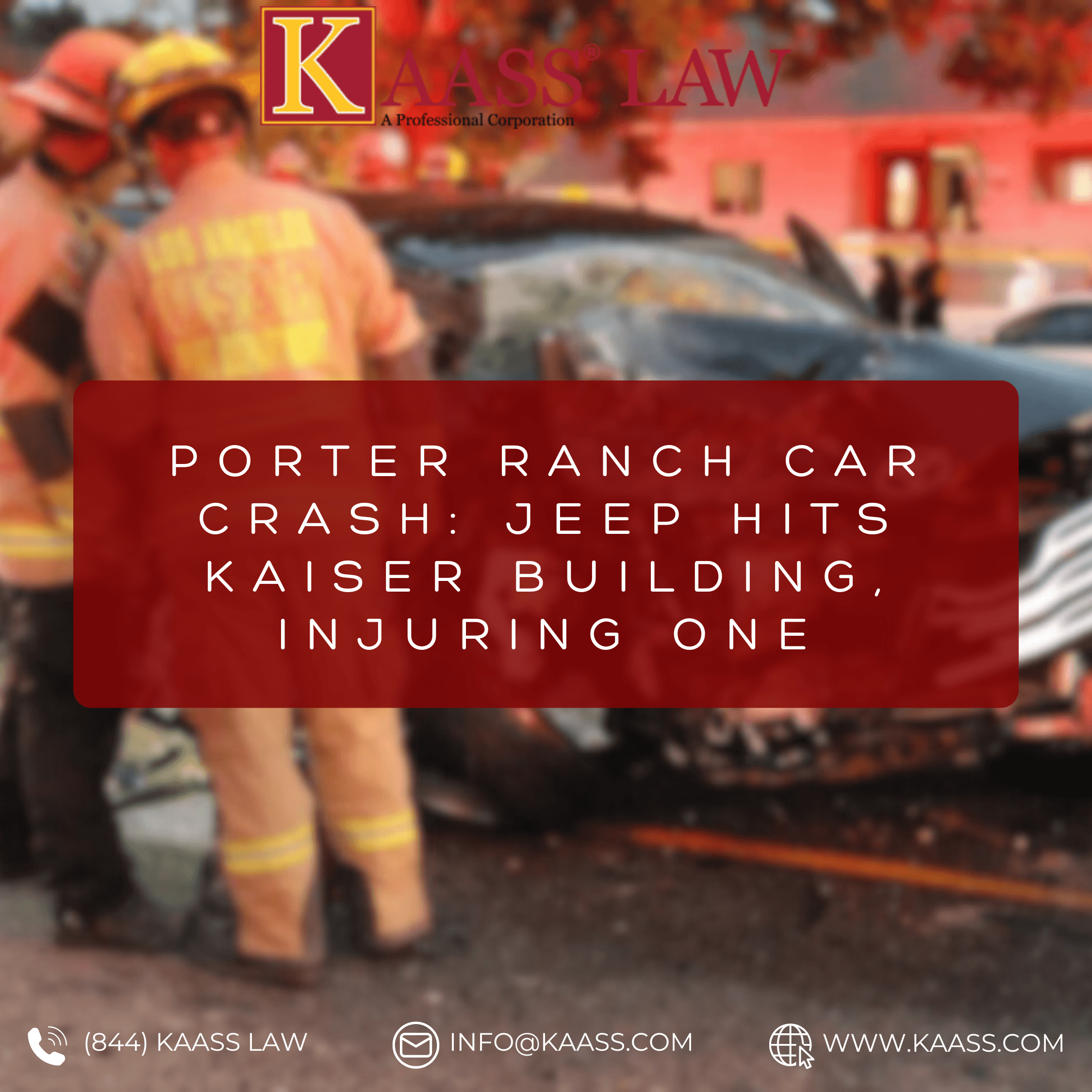
A quiet Monday afternoon in Porter Ranch was shattered. A Jeep Wrangler crashed directly into the lobby of a Kaiser Permanente medical office building. This shocking incident left patients and staff reeling. Paramedics also took at least one person to the hospital. While the immediate focus is on the well-being of the injured, this Porter Ranch Car Crash also brings up complex legal questions. A key question is who is responsible when a vehicle leaves the roadway and injures someone inside a building. This event is more than just a traffic accident. It involves different layers of potential liability. This article will break down the details of the crash. We will also explore the legal avenues victims can pursue to seek justice.
What We Know About the Porter Ranch Car Crash
According to news outlets like FOX 11 Los Angeles, the incident occurred just after noon on Monday, August 25, 2025. A white Jeep Wrangler drove into the Kaiser Permanente medical facility. The building is located in the 20000 block of West Rinaldi Street. Emergency crews responded quickly to the scene. They confirmed the vehicle traveled completely into the building's waiting room and shattered the glass front. Paramedics transported one patient to a local hospital with minor injuries. Fortunately, no one was trapped inside the vehicle. The Los Angeles Police Department is investigating the crash's cause. Officials also called building inspectors to assess the structural integrity of the facility.
A methane zone is an area that has a high risk of explosion hazards. This is due to the known concentrations of methane gas underground, which ultimately pose a danger to humans and workers in these confined spaces. A vapor mitigation system is required upon construction in these zones. In confined spaces, methane gas poses hazards due to its high flammability. It can also displace oxygen, making it highly hazardous to human lungs. Additionally, methane gas is difficult to detect because it is invisible to the naked eye. Moreover, methane gas can travel long distances. Listed below are some ways methane gas can create hazards to workers.
Odorless
Colorless
Explosive
Flammable
Displacement of oxygen
Rapid diffusion
Health effects
Protecting Workers in Methane Zones
Methane gas plays a crucial role in the safety of workers as it can cause severe health problems. It is essential to reduce the risk in confined spaces to limit the threats to workers' health and safety posed by methane gas. It is crucial to implement the following measures to mitigate these confined space hazards.
The FMCSA Regulations are vast, but several key areas are frequently central to truck accident claims. An attorney will investigate a trucking company's compliance in all of these areas after a crash.
Hours of Service (HOS) Rules
Driver fatigue is a leading cause of catastrophic truck accidents. To combat this, the FMCSA created strict Hours of Service (HOS) rules that dictate:
The maximum number of hours a driver can be on duty and drive in a 24-hour period.
The minimum number of off-duty hours and rest breaks a driver must take.
How drivers must log their hours using an Electronic Logging Device (ELD). According to the FMCSA's Hours of Service rules, these regulations are designed to ensure drivers are rested and alert behind the wheel.
Driver Qualification Standards
A trucking company cannot simply hire anyone to drive an 80,000-pound vehicle. In fact, the regulations require motor carriers to maintain a detailed "driver qualification file" for every driver. This file ensures each driver:
Has a valid Commercial Driver's License (CDL).
Has passed a medical examination.
Has a driving record that the company has reviewed.
Has passed required drug and alcohol tests.
Vehicle Maintenance and Inspection
Trucking companies have a legal duty to systematically inspect, repair, and maintain their vehicles. The regulations require:
Regular, documented vehicle inspections.
Records of all maintenance and repairs.
Daily Driver Vehicle Inspection Reports (DVIRs). A crash caused by faulty brakes or a tire blowout, for instance, often points directly to a violation of these maintenance rules.
Cargo Control and Securement
Improperly loaded or unsecured cargo can shift during transit. This can cause a driver to lose control. It can also result in cargo spilling onto the highway, creating a massive hazard. Consequently, the FMCSA has detailed rules for how companies must load and secure different types of cargo.
The Legal Power of FMCSA Regulations in a Lawsuit
In a personal injury case, the victim (plaintiff) must prove that the defendant was negligent. The FMCSA Regulations are an incredibly powerful tool for proving negligence against a trucking company.
Establishing the "Standard of Care"
The regulations establish the minimum legal safety standard—or "standard of care"—that a trucking company must meet. A reasonable trucking company follows these rules. Therefore, a company that violates them is, by definition, not acting reasonably.
Proving Fault with "Negligence Per Se"
In California, a legal doctrine called "negligence per se" can be applied. This doctrine states that if a defendant violates a statute (like an FMCSA rule), and that violation causes the type of harm the rule was designed to prevent, then the defendant is automatically presumed to be negligent. For example, if a truck driver violates HOS rules, falls asleep at the wheel, and causes a crash, their violation can prove they were negligent as a matter of law. This can make establishing fault much easier for the victim.
How KAASS LAW Handles Cases Involving FMCSA Regulations
At KAASS LAW, we understand that truck accident cases are far more complex than standard car accident claims. A deep knowledge of the FMCSA Regulations is essential to success. Our Personal Injury attorneys have the experience to handle these serious cases. When we take on a truck accident case, our investigation goes far beyond the crash scene. We immediately work to preserve crucial evidence from the trucking company. This includes the driver's logs, ELD data, and the driver's qualification file. It also includes the truck's full maintenance history. We meticulously compare this evidence against the requirements of the FMCSA Regulations. This process helps us identify violations and build a powerful case for negligence. We know how to hold negligent drivers and their employers accountable. If you or a loved one has been injured in an accident with a commercial truck, please Contact Us for a free, confidential consultation.
Conclusion
The FMCSA Regulations are not just a set of rules for the trucking industry; they are the foundation for public safety on our highways. For victims of truck accidents, these regulations are also a critical tool for justice. By demonstrating that a trucking company or driver violated these federal safety standards, an experienced attorney can prove negligence. Ultimately, this helps secure the full and fair compensation that victims and their families deserve. If you've been in a truck accident, understanding the role of these regulations is a key step in protecting your rights.
The CAV decal program was created to encourage people to buy low-emission vehicles. The program was extremely successful. In fact, it became a victim of its own success. Over the years, so many drivers qualified for the decals that they began to congest the HOV lanes. The primary purpose of carpool lanes is to encourage carpooling. This improves traffic flow for buses and multi-occupant vehicles. According to the California Department of Transportation (Caltrans), federal law requires HOV lanes to maintain an average speed of 45 mph or greater during peak hours. With a huge number of solo drivers using the lanes, many were failing to meet this standard. This "lane degradation" prompted the state to phase out the older decals.
Violating California HOV Lane Rules: A $490 Fine
The penalty for improperly using an HOV lane in California is severe. The minimum fine for a first-time violation is $490. This amount can be even higher depending on the county and court fees. Furthermore, an HOV lane violation is a moving violation. A conviction will likely result in a point on your driving record. Accumulating points can lead to large increases in your car insurance premiums. It could even lead to a driver's license suspension. The CHP is actively enforcing these new rules. Assuming there is a "grace period" is a risky and costly mistake.
Who Can Still Drive Solo in the Carpool Lane?
While the old decal program has ended, the state's effort to incentivize the cleanest vehicles continues. According to the California Air Resources Board (ARB), the CAV decal program is transitioning. Newer, qualifying zero-emission vehicles (ZEVs) and some of the cleanest plug-in hybrids may still be eligible for the current CAV decal. However, the eligibility requirements are much stricter than before. You must check the official lists on the ARB or DMV websites to find out if your specific vehicle qualifies for a new decal. Do not assume your vehicle is eligible just because it is an EV or hybrid.
How New California HOV Lane Rules Affect You
For the many drivers who lost this perk, the most immediate impact will be a longer commute. This change also has legal implications.
Fighting a Ticket: If you receive a $490 ticket, you have the right to contest it. A successful defense, however, requires a thorough understanding of the specific California HOV Lane Rules.
Accident Liability: HOV lane rules can also become a factor in a Personal Injury case. For example, if a driver causes an accident by making a sudden, unsafe maneuver out of the carpool lane, their illegal presence in the lane could be a key factor in proving their negligence.
How KAASS LAW Can Help
While our firm primarily handles injury cases, we understand that traffic laws and car accidents are deeply connected. At KAASS LAW, we have extensive experience investigating complex car accidents. We know how to determine fault, even when it involves nuanced violations of the vehicle code. If you have been injured in an accident involving a driver who was operating their vehicle illegally in an HOV lane, we can help you build a strong Personal Injury claim. We fight to ensure that negligent drivers are held fully accountable. If you have questions about an accident, please Contact Us for a free, confidential consultation.
Conclusion
The recent changes to the California HOV Lane Rules represent a major shift for many drivers. The expiration of the green and white CAV decals means that solo drivers in those cars now face a minimum fine of $490 for using the carpool lane. To avoid a costly ticket, it is essential to verify your vehicle's eligibility under the new program. This policy shift underscores the state's commitment to ensuring HOV lanes remain effective for their primary purpose: encouraging shared rides and easing congestion for everyone.
The Critical 6-Month Government Tort Claim Deadline
This is the most important rule for victims to know. For claims involving personal injury, wrongful death, or damage to personal property, you must present a formal written claim to the correct government entity within six months of the date the injury occurred. This is not a lawsuit. Instead, it is a formal notice that informs the government agency of your injury and your intent to seek compensation. This notice gives the agency an opportunity to investigate the incident. It also allows the agency to potentially settle the claim before anyone files a lawsuit. According to the official California Government Claims Program, filing this claim is a mandatory prerequisite to filing a lawsuit. If you fail to file this claim within six months, you generally lose your right to sue forever.
What If You Miss the 6-Month Deadline?
Is there any hope if you miss the initial six-month window? California law provides a very limited second chance, but it is not a guarantee.
The Application to File a Late Claim
If you miss the 6-month deadline, you have up to one year from the date of your injury to file a special application with the government entity. You are formally asking for permission to be excused from the 6-month rule in this "Application for Leave to Present a Late Claim."
Valid Excuses for Filing Late
A court or the government entity will only grant your application if you can prove you had a valid reason for the delay. The law is very specific about what counts as a valid excuse. According to California Government Code § 911.6, the government may accept a late claim if:
You missed the deadline due to mistake, inadvertence, surprise, or excusable neglect, and the public entity was not prejudiced by the delay.
The injured person was a minor for the entire six-month period.
The injured person was physically or mentally incapacitated during the six-month period and could not file a claim.
The injured person died before the six-month deadline expired.
Simply not knowing about the 6-month rule is often not considered a valid enough excuse on its own. Getting a late claim approved can be a difficult legal battle.
Who is a "Government Entity" in California?
The Tort Claims Act applies to a wide range of public and government bodies, including:
The State of California and its various agencies (e.g., Caltrans).
Counties (e.g., Los Angeles County, Orange County).
Cities (e.g., City of Los Angeles, City of Glendale).
School Districts.
Public Transit Authorities (e.g., LA Metro).
Other public districts and authorities.
If you slip and fall on a broken public sidewalk, a city-owned vehicle hits you, or your child sustains an injury at a public school due to negligence, the 6-month deadline likely applies.
Why You Should Never Wait: The Importance of Acting Quickly
Given these unforgiving deadlines, waiting to act is the biggest mistake you can make after a government entity injures you. Evidence can disappear, witnesses' memories can fade, and most importantly, you can lose your right to seek any compensation at all. The Government Tort Claim Deadline is one of the strictest in California law.
How KAASS LAW Manages Government Tort Claim Deadlines
At KAASS LAW, we understand the critical importance of these short deadlines. We have extensive experience handling Personal Injury cases against government entities. The first thing we do is identify the responsible parties to ensure we file the claim correctly and on time. We know how to navigate the complex procedures of the California Tort Claims Act. Our team acts quickly to investigate the incident, gather the necessary information, and prepare a formal notice of claim to preserve our client's right to sue. We handle these procedural hurdles so our clients can focus on their recovery. If you believe a government entity may be responsible for your injury, it is crucial to act fast. Please Contact Us immediately for a free, confidential consultation.
Conclusion
If a government entity's negligence causes you harm in California, you have rights, but they are tied to a very short clock. The Government Tort Claim Deadline requires you to file a formal claim within six months. While a limited one-year exception exists for filing a late claim application, relying on it is risky. The best way to protect your right to compensation is to act immediately after an injury. Consulting with an experienced personal injury attorney as soon as possible ensures you meet these critical deadlines and preserve your ability to seek justice.
National Association of Insurance Commissioners (NAIC)
State Farm, Progressive, Berkshire Hathaway (GEICO), Allstate, Liberty Mutual, Travelers, USAA, Chubb, Farmers Insurance, Nationwide, The Hartford, American Family, Erie Insurance, Auto-Owners Insurance, CNA Financial, Cincinnati Financial, Tokio Marine, Zurich Insurance, Markel, W. R. Berkley, Arch Capital Group, The Hanover, American International Group (AIG), Old Republic International, and Sompo Holdings.
The Adjuster’s True Role: Protecting the Company's Bottom Line
The insurance adjuster who calls you after an accident may sound friendly and helpful. They might say they just need to "get your side of the story." Or they may want to "clear up a few details." You must understand that their true role is to protect their employer's financial interests. The adjuster is not on your side. According to consumer guides from the California Department of Insurance, it is important to be cautious when speaking with an adjuster from the other party's insurance company. Giving a recorded statement without legal counsel is one of the biggest mistakes an injured person can make. An adjuster's goal is often to find reasons to reduce or deny your claim.
How "Anything You Say Can Be Used Against You"
Your words are the most powerful tool an insurance company has to fight your claim. Here are a few examples of how an adjuster can twist innocent, everyday statements against you:
Downplaying Your Injuries: The adjuster asks, "How are you today?" You politely respond, "I'm okay, just a little sore." They will note this. Later, their company will argue your injuries must not be serious. This happens even if a doctor later diagnoses you with a severe soft tissue injury.
Unintentionally Admitting Fault: After a crash, you might say, "I'm so sorry this happened." An adjuster can misconstrue this common courtesy. They can frame it as an admission of partial or full fault for the accident, even if the other driver was clearly negligent.
Speculating on Facts: The adjuster might ask, "How fast do you think the other car was going?" If you guess a speed, they will use it against you. If a later investigation shows a different speed, they will argue your memory is unreliable and your testimony is not credible.
Discussing Pre-existing Injuries: If you mention an old back injury from years ago, the insurer will try to blame all of your current pain on that pre-existing condition, rather than the recent accident.
A Lawyer Is Your Best Shield Against the Biggest Insurance Companies
Given these tactics, the best way to protect yourself is to have a legal professional handle all communications. When you hire a personal injury attorney, they become a shield between you and the insurer. Your lawyer will:
Handle All Communications: They will notify the insurance company that you have representation. They will instruct the insurer to direct all future communication to the law firm. This action stops the calls and pressure on you immediately.
Provide Only Necessary Information: Your attorney knows what information the insurer legally needs. They know how to provide it without damaging your claim.
Prevent Recorded Statements: They will prevent you from giving a recorded statement that the insurer can use against you. Instead, your lawyer will present the facts of your case through carefully prepared legal documents and evidence.
Build Your Case for Maximum Value: While your lawyer handles the insurer, you can focus on your medical treatment. Your attorney works to gather medical records, accident reports, and expert opinions. This helps build a strong case designed to recover the full value of your damages.
How KAASS LAW Can Help
At KAASS LAW, we have extensive experience dealing with the tactics used by the Biggest Insurance Companies. We understand the challenges individuals face when they go up against these massive corporations. Our firm dedicates itself to leveling the playing field for victims of negligence. We handle a wide range of Personal Injury cases. We work on a contingency fee basis. This means you pay no fees unless we win your case. Our team takes over all communications with the insurer from day one. We protect you from their tactics and fight to ensure you receive the full and fair compensation you deserve. If you need to file a claim against any insurance company, big or small, please Contact Us for a free, confidential consultation.
Conclusion
The Biggest Insurance Companies in the nation have a significant resource advantage over the average person. They are not in the business of voluntarily paying fair settlements. They are in the business of maximizing profits. Remember, their adjusters receive training to use your own words against you. The single most important step you can take to protect your rights after an injury is to let an experienced attorney speak for you. Having a skilled advocate in your corner ensures that you are not intimidated or tricked into accepting less than you deserve.
If the front driver made an unsafe and abrupt lane change.
Even in these cases, an investigation often finds the rear driver is still partially at fault for not maintaining a safe distance.
Why a Fracture is a "Serious Injury" in a Rear-End Accident Claim
News reports mentioned that Mr. Giuliani suffered a fractured vertebra. While his injuries were called "non-life-threatening," it's crucial to understand a key legal point. Any bone fracture is a serious injury in a legal claim. Insurance companies may try to downplay a fracture. However, it can lead to long-lasting consequences. According to medical experts at the Mayo Clinic, a vertebral fracture can lead to chronic pain and nerve damage. The recovery process can involve:
Extensive medical bills for emergency care and diagnostic imaging.
The need for braces, physical therapy, and sometimes surgery.
Significant time off work, which results in lost wages.
Lasting pain and suffering that impacts your quality of life.
Therefore, an injury like a fracture immediately elevates a Rear-End Accident Claim beyond a simple "fender-bender." This justifies seeking substantial compensation.
Dealing with the Insurance Company After the Crash
The at-fault driver's insurance adjuster will likely contact you quickly after a rear-end crash. It is critical to be extremely cautious in these conversations. An adjuster's job is to save their company money. They do this by minimizing your claim. The adjuster will ask for a recorded statement. They hope you will say something they can use against you, such as downplaying your pain or accidentally implying you were at fault. You are not required to give a recorded statement to the other driver's insurer. The safest action is to politely decline. You can state that your attorney will be in contact.
How a Lawyer Handles Your Rear-End Accident Claim
Hiring a lawyer immediately protects you. An experienced attorney understands how to manage every aspect of your claim to maximize your recovery. This includes:
Handling All Communications: Your lawyer takes over all conversations with insurance companies. This shields you from their tactics.
Investigating the Accident: They will gather all evidence. This includes the police report, witness statements, and photos.
Documenting Your Damages: Your attorney collects all your medical records and bills. They will work with you to document lost wages and calculate the full value of your pain and suffering.
Negotiating a Fair Settlement: Armed with evidence, your lawyer negotiates aggressively with the insurance company.
Filing a Lawsuit: If the insurer refuses to offer a fair settlement, your lawyer will be prepared to file a lawsuit and fight for you in court.
How KAASS LAW Can Help
At KAASS LAW, we have seen firsthand how a seemingly straightforward rear-end collision can lead to serious injuries. These crashes can also lead to complex legal battles. We have extensive experience handling Personal Injury cases, including car accidents involving significant injuries like fractures. We understand the tactics insurance companies use to devalue claims. Our team is prepared to fight back. We handle every aspect of your case, allowing you to focus on your recovery. We work on a contingency fee basis. This means you pay no fees unless we win your case. If a rear-end collision has injured you, please Contact Us for a free, confidential consultation.
Conclusion
The news of Rudy Giuliani's accident is a high-profile example of a very common event. A Rear-End Accident Claim may seem simple. However, securing fair compensation for serious injuries requires careful legal strategy. The presumption of fault is strong, but insurance companies will still fight to pay as little as possible. By understanding your rights and letting an experienced attorney handle the insurers, you can protect your claim. This helps you get the resources you need to heal.
Unfairly denying coverage for items that should be included in their policy.
Disputing the actual cost to rebuild a home in today's expensive construction market.
Prematurely cutting off "Additional Living Expenses" (ALE), which are meant to cover the cost of rent while a home is being rebuilt.
These tactics leave families in a state of financial and emotional limbo, unable to move forward with their lives.
Why Are Wildfire Insurance Claims So Difficult?
After a disaster, insurance companies face a massive number of claims at once. While this can cause some logistical delays, survivors often face more systemic problems. These can include:
Underinsurance: Many homeowners discover too late that their policy limits are not high enough to cover the full cost of rebuilding their home, a problem that their insurance agent may have never properly explained.
Demands for Excessive Documentation: Insurers may demand a detailed inventory of every single item lost in the fire, a re-traumatizing and nearly impossible task for a family that has lost everything.
Disputes with Adjusters: Lowball offers from insurance adjusters who may not understand local construction costs.
Your Legal Rights: Understanding Insurance Bad Faith
When an insurance company's actions go from a simple dispute to unreasonable and intentional misconduct, it may be acting in "bad faith." In California, every insurance policy has an implied "covenant of good faith and fair dealing." This means your insurer has a legal duty to treat you fairly and not to unreasonably withhold the benefits of your policy. Examples of insurance bad faith include:
Denying a claim without a valid reason.
Failing to conduct a thorough and timely investigation.
Unreasonably delaying payments.
Not making a reasonable settlement offer when liability is clear.
Misrepresenting the terms of the policy to the policyholder.
When an insurer acts in bad faith, a homeowner may be able to sue them not just for the original policy benefits, but also for other damages caused by the insurer's misconduct, such as emotional distress and, in some cases, punitive damages.
Steps to Take When Your Insurer Isn't Paying
If you are facing unreasonable delays or denials with your Wildfire Insurance Claims, you have several options:
Document All Communication: Keep a detailed log of every phone call, email, and letter with your insurance company. Note the date, time, and who you spoke to.
File a Complaint: You can file an official complaint against your insurance company with the California Department of Insurance. This will trigger a formal review by the state agency.
Consult an Attorney: An experienced attorney can help you understand your rights and determine if your insurer is acting in bad faith. According to resources from CalOES (California Governor's Office of Emergency Services), navigating the recovery process after a disaster is complex and understanding all available resources is key.
How KAASS LAW Can Help
While our firm focuses on representing victims of Personal Injury, the harm caused by an insurance company's bad faith actions can be a very real and significant injury. An insurer's refusal to pay a valid claim can cause severe financial hardship and emotional distress, which can be grounds for a lawsuit. At KAASS LAW, we are dedicated to holding powerful entities accountable. We can help you assess your situation and understand your legal options. If you are in a dispute with your insurance company, please Contact Us for a confidential consultation.
Conclusion
The ongoing struggle of the Eaton Fire survivors is a powerful reminder that for victims of a disaster, the fire itself is often just the beginning of the battle. Navigating Wildfire Insurance Claims can be a difficult and frustrating process. However, it is important for homeowners to remember that they have rights. The law requires insurance companies to act in good faith. When they don't, legal options are available to hold them accountable and secure the benefits you need to rebuild your life.
Criminal Background Checks: TNCs must perform a criminal background check on every driver before they begin offering service.
Zero-Tolerance Policy: Companies must have a zero-tolerance policy for intoxicating substances.
Driving Record Checks: TNCs must obtain each driver's driving record before they start. They must also review it quarterly thereafter. Critically, drivers with convictions for serious offenses like reckless driving, hit-and-run, or driving under the influence cannot drive for TNCs.
Driver Training Program: The company must establish a driver training program. This ensures all drivers operate their vehicles safely before they can offer service.
Licensing and Age: TNC drivers must have a valid California driver's license, be at least 21 years old, and have at least one year of U.S. driving history.
The Common Carrier Rule in California Rideshare Law
A central question in California Rideshare Law is whether TNCs qualify as "common carriers." This legal term has a very specific and important meaning.
What is the "Common Carrier" Standard?
A common carrier is defined as anyone who offers to carry persons or property for the public. Historically, this applied to taxis, buses, and trains. The law holds these carriers to a much higher legal duty than a typical person. According to the official text of California Civil Code § 2100, a carrier of persons for reward must use the "utmost care and diligence" for their safe carriage. This "utmost care" is a stricter standard than the "reasonable care" required of ordinary drivers. In practice, it means the company must do everything reasonably possible to ensure passenger safety. If a court considers a TNC like Uber or Lyft a common carrier, the company has a heightened responsibility to protect you from harm. This can be a powerful tool in a Personal Injury case.
Violating California Rideshare Law: Company Liability
If a TNC fails to follow the mandated safety rules and that failure leads to a passenger getting hurt, the company itself may be held negligent. This creates liability separate from the driver's actions at the moment of the crash. For example:
If a TNC failed to conduct a proper background check and a driver with a violent history assaults a passenger, the company could be liable for negligent hiring.
If a TNC did not properly check a driver's record and a driver with multiple past DUIs causes an accident while impaired, the TNC could be at fault for putting a dangerous driver on the road.
If an accident occurs and an investigation finds the driver never completed the required safety training program, the TNC may share in the liability for the resulting harm.
These scenarios focus on the company's failure to uphold its own safety obligations under the law.
Steps to Take if Injured in an Uber or Lyft
If you are injured while you are a passenger in a rideshare vehicle, taking immediate steps can protect your health and your legal rights.
Call 911: First, report the accident to the police. You should also request medical assistance immediately.
Document Everything: Get the driver's name and contact information. Be sure to take screenshots of the ride information in your app, including the license plate, driver, and trip details.
Get Witness Information: If other passengers or witnesses are present, politely get their contact details.
Report to the TNC: Use the app to formally report the accident and any injuries to Uber or Lyft's customer service.
Consult an Attorney: Before you give any detailed recorded statements to an insurance adjuster—whether for the driver or the TNC—contact a lawyer who understands California Rideshare Law.
How KAASS LAW Can Help
Navigating a claim against a massive TNC like Uber or Lyft can be very intimidating. Their insurance policies are complex, and they have powerful legal teams. At KAASS LAW, our attorneys understand the specific rules and regulations that govern rideshare companies in California. We have experience handling complex Personal Injury cases that involve multiple liable parties. Our team investigates to see if a TNC failed in its duty to ensure driver safety. We fight to hold these large corporations accountable when their negligence contributes to passenger injuries. If a rideshare accident injured you, please Contact Us for a free, confidential consultation.
Conclusion
While rideshare apps offer amazing convenience, the companies behind them have a significant legal responsibility to keep their passengers safe. California Rideshare Law requires TNCs to vet their drivers and follow strict safety protocols. Furthermore, the argument that they must be held to the high "common carrier" standard of care is a powerful one for protecting victims. If a rideshare accident injures you, remember that the liability may extend beyond just the driver. It can reach the corporation that hired them and put them on the road.
Determining Liability: The Driver's Responsibility
The first and most obvious area of investigation will be the Jeep driver's actions. In any car accident claim, the central question is whether a driver acted with negligence. Negligence is the failure to use the level of care that a reasonably careful person would in the same situation. In this Porter Ranch Car Crash, investigators will look for potential causes of driver negligence. These causes could include:
Distracted Driving: Was the driver using a cell phone or adjusting the GPS?
Pedal Error: Did the driver mistake the accelerator for the brake?
Medical Emergency: Did the driver suffer a medical event that caused a loss of control?
Impairment: Was the driver under the influence of alcohol or drugs?
Mechanical Failure: Did a defect in the vehicle, such as unintended acceleration, cause the crash?
If an investigation finds the driver was negligent, they and their auto insurance company will be held primarily responsible for the damages.
A Deeper Question: Could This Crash Have Been Prevented?
Beyond the driver's actions, a critical legal question involves the safety of the building itself. This falls under an area of law known as premises liability. According to the California Courts Self-Help Center, this legal concept holds property owners responsible for keeping their property in a reasonably safe condition. When a waiting room is located next to a parking lot, a key question arises. Was the property unreasonably vulnerable to a vehicle intrusion? Property owners have a duty to protect patrons from foreseeable dangers. If a business knows cars will be operating just feet from where patients are sitting, they may have a duty to install reasonable protective measures. These can include:
Steel bollards (short, sturdy posts).
Large, heavy planters.
Raised curbs or other barriers.
If a property owner fails to install such safety features in a high-risk area, they could be found partially liable for a victim's injuries.
Your Legal Rights if You Are a Victim
The person injured in the waiting room has the right to file a Personal Injury claim. This allows them to seek compensation for their losses. Depending on the investigation's findings, a victim could file a claim against the driver, the building owner, or both. Damages in such a claim can include:
Medical Expenses: The full cost of all medical treatment.
Lost Wages: Compensation for any time the victim had to miss from work.
Pain and Suffering: Compensation for the physical pain and emotional trauma caused by the incident.
In California, the statute of limitations for filing a personal injury lawsuit is generally two years from the date of the injury.
How KAASS LAW Can Help
Accidents like the Porter Ranch Car Crash can be legally complex. They often involve overlapping issues of driver negligence and premises liability. At KAASS LAW, our attorneys have extensive experience handling both car accident cases and complex premises liability claims. We understand how to investigate these incidents thoroughly. Our team works to identify all potentially liable parties. This ensures our clients have the best possible chance of a full recovery. We know how to prove negligence and fight for the compensation our clients deserve. If you have been injured in this or any other similar incident, please Contact Us for a free, confidential consultation.
Conclusion
The Porter Ranch Car Crash at the Kaiser facility is a frightening reminder that danger can strike where we least expect it. While the investigation into the driver's actions continues, this incident also serves as a crucial case study. It highlights the responsibilities of property owners to protect their patrons from foreseeable harm. For the victims, understanding that liability may extend beyond just the driver is the first step. This knowledge helps them secure the justice and compensation they need to heal and move forward.
Workers who have been affected by methane gas in the workplace should seek legal support and guidance from a licensed attorney. Suffering injuries from methane gas in confined spaces can become detrimental and highly harmful to an individual's overall health and well-being. You may be entitled to:
Workers’ compensation
Medical reimbursement
Lost wages
Damages for pain and suffering
Employers who fail to protect their workers from the risks of methane gas can be held liable for any resulting injuries.
How KAASS LAW Can Help
At KAASS LAW, we believe in the importance of protecting the rights of all individuals, including workers. Understanding the risks and consequences of methane gas in confined spaces is crucial to ensuring your health and safety. An experienced personal injury attorney can help you receive personalized legal advice that can assist you in obtaining the compensation and justice you deserve.
Conclusion
Exposure to methane gas can be extremely hazardous to workers and compromise their safety. It is essential to understand the adverse effects of methane gas and its difficulty in detection to ensure your health and safety on the job. If you or someone you know has suffered injuries due to methane gas contact KAASS LAW for a confidential consultation today. [video width="1920" height="1080" mp4="https://kaass.com/wp-content/uploads/2025/08/Protecting-Workers-from-Methane-Gas-Risks-Safety-and-Legal-Support.mp4"][/video]