One of the most common types of accidents, slip, and fall, happens quite often in the United States. Even celebrities like Kim Kardashian aren’t immune to such tragedies. She recently became a victim of a slip and fall, which led her to fracturing her foot. While this is unfortunate, and we wish her a speedy recovery, this provides an important reminder that this can happen to anyone, anywhere. We’re taking this opportunity to remind everyone of the importance of avoiding slip and fall scenarios and the legal options available if becoming a victim of such a case. The following will show the causes of these types of accidents and look at how these cases can potentially be interpreted in the legal system. Whether you are a celebrity or just an everyday person, understanding your rights in the event of a slip and fall is very important. In such cases, you have a right to financial compensation.
Common Slip and Fall Accidents
There are plenty of factors that can cause unsafe conditions and or environments in public or private spaces. Slip and fall accidents can literally happen anywhere, i.e., in the grocery store, on the sidewalk, in your house, at your work, or in your office. Common slips and falls include, but are not limited to:
Wet or Slippery Floor: This is very common and speaks for itself, but is worth mentioning at all times. This could happen from a spill, recently clean floor, or possible weather conditions such as rain and or snow.
Uneven Ground: Sidewalks that have cracks, stairs that are uneven, or parking lots that can potentially trip and fall.
Bad Lighting: Sometimes, hallways, parking structures, or staircases have dim or insufficient lights that can potentially cause misstep from the person. Poorly lit areas increase the risk of tripping over potential obstacles or missing a step. Leading to serious harm.
Debris: Loose rugs, boxes, trash, anything on the floor are potential debris that can cause a tripping hazard. People walking through clutter increases their chance of slipping and falling, which result to more injuries.
Weather Conditions: It was previously stated, but worth mentioning in better detail. Snow, ice, or even rain, can create conditions for people to slip and fall. These are specifically in outdoor areas. Property owners are responsible for clearing walkways.
Stairs and Handrails: Loose stairs, broken handrails, or missing steps on staircases can contribute to dangerous falls. These need to be properly taken care to prevent any potential injuries.
Legal Implications
In slip-and-fall cases, legal consequences can fall on one or multiple parties. These cases typically fall under the category of personal injury law. Most of these cases will be civil lawsuits. The biggest factor is determining who is liable for the slip and fall. In other words, who do we blame for such an incident to happen in the first place? For instance, in Kim Kardashian’s matter, if her fall happened in a place where there was an unmarked wet floor in public, she could potentially have a claim against the property owner or whoever is responsible for allowing the floor to cause slip and fall. For anyone that might have experienced something similar, understanding the basics of slip and fall is important.
Premises Liability: It can be homeowners, someone who runs a business, or a government entity. They have a legal duty to maintain a safe premise.
Negligence: in order to make a solid case, the injured party needs to show proof that the property owner is negligent in some way. So, in this case, the argument is that the property owner was aware, or should have been, of the hazard but failed to address the matter.
Injuries & Damages: It can be from minor bruises to very serious harm such as fractures, head trauma, or even spinal injuries. Any victim of a slip and fall can pursue compensation for medical bills, loss of work, pain, and suffering. These types of claims have a limited window to file a lawsuit.
Conclusion
If you ever fall into such a tragedy, seek medical attention. Your health is very important above all. Even if you don’t feel anything right away, some injuries like fractures or concussions may not be right away. Secondly, you have to attempt to report the incident. If there was a slip and fall at someone’s property, the owner or a manager needs to be notified right away. Gathering evidence is also key for building your case. Pictures, videos, or even a witness can be very helpful. Lastly, seek legal help. Here at KAASS LAW, we can further assist and or legally represent you if you contact us right away! We have an experienced team and prestige attorneys who can assess the situation and help compensate for your financial losses.
If you're a driver in CA, you may heard about the recent increase in the state’s minimum auto insurance coverage requirements that is currently taking place. While it might seem like a small adjustment, yet this type of change is significant. Understanding how it impacts you can help make better decisions about your insurance coverage. Here at KAASS LAW, we strive towards a better understanding of new laws and regulations. Starting effectively on January 1, 2025, there are up-to-date, new CA laws and even close-offs on loopholes that are taking place. The more you know and adapt to these rulings, the better you can be as a citizen in the state. This is an informative to understand how certain laws may proceed. Our goal at the firm is to reach out to our current and potentially new clients. The following will provide some changes and new rulings in the state of California. As always, please be safe and vigilant at all times.
Here at KAASS LAW, we take these matters very seriously. Sexual assault and abuse is a very serious violation that is devastating and is more long lasting effect on victims. Such incidents happen across many settings. It can be from work environment, domestic, or at a local business, but one place that is very concerning is at a drug rehab center. These types of institutions is to provide patients with support and care so they overcome their addiction. Unfortunately, this type of environment is where individuals are vulnerable the most and may further harm in sexual assault. This blog will further examine the the problems of sexual assault and abuse in drug rehab centers. We are exploring the legal implications for victims and providers by discussing the steps for individuals to take to protect their rights.
Types of Sexual Assault and Abuse in Rehab Centers
Sexual assault and abuse can happen in a variety of ways, especially at a drug rehab center. These types include, but not limited to: Staff Members: This one of the controversial forms of abuse is when a staff member, such as a therapist, doctor, counselor, security guard, or a caretaker. This abuse can involve any non-consensual sexual act. Ranging from unwanted touching, to rape. Given the authority and power dynamic between staff and patients, trauma caused by this abuse can be intense. : other patients in the rehab center are often close in the vicinity. Some rehab centers share rooms or communal living spaces. This makes it easier for a patient to sexually abuse another. While staff should monitor interactions to promote safety, inadequate supervision can allow such indecent sexual exploited behavior. : This doesn’t necessarily categorize anyone specific, rather, this another type of behavior that falls under sexual assault and abuse. For instance, staff members may manipulate patients emotionally, psychologically, coercing them into sexual mischief by taking advantage while they are vulnerable. Threats or promises for better treatment are one of many forms of coercion. This type is very subtle and difficult for victims to recognize or report, making it more harmful. : Failure of rehab centers to implement proper safety protocols and safeguard is another stem of allowing sexual abuse and assault to happen. These centers are responsible for patients’ well-being and have to guarantee a safe environment. When failing to do so upon their duty, either through inadequate staff training, insufficient oversight, or downright neglect of known risk, the location is prone for disaster.
Wrongful Termination Post Work Injury: Did your boss fire you from a job after an injury from that same work environment? California law protects employees from wrongful termination. This is especially after receiving a workplace injury and or filing a workers’ compensation claim. Sometimes the employer would retaliate against the injured party by making it difficult to recover from the injuries. If you believe this something you can relate to, we are here to help! Here at KAASS LAW, we commit to helping wronged employees guide them through complex legal matters. Wrongful termination, workers’ compensation retaliation, and personal injury are some normal categories. Here are some key points on your individual rights as an employee for employment under the State of California Law.
CA State Codes:
Workers’ Compensation Protections: California Labor Code § 132a states, “It is the declared policy of this state that there should not be discrimination against workers who are injured in the course and scope of their employment.” No employer can legally discriminate or retaliate against an employee for filing a workers’ compensation claim. Forms of retaliation can be termination (getting fired), demotion, harassment, or any adverse employment action. If any of these would happen, they may be liable for damages.
On December 12, 2024, The Consumer Product Safety Commission did a major recall on Stanley Cup due to a burn hazard. This is a fine example of product defect liability. CPSM stated, "These meg's lid threads can shrink when exposed to heat and torque, causing the lid to detach during use, posing a burn hazard." The total number of units in the recall is 2.6 million, which can be replaceable for a new one. "This recall involves all Stanley Switchback and Trigger Action stainless steel travel mugs sold in the United States." For those who are not familiar with the Stanley Cup, this bottle is very popular. Outdoor enthusiasts and daily commuters alike would use Stanley Cup quite often. However, this unexpected situation of the product recall raises important questions about safety and consumer rights. The following section will dive further into product defect liability.
Product Defect Liability?
This refers to the legal responsibility of manufacturers, distributors, and sellers. So holding any of the three accountable that the products they bring to the market are safe for consumers and the public. In the case of the Stanley Cup, the company's failure to ensure that their products were defective may lead to legal action if necessary. In most of the legal systems, defect product liability fall into three primary categories such as:
Getting a hip replacement after a slip & fall isn’t the greatest outcome, and I don’t wish that on anyone, but it happens quite so often. In recent news, the former Speaker of the U.S. House of Representatives, Nancy Pelosi, had the same unfortunate experience during her trip to Germany. Reports show that it happened while she was traveling and was a complete accident. The details of the fall aren’t disclosed to the public. However, such an incident highlights the danger and potential long-term problems of slip & fall accidents. Pelosi’s accident is a reminder that even public figures are no different to the risks of slipping and falling. While many may think of falls as a minor matter, the reality is that it can lead to serious injuries. This is especially in older adults or the elderly. One of the most common and severe consequences of such falls is a hip fracture, which often requires surgical resolution.
The Seriousness of the Matter
Falls are the leading cause of injury in the United States. According to the CDC, the Centers for Disease Control and Prevention, “Each year, there are about 1 million fall-related hospitalizations among older adults.” This increased their chances of falling, fracturing their hip, and having no choice but to get a hip replacement. A fracture of that caliber is one of the most serious consequences of a fall and can affect an individual’s mobility, or the lack thereof, and quality of life. For older adults, a slip-and-fall accident can be more devastating because bones tend to become more brittle and less dense with age. This makes them prone to fractures, especially in the hip, more likely to occur if an older person or elder falls and results in getting a hip replacement.
Knowing what accident mistakes to avoid is essential for protecting your legal rights. Here's what not to do after an accident to prevent compromising your claim. If you find yourself in such a situation, having experienced legal representation like that offered by KAASS LAW can make all the difference in safeguarding your interests.
1. Leaving the Scene: A Major Accident Mistake
One of the most critical accident mistakes is leaving the scene prematurely. Fleeing the scene can have serious legal consequences. In California, for example, leaving the scene of an accident where someone was injured or property damage can result in hit-and-run charges. You could face fines, imprisonment, and even lose your driver's license. Stay on-site, assess the situation, and ensure everyone is safe. Only leave after the proper authorities have arrived and you’ve exchanged information with the other party. Learn more about California's hit-and-run laws.
2. Admitting Fault: Avoid This Accident Mistake
Admitting fault is another common accident mistake. Even if you’re unsure of what happened, it’s important not to apologize or admit fault, as it can severely damage your ability to recover compensation for damages or injuries. Under California's comparative fault system, your compensation can be reduced by the percentage of fault attributed to you. Admitting fault could jeopardize your entire claim. Remain calm and avoid discussing the details of the accident or speculating on the cause. When speaking to the police, stick to the facts without admitting fault.
When hiring a contractor to install or repair your HVAC system, you place trust and confidence that the work will be completed in a safe and timely manner. However, one of the most dangerous risks with improper HVAC installations is carbon monoxide or CO poisoning. Carbon Monoxide is an odorless and colorless gas that can be fatal when it accumulates in your home due to faulty HVAC systems. The cause of many CO poisons is a common culprit: unlicensed and/or unqualified contractors. These inadequate contractors may make these mistakes and place homeowners at great risk of carbon monoxide poisoning. The following is an informative article on how to prepare yourself better to prevent these things from occurring. Living in a home with the likelihood of having family members or loved ones inside, one must protect them and themselves at all times. Safety is first when it comes down to the household.
Licensing Contractors
When it comes down to hiring contractors for home improvement or repair, including HVAC installations, it is extremely crucial to have a license in their specialty. Having a certificate and or license ensures that contractors have the ability to perform a job correctly. This includes ensuring that all installations meet local building codes and safety standards. HVAC contractors need the requirement to hold specific licenses to legally perform installations, maintenance, and repairs. Licensing guidelines are different by state, but most require contractors to demonstrate proficiency in key areas such as:
Slip and fall accidents are among the most common personal injury claims, but they can be surprisingly difficult to prove. Whether the incident occurred in a grocery store, restaurant, or on a public sidewalk, securing the proper injury evidence is critical to establishing liability and maximizing your compensation. In California, property owners have a legal obligation to maintain safe premises. However, simply being injured on someone's property does not automatically guarantee that you’ll win your case. To build a robust slip-and-fall claim, you need solid injury evidence to prove that the property owner was negligent. In this blog, we’ll explore the types of injury evidence that can help strengthen your case and give you the best chance of success.
1. Incident Reports: Crucial Injury Evidence
The incident report is one of the most critical pieces of injury evidence in a slip-and-fall claim. If your accident occurred in a commercial setting, like a store or restaurant, it’s important to immediately report the incident to management. Most businesses have standard procedures for documenting accidents on their premises. Why it’s essential: Incident reports are often the first formal record of your accident. They may include details about the time, date, and location of your fall and statements from employees or witnesses. If you don’t report the fall immediately, the property owner may argue that your injuries aren’t as serious as claimed or that the accident didn’t happen at all. : After your fall, ask the manager or employee on duty to create an official incident report. Be sure to get a copy for your records.
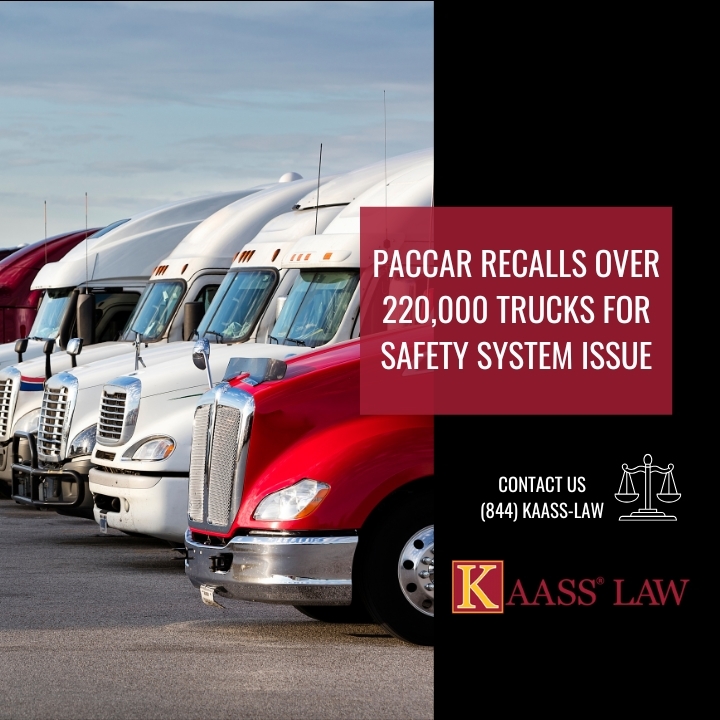
PACCAR Recalls Over 220,000 Trucks for Safety System Issue
Trucking is another level of safety and maintenance. Constant repairs and up-to-date systems are top priorities in the motor vehicles industry. When safety systems is the problem, the consequences are dire and can be far more dangerous than the problems of a normal car. PACCAR Inc., one of the largest manufacturers of big rig trucks, issued a recall for over 220,000 trucks due to a number of issues. “The commercial truck manufacturer is recalling 220,972 of its trucks for a loss of anti-lock braking systems (ABS) and electronic stability control. In the National Highway Traffic Safety Administration (NHTSA) recall report, PACCAR said the electrical noise and low signal to the power line carrier may cause the Electronic Control Units (ECU) to not process commands correctly and stop functioning.” Some of the safety systems are automatic traction control, anti-lock braking systems, electronic stability control, active cruise control, and collision mitigation systems. Here is the list of the following trucks in the question of the recall:
2024-2025 Kenworth C500b
$30,000 per accident for bodily injury or death
$5,000 for property damage
Starting in 2025, the limits will be:
$30,000 per person for bodily injury or death
$60,000 per accident for bodily injury or death
$15,000 for property damage
For the readers that aren’t familiar with these policies, these are the maximum limits you can get financially compensated on minimum coverage in the State of California. For instance, if another car, at fault, were to hit you, starting in the New Year, then you can only retrieve $30,000 in bodily injury. If someone else is in your car or there’s more than one passenger, then it would go up to $60,000 in total and not per person. Property damage is pretty self-explanatory.
Why Increase Coverage?
To keep it simple, the cost of medical care and repairs has gone up over the years. In California, the cost of healthcare, vehicle repairs, and vehicle replacement parts have is rising. This means that the previous minimum coverage limits were no longer enough.
What Does This Mean?
1. Better Financial Protection
This can help prevent you from being financially responsible for amounts that exceed your current coverage limits. This could otherwise lead to serious financial problems in the future.
2. Avoiding Financial Liability
Without enough coverage, you there is a risk of paying anything out-of-pocket for any remaining expenses. This could have long-lasting financial consequences.
3. Higher Property Damage Coverage
This can prevent you from having to pay the full amount out of pocket.
Assembly Bill 413
This particular bill “prohibits the stopping, standing, or parking of a vehicle within 20 feet of the vehicle approach side of any unmarked or marked crosswalk or 15 feet of any crosswalk where a curb extension is present, as specified.” The goal of this bill is to allow drivers to get a better view of potential bystanders crossing the street. If another vehicle is parked too close to the curb, then the risk of collision increases. Even if the curb isn’t red, please keep a respectful distance from the crosswalk.
Senate Bill 905
There was a loophole of breaking and entering that was only punishable when the doors of the vehicle were locked. Now, owners of the vehicle and or prosecutors don’t need to prove that it was locked but rather show that there was a forcible entry. This “bill would make it a crime for a person to unlawfully possess a property that was acquired through one or more acts of theft from a vehicle, unlawful entry of a vehicle, burglary of a locked vehicle, or vehicle tampering if the property is not possessed for personal use and the person has the intent to sell or exchange the property, or the intent to act with another person to sell or exchange the property…..”.
Senate Bill 1100
In addition to the California Fair Employment and Housing Act, “This bill would make it an unlawful employment practice for an employer to include a statement in various employment materials that an applicant must have a driver’s license unless the employer reasonably expects the duties of the position to require driving and the employer reasonably believes that satisfying that job function using an alternative form of transportation would not be comparable in travel time or cost to the employer, as specified.” In other words. Job postings cannot require job applicants to have a valid driver’s license unless the employer believes that the potential new employee has to drive to work. The employer would also need to reasonably believe that the applicant cannot use another form of transportation, i.e., walking, bicycling, taxi, Uber, Lyft, bus, etc.
Contact Us
If you believe you are in need of legal assistance and or representation, KAASS LAW has a well experienced team and attorneys ready to help! Do not hesitate to contact us right away! Once again, our goal is to better understand as California laws change throughout time. We always ask our clients and community to prioritize safety when behind the wheel or or as a bystander. If you ever got into a vehicle accident, here are a few pointers on what not to do. We cannot stress this enough but please try to stay watchful and alert to what is happening around you.
Drug rehab facilities have a legal and ethical duty to protect their patients under proper supervision. When abuse or assault happens, the center should be held legally liable for its failure in protecting the victim. The following are some common factors: Negligence Claims: Victims of sexual assault and or abuse can pursue legal action against the facility for negligence. If a location fails to properly control their staff, or provide adequate supervision, nor maintain a safe environment, it may be held liable and claim responsibility. Sexual Assault Lawsuits: If a staff member or another patient is responsible for the assault, a victim can pursue a lawsuit for damages under sexual assault laws. They can file and claim financial compensation for medical expenses, emotional distress, pain and suffering, and other matters that are relevant to the misconduct. Criminal Charges: Criminal charges can be brought against the perpetrator or group of predators for the abuse. Criminal prosecution is an important step in holding someone accountable for their wrongdoing. State and Federal Regulations: These rehabilitation facilities have regulations under the state of California, which include strict rules regarding patient safety and the treatment of vulnerable individuals. Violations can lead to sanctions, including fines, loss of accreditation, or even the closure of the facility. For victims, this legal framework can serve as a basis for pursuing justice.
What Should I Do?
If you or someone you know has been a victim of sexual assault or abuse at a drug rehab center, it is critical to take immediate action to protect your rights. Here are some steps that can be taken: Report the Abuse: Report the incident to the appropriate authorities within the rehab center, such as the facility’s management or its designated safeguarding officer. If you feel the staff is involved or unresponsive, contact local law enforcement or the state health department to report the abuse. Seek Medical Attention: Forensic examinations and medical evaluations are essential for documenting any physical evidence of sexual abuse. This can also help treat any potential injuries or infections caused by the assault. Consult an Attorney: Legal counsel is essential when pursuing justice. An attorney specializing in personal injury, sexual assault, or abuse can help victims understand their rights and navigate the legal process. They can also provide advice on pursuing civil litigation and seeking compensation for damages. Preserve Evidence: If you decide to take legal action, preserving any evidence is critical. This includes any communication, medical records, or physical evidence from the scene of the assault.
Contact Us
Sexual assault and abuse at drug rehab centers are serious violations that not only harm the victims but also undermine the integrity of the treatment process. It is crucial that these facilities need to hold themselves accountable for ensuring the safety and well-being of their patients. Victims of sexual assault or abuse in rehab centers should know that they have legal options and resources available to seek justice and support. By taking action and consulting with an experienced attorney, they can begin the process of healing and recovery while holding perpetrators and negligent facilities accountable. For any further assistance and or looking for legal representation, please reach out to KAASS LAW today!
Wrongful Termination: California law gives the employer the right to terminate any of their employees without cause. However, exceptions exist when that termination is a violation of public policy or statutory protections. If an employer were to terminate an employee after they filed a workers’ compensation claim or reported a workplace injury, that would fall under wrongful termination and is a violation of both CA law and public policy.
Fair Employment & Housing Act (FEHA):The California Fair Employment and Housing Act “provides protection from harassment or discrimination in employment because of age (40 and over), ancestry, color, creed, denial of family and medical care leave, disability (mental and physical) including HIV and AIDS, marital status, medical condition (cancer and genetic characteristics), national origin, race, religion, sex, and sexual orientation.” The employer must provide reasonable accommodations for treating you in order to be an effective employee instead of wrongfully discriminating and or terminating you.
Occupation Safety and Health Act Protections:California Labor Code § 6310 does not allow employers to retaliate against employees for reporting unsafe working conditions or workplace injuries. This law is another form of protection from wrongful termination.
What Should I Do?
In order to successfully make your claim for the mistreatment of your current or former employer, sufficient evidence must be provided to build your case. You would need to show that your termination was linked to your injury or workers’ compensation claim. For starters, you would need to request records of your workplace injury and medical treatments from whomever or wherever you saw for treatment. It is also important that if you are seeking treatment, you must successfully finish it to the best of your ability. Secondly, you have to get copies of your workers’ compensation claim and correspondence with your employer. Any work-related documents that are relevant to your injury and or wrongful termination are crucial. Thirdly, if applicable, try to get a witness statement about any form of retaliation or discriminatory behavior towards you. Lastly, try to get an employment record of your work history prior to the injury and then wrongful termination. This is an attempt to see your work ethic and potentially show your strong performance. If you were a hard worker or just an employee who got everything done without any issues at work, it wouldn’t make sense for your termination unless it was an act of retaliation and or discrimination towards you. These are the tools and methods for gathering and building our case. Your wrongful termination may be true, but you would need sufficient evidence to move forward with your claim.
Contact Us
KAASS LAW handles multiple claims such as workers’ compensation, wrongful termination, personal injury, and so on. It requires a deep understanding of California Law, which we’re invested in and understand completely. Our firm of experienced attorneys will thoroughly evaluate, assess, gather evidence, and aggressively advocate for your rights. We’re here to ensure you receive the compensation and justice you deserve! Take action now. CA laws are made to protect you, but there are deadlines if you need to file your claim. Don’t allow your employer to get away with unfair treatment against you or anyone else, for that matter. Unchecked injustices lead to more harm to the community around you. Your workplace injury should not be a detriment to your livelihood. Let our firm hold your employer accountable and help you move forward to financial recovery and provide some peace of mind.
A defect in Design: This happens when the product is inherently dangerous due to its design. Even if the manufacturer has made the design recently, it may present an unreasonable risk to its consumers. For example, if a brand new Tumblr were to overheat and burn the consumer due to how it was originally made, then it would fall under design defect.
Defect on Manufacturing: This occurs during the production or assembly process. For instance, for Stanley, the issue could be related to a flaw through their operating system. This could lead to potential injuries or dangerous consequences.
Failure to Warn: Cases where a product may be safe in design and manufacture, but it is not properly labeled, and the risks associated with its use are not made clear to the public.
California Code
The CA Code states that: "(1) The product is inherently unsafe, and the product is known to be unsafe by the ordinary consumer who consumes the product with the ordinary knowledge common to the community. (2) The product is a common consumer product intended for personal consumption, such as sugar, castor oil, alcohol, and butter, as identified in comment i to Section 402A of the Restatement (Second) of Torts. (b) This section does not exempt the manufacture or sale of tobacco products by tobacco manufacturers and their successors in interest from product liability actions, but does exempt the sale or distribution of tobacco products by any other person, including, but not limited to, retailers or distributors. (c) For purposes of this section, the term "product liability action" means any action for injury or death caused by a product, except that the term does not include an action based on a manufacturing defect or breach of an express warranty."
What Should I Do?
If you purchased a recalled Stanley Cups or any other potentially defective product, here are some options to consider:
Verify the Information: Review the details of the recall and see if your purchased product is relevant.
Stop the Product: If your purchased product is recalled due to it being a defect, stop using the product. Immediately ceasing the usage is to prevent any potential injuries and or harm onto yourself.
Return or Exchange: Research and assess how to return or exchange the defective product. You may possibly get a financial refund.
Seek Legal Consultation: Reaching out to an attorney regarding this matter is one of the best solutions for legal options.
Why Does This Matter?
With the recent news of the Stanley Cup recall, our goal here at KAASS LAW is to provide awareness about the product you or your loved ones are purchasing. Being a conscious consumer is very important. If these products can potentially have a harmful impact on yourself and or the community, you should know about it. The Stanley Cup recall serves as a reminder of the importance of product defect liability laws. When manufacturers fail to meet safety standards, the legal system is there to hold them accountable. This ensures that consumers have recourse if this affects them in any way. For any further assistance and or seeking legal representation, please contact us right away!
Hip replacement surgery, also called hip arthroplasty, is a common procedure performed after a hip fracture, especially in older adults. The surgery replaces a damaged hip joint with a prosthetic one. The procedure is the last option after other treatments, such as medication or physical therapy, aren’t as effective in resolving the pain and or mobility. The recovery process post-surgery can be very lengthy, and it takes a few days in the hospital to recover through rehabilitation. It can last from a few days to a couple of weeks to regain strength and mobility. It is not uncommon for patients to use walkers or crutches during their recovery or ever afterward, based on their circumstances.
Psychological Aspect
On top of the physical toll that a broken hip and surgery can have on a person, there can also be a psychological effect that is onto them as well. The fear of falling again is a common thought to bear among those who have experienced a traumatic event of a fall, and it can lead to decreased confidence in physical activities. This fear can sometimes result in a reduced quality of life. Individuals will likely avoid certain everyday habits and or chores they would normally do around the house or somewhere outdoors. In addition, someone recovering from sugaring is emotionally taxing. Patients would normally feel frustrated, anxious, or depressed as they struggle with limitations during their recovery. These are serious factors in someone’s mental health.
Preventing This Moment!
Here’s the thing: accidents are there for a reason: they happen unintentionally! However, there are steps to take in order to reduce the risks of falling, slipping, tripping, and or eventually getting a hip replacement due to it. Here are some key points from allowing it to not happen:
Home Safety Equipment: Loose rugs, electrical cords, or clutter from walkways is an important step in preventing these accidents from occurring. Grab bar installations near the bed or bathrooms is a great way to reduce the risk of accidents. Establishing a well lit staircase is also just as important.
Regular Exercise: Try to stretch and work out to the best of your ability! Yoga, swimming lessons, Tai Chi, or resistance training are quite beneficial for older adults and elders.
Footwear: Proper shoes go a long way in preventing slip & falls from happening! Consider buying non-slip shoes and avoid wearing high heels or sandals as best as you can.
Glasses and hearing aids: If someone with impaired vision or hearing, this can increase their chances of being at risk of an accident! Make sure to get the proper subscription for either of the two, or both. Getting a hearing or eye examination on a regular basis is a great way to correct your balance.
Contact Us
While Nancy Pelosi has great access to treatment and we wish her a speedy recovery, this may not apply to you. Allow this to be a reminder that slip & fall accidents are a serious issue. If you believe that your accident was due to someone else’s negligence or believe that your treatment was mishandled, KAASS LAW is here to help! Please reach out to us for any further assistance or potential legal representation.
3. Failing to Call the Police: An Accident Mistake You Can’t Afford
Failing to call the police is a significant accident mistake. Even in minor accidents, a police report provides an official record, which is valuable when filing an insurance claim or a legal case. California law requires you to report any accident resulting in injury, death, or property damage exceeding $1,000 to the DMV within 10 days. Without a police report, you risk losing important documentation that could support your claim. Request a copy of the police report for your records and refer to it during your claim process. Find out how to obtain a police report in California.
4. Do Not Refuse Medical Attention
A common accident mistake is declining medical attention. Even if you feel fine, some injuries, like concussions or internal damage, may not be immediately noticeable. Delaying medical treatment can impact your ability to seek compensation, as insurance companies may argue that your injuries were not caused by the accident. Always seek medical attention after an accident and keep records of all treatments. These documents will be essential when filing your claim. Check the importance of medical documentation in personal injury claims.
5. Do Not Fail to Gather Evidence
Failing to gather evidence at the scene is another common accident mistake. Evidence is critical for building a solid case. Try to take photos of the accident site, vehicle damage, and any visible injuries. Collect contact information from any witnesses, as their statements could be valuable in proving your side of the story. Also, gather details such as the other party's insurance information, license plate number, and driver’s license. This will be useful for both insurance purposes and potential legal proceedings.
6. Do Not Speak to the Other Party’s Insurance Company Without Legal Representation
One of the biggest accident mistakes is speaking to the other party’s insurance company without legal representation. Their goal is to minimize the payout, often leading them to push for a quick, lower settlement. Do not provide recorded statements or sign any documents without consulting an attorney. A skilled lawyer, like those at KAASS LAW, can ensure you are not tricked into accepting an offer far less than you deserve. Contact KAASS LAW for expert personal injury assistance.
7. Do Not Post About the Accident on Social Media
Sharing details about the accident on social media is a critical accident mistake. Anything you post can be used against you. If you claim injuries but post pictures of yourself engaged in physical activities, the opposing party may argue that your injuries are not as serious as you claim. To protect your claim, avoid discussing the accident, your injuries, or any legal proceedings on social media. Read more about how social media can affect your personal injury case.
8. Do Not Accept a Quick Settlement
Accepting a quick settlement is another common accident mistake. Insurance companies may pressure you into settling quickly, often offering far less than what you deserve. A rushed settlement may not account for long-term medical treatments or other damages that have not yet been fully realized. Be patient and allow your attorney to negotiate a fair settlement that covers all your losses, including future medical expenses and lost earnings.
9. Do Not Delay Filing a Claim
Delaying the filing of your claim is a serious accident mistake. Each state has specific statutes of limitations for personal injury cases. In California, the statute of limitations is two years from the date of the accident. Failing to file within this time can result in losing your right to recover compensation. It’s essential to begin the process as soon as possible, ensuring evidence is preserved and witnesses are available. Learn more about California's statute of limitations.
10. Do Not Go Without Legal Representation
Perhaps the most costly accident mistake is attempting to handle the case without legal representation. Navigating the legal process alone can lead to mistakes, lower compensation, or even losing your case. An attorney can help you understand your rights, negotiate with insurance companies, and represent you in court. At KAASS LAW, we specialize in personal injury cases and have extensive experience helping clients recover the compensation they deserve after an accident. Contact our experienced attorneys today.
Conclusion: Avoiding Accident Mistakes
Knowing what accident mistakes to avoid is just as important as knowing what steps to take after an accident. By steering clear of these common errors, you can protect your rights and improve your chances of a successful claim. If you’ve been involved in an accident, having an experienced legal team like KAASS LAW by your side can make a significant difference. For more information on how to handle accidents and claims, refer to resources provided by the California Department of Insurance, which offers guidelines on claims and your legal rights.
Safety Standards: The HVAC system installation is in a way that meets all local, state, and federal regulations.
Environmental Code: Adhering to guidelines about energy efficiency and sustainability.
Proper Installation: Ensuring the system is correct in size, installed, and calibrated to avoid issues. Improper ventilations can lead to carbon monoxide poisoning.
Hiring anyone unlicensed and unqualified means you may be putting your home, family, and your legal rights at risk. It is better to hire an actual licensed HVAC contractor to ensure proper handling of your house. Installing Carbon Monoxide Detectors is also important. They can easily sound an alarm when dangerous levels are present. Regular maintenance and inspections should be on your schedule at all times. Having proper ventilation goes without saying. Contractors should make sure the system’s exhaust vents are proper and free from obstructions. If your HVAC system is built otherwise, it could be putting you and your surroundings at risk of CO buildup.
Legal Consequences
If a contractor performs a faulty HVAC installation that leads to carbon monoxide poisoning or any other issues, homeowners may have the proper scope to pursue a lawsuit. This also applies to anybody who was a guest at a hotel or someone else’s house. Here are a few potential options:
Breach of Contract: If a contractor with a valid license fails to meet the terms of the contract, you could make a claim that there is a compromise on the contract. For instance, if the contractor’s installation was leading to dangerous conditions, you might be able to seek compensation for damages.
Negligence: Contractors have a duty to perform their work with complete competence and reasonable care. Failure to do so and installation of the HVAC system in an improper fashion will carry harmful effects and risks. Contractors can be held liable for damages, including medical expenses from CO poisoning or the cost of repairing or replacing the system. Emotional distress can also be a factor with all of this going on.
Insurance Claims: Cases where lack of proper installments can lead to CO poisoning, homeowners can file homeowner or health insurance if applicable.
Filing a Complaint: If the contractor violated the safety standards, homeowners can file a complaint with the state licensing board or consumer protection agency. This gives the ability to help prevent other homeowners from falling victim to unsafe practices.
CO poisoning happens very often within a household, but it is also worth mentioning that this can happen to anyone, anywhere. Sometimes, your work environment, hotels, shopping malls, schools, grocery stores, or even a theater can potentially have these risks. There are plenty of ways and factors that need consideration, so always try to be aware of your surroundings as best as you can.
Don’t Risk It!
The HVAC system is a critical process that requires skill, experience, intelligence, and proper licensing. Anyone who doesn’t have any of the four, or none at all, is not worth risking your life over for a cheaper deal. Hiring a licensed HVAC contractor, maintaining your system, and installing carbon monoxide detectors can help protect your family from the dangers of CO poisoning. If something goes wrong, legal action can be taken. Here at KAASS LAW, we are familiar with this matter and can represent homeowners or anyone who was the victim of CO poisoning.
2. Photographs and Video Footage as Strong Injury Evidence
Visual evidence can be one of the most persuasive elements in a slip-and-fall case. Photographs and video footage capture the accident scene and show hazardous conditions, such as spills, broken stairs, or uneven surfaces, that may have caused your fall. Why it’s essential: Photographs and videos can provide indisputable injury evidence of unsafe conditions. They allow you to demonstrate the state of the property at the time of the accident, preventing the property owner from disputing the hazard's existence or claiming it was promptly addressed after your fall. What to do: Take photos or videos of the area where you fell immediately after the incident. Focus on capturing what caused the fall, such as a wet floor, clutter, or poor lighting. If the property has security cameras, request that footage be preserved before it’s overwritten or deleted.
3. Medical Records: Key Injury Evidence
After any slip and fall, seeking medical attention as soon as possible is crucial. Even if you think your injuries are minor, symptoms may worsen over time, and early medical intervention could prevent complications. Medical records are key injury evidence in showing the severity of your injuries and their connection to the fall. Why it’s essential: Medical records document the nature and extent of your injuries and the treatment you received. These records validate your claim and help quantify damages, such as medical bills and ongoing care needs. What to do: Visit a doctor or healthcare provider as soon as possible after your fall, and follow all recommended treatment plans. Keep detailed records of your medical visits, prescriptions, physical therapy, and any related expenses. These documents will be critical in proving your injuries and the costs of your recovery.
4. Witness Statements: Supporting Injury Evidence
If there were any witnesses to your slip and fall, their testimony can significantly bolster your case. Witnesses provide an unbiased account of what happened. They may be able to corroborate your version of events, such as the presence of a hazardous condition or the property owner’s failure to address the problem. Why it’s important: Witnesses offer independent confirmation that the property was unsafe and that your actions didn’t cause your fall. In cases where there’s a dispute over liability, witness testimony can help clarify how the accident occurred. What to do: Get the names and contact information of anyone who saw your fall or noticed the hazardous condition. Ask them to provide a written or recorded statement describing what they saw.
5. Expert Testimony: Strengthening Your Case with Injury Evidence
Expert testimony can be precious in some slip-and-fall cases, particularly those involving complex safety issues or building codes. Experts in fields like safety, engineering, or medicine can offer professional opinions on whether the property owner acted negligently or if specific conditions contributed to your fall. Why it’s crucial: Experts lend credibility to your claim by providing objective, fact-based analyses of the hazard and its potential to cause injury. Their testimony can clarify technical issues, such as whether a surface was too slippery or a handrail was improperly installed. What to do: Your personal injury lawyer will help determine if expert testimony is necessary and coordinate with qualified professionals to strengthen your case.
6. Maintenance and Inspection Records: Additional Injury Evidence
A key aspect of proving negligence in a slip and fall claim is showing that the property owner either knew about the hazard or should have known about it but failed to take appropriate action. Maintenance and inspection records can reveal whether the property owner regularly checks the premises for hazards and promptly addresses any issues. Why it’s important: These records can demonstrate whether the property owner had a history of neglecting maintenance or was aware of a specific hazard before your fall. If the owner fails to take reasonable steps to prevent accidents, these records could help establish liability. What to do: Your attorney can request maintenance and inspection logs during the discovery phase of your case. This evidence is especially important if the hazardous condition was not immediately obvious or if the property owner claims they were unaware of the problem.
7. Comparative Negligence Defense: Countering Claims with Injury Evidence
California follows a comparative negligence system in personal injury cases, meaning that your compensation may be reduced if you’re found partially responsible for the accident. The property owner’s legal team may argue that you were texting while walking, wearing inappropriate footwear, or not paying attention. Why it’s essential: The defendant’s legal team will likely try to shift some of the blame to you to reduce their liability. Strong injury evidence to counter these claims can help you receive fair compensation. What to do: Work with your attorney to gather evidence demonstrating you acted reasonably during the accident. Witness testimony, video footage, and a detailed account of the incident can help refute the comparative negligence defense.
8. Legal Guidance: Why You Need an Experienced Attorney
Slip and fall cases can be complex, mainly when gathering and presenting evidence. An experienced personal injury lawyer can help you navigate the legal process, ensure crucial injury evidence is preserved, and advocate to maximize your settlement. Why it’s important: A skilled attorney can determine the best legal strategy for your case, from negotiating with insurance companies to taking the case to trial if necessary. Your lawyer will also be able to counter any arguments that the property owner’s legal team may present, such as claims of comparative negligence or disputing the severity of your injuries. If you’ve been injured in a slip-and-fall accident, don’t wait to seek legal advice. KAASS LAW can help you collect the required injury evidence to build a strong case and fight for the compensation you deserve. Contact us today for a free consultation and learn how we can assist with your slip and fall claim. For more details on maintaining a safe environment and preventing slip-and-fall accidents, check out the Occupational Safety and Health Administration (OSHA) website for valuable safety resources.
At KAASS LAW, we understand how important it is for businesses and individuals to be informed about product recalls and the legal implications they may face as a result. In the following, we explore further the recall and bring awareness to fleet owners and how affected these parties can take steps to protect themselves legally.
The Impact on Truck Recalls
When manufacturers issue a recall for a vehicle, it can have a wide range of effects on both truck drivers and businesses that rely on this equipment. For drivers alone, a malfunctioning braking system can lead to major disasters such as accidents, injuries, and or fatalities. From a business standpoint, the recall may create a line of logistical and financial challenges. Here are some key points to consider:
Risk of Accidents: The most important factor in recalls is the potential risk of accidents. If a malfunctioning braking system compromises the truck, it limits the truck’s ability to stop effectively, which increases the chance of getting into an accident, particularly in high-stress-driving conditions like emergency braking situations or when the truck is at a steep decline.
Financial and Logistical for Business: Operations that depend on PACCAR trucks, recalls can create major setbacks and challenges. People who own fleets or solo owner operators would have to adapt or prepare to afford any expenses while they’re dealing with delays on repairs on their trucks.
Legal Consequences & Liability: When safety defects like this are identified, there are potential legal matters for both manufacturers and businesses that use the vehicle in question. Producers of the vehicle have a legal responsibility to ensure that their products are safe to the community and defects are taken care of in a timely manner. If a company continues to operate trucks with known safety issues, it may face legal actions from injured parties such as truck drivers, passengers, or others involved in a collision caused by the malfunction.
What Should You Do?
Firstly, it is important to check if your equipment is part of the recall order. If the manufacturer announces a notice, you can verify with your dealership if your truck needs to be a recall. There is also a possibility to check through an online portal if applicable. Secondly, scheduling repairs should always be something that needs to be done regardless of the situation. PACCAR can provide free software updates and or repairs if relevant to the recall. Thirdly, in the event of a truck being a recall, you have to notify the insurance company. This can be a game changer if you ever have to go through an insurance claim with them. Lastly, for business purposes, it never hurts to seek legal consultation. If you need to cover some grounds for protecting your operations, seek legal help. This also applies to personal injury claims as well.
Why is this Important?
With the recent recalls being announced from PACCAR of over 220,000 trucks, it is important to spread awareness on safety and vigilance in the trucking industry. Where you are a truck driver, fleet owner, or stakeholder in the industry, taking prompt action to address this matter is key to further avoiding any accidents and minimizing legal or financial risks. KASS LAW understands the importance of the complexities surrounding product recalls and potential consequences. If you have been impacted by this and/or any other relevant recall, please feel free to contact us right away! We can do our best to provide some type of consultation or legal representation!