Selecting the appropriate car insurance coverage is an important decision that impacts your financial security and legal protection. While California has minimum insurance requirements, they may not always provide sufficient protection.
The Minimum Auto Insurance Requirements in California
California law requires drivers to carry minimum liability limits of:
$15,000 for injury or death to one person
$30,000 for injury or death to two or more people
$5,000 for property damage
However, these limits are often inadequate for serious accidents. For instance, if you severely injure another driver, the $15,000 limit might not cover all of their medical expenses. Therefore, it is usually wise to increase your liability limits.
Assess Your Risks and Needs
Before choosing a policy, you need to evaluate your personal risks. For example, if you drive on congested Los Angeles highways every day, you are more likely to be in an accident. It's also important to consider the following:
The driver's age and years of experience
The type and value of the vehicle
Financial stability
Even with low mileage or an older car, insurance with higher limits can protect against significant losses.
Mandatory and Optional Coverages
In addition to the required liability coverage, there are other types of auto insurance that may be helpful.
Uninsured Drivers Insurance Although auto insurance is mandatory in California, some drivers ignore this requirement. This coverage helps cover your losses if the person responsible for the accident does not have the right policy
Comprehensive and partial coverage
Comprehensive coverage protects against damage from theft, vandalism, fire, and natural disasters
Partial coverage includes collision and comprehensive coverage. Collision coverage pays for damage to your car in a collision, regardless of who was at fault
These options are especially relevant for owners of new or expensive cars. Read "Difference Between Civil and Criminal Negligence" to learn more about the differences between civil and criminal negligence in the context of a car accident.
How do You Compare Insurance Quotes?
When choosing an insurance company, it is important to consider not only the price but also:
A deductible is the amount you pay out of pocket before your insurance coverage begins. A higher deductible means a lower premium but also more personal risk. Ideally, choose a deductible that you can afford in the event of an accident. Also, always check the payout limits. Some policies may have hidden limits on certain categories of losses, so it's important to consider this in advance.
What Should You Consider if You Have a Car Loan or Lease?
If you lease or purchase a car on credit, the bank or leasing company may require certain types of insurance, including comprehensive coverage. Gap insurance, which covers the difference between the market value of the car and the balance of the loan, is fairly common. Gap insurance protects you from financial loss in the event of a total loss of the car. To avoid penalties and payment problems, it is important to comply with the lender's or leasing company's requirements.
The Legal Aspects of Disputes with Insurance Companies
Even if you choose a quality auto insurance policy, disputes with the insurance company can arise, especially in the event of a serious accident or large payout. Insurance companies may:
Delay payouts
Underestimate the amount of reimbursement
Deny coverage altogether
In such cases, it is recommended that you immediately consult an attorney who specializes in insurance law. California has a "good faith" insurance principle that requires insurers to act honestly and in the best interest of their policyholders. If an insurance company violates this principle, a bad faith claim can be filed. In such situations, the injured person can claim full compensation and additional damages. To prove bad faith, it is important to gather documents and evidence showing the insurance company's behavior.
The Impact of Credit History on Auto Insurance Rates
In California, the use of credit history to calculate insurance rates is restricted. However, insurance companies sometimes use financial data to assess risk. Therefore, it is important to maintain financial discipline by:
Paying bills on time
Having no debts
Having a stable income
These will all help lower the cost of the policy.
Temporary Policies and Short-Term Coverage
Some drivers are interested in purchasing short-term insurance, especially if they:
Renting an automobile
Have a temporary residence in California
Seasonal auto use
These policies do exist, but it is important to ensure they meet the minimum legal requirements and cover potential risks.
How Can You Avoid Having Your Payment Denied?
To minimize the probability of an insurance claim being denied, you should:
Always provide accurate information when applying for a policy
Keep all documents related to the accident
Notify the insurance company immediately after an accident occurs
Do not sign any documents without consulting a lawyer first
Consulting to a lawyer in a timely manner can prevent financial losses and shorten the dispute settlement period.
How KAASS LAW Can Help?
Having legal support for auto insurance is essential to protecting your rights and financial interests. At KAASS LAW our experienced lawyers can help you:
Understand the ins and outs of insurance policies and find the best coverage for you
Evaluate the adequacy of liability limits based on your lifestyle and finances
Protect your interests when insurance payments are denied or delayed
Prepare and file claims against the insurance company in the event of unfair handling of your claims
Represent you in court and during negotiations to achieve the most favorable outcome possible
We understand that auto insurance issues can be complex and confusing. Therefore, the KAASS LAW team is always ready to provide professional advice.
Conclusion
Selecting the best auto insurance requires considering many factors. It is important not only to meet the minimum legal requirements but also to protect your assets. If you are unsure which coverage is right for you, it is highly recommended that you consult with an experienced attorney. Contact us if you need legal advice regarding auto insurance, liability, or car accidents. Call 844-522-7752 for a free consultation, our experienced lawyers can help you choose the right strategy. [video width="1920" height="1080" mp4="https://kaass.com/wp-content/uploads/2025/06/Selecting-the-right-auto-insurace-policy-in-california-is-essential-for-your-lrgal-and-financial-protection-1.mp4"][/video]
Motorcycle and bicycle accidents can result in devastating injuries. For injured bikers, the road to recovery often includes not just medical treatment but also navigating complex insurance claims. If you're an injured biker in California, it’s important to understand your rights and how the claims process works, because what you do immediately after the accident can make or break your case.
At KAASS LAW, we represent injured bikers who have been hurt due to the negligence of others. Our experienced personal injury attorneys help clients pursue the compensation they deserve, whether through insurance negotiations or litigation.
Why Insurance Claims Matter for Injured Bikers
After an accident, filing an insurance claim is often the first step toward financial recovery. Medical bills, lost wages, property damage, and pain and suffering can add up quickly. If the other party is at fault, their insurance company may be responsible for covering your damages.
However, insurance companies are not always eager to pay. That’s why injured bikers need to understand how to file a strong claim, what evidence is needed, and what tactics to watch out for.
Receiving a denial for your VA disability claim can be both frustrating and disheartening. However, you are far from alone. Many veterans experience initial denials, even with clear, service-connected disabilities. The good news is that denial is not the end of the process.
Several appeal paths are available to help you pursue the benefits you deserve.
At KAASS LAW, we are committed to supporting veterans throughout California. If your disability claim was denied, we are here to help you understand your rights, strengthen your appeal, and work toward a successful outcome.
Why Was Your VA Disability Claim Denied?
To begin with, it's important to understand why the VA denied your disability claim. In most cases, denials happen due to:
Cities in California are teeming with life. While the energy of a city is precisely what makes cities so exhilarating, it is also incredibly hazardous for all drivers, especially at intersections. These places where roads intersect are common places for car accidents. Where numerous streams of cars, pedestrians, and bicycles intersect, the odds of collision multiply exponentially. Some crossings earn a reputation for being particularly hazardous due to high accident rates or specific challenging features. Understanding what makes certain crossings some of the most Dangerous California Intersections is the first step toward safety. This article will discuss factors that contribute to these risky spots, highlight examples noted in reports, offer safety tips, and explain your legal rights if an injury occurs. These are usually preventable accidents. If pedestrians and motorists alike respect traffic regulations and establish safer habits, our city streets can be safer. Having knowledge of legal obligations does impact.
Why Are Some Intersections So Risky?
Several elements can combine to make an intersection particularly prone to accidents. These combined factors often define what makes many so hazardous:
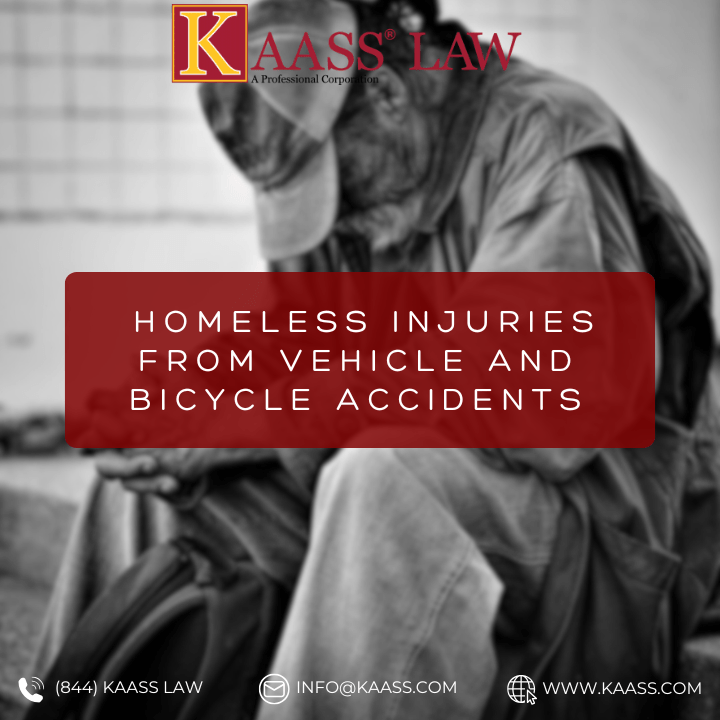
Every year, countless vulnerable individuals face severe risks on the streets. Among these, homeless injuries caused by vehicles and bicycles remain an alarming and often overlooked problem. Homeless people, who already endure difficult living conditions, are disproportionately exposed to harm when hit or run over by motor vehicles or bicycles. At KAASS LAW, we are committed to advocating for the rights of these victims and ensuring they receive the justice and compensation they deserve.
The Reality of Homeless Injuries in Urban Areas
The homeless demographic is especially at risk for injuries involving vehicles due to their constant presence near roadways, highways, and urban centers. Many homeless individuals walk along busy streets, sleep on sidewalks, or take shelter near traffic-heavy areas. This constant proximity significantly raises the chance of pedestrian accidents.
Additionally, bicycles—especially in cities with dense bike lanes and popular bike-sharing programs—pose another unexpected hazard. While cyclists are generally cautious, accidents involving bicycles and pedestrians can cause serious injuries, particularly when the pedestrian is homeless and may not have access to immediate medical care.
On May 30, 2025, the U.S. Supreme Court granted the Department of Homeland Security's emergency petition. The court gave the Donald Trump administration the power to terminate the temporary legal status granted to over 500,000 immigrants. This decision affects citizens from the following countries:
Cubans
Haitians
Nicaragua
Venezuela
These countries are home to individuals under the CHNV parole program, which has been in place since 2022.
How Did the CHNV Parole Program Come About?
In 2022, Secretary of Homeland Security Alejandro Mayorkas launched the program. It offered a two-year humanitarian stay permit to citizens of countries experiencing instability. This measure responded to the growing number of immigrants at the border with Mexico. The program allows applicants to:
Learn how to recognize signs of a staged car accident in California. Discover red flags, what to do, and how KAASS LAW protects you from insurance fraud.
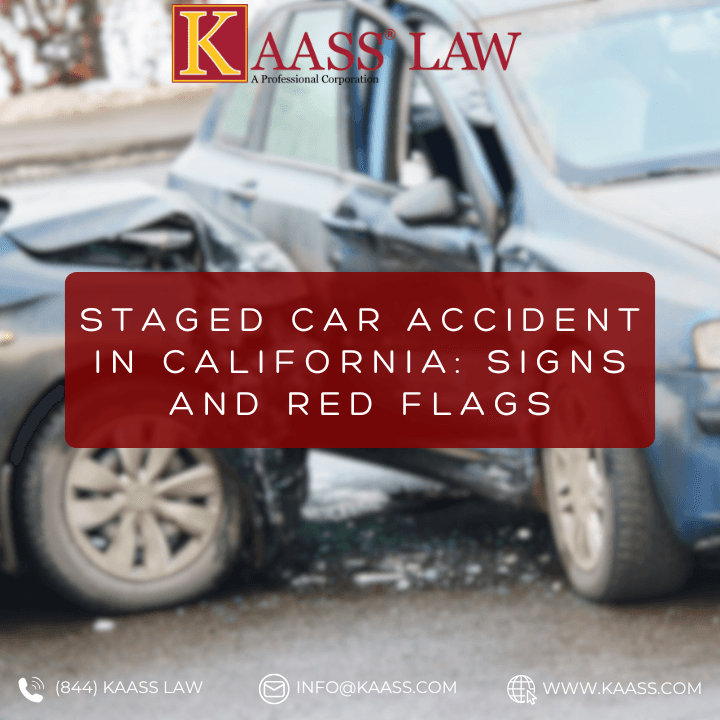
Car accidents can be stressful and overwhelming. However, some crashes are not accidents at all—they’re planned setups known as staged car accidents. These deceptive events are orchestrated by individuals or organized groups aiming to commit insurance fraud. If you fall victim to one, you could face financial loss, legal issues, and damage to your driving record.
At KAASS LAW, our California attorneys help clients recognize and fight back against staged car accident schemes. Being able to spot the signs early can make all the difference.
What Is a Staged Car Accident?
A staged car accident involves intentionally causing a crash to make it appear accidental. The goal? To file false insurance claims for injuries, vehicle damage, and medical treatments. Often, the perpetrators choose targets who drive newer vehicles or who appear to carry comprehensive insurance coverage.
Fraudsters may act alone or work with accomplices, including passengers, fake witnesses, corrupt auto repair shops, and even unethical medical providers. These networks collaborate to make the incident look legitimate and to maximize insurance payouts.
Burn victims in California may be entitled to compensation after fire, propane, chemical, or gas-related accidents. Learn how KAASS LAW can help.
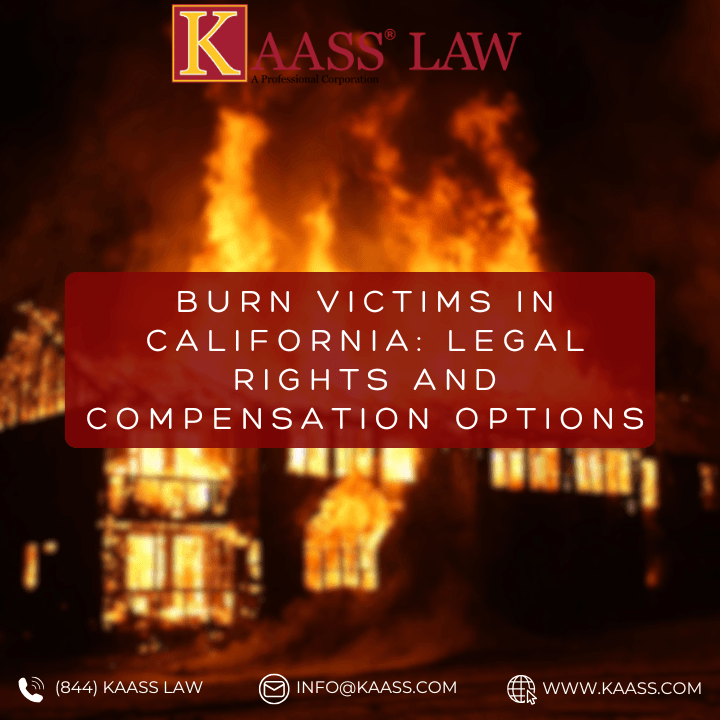
Burn injuries are some of the most devastating and traumatic injuries a person can suffer. For burn victims, the physical pain is only the beginning. Many face long-term medical care, lost wages, emotional trauma, and permanent scarring. In California, if your burn injury was caused by someone else’s negligence—such as a gas leak, chemical spill, or propane tank explosion—you may be entitled to financial compensation.
At KAASS LAW, we represent burn victims throughout California and work tirelessly to hold negligent parties accountable. Whether your injuries were caused by a faulty product, unsafe property conditions, or a workplace incident, our team is here to help you recover.
What Causes Burn Injuries? A Guide for Burn Victims
Burn injuries can result from many different types of incidents. Some of the most common include:
1. Fires and Explosions
House fires, vehicle fires, or explosions from appliances or gas lines often lead to severe burns. Faulty wiring, unattended stoves, or defective smoke detectors can increase the danger.
California's coastal regions have traditionally been considered relatively safe from wildfire. However, meteorologists and climatologists, including UCLA experts, are warning of abnormal warming along the coast in 2025. Climatologist Daniel Swain noted that summer and fall could be "significantly warmer" along the California coast once May's cloudy weather ends. This creates a worrisome prospect: Fire season could spread to new areas, including densely populated coastal cities. These conditions necessitate reviewing legal strategies for property protection and possible compensation for damages caused by natural disasters.
Reasons for Increased Fire Danger in 2025
According to the National Interagency Fire Center, heat and the rapid melting of snow cover cause vegetation to dry out. This creates ideal conditions for fires to spread. Southern California is experiencing a deficit in precipitation, and temperatures in the Central Valley are already reaching 100°F, including:
Toyota has announced a recall of over 443,000 Tundra and Hybrid vehicles from 2022 to 2025. The recall is due to the potential for moisture to enter the rear light units, which could cause them to malfunction. This reduces visibility when backing up and provides no light indication to other road users, increasing the risk of traffic accidents. According to a May 19, 2025, notice to the U.S. National Highway Traffic Safety Administration (NHTSA), moisture can damage the electrical contacts inside the reversing units. This can cause one or both taillights to fail. Failure of the lighting systems is a serious defect, especially when maneuvering at night or in limited visibility conditions.
Which Toyota Vehicles are Subject to the Recall?
As of May 2025, the following models are included in the recall:
The 2022–2025 Toyota Tundra
The 2022-2025 Toyota Tundra Hybrid
It is important to note that the listed models include both gasoline and hybrid versions. Vehicle owners on the recall list can receive free repairs from an authorized Toyota dealer.
Consequences of the Malfunction
What to Do Immediately After a Bike Crash
Whether you were on a motorcycle or a bicycle, your first priority should be your safety. Once immediate medical needs are addressed, take the following steps:
Call the police and file an official report.
Take photos of the accident scene, your injuries, the vehicles or bike, and the surrounding area.
Exchange contact and insurance information with the other party involved.
Gather witness information, including names and phone numbers.
Seek medical attention, even if you don’t feel injured right away.
Notify your own insurance company as soon as possible.
These actions will help support your insurance claim and create a clear record of what happened.
How Insurance Companies Evaluate Claims from Injured Bikers
Insurance adjusters will assess your claim based on several key factors:
The police report and official documentation
Medical records and bills
Statements from witnesses
The level of property damage
Your own statement about the incident
Although this process may seem straightforward, adjusters often try to minimize your compensation. They may argue that you were partially at fault or that your injuries are less serious than claimed. This is why injured bikers should avoid giving recorded statements without first consulting an attorney.
Common Pitfalls to Avoid When Filing a Claim
When it comes to dealing with insurance companies, what you don’t know can hurt you. Injured bikers should be cautious of the following missteps:
Admitting fault, even casually
Delaying medical care, which may appear as if the injury is not serious
Settling too early, before you know the full extent of your injuries
Not keeping records, including photos, receipts, and appointment summaries
Relying on the insurance company to act in your best interest
These common mistakes can significantly reduce your potential compensation or result in a denied claim.
What Compensation Can Injured Bikers Recover?
Depending on the nature of the accident and the severity of your injuries, you may be entitled to several types of compensation, including:
Emergency medical expenses and ongoing treatment
Lost wages or diminished earning capacity
Pain and suffering
Property damage to your bike or gear
Emotional distress
Loss of enjoyment of life
In certain cases, punitive damages may also be awarded if the at-fault party acted with extreme recklessness or malice.
Filing a Claim with Uninsured or Underinsured Motorists
California law requires drivers to carry liability insurance, but not all do. If the person who caused your crash lacks adequate coverage, your own uninsured/underinsured motorist coverage may come into play. This type of claim is often complex and may still involve disputes over the value of your injuries.
KAASS LAW helps clients navigate these challenging claims and ensures their own insurance companies don’t shortchange them.
When Should You Contact a Personal Injury Attorney?
While it’s possible to file a claim without legal help, doing so can be risky. Injured bikers face serious medical and financial consequences after an accident, and insurance companies have teams of professionals working to protect their interests, not yours.
In California, the statute of limitations for most personal injury claims is two years from the date of the accident. However, if the injury involves a government entity—such as a defective road or city vehicle—you may only have six months to file a notice of claim.
Acting quickly helps preserve your rights and ensures you don’t miss critical legal deadlines.
Recovering after a bike accident can be a long and painful process. Medical bills, emotional stress, and insurance hassles only add to the burden. Fortunately, you don’t have to face it alone.
If you or a loved one has been hurt in a crash, contact KAASS LAW for a free consultation. Our team is ready to stand up for injured bikers and ensure your rights are protected every step of the way.
KAASS LAW – Protecting California’s injured bikers, one case at a time.
Although these reasons may seem final, many of them can be addressed during the appeal process. Therefore, understanding the specific reason behind your denial is essential.
Step 1: Carefully Review the Denial Letter
First and foremost, read the VA's decision letter in detail. This letter—called the Rating Decision—explains the VA’s reasoning. Specifically, it outlines what medical and service records were considered, what rating (if any) was assigned, and why the disability claim was not approved.
This letter often contains the clues needed to build a successful appeal. If anything is unclear, do not hesitate to contact an attorney familiar with VA procedures. At KAASS LAW, we are happy to review denial letters and explain your legal options.
Know Your Appeal Options After a Denied Disability Claim
Since 2019, the VA has used a new system for appeals under the Appeals Modernization Act (AMA). As a result, veterans now have three options for challenging a denied disability claim:
1. Supplemental Claim
This option is ideal if you have new, relevant evidence. For example, you might submit updated medical records or expert opinions that weren’t included in your original claim.
2. Higher-Level Review
Alternatively, you can request that a senior VA claims reviewer re-examine your file. Although you can’t add new evidence here, you may request a phone conference to explain where the original decision went wrong.
3. Board Appeal
Finally, you can appeal directly to the Board of Veterans’ Appeals. Depending on your choice, you can either submit new evidence, request a hearing, or ask for a direct review with no new materials.
Each path has pros and cons. Thus, it’s important to select the approach that aligns best with your circumstances. At KAASS LAW, we help veterans assess their options and choose a strategy tailored to their case.
Strengthening Your VA Disability Claim With New Evidence
In many situations, submitting additional evidence can turn the tide in your favor. Some examples of helpful evidence include:
Independent medical evaluations (IMEs)
Statements from fellow service members or family
Updated medical reports or diagnostic tests
Service logs or incident reports
Moreover, you should clearly connect this evidence to your service history and current disability. A well-supported claim is much more likely to succeed on appeal.
Don’t Miss Critical Deadlines for Your Disability Claim
Timing matters. You typically have one year from the date of your denial letter to file an appeal. After that, your claim may be permanently closed unless you can reopen it with new evidence.
Because these deadlines are firm, it’s essential to act quickly. Partnering with an attorney ensures that all paperwork is completed accurately and filed on time.
How KAASS LAW Supports Veterans With Denied Disability Claims
Facing a denied disability claim can be overwhelming, especially when you’re already dealing with a serious medical condition. That’s where we come in.
At KAASS LAW, we offer:
Personalized legal advice based on your denial
Assistance with choosing the right appeal track
Help in obtaining and submitting new evidence
Representation during hearings before the VA Board
With decades of experience in administrative and injury law, our attorneys are ready to guide you every step of the way. Visit our Veterans Benefits Claims page to learn more about how we serve veterans in California.
FAQs About VA Disability Claims and Appeals
Can I hire an attorney to help with my appeal?
Yes, and doing so often increases your chances of success. An attorney can spot errors, gather compelling evidence, and communicate effectively with VA officials.
What happens if my appeal is denied again?
If that occurs, you still have options. You may file a supplemental claim or escalate your case to the U.S. Court of Appeals for Veterans Claims.
Will I owe attorney’s fees upfront?
In most cases, no. Many attorneys, including those at KAASS LAW, work on a contingency basis, meaning you pay only if your appeal succeeds.
Helpful Resources for Disability Claim Appeals
The VA provides useful tools and forms through its online portal. You can track your appeal, upload documents, and review deadlines at: VA Decision Reviews and Appeals
This site is updated regularly and offers direct guidance for veterans managing their appeals.
A Denied VA Disability Claim Is Not the End
In conclusion, a denied disability claim can feel like a major setback, but it doesn't have to be permanent. Many veterans are awarded benefits after appeal, especially when they present strong evidence and follow the proper channels.
If your claim was denied, don’t give up. Contact KAASS LAW for a free consultation. Let us fight for the benefits and recognition your service deserves.
You may also want to read our related article on appealing Social Security Disability denials if you are filing multiple disability claims.
KAASS LAW – Advocating for veterans, one disability claim at a time.
Complex Design: Intersections with multiple lanes, confusing turn options, unusual angles, or closely spaced entry/exit points can certainly overwhelm drivers and lead to mistakes.
High Traffic Volume: Simply put, more vehicles and pedestrians passing through an intersection increase the potential for conflict. Congestion often breeds impatience and, consequently, risky maneuvers.
Speeding: Drivers approaching intersections too fast for the prevailing conditions or the intersection's layout have less time to react to changing lights, pedestrians, or other vehicles.
Poor Visibility: Obstructions like buildings, parked cars, or overgrown landscaping can limit sightlines. Inadequate street lighting or adverse weather conditions, such as fog or heavy rain, further reduce visibility for all parties.
Driver Behavior: Unfortunately, human error is a leading cause of intersection accidents. This includes distracted driving (texting, GPS), impatience, aggressive driving, running red lights, and failing to yield the right-of-way.
Inadequate Infrastructure: Some intersections may lack sufficient safety features. Examples include a lack of protected turn signals, unclear lane markings, insufficient pedestrian crossing times, or unsafe facilities for cyclists.
When several of these risk factors exist at one location, an intersection becomes a prime candidate for accidents.
Spotlighting Some Dangerous California Intersections
Naturally, the only thing preventing any intersection from being more or less lethal is the vigilance of the people driving. Also, "most dangerous" rankings differ as traffic conditions fluctuate and bureaucrats make (or fail to make) changes. Nevertheless, a number of traffic surveys and media reports over the years have identified some locations in California where startlingly common accidents take place. These are instances of the type of situation that needs closer scrutiny.
Los Angeles Area Examples
Los Angeles County, with its immense traffic volume, frequently sees intersections cited for high accident rates.
According to reports like one from CBS News Los Angeles (KCAL News) referencing a study, the intersection of Lindley Avenue and Roscoe Boulevard in Northridge has often been highlighted. Many collisions and injuries have occurred here.
Similarly, reports have noted the intersection of Devonshire Street and Reseda Boulevard, also in Northridge, for its dangers.
The Figueroa Street Corridor in Los Angeles has gained attention as a particularly hazardous area, especially for pedestrians and cyclists. Factors here include high vehicle speeds and complex interchanges.
Other Los Angeles intersections mentioned in various reports for high accident counts include Sepulveda Boulevard and Victory Boulevard in Van Nuys, La Brea Avenue and West Adams Boulevard, Highland Avenue and Sunset Boulevard, and Slauson Avenue and Western Avenue in South Los Angeles. Indeed, studies often point to numerous dangerous intersections throughout South Los Angeles.
Inland Empire Examples
San Bernardino County has also had intersections highlighted for safety concerns:
The crossing of Hesperia Road and Bear Valley Road, near the border of Victorville and Apple Valley, reports have cited as a high-accident area.
Another intersection in Victorville, Bear Valley Road and Amargosa Road, past studies have also identified.
Other Noted Areas
Other cities have seen specific intersections gain notoriety:
In Bakersfield, past reports ranked the intersection of Ming Avenue and South H Street among the state's most dangerous.
Santa Barbara's intersection of State Street and La Cumbre Road has also appeared in past reports due to accident frequency.
It's also commonly understood that major metropolitan areas like Sacramento, San Francisco, and San Diego have numerous complex and high-volume intersections that present significant risks daily.
Again, these examples illustrate locations where risks are elevated. However, everyone needs to exercise caution at all intersections.
Common Causes of Accidents at High-Risk Intersections
While intersection design and traffic volume play a role, driver error primarily causes most crashes at these locations. Common negligent actions include:
Distracted Driving: Drivers using cell phones, adjusting GPS, eating, or otherwise not paying full attention.
Speeding: People trying to beat a yellow light or simply driving too fast for the intersection's complexity or prevailing conditions.
Failure to Yield: Drivers not yielding the right-of-way to other vehicles or, very often, to pedestrians and cyclists in crosswalks, especially during turns.
Impaired Driving: Driving under the influence of alcohol or drugs severely impairs judgment and reaction time.
Running Red Lights/Stop Signs: Drivers blatantly disregard traffic signals.
Aggressive Driving: Impatient lane changes or other reckless maneuvers.
Pedestrian and cyclist behavior, such as crossing against signals or not being visible (dark clothing at night), can also contribute, though drivers generally bear a higher duty of care.
Safety First: Navigating Any Intersection in California
Both drivers and vulnerable road users (pedestrians, cyclists) can adopt safer habits. These habits help prevent accidents and also relate to legal responsibilities.
Tips for Drivers
Approach Cautiously: Treat every intersection as a potential hazard. Always slow down and prepare to stop.
Scan Thoroughly: Look left, right, then left again before proceeding. Actively check for pedestrians and cyclists, not just other cars.
Obey All Signals and Signs: Come to a complete stop at red lights and stop signs. Never try to run yellow lights.
Yield Right-of-Way Correctly: Understand and respect pedestrian right-of-way in crosswalks. Yield to traffic already in the intersection.
Eliminate Distractions: Put your phone away. Focus entirely on driving.
Be Patient: Don't let impatience lead to risky decisions at intersections.
Maintain Your Vehicle: Ensure your brakes, lights, and tires are in good working order.
Tips for Pedestrians & Cyclists
Use Crosswalks and Obey Signals: Cross streets at designated crosswalks or intersections whenever possible. Wait for the "Walk" signal.
Be Visible: Wear bright or reflective clothing, especially at dawn, dusk, and night. Carrying a flashlight when walking in the dark can significantly improve visibility. According to safety resources like the California Office of Traffic Safety (OTS), pedestrian vigilance is key.
Stay Alert: Avoid distractions like phones or headphones. These prevent you from hearing or seeing approaching traffic.
Make Eye Contact: Before stepping into a crosswalk, try to make eye contact with drivers. This helps ensure they see you. Never assume a driver will stop.
Avoid Darting Out: Don't suddenly step into the street from between parked cars or other obstructions.
Legal Rights After Accidents at Dangerous California Intersections
If, despite caution, an accident happens, it is crucial to know your rights under the law. Determining fault is an important step. Investigators will examine who broke traffic rules or was negligent in exercising reasonable care. Did a motorist run a red light? Did one party neglect to yield? Was a pedestrian crossing the road in an unsafe manner? These are questions to help assign blame for Dangerous California Intersections accidents. California is a "pure comparative negligence" state. That means that if there are multiple parties responsible for an accident, an injured party can still recover damages. However, their award will be reduced by their share of fault.
How KAASS LAW Investigates Accidents at Dangerous California Intersections
At KAASS LAW, we understand that accidents at Dangerous California Intersections often involve complex factors. Our team has extensive experience handling Personal Injury cases stemming from such incidents.
We conduct thorough investigations. This may involve gathering police reports, interviewing witnesses, analyzing traffic signals, and investigating road design. We also work with accident reconstruction experts when necessary to prove how negligence occurred. Our attorneys are skilled in establishing fault and fighting for the maximum compensation our clients deserve. If you or a loved one has been injured in an intersection accident, please Contact Us for a free, confidential consultation.
Conclusion
Many factors create Dangerous California Intersections, but driving habits often continue to be a significant cause of accidents. Pedestrians and drivers are both accountable for being careful. Following traffic law can prevent these usually-catastrophic collisions. If you are hurt at a negligence-caused intersection, be informed about your rights. Get legal assistance early in order to explore your recovery options.
Common Causes of Homeless Injuries from Vehicles and Bicycles
Several scenarios often lead to homeless injuries caused by vehicles or bicycles:
Pedestrian Strikes: Homeless individuals crossing streets or walking near roads risk being hit by cars, trucks, or buses. Distracted or impaired drivers, poor visibility at night, and a lack of pedestrian-friendly infrastructure all contribute to these accidents.
Hit and Run Incidents: Unfortunately, homeless victims are sometimes involved in hit-and-run accidents, where the driver flees the scene without offering assistance. This dramatically complicates the victim’s ability to recover damages and get medical help promptly.
Sleeping Near Roadways: Many homeless individuals sleep near roads, alleys, or underpasses. Vehicles that veer off the road, especially at night or during poor weather conditions, can accidentally run over them.
Bicycle Collisions: As bike traffic increases, so does the risk of collisions. Speeding cyclists can strike homeless pedestrians, particularly in areas where bike lanes and pedestrian pathways overlap or are poorly marked.
Why Homeless Injuries Often Lead to Complex Legal Challenges
Homeless injuries from vehicle or bicycle accidents can involve complicated legal and practical issues. Many victims may not have identification, access to medical care, or financial resources to navigate the legal system. Additionally, insurance companies might resist paying claims or downplay the severity of injuries.
Determining liability can also be difficult. It’s crucial to prove negligence, whether it’s a distracted driver, poorly maintained roadways, or unsafe bike lanes contributing to the accident. Documentation and witness statements may be hard to obtain when the victim is homeless.
How KAASS LAW Supports Victims of Homeless Injuries
At KAASS LAW, we understand the unique difficulties homeless injury victims face. Our experienced legal team provides compassionate, dedicated representation tailored to each client’s needs. We work to:
Investigate Thoroughly: Our team collaborates with accident reconstruction experts, eyewitnesses, and medical professionals to gather evidence proving negligence.
Navigate Insurance Claims: We fight against insurance companies that try to deny or undervalue claims, ensuring victims get fair compensation.
Advocate for Medical Care: We help connect clients with medical providers who understand their circumstances and assist with billing or payment plans.
Protect Your Rights: We aggressively pursue damages for medical expenses, lost income, pain and suffering, and other harms caused by the accident.
If you or a loved one has suffered from injuries due to a vehicle or bicycle accident, don’t hesitate to contact KAASS LAW for a free consultation.
Preventing Homeless Injuries: What Communities Can Do
Preventing these tragic accidents requires combined efforts from city officials, communities, and advocacy groups. Some steps that can reduce homeless injuries include:
Improved Lighting: Well-lit streets and sidewalks increase visibility for both drivers and pedestrians.
Safe Shelters: Providing safe, off-road shelters reduces the number of homeless individuals near dangerous traffic areas.
Better Infrastructure: Clear pedestrian walkways, properly marked bike lanes, and traffic calming measures help separate vulnerable pedestrians from vehicles and bicycles.
Public Awareness: Educating drivers and cyclists about the risks homeless people face encourages more cautious behavior on the road.
Organizations like the National Coalition for the Homeless work tirelessly to raise awareness and promote policies that protect homeless individuals.
Why Legal Help Matters for Homeless Injury Victims
Many homeless victims wrongly assume they have no legal recourse due to their living situations. However, everyone deserves protection under the law. Legal representation can help overcome barriers related to documentation, healthcare access, and insurance claims.
At KAASS LAW, we believe in fighting for justice for every client, regardless of their background. We have a track record of helping injury victims secure settlements that cover their medical treatment, rehabilitation, and other necessary support.
Additional Resources from KAASS LAW
To better understand your rights and how to proceed after an injury, check out these helpful resources on our site:
Homeless injuries caused by vehicles and bicycles are a serious issue that demands attention from legal professionals, community leaders, and policymakers alike. If you or someone you know has been injured in such an accident, contact KAASS LAW to explore your legal options and get the help you need.
Your safety and rights matter — don’t face this fight alone.
Contact KAASS LAW today for a consultation on your homeless injury case.
However, in 2024, the department announced that it would not renew such status. With the advent of the Trump administration, this position has been reinforced. A petition was filed to cancel the program and revoke the already-issued permits.
Trial and Key Arguments
U.S. District Court Judge Indira Talwani ruled that revoking status en masse without an individualized assessment violates the U.S. Immigration and Nationality Act (INA). However, the Supreme Court froze the decision, permitting the immediate termination of humanitarian status for 532,000 individuals. Notably, Justices Ketanji Brown Jackson and Sonia Sotomayor dissented.
The Risk of Immediate Violation of Immigration Status
Once the Supreme Court's decision takes effect, more than 500,000 immigrants from:
Cuba
Haiti
Nicaragua
Venezuela
Those part of the CHNV program may instantly lose their legal status. This means they will become "illegal" under immigration law, raising the risk of deportation. They would also lose their right to legal employment, which could put them and their families in dire financial straits. According to the Associated Press, the decision could affect nearly one million people, including family members and sponsors. Organizations such as the Haitian Bridge Alliance have already expressed concerns about the possible impact of this decision on vulnerable communities.
Impact on Families and Communities
Many immigrants have children or other family members born in the U.S. or have legal status. This creates legal and emotional complexities, particularly regarding family separation. Humanitarian organizations like the Haitian Bridge Alliance have opposed the decision and are fighting it in court. At KAASS LAW, we have covered important topics such as DOJ Halts Legal Aid: Immigration Court and Who Can Apply for Asylum in the United States. These articles may be helpful to those looking for ways to maintain legal residency in the United States.
Impact on U.S. Immigration Policy
The decision reflects the growing trend of granting more executive power over immigration issues. The Trump administration has repeatedly expressed frustration that lower courts have blocked its initiatives, including a ban on entry from Muslim countries and the repeal of DACA. The Supreme Court affirms that the executive branch has broad discretion in these matters.
Legislative Grounds and Disagreement
Both the Biden and Trump administrations cited the same law, the Immigration and Nationality Act (INA), but interpreted it differently. Mayorkas used it to justify launching the humanitarian program, while Kristi Noem claimed she had the authority to repeal it. According to current immigration law, the DHS secretary has significant jurisdiction over temporary asylum and humanitarian status. However, it remains unclear whether statuses that have already been issued can be revoked without procedural fairness.
What Should Affected Individuals Do?
Those already in the U.S. under the CHNV humanitarian program should immediately consult an immigration attorney. There may be alternative paths to legalization, such as:
Filing for asylum
Filing for family sponsorship
Obtaining TPS (Temporary Protected Status)
Appearing in court with the help of legal organizations
Possible Legal Defense Strategies
Attorneys may use the procedural violations identified by Judge Talwani as grounds for appeal. In addition, arguments related to:
Violation of the Fifth Amendment
Lack of individualized evaluation
Circumventing Congress by exceeding DHS's authority
Relationship to Other Immigration Measures
The Supreme Court's decision to revoke the temporary legal status of more than 500,000 migrants closely resembles other immigration initiatives the court has approved recently. For instance, the court has previously upheld a ban on entry to the U.S. for citizens of predominantly Muslim countries. The court has also authorized the revocation of Temporary Protected Status (TPS) for Central Americans. These actions reflect a consistent trend of tightening federal immigration policy. Furthermore, the decision confirms that the Supreme Court consistently upholds the executive branch's ability to enact strict immigration measures without congressional approval.
Political Significance and Reactions
The Supreme Court's decision also has a strong political impact. It raises questions about the balance of power between the judiciary and the executive branches and about ethical responsibility in the context of humanitarian policy. Representatives of both parties have already expressed opposing views, and this issue could become a focal point of the 2024–2025 presidential campaign.
Conclusion
The Supreme Court's decision will significantly impact the lives of hundreds of thousands of people. The decision confirms the expansion of executive authority over immigration and jeopardizes the legal status of 500,000 individuals. In the face of such legal uncertainty, knowledgeable legal guidance is essential. Contact us if you or a loved one qualifies for the program. Call 844-522-7752 for a consultation, we can help you understand your situation and determine the best legal steps to protect your rights.
Recognizing a staged car accident is crucial. Below are some warning signs to watch for when you're involved in a collision:
1. Sudden and Unnecessary Braking
One common tactic is known as the “swoop and squat.” A car quickly swerves in front of you and slams on the brakes, while another vehicle blocks you from changing lanes. If you rear-end the vehicle in front, they claim you're at fault. This maneuver happens fast and leaves little time to react.
2. More Passengers After the Crash
At the time of the collision, you may notice one or two people in the other car. Later, when the police arrive, more “injured” passengers may suddenly appear. These extra passengers often file fake personal injury claims.
3. Overeager or Aggressive Witnesses
Some “witnesses” show up instantly, claiming you were at fault—before police arrive or without seeing the whole event. These individuals may be accomplices, planted at the scene to provide false statements supporting the fraudsters' version of events.
4. Damage That Doesn’t Match the Crash
Always inspect the vehicles after an accident. If the damage on the other car looks old, unrelated to the impact, or inconsistent with your crash, you should take photos. Fraudsters often claim pre-existing damage as new to inflate their insurance claims.
5. The Driver Discourages Calling the Police
If the other driver insists you handle things privately and skip calling the police, that’s a major red flag. They may want to avoid an official report that could reveal inconsistencies. Always call law enforcement and request a report, no matter how minor the accident may seem.
6. Rehearsed or Suspicious Behavior
Pay attention to how the driver behaves. Do they offer a pre-filled form with a specific repair shop or chiropractor? Do they seem unusually prepared, calm, or rehearsed? These signs may suggest they’ve done this before.
What to Do If You Suspect a Staged Car Accident
If you believe the crash wasn’t an honest mistake, you need to act fast. Here are the steps to take:
Call the police immediately. A formal report protects your version of the story.
Take photos and videos. Capture the scene, all vehicles involved, license plates, passengers, and the road.
Write down everything. Document what happened, the behavior of the other driver, and the number of people present.
Avoid discussing fault. Don’t admit blame or agree to handle things privately.
Contact your insurance provider. Give them all the evidence you gathered.
Speak with an attorney. Legal advice can help you avoid liability for a fraudulent claim.
If you're being falsely accused or pressured to admit fault, contact KAASS LAW immediately.
Why Staged Car Accidents Happen
Unfortunately, staged car accidents are often linked to organized crime. These rings include dishonest drivers, phony passengers, fake witnesses, and unethical professionals. Each person plays a role in building a false narrative and inflating the claim.
According to the National Insurance Crime Bureau (NICB), these scams cost the insurance industry billions yearly and increase costs for everyday drivers.
How KAASS LAW Can Help
At KAASS LAW, we know how to investigate suspicious car accidents and protect innocent drivers. Our team can step in immediately if you suspect someone is targeting you in a staged car scam.
We provide:
Thorough investigations into the facts of the case
Cross-examination of fraudulent witnesses
Collaboration with accident reconstruction experts
Legal representation if you're wrongfully sued
Our attorneys understand how these scams work—and how to fight back effectively. We believe every driver deserves protection from fraud and abuse.
Falling victim to a staged car accident is more than just frustrating—it can be financially and legally devastating. However, with the right knowledge and legal support, you can protect yourself and fight back against fraud.
If something about a crash doesn’t feel right, trust your instincts. Document everything, stay calm, and call the police. Most importantly, reach out to a legal team that understands these schemes inside and out.
At KAASS LAW, we help fraud victims defend themselves and reclaim control. Don’t let scammers get away with it—contact us today for a consultation.
Improperly maintained propane tanks or gas lines can explode or leak. These incidents can occur at home, in restaurants, or on commercial properties. The resulting injuries are often catastrophic and may involve both thermal and inhalation burns.
3. Chemical Burns
Exposure to corrosive substances like acids or industrial cleaners can lead to deep tissue damage. These burns often happen in the workplace, especially in construction, cleaning, and manufacturing settings.
4. Electrical Burns
Contact with exposed electrical wiring or equipment can result in both external burns and internal organ damage. These burns can be deceptive, as they may appear minor on the surface but cause serious underlying injury.
5. Defective Products
Faulty heaters, flammable clothing, or unsafe household appliances can catch fire or overheat, injuring users unexpectedly. In these cases, the manufacturer may be liable.
Types of Compensation Available to Burn Victims
If you have been injured due to someone else’s negligence, you may be able to recover compensation through a personal injury claim. Depending on the circumstances of your case, you could be entitled to damages for:
Medical expenses (including surgery and rehabilitation)
Lost income or reduced earning capacity
Pain and suffering
Emotional distress
Permanent disfigurement or scarring
Home modifications or long-term care
In certain cases, punitive damages may also be awarded to punish the negligent party for especially reckless or dangerous behavior.
Liability and Negligence in Burn Injury Cases
To succeed in a personal injury claim, burn victims must show that someone else’s negligence caused their injuries. This could include:
A landlord who failed to maintain a safe gas line
A product manufacturer who sold a defective propane heater
A company that improperly stored hazardous chemicals
A restaurant or store that allowed a fire hazard to exist on the property
Each case requires a detailed investigation. At KAASS LAW, we work with fire investigators, safety experts, and medical professionals to uncover the truth and build a strong claim on your behalf.
What to Do After Suffering a Burn Injury
Time is critical after a serious burn. Here's what burn victims should do to protect their health and legal rights:
Seek Immediate Medical Attention: Burns require prompt treatment, even if they seem minor. Some burns worsen over time or result in infection.
Preserve Evidence: Take photos of your injuries, the accident scene, and any hazardous materials involved. Keep records of medical treatment and expenses.
Report the Incident: If the burn occurred at work, notify your employer. If it happened in a rental unit or public place, report it to the appropriate authorities.
Avoid Talking to Insurance Companies Alone: They may try to minimize your claim. Instead, consult with an experienced personal injury attorney.
How KAASS LAW Helps Burn Victims
At KAASS LAW, we understand the serious and lasting impact that burn injuries have on victims and their families. That’s why we offer:
Personalized legal strategies tailored to your situation
Aggressive negotiation and litigation to maximize your compensation
Compassionate communication every step of the way
We take pride in helping burn victims regain control of their lives and move forward after tragedy.
You can learn more about how we represent injury victims on our Personal Injury Practice Page. We also provide guidance for product liability claims involving defective heating devices, propane tanks, or unsafe consumer items.
Statute of Limitations for Burn Injury Claims in California
In California, the statute of limitations for most personal injury claims is two years from the date of the injury. However, certain exceptions apply—especially if the injury was not immediately discoverable, or if the victim is a minor.
Because of these time-sensitive rules, burn victims should act quickly to preserve their legal rights.
Resources and Support for Burn Victims
Recovery from a burn injury involves more than legal action. You may also need counseling, support groups, or community resources. One such organization is the Phoenix Society for Burn Survivors, a nonprofit that offers peer support, advocacy, and recovery programs for burn victims nationwide.
Contact KAASS LAW Today
If you or a loved one suffered burn injuries in California due to fire, chemicals, propane, or gas, you don’t have to face the aftermath alone. The attorneys at KAASS LAW are ready to help you hold negligent parties accountable and seek full compensation for your losses.
Contact us today for a free, confidential consultation. We are committed to protecting your rights and helping you move forward with strength and dignity.
AccuWeather meteorologists emphasize that the presence of wind makes fires even more likely. Particularly in areas with dry grass and brush. These factors set the stage for lawsuits related to:
Negligence
Violations of fire safety standards
Damages caused by the negligent actions of individuals or companies
Legal Liability for the Spread of a Fire
According to California Civil Code §1714, a person whose actions or inactions cause harm to others may be held liable. This rule applies to both individuals and companies. For example, officials have accused the energy company PG&E multiple times of causing large-scale fires. In the Butte Fire Cases (JCCP No. 4853), Pacific Gas and Electric was found liable for damages caused by a fire started when a tree fell on a wire. The court ordered the company to pay millions of dollars in compensation to the victims. This demonstrates that civil and criminal liability is possible when violating safety standards or negligence causes a fire.
Filing a Claim After a Fire
Property owners, tenants, farmers, and business owners who have suffered fire-related damage can file a civil claim for compensation. The main grounds for a claim include:
Damage to the property
Loss of business and income
Evacuation costs
Medical expenses for injuries
Emotional and psychological distress
In addition to property damage, plaintiffs may claim moral damages if the fire caused any of the following:
Endangerment of life
Personal injury
Prolonged stress
How Can Guilt Be Proven?
To hold a defendant liable, the following elements must be proven: 1. Duty of care. The defendant should have taken steps to prevent the fire. 2. The defendant breached that duty. Examples include failing to clear the area of dry vegetation or using prohibited equipment in a high-fire-hazard environment. 3. Causal connection. There must be a direct connection between the defendant's actions and the occurrence or spread of the fire. 4. Actual damages. Property damage or personal injury. Evidence may include:
Witness statements
Fire department reports
Photographic documentation
Expert reports and surveillance camera data
Responsibilities of Landlords and Landowners
Landlords and tenants are responsible for complying with fire codes. According to Public Resources Code §4291, they must maintain a fire protection zone within 100 feet of buildings in high-risk areas. Failure to comply with these requirements can result in administrative penalties and civil liability for damages.
Who Else Can be Held Liable?
Depending on the circumstances, the following parties may be held liable for fire damage:
Power companies for faulty equipment
Municipalities
Construction contractors
Private individuals who have conducted bonfires or used pyrotechnics
Each case requires an individual legal assessment.
What Should You Do?
If you have been affected by a wildfire, the first step is to document the damage, specifically:
Photos and videos
Service reports
Medical reports
You should also notify your insurance company and consult with a qualified attorney.
Protecting Businesses From Wildfire Risks
Businesses at risk should take proactive measures. It is recommended that they:
Develop an evacuation plan
Review and update their insurance policies
Conduct regular inspections of the area
Install firefighting equipment
Assign individuals to enforce safety standards
Employees or customers injured on the premises can sue business owners.
How KAASS LAW Can Help?
Our attorneys have extensive experience handling cases involving wildfire damage and insurance disputes. We help clients:
Prepare and file properly drafted insurance claims
Negotiate with the insurance company
Appeal the denial of payment
Seek fair compensation for tangible and intangible damages
If your insurance covers fire damage, we will do everything possible to ensure you receive full compensation. If you're unsure whether your case qualifies, contact us for a consultation. We will analyze the policy terms and explain your rights. You can read our Insurance Collusion in California Wildfire Areas article, which describes the claims process in more detail.
Conclusion:
Due to the increasing risk of wildfires in California's coastal and inland regions, residents and businesses must prepare legal defenses in advance. Negligence in this environment can result in significant losses and lawsuits. If a wildfire has damaged your property or business, or if you expect possible impacts in the coming months, contact us. Call 844-522-7752 for a free consultation. We can help you pursue insurance compensation.
Failure of the taillights when reversing violates federal vehicle safety standards and directly affects everyone's safety. For example, a lack of illumination can prevent other drivers or pedestrians from noticing in time that a vehicle is traveling in reverse. Additionally, defective lighting can result in administrative fines. This is because it violates technical standards for vehicle operation. Such malfunctions may also be considered when determining liability in the event of an accident.
Official notification letters will be sent out beginning June 30, 2025
Toyota has indicated that the replacement may require the lights and the associated wiring harnesses, which indicates the defect's potential electrical complexity.
Manufacturer's Liability and Consumer Protection
According to California law and U.S. federal regulations, automakers must report any safety-related defects immediately. In cases where such defects cause an accident or injury, victims have the right to file a lawsuit against the manufacturer. As described in the article on Product Liability, consumers can claim:
Compensation for damages caused by the defect
Medical expenses
Compensation for lost earnings
Eventually, compensation for moral damages
Legal assistance is essential in such cases, especially if the injured person was unaware of the cancellation and was not notified.
Class Action Possibility
Consumers can initiate a class action lawsuit if multiple incidents occur due to a defect. These lawsuits seek to hold the manufacturer liable for all affected consumers. The court may order Toyota to compensate the victims and award punitive damages. Class action lawsuits may also call for expanded technical inspections of all vehicles of a given model sold. This significantly increases safety on the roads and strengthens oversight by supervisory authorities.
Potential Legal Consequences for Toyota
If the company was found to be aware of the defect before filing a notice with the NHTSA, additional legal penalties could result. Willfully withholding information about the defect could result in criminal charges and multi-million dollar lawsuits. Additionally, car owners affected by the taillight defect may initiate litigation through individual lawsuits if the damages are substantial. Such lawsuits may include claims for loss of vehicle value, temporary transportation rental costs, and other financial losses. Remember that filing a successful claim requires proof of a causal link between the defect and the resulting damage. KAASS LAW can help gather evidence and conduct an independent technical review. Additionally, owners can claim extended warranty service if the taillight breaks again after repair.
What Should You Do if Your Vehicle Has Already Been Damaged?
If you have experienced a taillight failure, document the incident:
Take photos
Keep receipts for repairs
Record the date and time of the malfunction
These materials can serve as evidence if you seek compensation. It is also essential to stop operating the vehicle immediately if the rear light is not working. This will help you avoid potential accidents and liability for traffic violations.
Conclusion
The recall of over 440,000 Toyota vehicles is a solemn reminder of the importance of reliable auto components. Owners should promptly respond to the recall notice and seek free repairs. Additionally, consumers are entitled to protection and compensation for damages caused by a manufacturing defect. Contact us if you have experienced this defect firsthand. Call 844-522-7752 for a free consultation. We can help you determine if you have grounds for a claim and provide legal support throughout the process.