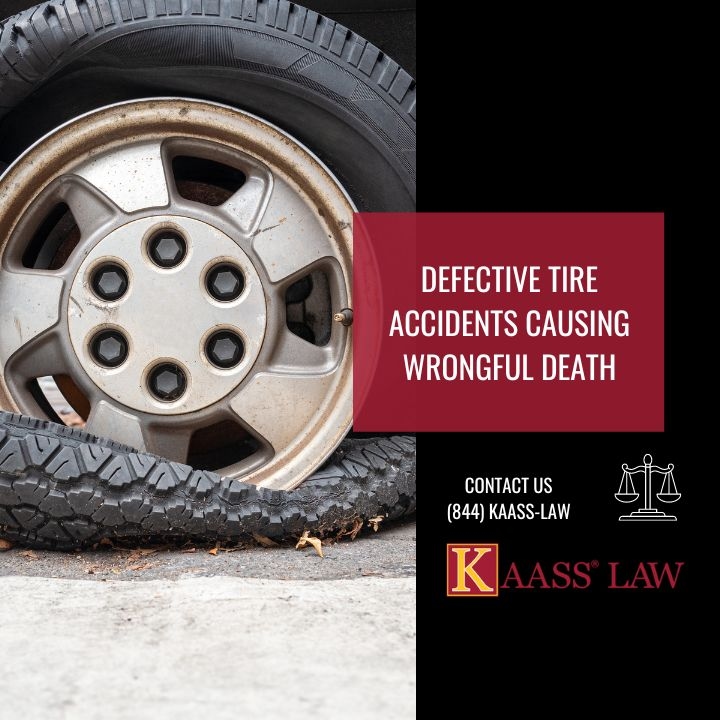
When a tire blows out at high speed, your car may swerve, cross lanes, or collide with another car. Deaths and severe injuries are frequently brought on by tire failure. Sometimes, a defective tire that results in accidents and fatalities may be the fault of the tire manufacturer or another party. Our California tire accident attorneys know the devastation such instances may cause. Defective tires that separate or blow out have a long history in the auto and tire manufacturing industries. You might not know you use hazardous tires due to a broken recall system.
The Most Common Defects that Lead to a Tire Accident
The following are the most prevalent tire flaws:
Separation of treads
Manufacturing flaws
Tires that appear to be new but are actually worn
Insufficient puncture repair
Failure to Retread
Tires that are inappropriate for the vehicle
Steel belt and tread separation due to the difficulty of connecting steel to rubber
Tires manufactured without suitable separation prevention design features
Damaged tires
These flaws pose varied degrees of risk. For example, separating rubber and metal might result in a blowout, which can cause a dangerous loss of control, especially at high speeds.
Who Can Be Responsible For a Defective Tire Accident?
Generally, vehicle owners and workshops that do state inspections are responsible for inspecting their tires. Tire manufacturers are accountable for fatalities and injuries due to product liability litigation in high-profile incidents. Parties held liable for tire failures that result in severe or fatal accidents include:
The Driver
Many motorists neglect to inspect, maintain, and rotate their tires. Tires frequently rot or become under-inflated. Therefore, most tires are labeled with the miles they may be driven safely on. Drivers frequently disregard the labeling.
A Bus or Trucking Company
A trucking company or bus operator is responsible for maintaining its fleet. Both trucking businesses and bus companies are responsible for fleet maintenance and should have strict protocols to examine and maintain tires.
A Tire Manufacturing Company
A design may be defective, or substandard manufacturing may indicate that the design was not followed.
An Auto Service and Repair Facility
Repair shops may install tires poorly or fail to see flaws during service or inspection. For example, you may sue the car shop for negligence.
What Damages Can a Surviving Family Member Recover in a Wrongful Death Case?
In tire defect claims, recoverable damages include:
In addition to bringing you the money and closure you need after your accident, a successful lawsuit against a tire manufacturer also draws attention to a product that shouldn't be sold. Also, a judge may instruct a manufacturer to implement a tire recall or issue a consumer warning, potentially saving lives.
Hire Experienced California Wrongful Death Attorneys
Manufacturers of tires for vehicles, trucks, buses, and motorbikes have a legal obligation to create and market safe products and to notify motorists of known flaws. Recent recalls have shown that tire manufacturers are reluctant to identify flaws and hazards in their products. Regrettably, many defective tires due to the recall remain on the road because drivers were not notified of the recall. The consequences are frequently severe when tires fail due to a design or manufacturing flaw. Drivers, passengers, and other motorists may pay with their lives. The manufacturers must be responsible for causing death. Our experienced wrongful death lawyers at Kaass Law will help you to recover damages. So, call us now at (310) 943-1171. To see our other services, click on this link.
People are seriously injured or killed by falling trees far more frequently than you might believe. In fact, the United States now has more trees than it did 100 years ago. Every year, over 100 people are killed or injured when trees fall on them or their vehicles. Many more are seriously injured. Tree accidents can sometimes result in legal action. If you or a family member has been injured by a falling tree, you may be wondering if you can seek compensation from the property owner.
What Exactly Is Wrongful Death?
Wrongful death is a legal term that refers to a death caused by the negligence, recklessness, or intentional actions of another person or entity. If a tree falls on someone else's property and the property owner knew or should have known that the tree was dangerous, they may be held liable for any injuries or deaths that occur.
Who Is entitled to submit a Wrongful Death Claim?
Family members of the deceased person, for example, spouses, kids, and parents can file a wrongful death claim. As the specific rules may differ from state to state, you need to consult with an experienced attorney.
What Can You Recover in a Wrongful Death Claim?
If you file a wrongful death claim, you may be able to recover the following damages:
You must select a proper entity while structuring a business. Corporations and limited liability companies (LLCs) are two common options in the United States, each with a unique combination of benefits and drawbacks. Therefore, this blog strives to offer a thorough breakdown of the variations between corporations and LLCs in Delaware, USA, and how they contrast with those in other nations.
An International Business Structure: Corporations
Corporations are well-known and frequently used business entities in every country. Here are a few essential traits of corporations:
Characteristics
Separate Legal Entity. A firm appears as a distinct legal entity from its owners, providing limited liability protection to stockholders.
Corporations can continue to exist forever, regardless of ownership changes.
Transferability of Ownership. Stock shares of a company can be purchased, traded, or transferred with ease.
Access to Capital. Companies can raise money in a number of ways, including by issuing bonds or shares.
The vast network of highways that crisscross our nation plays a crucial role in the transportation of goods, and trucks are the backbone of this logistical web. However, behind the scenes of this bustling industry lies a dark reality – wrongful deaths resulting from truck accidents caused by negligent hiring practices. In this blog post, we'll delve into the heartbreaking consequences of such practices and the legal implications they carry.
Negligent Hiring Practices
Trucking companies have the crucial task of making sure their drivers aren't just qualified but also equipped to handle the challenges of operating large commercial vehicles. Negligent hiring happens when a company skips thorough background checks, doesn't confirm a driver's qualifications, or overlooks warning signs in a potential employee's history.
The Human Element
Accidents involving trucks are usually complicated, involving various factors, and human aspects play a crucial role. Negligent hiring practices heighten these risks by placing unqualified or unfit individuals in control of large trucks. However, there are instances where drivers with records of traffic violations, issues with substance abuse, or insufficient training slip through.
Legal Ramifications
Wrongful death claims arising from truck accidents due to negligent hiring practices are complex and emotionally charged. Families who have lost a loved one in such accidents may pursue legal action against the trucking company, seeking compensation for their grief, loss of financial support, and funeral expenses.
Truck accidents can have devastating consequences, resulting in serious injuries, property damage, and legal complexities. When such accidents end up in court, the role of expert witnesses becomes paramount. These professionals bring specialized knowledge and expertise to help the court understand complex aspects of the case. In this blog, we'll delve into the significant role that expert witnesses play in truck accident cases.
Understanding the Complexity of Truck Accident Cases
Truck accidents are often more intricate than typical car accidents. Commercial trucks are subject to various regulations, and their sheer size and weight can lead to more severe consequences in a collision. Establishing liability in a truck accident demands a deep understanding of traffic laws and industry regulations governing commercial trucks.
Identifying the Need for Expert Witnesses
One of the primary roles of expert witnesses is to fill the knowledge gap that exists in complex cases. In truck accident cases, experts may provide insights into a variety of areas. For example, accident reconstruction, trucking industry practices, and the mechanical functioning of the vehicles involved. Attorneys often identify the need for expert witnesses early in the litigation process to ensure a comprehensive presentation of the case.
Accident Reconstruction Experts
Accident reconstruction experts play a crucial role in deciphering the events leading up to a truck accident. Using their engineering and forensic expertise, they can recreate the accident scene, analyze skid marks, evaluate vehicle damage, and determine factors like speed and braking patterns. Consequently, this information is invaluable in establishing the sequence of events and determining liability.
A complex and frequently highly charged interaction exists between wrongful death and criminal sentence. One of the most important tasks of the legal system is to make sure that justice is served when a life is lost as a result of another person's negligence or malicious behavior. In this blog, we'll look at the numerous aspects of wrongful death cases, the implications of a wrongful death decision for criminal punishment, and the challenges the legal system encounters when attempting to balance the scales of justice.
Recognizing the Seriousness of Wrongful Death
Legal minefields known as wrongful death lawsuits develop when someone's life is tragically taken by another party's carelessness, recklessness, or intentional behavior. These examples cover a wide range, from tragic instances of medical negligence to tragic car accidents, impacting every aspect of life. However, each wrongful death case has its own particular set of legal complexities and burden of grief.
Wrongful Death and Criminal Sentencing
When illegal activity results in a wrongful death, the legal system sets out on a difficult quest to achieve some measure of justice. Let's start down the long road of investigating how a wrongful death verdict has repercussions that extend to criminal sentence.
The Dual Dance of Justice
A dual legal process that weaves the tapestry of criminal prosecutions and civil lawsuits simultaneously is a common feature of wrongful death cases. Comparatively, the civil track aims to make up for the victim's family's immeasurable loss. Although, the criminal track works to establish the guilt of the accused and impose punitive measures like imprisonment. Although separate, these parallel courses frequently intersect and have an impact on one another, creating a complicated web of factors.
In the realm of legal proceedings, determining damages is a critical step towards achieving justice. Whether it involves personal injury claims, commercial litigation, establishing the extent of financial losses incurred is paramount. This is where expert witnesses play an instrumental role.
Expert witnesses are those who have specialized knowledge in a specific field and whose testimony helps judges and juries grasp complicated situations. Their ideas and analysis can be the cornerstone that assures a fair and accurate assessment when determining damages. Let us look at the important role of expert witnesses in this essential area of legal processes.
1. Technical Proficiency and Specialized Knowledge
Expert witnesses are chosen for their deep understanding of a specific subject matter. Accordingly, this might encompass a wide array of fields such as economics, medicine, engineering, finance, or any area relevant to the case at hand. Their expertise allows them to break down complex concepts into understandable terms for the court. For instance, in a medical malpractice case, a qualified healthcare expert can elucidate the standard of care, the breach of that standard, and the resulting damages. This specialized knowledge is invaluable in quantifying the extent of harm suffered by the plaintiff.
2. Providing Objective and Unbiased Analysis
Expert witnesses, unlike ordinary witnesses who may have a personal stake in the outcome of the case, are expected to retain objectivity. They give their findings based on facts and expert judgment. This impartiality provides credence to their testimony and strengthens the proceedings' overall integrity.
Settlement vs trial issue requires an imperative understanding of wrongful death cases. These legal actions are filed when a person's demise results from the negligent or intentional actions of another party. Wrongful death claims aim to seek compensation for the losses suffered by the surviving family members, encompassing financial, emotional, and practical impacts.
Wrongful Death Settlements: Advantages and Disadvantages
A wrongful death settlement involves an agreement established between the parties concerned before going to trial. Here are the benefits and drawbacks of opting for a settlement:
Pros:
1.Fast Resolution: Settlements are often completed far faster than trials, allowing the bereaved family to get compensation sooner and maybe alleviate their financial burden. 2.Predictable Outcome: The compensation amount in a settlement is negotiated, providing a degree of predictability in the outcome. This can aid the family in planning for the future. 3.Lower Emotional Stress: Because trials require repeating painful events, they can be emotionally taxing for the family. Settlements spare them from this additional emotional strain. 4.Lower Costs: Legal fees, court expenses, and other costs associated with a trial can be substantial. Consequently, A settlement often results in lower overall expenses.
Truck accidents carry the potential for catastrophic outcomes, from tragic wrongful deaths to life-altering injuries. To go about preventing the inherent risks tied to these accidents, the trucking industry heavily relies on safety regulations as a lifeline. In this blog post, we'll delve into the crucial role of safety regulations in averting wrongful deaths in the world of trucking, shedding light on the key regulations that help forge a safer and more secure road environment.
Preventing Accidents With Safety Regulations
The American economy heavily relies on the trucking industry, where millions of trucks cross the country daily to transport goods. However, the immense size and weight of commercial trucks pose inherent dangers when they aren't subject to rigorous regulation. It's the responsibility of safety regulations to safeguard the well-being of everyone who shares the road with these colossal vehicles.
Hours of Service Regulations
Among the paramount safety regulations within the trucking industry, Hours of Service (HOS) rules take center stage. These HOS regulations serve a vital purpose: averting driver fatigue, a leading factor behind truck accidents. They establish limits on the maximum hours a commercial truck driver can work within a day and a week, coupled with mandatory rest breaks. Unwavering commitment to these HOS regulations significantly lowers the risk of fatigued drivers on the road, effectively thwarting accidents and the associated wrongful deaths.
Vehicle Maintenance and Inspection Requirements
The core of truck safety hinges on consistent vehicle maintenance and thorough inspections. The Federal Motor Carrier Safety Administration (FMCSA) plays a pivotal role by stipulating that commercial trucks must undergo periodic inspections to verify their optimal operational status. Furthermore, trucking companies are obligated to maintain comprehensive maintenance records. These regulations serve as a bulwark against accidents arising from mechanical failures, which have the potential to result in devastating consequences.
In order to fulfill customer needs, trucks play a crucial role in the global economy by moving goods across great distances. But this vital sector does not come without a price in terms of convenience. The effects of truck accidents on the environment are one major worry. These accidents may not only pose a threat to human safety but also have long-term effects on the ecosystem. This blog article will explore how truck accidents impact the environment in various ways, highlighting the often-overlooked ecological consequences.
Spills of Dangerous Materials
The possibility of hazardous products leaking out of trucks is one of the most urgent environmental issues. Many trucks carry products that might seriously endanger ecosystems if handled improperly. Soil, water bodies, and the air can become contaminated by chemical spills, which can involve fuel, hazardous materials, or other contaminants. There may be catastrophic long-term effects on the local flora and wildlife, resulting in habitat degradation and biodiversity loss.
Effects of Air Quality on Truck Accidents
Truck accidents often release airborne contaminants. Diesel fuel, a common truck fuel contributing to air pollution, releases nitrogen oxides and particulate matter. The surrounding air quality may deteriorate as a result of fuel and other things burning during a truck accident. This adds to more general environmental problems including smog formation and greenhouse gas emissions in addition to having an impact on the health of neighboring communities.
Effects of Soil Pollution on Truck Accidents
Pollutants from a vehicle collision may seep into the ground and leave a trail behind. Fuel and chemical spills have the potential to seep into the ground and contaminate the land. In addition to the local accident site, agricultural fields and groundwater supplies may be impacted downstream by this contamination. The introduction of alien materials into the soil can exacerbate environmental damage by upsetting natural ecosystems and damaging plant life.
Medical expenses incurred before the death
Funeral and burial expenses
Loss of income and support from the deceased
Loss of companionship and consortium
Pain and suffering of the deceased person before their death
How Can You Prove Liability in a Wrongful Death Claim?
If you want to prove liability in a wrongful death claim, you need to show:
The person or entity you are suing had a duty to exercise reasonable care in preventing the tree from falling
They breached that duty by failing to take appropriate action, such as removing or trimming the tree
The breach of duty was the direct cause of the death of your loved one
You have suffered damages as a result of the death
What if the Property Owner Claims the Tree Fell Due to Natural Causes?
If the property owner claims the tree fell due to natural causes, the situation may become more complicated. It is critical to gather evidence and determine whether the tree was healthy or if there were signs of decay or disease. It is also critical to determine whether the owner was aware of any potential hazards posed by the tree. If there is evidence that the owner failed to address a known problem with the tree, they may be held responsible for any damage. Finally, it is critical to consult with a legal professional and collect as much evidence as possible in order to determine liability in the situation.
What Should You Do If You Are Thinking About Filing a Wrongful Death Claim?
If you are considering taking legal action following the death of a loved one, you should first consult with a qualified attorney who has handled wrongful death claims. They can assist you in understanding your legal rights and advise you on the best course of action to take. It's also critical to collect as much evidence as possible to back up your claim. Photographs of the fallen tree may be included. Eyewitness testimony is also required, as is any correspondence you may have had with the property owner regarding the tree.
Contact Us Today
To win a premises liability case involving a fallen tree, you must demonstrate that the landowner breached the duty of care owed to you and that the injuries you sustained were a foreseeable and likely result. When dealing with liability from falling or fallen trees, proving liability is frequently difficult. If you were injured as a motorist by a fallen tree, you should contact an experienced car accident lawyer right away. Please contact us at 1 (310) 943-1171 for a free legal consultation.
Articles of Incorporation. A corporation is created by submitting articles of incorporation, which include the organization's goals, organizational structure, and initial shareholder information, to the appropriate state government.
Board of Directors. A board of directors is responsible for directing the operations of a corporation.
Owners of a corporation have shares of stock, which serve as a representation of their ownership and grant them dividends and voting rights.
Officers and Employees. Corporations have officers that oversee daily operations, such as the CEO and CFO, while employees carry out the business's operations.
Governance and Management
Fiduciary Duties. Directors and executives must behave in the best interests of the corporation and its shareholders in order to uphold their fiduciary duties.
Formalities. Corporations must observe greater formalities, such as attending regular board meetings, keeping accurate corporate documents, and maintaining minutes
Limited Liability Company Flexibility: LLCs
The popularity of restricted Liability Companies (LLCs) has grown recently as a result of their adaptability and restricted liability protection. Let's examine their main characteristics:
Characteristics
Similar to corporations, LLCs provide their owners with limited liability protection, insulating personal assets from business debts and liabilities.
Pass-Through Taxation. LLCs are frequently treated as "pass-through" entities, in which profits or losses are transferred to the owners' individual tax returns without being subject to a second level of taxation.
Flexible Profit Distribution. LLCs can create customized profit-sharing agreements since they have more freedom in how they distribute profits among members.
Legal Structure
Operating Agreement. An operating agreement, which specifies the members' rights, obligations, and ownership stakes, is created when an LLC is established.
Members. Members are the LLC's owners, and they often represent their own interests as percentages.
Management Options. LLCs have two different management options: manager-managed, where members designate one or more managers to take care of day-to-day operations, or member-managed, where all members participate in decision-making.
Governance and Management
Fiduciary Obligations. While the operating agreement may specify the fiduciary obligations of LLC members and management, they typically owe a responsibility of loyalty and care to the LLC and its members.
Informality. In comparison to corporations, LLCs have fewer formal requirements, such as fewer required meetings and less stringent record-keeping requirements.
Differences Between Delaware and Other Countries
Furthermore, Delaware's relatively straightforward formation requirements, along with its greater flexibility in structuring stock classes and LLC ownership, the option for a single-member board of directors for corporations, the choice between member-managed and manager-managed LLCs, and the less formal requirements for corporate records and meetings, are some of the key differences that set Delaware apart from other nations in terms of corporations and LLCs. These distinguishing characteristics not only highlight Delaware's reputation for flexible and advantageous business regulations but also solidify its position as a highly desirable destination for companies seeking to incorporate in the United States. Therefore, to ensure compliance and make wise choices, it is crucial for business owners to take into account the particular laws and regulations of the nations in which they conduct business.
Contact Attorney Today
Despite the fact that this blog offers a broad overview of the distinctions between corporations and LLCs in Delaware, the USA, and other nations, it is essential to seek legal counsel from a licensed professional to get personalized legal advice. Additionally, an experienced lawyer can evaluate your particular business needs, assist with business formation, and guarantee adherence to all applicable rules and regulations. By consulting a qualified attorney, you can gain valuable insights, and receive personalized guidance. Also, make well-informed decisions that support your company's objectives and safeguard your interests. Therefore, we encourage you to contact us today at 310-943-1171 or visit our website to explore our range of services and areas of expertise.
To establish liability in these cases, it is crucial to demonstrate that the trucking company failed in its duty to hire and retain qualified, safe drivers. This often involves a thorough examination of the company's hiring practices, training protocols, and adherence to industry regulations. Legal professionals may seek evidence of inadequate background checks, insufficient driver training, or a pattern of hiring drivers with safety violations.
Preventing Future Tragedies From Negligent Hiring
Addressing negligent hiring practices requires a collective effort from lawmakers, regulatory bodies, and the trucking industry itself. Therefore, stricter regulations, more comprehensive background checks, and improved oversight can contribute to a safer environment on our roads.
The Role of Technology
Advancements in technology, such as electronic logging devices (ELDs) and telematics, offer tools that can aid in monitoring driver performance. These technologies can provide real-time data on driving habits, adherence to hours-of-service regulations, and vehicle maintenance, helping to identify and rectify potential safety concerns.
Industry Accountability In Negligent Hiring
Though individual trucking companies bear responsibility for their hiring practices, collective efforts are crucial for ensuring safer roads. This involves sharing best practices, advocating for standardized training programs, and cultivating a culture of safety within the trucking community. These collaborative measures are essential steps toward preventing tragic accidents.
Conclusion
The loss of lives in truck accidents due to negligent hiring practices is truly heartbreaking and, importantly, avoidable. As we navigate the complex network of commerce, it becomes paramount to prioritize safety over speed. Taking steps to address and correct negligent hiring practices is a significant stride towards a future where families are spared. Ensuring every journey on the road is a safe one is a shared responsibility that we must collectively uphold.
Truck accidents may result from mechanical failures or defects in the vehicle. Mechanical and engineering experts can provide insights into whether the truck was properly maintained, if any parts were defective, or if the accident was caused by a failure in the truck's systems. Their testimony can help establish whether the trucking company or manufacturer should be held liable for the accident.
Trucking Industry Practices Experts
Understanding the intricacies of the trucking industry is essential in determining liability. Trucking industry practices experts can shed light on whether the trucking company adhered to federal regulations, maintained proper hiring practices, and followed safety protocols. However, this information can be pivotal in establishing negligence on the part of the trucking company.
Medical Experts
In cases involving serious injuries, medical experts may be called upon to provide insight into the extent of injuries and the cost of medical treatments. Their testimony can help establish the impact of the accident on the victim's life, contributing to a more accurate calculation of damages.
Human Factors Experts
Understanding the role of human factors in a truck accident is essential. Human factors experts specialize in analyzing driver behavior, attention, and decision-making. Hence, their insights can help determine if the truck driver was fatigued, distracted, impaired, or engaged in any behavior that may have contributed to the accident.
Providing Credible Testimony
Attorneys select expert witnesses not only for their knowledge but also for their ability to communicate complex information effectively. They should explain technical details in a way that judges and juries can easily comprehend. Attorneys rely on expert witnesses to provide credible, unbiased, and authoritative testimony that can sway the outcome of a case.
Challenges in Admitting Expert Testimony
While expert witnesses play a critical role, their testimony must meet certain criteria to be admissible in court. The judge must determine whether the expert's methods and reasoning are scientifically valid and whether their testimony will genuinely assist the trier of fact. Defense attorneys may challenge the admissibility of expert testimony, making the selection of qualified and reputable experts crucial.
Contact an Attorney
In truck accident cases, expert witnesses are instrumental in unraveling the complexities surrounding the incident. These experts, by offering insights into mechanical failures and industry practices, significantly contribute to informed court decisions. Their expertise ensures that the legal process accurately addresses the nuances of truck accidents, ultimately contributing to a fair and just resolution for all parties involved. Please don't hesitate to contact our law office for a consultation at 310.943.1171 or visit our website for other practices.
The court may mandate that the wrongful death victim's family get restitution. It happens when the criminal defendant is found guilty of the crime. This monetary restitution serves as a form of recompense by covering expenses associated with the victim's death. For example, funeral expenses and lost wages. The court's discretion governs the reparation amount, resulting in variations in compensation that can be staggeringly different.
Criminal Sentencing: An Echo of Civil Justice
The sentence of a criminal offender can be considerably impacted by the outcome of a wrongful death verdict in a civil action. When determining the appropriate sentence for a defendant, judges presiding over criminal trials may take into account the conclusions and decisions reached in related civil actions. A substantial restitution judgment may give a great weight when determining a criminal defendant's sentence.
Act of Justice and Compensation in Balance
The delicate balance between justice and compensation in wrongful death and criminal punishment cases is one of the most difficult tightropes to walk. Civil cases try to give the victim's family some financial help and closure. Although the criminal sentencing is essentially intended to punish the offender and protect society. Finding this balance can be difficult because the criminal sentencing objectives may not always line up with the victim's family's demands for financial restitution.
Obstacles on This Journey
We come across a number of difficult forks in the legal path as we navigate wrongful death cases that converge with criminal accusations.
Differing Burdens of Proof
Criminal proceedings demand the highest standard of proof – guilt beyond a reasonable doubt. In contrast, civil wrongful death cases often hinge on the preponderance of evidence, a lower standard of proof. The disparities between these standards can lead to contrasting outcomes. The burden of proof plays a significant role in the proceedings of both realms.
The Emotional Power of Victim Impact Statements
Victim impact statements hold a unique emotional sway in criminal sentencing. They provide an opportunity for the victim's family to articulate the profound emotional, psychological, and financial impacts of their loss. These deeply personal narratives can influence a judge's sentencing decision. It weaves the fabric of justice with the threads of human suffering.
The Weight of Public Perception and Pressure
High-profile wrongful death cases can generate extensive media coverage and public interest, which influences the course of criminal prosecutions and subsequent sentencing decisions. The influence of the court of public opinion raises questions regarding the fairness and impartiality of judicial procedures.
The Tug of Prolonged Legal Processes
Cases involving wrongful death can last a long time, especially if they are complicated by medical or legal issues. The victim's family may suffer severe emotional and financial harm as a result of the protracted nature of court disputes.
Conclusion: The Unwavering Pursuit of Justice
The confluence of wrongful death and criminal sentencing is a complex tapestry. It demands an intricate dance to balance the scales of justice. In order to create a system that respects the needs and rights of all parties concerned, we must travel this path under the twin lights of transparency and justice. Additionally, to seeking justice, the overarching goal should be to stop further wrongful deaths, offer consolation to mourning families, and make those at fault accountable for their deeds. In the heart of this intricate legal tango, a profound quest for justice unfolds, where each step taken is laden with the memory of lives lost.
Expert witnesses are obliged not only to testify at trial, but also to prepare detailed reports outlining their findings. These reports serve as an important reference for the court, allowing them to properly review and grasp the expert's analyses. These reports often encompass a thorough examination of the methods utilized in the assessment, relevant data and statistics, and the expert's professional stance regarding the damages at hand. However, this meticulous documentation fosters transparency and aids the court in arriving at well-informed decisions.
4. Quantifying Economic Damages
When it comes to situations where there are financial losses, experts in finance become incredibly important. They use thorough approaches to figure out the monetary harm involved, considering things like lost profits, reduced business value, and potential future earnings. Their evaluations entail a thorough review of financial records, market trends, and other pertinent elements. Thus, this procedure guarantees that the monetary damages granted accurately represent the economic effect incurred by the injured party.
5. Clarifying Complex Concepts
Legal cases often involve intricate technical, financial, or scientific details that may be challenging for the average person to grasp. Expert witnesses bridge this gap by providing clear, concise explanations of these concepts. Moreover, they serve as educators for the court, ensuring that everyone involved has a solid grasp of the relevant issues.
6. Challenging Opposing Expert Testimonies
In many occasions, both parties will submit their own expert witnesses, each with their own interpretation of the facts. The court looks to these experts to present contrasting viewpoints so they can examine the evidence and make an impartial judgement. Expert witnesses are adept at countering opposing testimonies, using their knowledge and expertise to highlight flaws in methodology or flawed assumptions. This process helps the court in discerning the most accurate and reliable assessment of damages.
Contact an Attorney
Expert witnesses are the unsung heroes who offer clarity and objectivity to the calculation of damages in the complex dance of legal processes. The pursuit of justice is impossible without their particular expertise, objectivity, and capacity for communicating complicated concepts.
Devoid of their crucial input, gauging the scope of damages would be arduous and prone to subjectivity. Hence, the involvement of expert witnesses is essential in ensuring the equity and impartiality of financial judgments rendered in legal disputes. Visit our other page to learn more about any potential cases you could have.
1.Potentially Less Settlement: In some circumstances, the amount paid in a settlement may be less than what the court could potentially award. This factor plays a role if the argument is very persuasive. 2.Confidentiality Clauses: Some settlements include confidentiality clauses, preventing the family from discussing the case details publicly. This can limit the opportunity for raising awareness about the issue. 3.Limited Public Accountability: Trials are public proceedings, and a verdict can convey a powerful message about accountability. Settlements, on the other hand, are private and may not have the same impact.
Taking the Case to Trial: Advantages and Disadvantages
Choosing to pursue a wrongful death case through a trial involves presenting the evidence and arguments in a court of law. Here are the benefits and drawbacks of opting for a trial:
Pros:
1.Potential for Higher Compensation: If the evidence strongly supports the case, a trial may result in a higher award than what they might offer in a settlement. 2.Public Accountability: Trials are public proceedings, and a verdict can draw attention to the negligence or wrongdoing that led to the wrongful death, potentially preventing similar incidents in the future. 3.Preservation of Rights: If a settlement offer is unjust, pursuing a trial allows the family to exercise their right to seek fair compensation through the legal system.
Cons:
1.Prolonged Process: Trials can be lengthy affairs, involving pre-trial motions, jury selection, presentations of evidence, and deliberation. This can extend the process of obtaining compensation. 2.Heightened Emotional Strain: Trials require the family to revisit the painful details of the case, potentially causing additional emotional distress. 3.Uncertain Outcome: While trials offer the potential for higher compensation, there's also the risk of receiving a lower or no award, depending on the strength of the case and the decisions of the court. The decision between a wrongful death settlement vs trial is a deeply personal one for the grieving family. It's crucial to weigh the pros and cons carefully, consult with experienced legal counsel. Ultimately, the goal is to secure a resolution that provides fair compensation and a sense of closure for those left behind. As a result, you will be able to explore other practice areas within our specific sector. For more information, please see this link.
Overloaded or improperly secured cargo can lead to instability and accidents. Safety regulations specify weight limits for trucks and require proper cargo securement. Therefore, compliance with these regulations prevents accidents and wrongful deaths caused by cargo-related incidents.
Drug and Alcohol Testing
Stringent regulations compel commercial truck drivers to undergo drug and alcohol testing, a measure aimed at guaranteeing that drivers are free from impairment when they take the wheel. The prevention of drug and alcohol-related accidents stands as a crucial pillar of overall safety within the trucking industry.
Training and Certification
Drivers of commercial trucks must undergo rigorous training and obtain the necessary certifications. Safety regulations dictate the standards for driver training and licensing. Adequate training reduces the likelihood of accidents due to driver error.
Compliance and Enforcement for Preventing Accidents
The efficacy of safety regulations in averting wrongful deaths within the trucking industry is profoundly contingent on adherence and enforcement. Federal and state agencies, like the FMCSA, bear the responsibility of both monitoring and ensuring compliance with these regulations. The repercussions for non-compliance can be substantial, encompassing hefty fines, the potential suspension of operating licenses, and assuming legal liability in the event of accidents.
Preventing Wrongful Deaths: A Case Study
To illustrate the impact of safety regulations in preventing wrongful deaths in trucking, let's consider a hypothetical case study. In a parallel universe without stringent safety regulations, a fatigued truck driver operating an overloaded vehicle with improperly secured cargo collides with a passenger vehicle, resulting in a wrongful death. However, in our reality, the safety regulations mentioned earlier prevented this tragic event:
Hours of Service (HOS) regulations ensured that the driver had sufficient rest and was alert while operating the truck, reducing the risk of driver fatigue.
Vehicle maintenance and inspection requirements guaranteed that the truck was in proper working condition, eliminating the possibility of mechanical failure as a contributing factor in the accident.
Weight limits and cargo securement regulations prevented overloading and ensured that the cargo was securely fastened, enhancing the truck's stability on the road.
Drug and alcohol testing regulations ruled out the possibility of impairment, making sure the driver was sober during the journey.
Training and certification requirements ensured that the driver had received adequate training, reducing the likelihood of driver error.
As a result, the safety regulations in place played a crucial role in preventing a wrongful death that might have occurred in a universe without such regulations.
Conclusion
Safety regulations in the trucking industry are far from arbitrary; they serve as crucial safeguards that stand between life and tragedy. These rules aren't just about ticking boxes; they're about preventing wrongful deaths. By systematically addressing and mitigating the risks inherent in truck accidents, these regulations become lifesavers, protecting the well-being of everyone who shares our roads. To secure a safer future, it is absolutely essential for both the trucking industry and the regulatory authorities to maintain their unwavering commitment to these pivotal safety regulations. By diligently enforcing and adhering to them, we pave the way toward a world where truck accidents and the devastating wrongful deaths they bring about become increasingly uncommon occurrences.
Aquatic ecosystems are directly threatened by truck accidents that occur close to water bodies. Oil, fuel, and other hazardous material spills can travel far and swiftly into rivers, lakes, and seas. Beyond only the immediate aquatic life, the entire food chain is impacted, and long-term ecological disturbances may result. Furthermore, chemical-based cleanup operations as well as other interventions can put aquatic ecosystems under more stress.
Ecological and Economic Repercussions
Truck accidents have an extended environmental impact beyond their immediate aftermath. The financial toll that environmental harm can take is often quite high. There are substantial financial costs associated with cleanup operations, habitat restoration, and resolving long-term environmental deterioration. Moreover, ecological disruption and biodiversity loss can have a domino impact on industries that depend on healthy ecosystems, such as agriculture and fisheries.
Prevention and Mitigate Actions
A multifaceted strategy is needed to address how truck accidents affect the environment. Important measures include tighter laws governing the transportation of hazardous chemicals, better driver education programs, and higher vehicle safety requirements. It is possible to prevent accidents or lessen their severity by making investments in technology like vehicle telematics, collision avoidance systems, and improved braking systems.
The Function of Technology
Technological advancements have significantly reduced the impact of truck accidents on the environment in recent years. Sophisticated monitoring systems can track the state of a truck in real time, enabling the early identification of potential problems. Additionally, telematics helps with route optimization, which lowers the chance of collisions and uses less gasoline. The incorporation of autonomous driving technologies has the potential to augment traffic safety and diminish the probability of human error. Conclusion: As we continue to rely on the trucking industry for the efficient movement of goods, it is imperative to confront the environmental consequences of accidents head-on. By understanding the ecological aftermath of truck accidents, we can work towards implementing preventative measures, investing in technology, and fostering a culture of safety within the industry. Only through a concerted effort can we mitigate the environmental impact and build a sustainable future where the essential role of trucking is harmonized with the health of our planet.