Intentional interference with economic relations is an unfair business practice in California which includes three types of actions:
Intentional interference with contractual relations
Intentional interference with prospective economic advantage
Negligent interference with prospective economic advantage
Intentional Interference with Contractual Relations
Elements of a claim for intentional interference with contractual relations According to CACI 2201, the plaintiff must be able to prove the following elements to establish the claim:
There was a valid contract between the plaintiff and a third party;
Defendant knew about the contract
By engaging in this conduct the defendant had the intention to disrupt the relationship or knew that disruption of the relationship was substantially certain to occur
The relationship was disrupted
The plaintiff was harmed as the result of the defendant’s conduct
The claim of intentional interference with contractual relations requires the existence of an underlying enforceable contract. In case there is no contract or the contract is unenforceable, then the plaintiff will have a claim for interference with prospective economic advantage.
Intentional Interference with Prospective Economic Advantage
Elements of a claim for interference with prospective economic advantage According to CACI 2202, The plaintiff must be able to prove the following elements to establish the claim:
The plaintiff and a third party were in an economic relationship that probably would have resulted in an economic benefit to him
Defendant knew about the relationship
Defendant engaged in a wrongful conduct
By engaging in this conduct defendant intended to disrupt the relationship or knew that the disruption was substantially certain to occur
The relationship was disrupted
The plaintiff was harmed as the result of the defendant’s conduct
Though generally, a claim for intentional interference with prospective economic advantage includes the defendant’s interference with a prospective contract, liability can be based on interference with any economic relationship containing a probability of future benefits to the plaintiff, including interference with any lawful trade, business, or occupation. Some common examples of intentional interference with prospective economic advantage include conduct constituting libel fraud, or misappropriation of trade secrets.
Negligent Interference with Prospective Economic Advantage
Elements of a claim for negligent interference with prospective economic advantage According to CACI 2204, the plaintiff must be able to prove the following elements to establish the claim:
The plaintiff and a third party were in an economic relationship that probably would have resulted in an economic benefit to him
Defendant knew about the relationship and was aware or should have been aware that in case he didn’t act with due care his actions would interfere with the relationship
Defendant was negligent and failed to act with reasonable care
The relationship was disrupted
The plaintiff was harmed as the result of the defendant’s conduct
Damages a Plaintiff Can Recover When Bringing a Successful Claim Against the Defendant
Damages for interference with economic relations can include recovery for all resulting harm, including expenses, damage to business reputation, mental distress. The victim can also recover punitive damages in case the defendant acted with fraud, malice, or oppression. [video width="1280" height="720" mp4="https://kaass.com/wp-content/uploads/2019/11/output_HD7202.mp4"][/video]
In California malicious prosecution is a civil cause of action aimed to go after individuals who file frivolous lawsuits and cause damages as a result. Malicious prosecution claims are having a chilling effect on an ordinary citizen’s readiness to bring a dispute to the court, and are often characterized as a “disfavored cause of action.”
Elements of Malicious Prosecution in California:
An injured person must be able to prove all the elements for this claim. Failing to prove any one of the elements of this cause of action will result in a loss at trial.
Legal action prosecuted or commenced without probable cause: If the claim is brought without justification, the case is without probable cause. Generally probable cause is analyzed on a claim-by-claim basis, meaning that every claim brought and prosecuted without probable cause can support a claim for malicious prosecution.
Legal action was initiated with malice or malicious intent
Final resolution of the claim in the defendant’s favor. The defendant in the malicious prosecution action must prevail on the underlying suit – at least with regard to the causes of action for which malicious prosecution is claimed.
Legal Damages: The actions cause economic and non-economic, which can be considered and must be proven at trial.
What Must the Plaintiff Prove?
According to CACI 1501 to prove a claim of malicious prosecution the plaintiff must be able to show the following:
Defendant was actively involved in bringing about the lawsuit
In California, victims who suffer emotional distress as a result of another person’s conduct can file a lawsuit for the intentional or negligent infliction of emotional distress. There is no need that a victim suffers a physical injury.
Intentional Infliction of Emotional Distress
Elements of Intentional Infliction of Emotional Distress:
The plaintiff must be able to prove the following elements for a successful claim for intentional infliction of emotional distress:
The defendant’s conduct was outrageous
Defendant had the intention to cause harm or acted with reckless disregard of the likelihood of causing distress to the plaintiff
Plaintiff suffered severe emotional as a result of the defendant’s conduct.
Outrageous Conduct
Under California law, outrageous behavior means that the conduct is so extreme that it goes beyond all possible bounds of decency. Conduct is considered outrageous when a reasonable person finds the behavior uncivilized, goes beyond minor annoyances and poor manners that must be anticipated in day-to-day activities. As defined by CA case law, outrageous conduct can be shown in different ways including showing a pattern of behavior and not just an isolated incident, abusing the position of authority, using the victim’s vulnerability to emotional distress, or acting with knowledge that the conduct would likely cause emotional distress.
Defamation involves a false statement made by one person about another person which causes harm to a person’s property, profession, business, or occupation.
Elements of Defamation
The plaintiff must be able to prove the following elements to establish a defamation claim in California:
Defendant made an intentional publication of a statement of fact
The fact is false
The fact is unprivileged
The fact has a natural tendency to injure or cause special damage
Defendant's fault in publishing the statement is at least considered negligence.
Methods of Making Defamatory Statements:
Defamatory statements are made using two methods: slander or libel
Slander: According to California Civil Code Section 46, slander is a false and unprivileged publication, orally uttered, which charges any person with crime, imputes in a person the existence of an infectious, contagious, or loathsome disease, tends directly to injure him in respect to his office, profession, trade or business, imputes to a person impotence or a want of chastity.
According to California Civil Code Section 45 libel is defined as a false and unprivileged publication by writing, picture, printing, effigy, or other fixed representation to the eye, which exposes any person to hatred, ridicule, contempt or obloquy, or which causes him to be avoided or shunned, or which tends to injure him in his occupation.
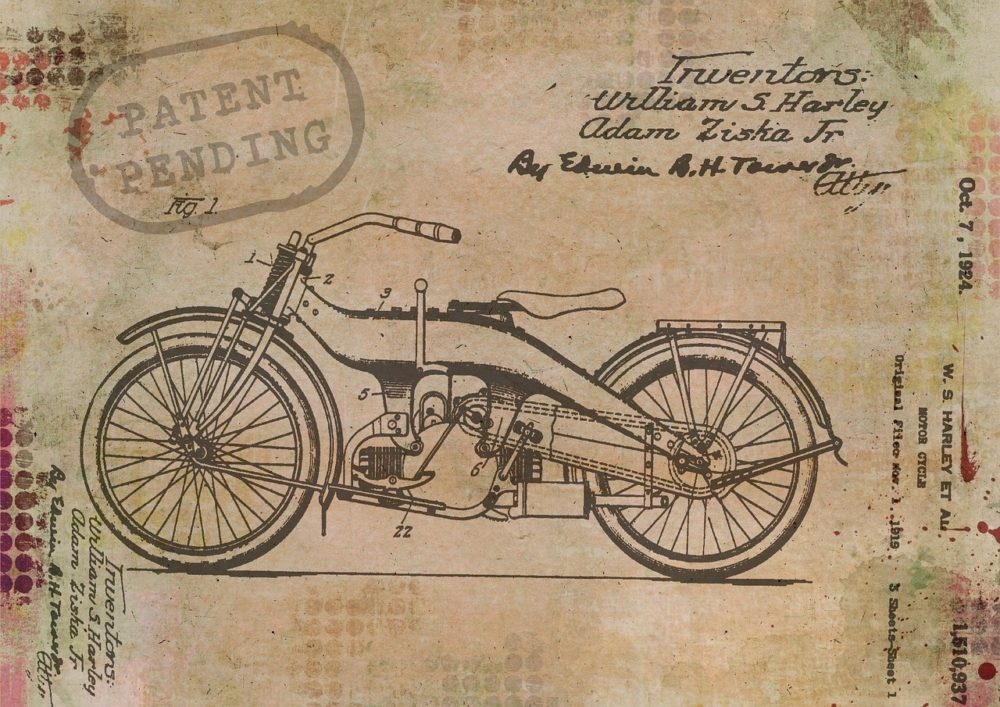
According to California Product Liability Laws, any person who designs, produces or sells a defective product is strictly liable for the damages by the product. This will further explain the following in motorcycle parts product liability.
Elements the Plaintiff Must Prove
Generally, a plaintiff must be able to establish the following elements, to prevail on a claim for products liability in California,
Defendant designed, distributed, manufactured, or sold a defective product
Product contained the defect when it left the defendant's possession
Plaintiff used the product in a reasonably foreseeable manner
As a result of the defect the plaintiff suffered harm
Strict Product Liability in California
Under the strict liability law, it is not a requirement for the plaintiff to demonstrate the defendant’s negligence. Under the law, if the plaintiff got any injuries as a result of the defendant, then the defendant is labile for the injuries, with or without negligence.
Wrongful termination occurs when an employment relationship is ended by an employer in violation of the employee’s legal rights.
California Wrongful Termination Claims
In California, wrongful termination claims can arise when an employer violates a federal or state statute, the worker’s employment contract, general principles of public policy, or some other aspect of the law.
California "At-Will" Employees
The majority of employees in California are considered to be “at-will” employees. This means the employees are free to end the employment relationship at any time they want and likewise the employers are free to fire them at any time for any legal reason, or even without any reason. Employment is presumed to be at-will, in case there is no specific contractual relationship between the employee and employer which bounds the employer from firing the employee.
Employment Contact
Not all employees are considered at-will and some of them have contracts which limit the employer’s ability to fire them without a reason. For example, when the employee is hired for a specific period of time, but the contract doesn’t specify the circumstances under which the employee can be terminated, he can only be fired under the following circumstances:
Bribery is an act of offering giving, receiving, or soliciting something of value for the purpose of influencing the acts of a public official in discharge of his legal or public duties.
18 U.S.C. § 201(b)(1): Bribery of a Public Official
Defendant is guilty of bribing a public official in case he directly or indirectly gives or promises to give something of value to the public official with intention to corruptly influence the public official to omit or perform an official act in violation of the official’s public duty. Corrupt action is any intentionally performed action with an illegal purpose. Public official is any officer, agent or employee of the US or any agency, department, or branch of the federal government who is acting in an official capacity. For the purposes of this crime jurors sitting on a federal jury will also fall within the definition of the public official. According to 18 U.S.C. § 201(a) official act is any action or decision that may be brought before a public official in his official capacity.
18 U.S.C. § 201(c)(1)(A): Illegal Gratuity to a Public Official
Defendant is guilty of providing illegal gratuity to a public official in case he directly or indirectly offers or gives something of value to a public official because of an official act performed by the public official. For proving the violation the prosecutor must establish that there is a relationship between the “something of value” and the official act for which it was conferred. Defendant is guilty of bribery of a bank officer in case he offers or gives something of value to a bank officer with intention of influencing the bank officer and in connection with a business transaction. Bank officer is any director, agent, employee, or other office of a financial institution.
Chapter 18 of the United States Code, Section 371 criminalizes both conspiracies to defraud the US as well as conspiracies to violate any other provision of federal law. According to the statute it is illegal for two or more persons to conspire either for committing an offense against the US, or to defraud the United States, or any agency in any manner or for any purpose, and one or more of these persons act in a way that furthers the conspiracy.
Elements of Federal Conspiracy
The prosecution must establish the following elements beyond a reasonable doubt for convicting the defendant in violation of 18 U.S.C Section 371
There was an agreement between at least two people with intent to defraud or commit an offense against the United States government
Defendant willfully joined the agreement
Defendant or other conspirator committed an overt act with intention to further the conspiracy.
"Defraud" Element in Federal Conspiracy Crimes
For the purposes of this statute term “to defraud” in the United States means:
Impairing or obstructing the efficiency of any department of the US government, to destroy its reports and operation as fair, impartial, and reasonably accurate;
According to 18 USC Section 1001 it is illegal to knowingly and willfully making any materially fictitious, false, or fraudulent statement or representation in any matter within the jurisdiction of the executive, judicial and legislative branch of the United States.
18 USC Section 100, proscribes three types of illegal conduct:
Concealing, falsifying, or covering up of a material fact by any scheme, trick, or device
Making a fraudulent statement or representation or false fictitious
Using or making a false writing or document.
Elements of Crime
The government must be able to establish the following elements beyond a reasonable doubt for convicting the defendant under 18 USC 1001.
Defendant used or made a materially fictions false, or fraudulent statement, representation, or document
Defendant made or used it knowingly and willfully
The statement, document or representation regarding a matter within the US government’s jurisdiction
Representation and Statement
In the context of 18 USC 1001 a statement, can be either be in writing or oral. The representation or statement is not a requirement to be a legal mandate or be under oath to violate 18 USC Section 1001. It also doesn’t have to receive by the government or made directly to the government.
Under Federal Health Care Fraud, per 18 US Code Section 1347 it is prohibited to knowingly and willfully execute, or attempt to execute, a scheme or artifice to defraud any health care benefit program; or to obtain, by means of false or fraudulent pretenses, representations, or promises, any of the money or property owned by, or under the custody or control of, any health care benefit program.
Elements of Federal Health Care Fraud
The prosecutor must establish the following elements to convict the defendant under Federal Health Care Fraud US Code Section 1347:
Defendant executed or attempted to execute a scheme to defraud any health care benefit program
Fraud was connected with the delivery or payment of health care services or benefits
Defendant acted knowingly and willfully
Defendant Executed or Attempted to Execute a Fraudulent Act
According to 18 US Code Section 1347, an attempt to commit health care fraud is punishable to the same extent as the commission of fraud. An “attempt” is consist of intention to commit illegal conduct and a “substantial step” toward its commission.
No reasonable person in the defendant's circumstances would have believed that there was a reasonable ground to bring the lawsuit against the plaintiff
Defendant acted mainly for a purpose other than succeeding on the merits of the claim
Plaintiff was harmed as a result of defendant's conduct
Proceedings Which Give Rise to Malicious Prosecution Claims:
Judicial arbitrations
Private arbitration agreements which obviously allow for the malicious prosecution remedy
Probate proceedings
Declaratory relief claims
Order to Show Cause proceedings, associated with pending litigation (except in family law proceedings)
Who Can Be Liable for Malicious Prosecution?
A person, who unsuccessfully prosecuted an underlying action as an individual party plaintiff can be considered liable for malicious prosecution. Though, the degree of personal liability of directors and officers of a corporate plaintiff is not clear. CACI 1501 references those who are “actively involved in bringing or continuing the lawsuit,” which can include those who become later involved in the continued prosecution of the prior action.
The attorney who originally initiated the underlying action is potentially liable for malicious prosecution. Successor or later involved counsel who associate or into the underlying action are also subject to liability.
Types of Damages Which the Victim Can Recover in Successful Malicious Prosecution Claim:
Pain and suffering
Loss of reputation
Emotional distress
Embarrassment
Attorney fees
Lost wages
Costs of litigation
Medical and psychological therapy costs
All court fees and expenses
Malicious Prosecution Video
[video width="1280" height="720" mp4="https://kaass.com/wp-content/uploads/2020/04/output_HD720.mp4"][/video] Do you feel as though you or a loved one have been a victim of malicious prosecution in California? KAASS Law would be happy to take a look into your situation to see what we can do to help you out. Give us a call now at (310) 943-1171 or get in touch by filling out the form below. [contact-form-7 id="5673" title="KAASS LAW Contact Form"]
Severe emotional distress means that the distress is so lasting or substantial that no reasonable person could be expected to bear it. It includes highly unpleasant mental reactions, such as shame, fright, worry, grief or anger.
Negligent Infliction of Emotional Distress
Unexpected accidents may cause life-altering physical injuries, disabilities to people or make a victim suffer from emotional distress. A victim can be entitled to recover compensation in case another person’s negligent conduct has caused him to suffer from emotional distress.
Elements of Intentional Infliction of Emotional Distress
The plaintiff must be able to prove the following elements for a successful claim for negligent infliction of emotional distress:
Defendant acted negligently
As a result of defendant’s negligent conduct, the plaintiff suffered serious emotional distress
Claims of Negligence
Negligence takes place when one person has and breaches a duty of care that he owes to another person. A victim must be able to establish the following elements to prove the negligence.
Defendant owed a duty of care to the victim
Defendant breached the duty in some way
The victim suffered harm as a result of the defendant’s conduct
Emotional Distress Suffered by a Bystander
In California law, a bystander who witnesses an accident when another person is injured or killed, may also be able to recover damages for emotional distress. The bystander must be able to prove the following elements for a successful claim for negligent infliction of emotional distress:
Defendant negligently caused a death or injury to a victim
Bystander was present when the accident took place
Bystander was aware that the accident was causing an injury or death to the victim
Bystander suffered serious emotional distress when witnessing the victim’s injury or death
Some examples of situations when a bystander can be eligible for monetary damages
Car accidents
Pedestrian accidents
Workplace accidents
Motorcycle accidents
Injuries caused by defective products
Are you in need of legal assistance regarding emotional distress? Our litigation attorneys in California can provide you with services involved with personal injury, employment law, and many other practice areas of law. No need to fight a battle on your own. Get in touch right away to find out how KAASS Law can help you!
A statement is a defamation per se in case there is no need for extrinsic evidence to explain the statement's defamatory nature. A plaintiff doesn’t need to show special damages as damages to the plaintiff's trade, business, property, profession or occupation if the statement is defamation per se.
Defamation per Quod
Defamation per quod means that the statement is not defamatory on its face and requires proof and allegations of special damages. Examples of special damages can include lost profits and adverse employment consequences.
Public Figures
According to the First Amendment of the U.S. Constitution, when a public figure brings an action for defamation, in addition to all mentioned elements, he should also prove that the statement was made with actual malice. Thus, the public figure must prove that the person who made the defamatory statement knew that is was false. Here are some examples of a public figure under California law:
Author
Television personality
Real-estate developer
Founder of a church
What Can a Victim Win in a Defamation Case?
There are different types of compensation available to the victims, who win defamation lawsuits. These include:
Back pay
Lost Wages
Pain and Suffering
Punitive Damages
Legal Defenses for Defamation Claims
There are several defenses available in defamation cases. Here are some of them:
Defendant’s statement wasn't published
Defendant made a true statement
Defendant’s statement was privileged
Defendant’s statement wasn’t made with malice
Defendant’s statement wasn't made negligently
California Defamation Claim Video
[video width="1280" height="720" mp4="https://kaass.com/wp-content/uploads/2019/11/Defamation-claim-in-California.mp4"][/video] Do you have any additional questions or concerns regarding defamation claims in California? Get in touch with KAASS Law for more information now.
There are essentially three types of claims under strict product liability:
Manufacturing defect claims, which involve a defect in a specific item produced
Design defect claims, which involve a defect in the design of an entire product line
Failure to warn claims, which involve the defendant’s liability for improperly warning the plaintiff about the hazards of using the product
Manufacturing Defect Claims
In manufacturing defect claims, if you can compare the product in question with another product in the same line within the manufacturer, the product falls into manufacturing defect claim. So, the product presented a harm which actually was a result of the manufacturing defects.
Design Defect Claims
If the plaintiff asserts that the defect is in all the same product line, then it falls under design defect claims. In California, there are two test in defective design product liability claims:
The Risk-Benefit Test
According to this test, after the plaintiff shows that the defective product design caused the injuries, the burden of proof completely shifts to the defendant. The defendant must prove that the utility of the defective product design outweighs the risk of the design and in case he fails to do that, then the plaintiff will win the case.
The Consumer Expectations Test
According to this test a product’s design will be considered defective in case it fails to perform as safely as an ordinary consumer would expect it to perform.
Failure to Warn Claim
According to California strict product liability, a defendant who is aware that the consumer is using the product in a reasonably foreseeable manner that exposes him to a risk of injuries is obliged to warn the consumer of the risk of injury or harm. The defendant can be liable for a failure to warn when such failure to change the outcome. So, in case a typical consumer is aware of the risk of injuries or harm on his own, then the defendant can’t be found liable for failing to warn of an already-known hazard. Get in touch with our Los Angeles motorcycle accident attorneys for more information and a free consultation! [contact-form][contact-field label="Name" type="name" required="true" /][contact-field label="Email" type="email" required="true" /][contact-field label="Website" type="url" /][contact-field label="Message" type="textarea" /][/contact-form]
Employee intentionally breached his employment duties
Employee is habitually negligently performing his duties
Employee is incapable to perform his duties for some reason.
These types of employment contracts can be entered into in writing or verbally, but it must be specified that the agreement is for a set period of time.
Exceptions to At-Will Employment in California
Exceptions to “at-will” employment give to allow the employees to sue their employers for wrongful termination.
Breaches of existing employment contract
Retaliatory discharge
Sexual harassment
Fraud or misrepresentation
Firing after inducement
Implied contracts
Employer Can’t Fire an Employee for Unlawful Reasons
Even though employers can fire at-will employee for seemingly arbitrary reasons, they are still prohibited from terminating employees for illegal reasons. According to the California Fair Employment and Housing Act, it is illegal for employers to discriminate in employment decisions on the basis of the following factors:
Employee’s mental or physical disability
Employee’s religion or religious practices
Employee’s race
Employee’s pregnancy
Employee’s gender
Employee’s age
Employee’s sexual orientation or gender identity
Employee’s political affiliation
Employee’s national origin
In case the decision to terminate the employee was motivated by any of the above-mentioned reasons, the termination is unlawful under the law. Employees that have become the victims of wrongful termination have the right to file a lawsuit against their former employers and seek monetary damages.
Steps the Former Employee Must Undertake in Case of the Wrongful Termination
Document everything
Review the employment contract
Contact a lawyer
File a claim or lawsuit
Damages the Employee Can Recover
According to the law, wronged employees can recover:
Economic damages, such as loss of past and future wages and benefits.
Emotional damages
Punitive damages in case the employer's conduct was particularly malicious or reprehensible
Reinstatement
Wrongful Termination in California Video
[video width="1280" height="720" mp4="https://kaass.com/wp-content/uploads/2020/02/Wrongful-Termination.mp4"][/video] Are you in need of additional information about wrongful termination in California? Our employment law attorneys in Los Angeles at KAASS Law should be able to answer and specific questions that you have. Feel free to get in touch with us anytime at (310) 943-1171 or fill out the form below. [contact-form-7 id="5673" title="KAASS LAW Contact Form"]
18 U.S.C. § 215(a) (1): Bribery or Reward of a Bank Officer
Legal defenses to federal bribery charges
Lack of Evidence
For convicting the defendant the prosecution must prove beyond the reasonable doubt all elements of crime. In case there is a lack of evidence proving the defendant’s fault he can’t be found guilty of federal bribery.
Lack of Intent
In federal bribery cases, the prosecutor must establish that the defendant had the criminal intent to commit the crime. One of the most difficult areas of the government’s case is proving intent, and if the defendant can present arguments and evidence to show that he did not possess the intent to commit the alleged criminal activity, he won’t be found guilty of this crime. Penalties for Federal BriberyPenalties for violating 18 U.S.C. § 201(b)(1)
Up to fifteen years in federal prison
A fine of up of an amount not more than three times the monetary equivalent of the thing of value offered to the public official.
Penalties for violating 18 U.S.C. § 201(c)(1)(A):
Up to two years in federal prison and/or fines
Penalties for violating 18 U.S.C. §215(a) (1): If the amount of the “something of value” offered or provided to the bank officer is more than $1000, the penalties are the following:
Up to thirty years in federal prison
Fines of up to $1,000,000 or three times the value given, whichever is greater.
If the amount of the “something of value” is less than $1,000, the defendant will receive up to one year in federal prison and fines.
The prosecution must establish that the defendant had some knowledge of the conspiracy’s objectives. But for being considered a participant in a conspiracy defendant doesn’t have to know about every objective of the conspiracy, or be aware of the identities of other conspirators. Overt Act is any act or statement that is knowingly done by one or more conspirators with intention to further the aim of the conspiracy. It is important to mention that a conviction for conspiracy under 18 U.S.C Section 371does not necessarily require underlying criminal act to be completed.
Defenses to Federal Conspiracy Charges
Defendant did not willfully join the agreement
According to 18 U.S. Code 371, for being found guilty defendant must intend to agree, and have intention to commit the crime. A forced agreement made under threat or duress or is not enough for convicting the defendant.
There was no overt act for furthering the conspiracy
According to 18 U.S. Code 371 there must be an overt act to further the conspiracy. So if a conspiracy agreement was found, but no act was made to further the alleged agreement, defendant should not be convicted of federal conspiracy. Penalties for violating 18 U.S.C Section 371
Up to five years in federal prison
A fine up to $250,000, or up to $500,000 in the case of conspiracy by organizations.
But if, the crime, the commission of which was the object of the conspiracy, is only a misdemeanor, the punishment for that conspiracy cannot exceed the maximum punishment provided for such misdemeanor.
In the context of 18 USC Section 1001 charge, willfulness means that the defendant intentionally and voluntarily provided facts that were incorrect. Untrue statements or incorrect facts provided result of misunderstanding, confusion, honest mistakes, or faulty recollection don’t rise to the level of willfulness.
Materiality
Prosecution for a violation of 18 USC Section 1001 requires proof of materiality. The statement or representation must have a tendency to influence, or be capable of influencing the decision making body to which it is addressed. There is no requirement to prove that the decision maker body was in fact of influence or diversion.
Jurisdictional Element
Jurisdictional element means that the government must establish that the false statement or representation is in regard to a matter within the US government’s jurisdiction. Courts have given broad interpretation to “jurisdiction” in this context to mean any area where the government has power to act or enforce regulations. Jurisdiction includes the healthcare, economy, education, and many other areas.
Defenses to 18 USC Section 1001 Charges
Defendant didn’t know the statement was false.
It is a valid defense if the defendant made a false statement because of an honest mistake, or confusion. A simple misunderstanding can also be a defense.
Defendant’s statement was not material.
The defense challenges whether a statement or representation is relevant or important enough for being considered material to a federal matter. A defense also applies when the false statement is not made within the government’s jurisdiction or to a government agent. The penalties for violation 18 USC Section 1001
Up to 5 years in federal prison
In case the crime involves international or domestic terrorism, human trafficking, or certain sex offenses, the defendant can receive up to 8 years in federal prison.
A fine
Contact KAASS Law for legal consultation or further assistance!
To be found guilty of health care fraud under 18 US Code Section 1347, it is necessary to knowingly and willfully execute an illegal scheme. While presenting proof of actual knowledge is one way that the prosecution can get a conviction, sometimes, constructive knowledge can be enough to establish criminal culpability for health care fraud. In case the defendant was aware of a high potential for fraudulent conduct and took steps to intentionally avoid learning about it, in some cases this can be enough to establish knowledge.
Health Care Benefit Program Fraud
18 US Code Section 1347 applies to fraud targeting all health care benefit programs. According to 18 US Code Section 24(b), a “health care benefit program” is any public or private plan or contract, affecting commerce, under which any medical benefit, item, or service is provided to any individual, and includes any individual or entity who is providing a medical benefit, item, or service for which payment may be made under the plan or contract.
Examples of Health Care Fraud
Health care fraud covers many white collar crimes and it can include the following types of conduct:
Medicare and Medicaid fraud
Billing fraud
HIPAA (Health Insurance Portability and Accountability Act) violations
Falsifying medical records
Insurance fraud
Kickbacks
Unbundling
Performing unnecessary procedures
Penalties for Violating 18 U.S. Code Section 1347
18 U.S. Code Section 1347 imposes severe penalties for health care fraud. The penalties are the following:
Up to 10 years in federal prison
Fines of up to $250,000 for individuals or fines of up to $500,000 for organizations
If the fraudulent actions resulted in serious bodily injury the defendant can face of up to 20 years in federal prison. If the fraud resulted in death the defendant can face a life sentence.
Federal Health Care Fraud Attorney
Contact the criminal defense attorneys at KAASS LAW if you or a loved one has been arrested for Federal Heath Care Fraud charges. Call (310) 943-1171 or set up an appointment to set up a free consultation with a Federal health care fraud attorney.