What Are the Common Injuries From Falling Down Stairs?
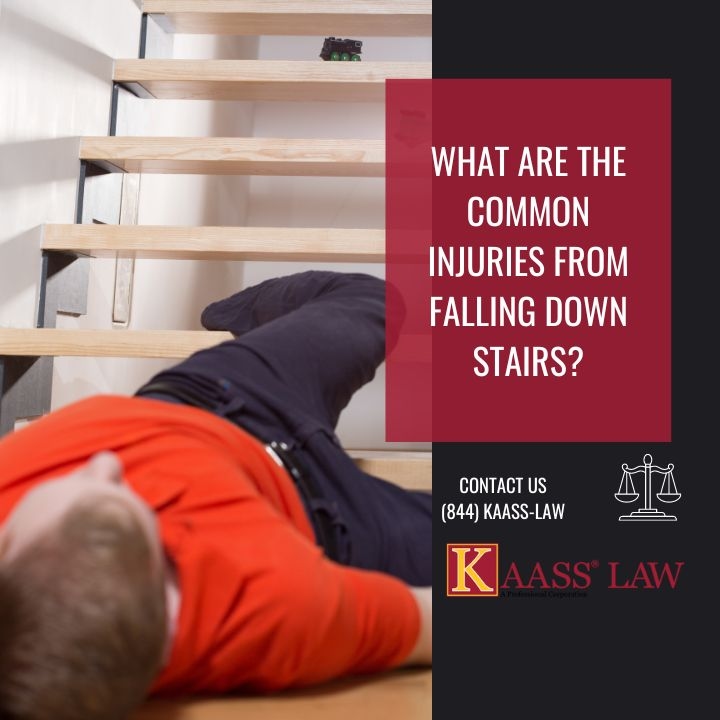
Many individuals have serious concerns about tumbling down the stairs, whether at work, at home, or in public. It's crucial to learn how to avoid accidents as soon as possible since they have the potential to cause life-altering damage. Every time you use stairs, stairway safety should always be your first priority. Handrails, carpets, and anti-slip coatings provide users with the assurance that the surroundings of staircases are secure. Although there may be safety precautions on a staircase that limit future accidents, it does not entirely avoid them from happening.
What Are the Common Injuries From Falling Down Stairs?
What are the most prevalent injuries caused by a stairwell fall? The distance you fell, whether the steps were carpeted, and if the stairway was enclosed are all variables that will impact the severity and character of your injuries if you fall downstairs. While each individual may get a different injury as a consequence of a fall, there are a few that are more common than others. Typical examples include the following:
- Neck & back injuries, as well as traumatic brain injury
- Spinal-cord injury
- Shattered or fractured bones
- Deep laceration or contusion
- Broken facial bones
- Compound fractures of the wrists and hands
- A sprain or a strain
- Dislocations
- Harm to organs
- Bleeding, internal and external
The degree of your injuries will, of course, be determined by the type of staircase involved and how you fell. For example, you may fall forward and put your weight on your arm, or you could fall backward and forcefully bang your head on the above stairs. Many injuries can be quite serious and need a lot of medical attention, including emergency care, surgeries, hospital stays, rehabilitation therapy, and any other necessary treatments.
Do Stairway Falls Often Involve Negligence?
It is the responsibility of property owners to keep all stairways on their property fairly safe for guests. Unfortunately, a lot of falls happen because careless property owners fail to uphold this duty of care and maintain their property. The following are some instances of carelessness that result in stair falls:
- Damaged or unequal stairs
- Lacking sufficient railings
- Lacking sufficient lighting in stairwells
- Having overly steep or few steps and allowing rotting or lose stair planks
- Worn carpet on the staircase
- Slippery or wet surfaces
- Not alerting visitors about potential risks
A property owner may be held accountable for the damages suffered by a fall victim due to any of the aforementioned hazardous situations.
Home Stair Safety at Home and Your Workplace
Employers should prioritize stair safety at work. It's crucial to take the necessary steps to prevent accidents because they can occur at any time and to anybody. The staircase in issue will determine if this is due to stairway construction or a specific problem. It would be tragic if you or one of your employees were hurt as a result of faulty construction or a lack of protective elements. Stair safety is equally important in the home as it is in the workplace. Falls down the stairs can happen at any time. As a result, in addition to making physical adjustments to your staircase to make it safer overall, it's vital that you follow the proper safety measures when using it. For instance, you could:
- Maintain your alertness while utilizing the stairs
- You eliminate any potential tripping dangers
- Take your time up the steps
To prevent accidents, everyone in your home or place of employment should practice stairway safety, not just you. It just takes a fraction of a second for one to occur.
Aftercare and Seeking Help
If an accident occurs, understanding how to recover from a fall down the stairs is important. All of the injuries stated above are quite serious, prompting the individual to seek medical attention in the majority of situations. Depending on the severity of your injuries, it is essential that you visit a doctor or healthcare specialist in order to receive the proper care for a stair-related injury. We hope that this guide has shown you the most typical injuries that can arise from falling steps, the laws that apply to such injuries, how to recover from a fall, and most importantly, how to avoid such injuries in the first place. Contact Kaass Law at 310.943.1171 to discuss your case further. https://youtu.be/MNarbp2mWXM
Related Articles
View All Posts
Hotel injuries can involve unsafe balconies, security failures, elevators, pools, furniture, and other hazards beyond slip and fall accidents.
E-bikes are gaining popularity across California, offering an efficient and eco-friendly way to get around. But with the rise in usage, the number of e-bike injury incidents involving both riders and pedestrians has also grown. If you’ve been injured while riding an e-bike—or struck by one—you need to take swift action to protect your health and your legal rights. Here's what to do immediately after an injury accident in California
Step 1: Get Medical Attention for Your E-Bike Injury
Your health should always come first. After an e-bike injury, call 911 or go to the nearest emergency room, even if you feel okay. Some injuries, such as concussions or internal bleeding, may not show immediate symptoms.
Seeing a doctor promptly not only protects your health but also creates a medical record that can be critical if you decide to pursue a legal claim.
Step 2: Report the E-Bike Injury to the Police
Call local law enforcement to report the accident. In California, any collision involving injury or property damage must be documented. The responding officer will create an official police report.
Be clear and honest when giving your statement. Make sure you ask how to obtain a copy of the report. It will serve as important evidence in your case.
Step 3: Preserve Evidence—Don’t Disturb the Scene
In any e-bike injury case, preserving the accident scene is critical. If you are physically able, avoid moving the e-bike, other vehicles, or debris until authorities arrive. This helps investigators document the scene accurately.
Take photographs or videos of:
- Damaged e-bikes or vehicles
- Skid marks and debris
- Traffic signs or signals
- Visible injuries
- Your location relative to the road or sidewalk
If you're unable to take photos yourself, ask a witness or bystander to help. Never clean up or move items until the scene is documented.
Step 4: Collect Witness Statements After an E-Bike Injury
Witnesses can play a key role in verifying your version of events. If anyone saw the crash, ask them for:
- Full name
- Contact information
- A brief statement of what they saw
Eyewitness accounts are especially helpful in e-bike injury cases involving disputes over right of way, sidewalk use, or rider negligence.
Step 5: Document Your Injuries and Financial Losses
Keep records of everything related to your e-bike injury, including:
- Photos of injuries
- Doctor’s notes
- Prescriptions
- Physical therapy sessions
- Time missed from work
- Property damage (e.g., broken phones, cracked helmets, damaged e-bike)
Hold on to all bills, receipts, and repair estimates. This documentation will help build your case and support your claim for compensation.
Step 6: Don’t Speak to Insurers Without Legal Help
After an e-bike injury, insurance companies may contact you for a statement. Don’t provide one without first consulting a lawyer. Insurers often try to minimize payouts or shift blame.
At KAASS LAW, we deal with insurance adjusters on your behalf. We make sure your rights are protected and help you pursue fair compensation.
Step 7: Understand Liability in an E-Bike Injury Case
Determining fault is key in any e-bike injury case. Liability may fall on:
- A negligent e-bike rider
- A driver who hit a rider
- The city has hazardous road conditions
- An e-bike manufacturer is experiencing equipment failure
A personal injury attorney can help investigate the cause, gather evidence, and identify all responsible parties.
Common Causes of E-Bike Injury in California
Here are the common causes of e-bike injury for both riders and pedestrians:
- Reckless or speeding riders
- Riding on sidewalks or pedestrian paths
- Distracted riding or driving
- Mechanical failures (brakes, tires, batteries)
- Dooring accidents from parked vehicles
- Failure to yield at crosswalks or stop signs
If negligence was involved, you may be eligible for compensation for your injuries and damages.
Know Your Rights After
California law provides legal options for victims of injury accidents. Whether you're a rider or a pedestrian, you have the right to seek damages if someone else was at fault.
Visit our Personal Injury and Bicycle Accident Lawyer pages to learn more about your rights and how KAASS LAW can help.
When to Contact an Attorney
Don't wait to speak with a qualified attorney if you’ve suffered an injury in California. At KAASS LAW, we assist victims in gathering evidence, filing claims, and securing the compensation they deserve.
We offer free consultations and work on a contingency fee basis, meaning you pay nothing unless we win your case.
E-Bike Safety Resources
Visit the National Highway Traffic Safety Administration (NHTSA) to learn more about e-bike safety, traffic laws, and accident prevention. This reputable resource offers valuable guidance for both riders and motorists.
Call KAASS LAW Today for Help With Your E-Bike Injury Case
If you or a loved one has been involved in an e-bike injury accident—whether as a rider or a pedestrian—you don’t have to face the aftermath alone. The legal team at KAASS LAW is here to help you understand your rights, gather critical evidence, and pursue the compensation you deserve.
Our experienced California personal injury attorneys have successfully represented clients in a wide range of transportation-related accident cases. We are committed to holding negligent parties accountable and helping you get the justice you need to move forward. Call us today at (310) 943-1171 or visit kaass.com to schedule your consultation.
What Are California's Clean Car Rules?
Clean Car rules refer to California's vehicle emission standards aimed at reducing air pollution and greenhouse gases. These rules come from the California Air Resources Board (CARB). They require automakers to cut tailpipe emissions and produce zero-emission vehicles like electric or hydrogen-powered cars.
California's program is stricter than federal rules. Over a dozen other states have adopted these standards under Section 177 of the Clean Air Act.
Legal Challenge to Clean Car Standards Gains Traction
Recently, the U.S. Supreme Court allowed a lawsuit against California’s Clean Car rules to move forward. This case was brought by Republican-led states and industry groups. They claim that California's authority to set its own emission rules is unconstitutional.
The main argument revolves around the federal Clean Air Act. It allows California to request a waiver to impose stricter standards. The plaintiffs argue that these waivers create confusion and impose unfair burdens on car manufacturers. Automakers must then meet both federal and California standards.
Supreme Court Declines to Block the Case
The Supreme Court did not rule on the lawsuit’s outcome. Instead, it simply allowed the case to continue in lower courts. This reverses earlier decisions that blocked the case on jurisdictional grounds.
California Attorney General Rob Bonta has promised to defend the rules. Environmental groups also support the Clean Car program, citing public health and climate benefits.
What This Means for Automakers and Consumers
If the challenge succeeds, California might lose its power to enforce stricter emissions rules. Automakers would likely reduce investments in zero-emission vehicles for the California market.
Consumers could see fewer Clean Car options and increased vehicle emissions. If California wins, the state could continue shaping national clean vehicle policy and technology.
Environmental and Health Impacts
Clean Car standards are about more than climate change. They address serious public health concerns. Vehicle emissions worsen smog and trigger asthma and heart conditions, especially in cities.
California suffers from some of the worst air pollution in the U.S. Areas like Los Angeles and the Central Valley are most affected. Clean Car rules aim to reduce the harm caused by millions of vehicles.
To learn more about vehicle pollution and public health, visit the Environmental Defense Fund.
Legal Battle Over State vs. Federal Power
This lawsuit raises big questions about federalism. Should California be able to set stricter rules than the federal government?
The Clean Air Act gives California the right to apply for waivers. That’s because the state has struggled with air pollution for decades.
Opponents argue these waivers give California too much control over national markets. Supporters say they drive innovation and protect public health.
The Trump administration revoked California’s waiver. President Biden later restored it. The back-and-forth has led to legal uncertainty.
Clean Car Standards Drive the Electric Vehicle Future
No matter how this case ends, the shift toward electric vehicles (EVs) is underway. Automakers like Tesla, Ford, and GM are heavily investing in EVs.
Clean Car rules helped build charging infrastructure and encouraged EV adoption. Weakening these rules might slow progress. But market forces and climate goals will likely keep the EV transition moving forward.
KAASS LAW’s Legal Insight
At KAASS LAW, we closely track cases like the Clean Car challenge. Environmental laws affect businesses, consumers, and government entities alike. Our attorneys are ready to help you understand and respond to these legal changes.
Visit our Business Law page to learn how we assist clients with compliance and litigation. We also handle Lawsuits and Litigation in various sectors, including environmental matters.
What Happens Next?
The case returns to lower courts for full litigation. Both sides will present their arguments. A final decision may take years.
Until then, Clean Car standards remain active. Automakers, regulators, and environmental groups will be watching closely. The ruling could reshape national clean air policy.
Conclusion
The Supreme Court’s action allows a high-stakes lawsuit against California’s Clean Car rules to move forward. The outcome will affect state powers, public health, and the auto industry.
Whether you’re a business, consumer, or policymaker, the decisions made in this case could impact you. Contact KAASS LAW to learn how we can help you navigate these evolving legal landscapes.