The Prudent Investor Standard and a Property Manager’s Duty of Care in California: Understanding Legal Responsibilities
Property managers play an important role in maintaining rental properties, protecting property values, and addressing conditions that could affect tenants and visitors. In California, their responsibilities go beyond collecting rent and coordinating repairs. Depending on their authority and involvement, property managers may also have legal obligations to exercise reasonable care when overseeing property conditions. Understanding these distinctions can help property owners, managers, and injured individuals recognize when unsafe property conditions may create legal liability.
The Prudent Investor Standard: An Overview
California's prudent investor rule is mainly established under Probate Code Section 16047. It requires trustees managing trust assets to exercise reasonable care, skill, and caution. The prudent investor standard encourages responsible financial decisions, including evaluating risks, considering long-term objectives, and managing assets adequately.
Duty of Care for Property Managers
Under California Civil Code Section 1714, individuals and businesses may be responsible for injuries caused by their failure to exercise ordinary care under circumstances where it may be extremely important. In property management, this principle may apply when a manager has sufficient control over a property condition and fails to take reasonable steps to address a possible danger that may cause injuries in the future. Common responsibilities may include, but are not limited to, the following.
- Inspecting common areas for potentially dangerous conditions.
- Responding to tenant complaints involving safety concerns.
- Coordinating necessary repairs and maintenance.
- Addressing reported structural defects or unsafe walkways.
- Maintaining records of inspections, complaints, and repairs.
- Communicating significant safety concerns to property owners.
The scope of these responsibilities varies depending on the manager's authority, contractual duties, and actual control over the properties.
A property manager is not automatically liable whenever an individual becomes injured on the property. Liability often requires an examination of the circumstances, including whether the manager owed a duty, breached that duty, and contributed to the resulting harm.
The Importance of Property Safety and Maintenance
Responsible property management requires balancing financial considerations with reasonable safety precautions. While managers may operate within budgets established by property owners, financial rules do not eliminate applicable duties to address dangerous conditions. If someone falls and suffers an injury, the manager's knowledge of the hazard, authority to repair it, and response to complaints may become important in determining who may be held potentially liable. In addition, the following instances may also create possible risks.
- Recurring water leaks
- Damaged flooring
- Inadequate lighting
- Malfunctioning security gates
Individuals should understand whether the manager exercised the care required under the circumstances.
Who May Be Liable?
Depending on the circumstances, both a property owner and a property management company may face potential liability for injuries involving dangerous property conditions. California premises liability law considers ownership, possession, occupancy, or control of property, together with negligent maintenance and causation.
A management company that controls inspections, supervises repairs, or oversees common areas may have responsibilities separate from those of the landlord. For example, if a manager receives repeated complaints about a broken handrail but fails to arrange repairs or notify the owner, that behavior may be examined when determining negligence.
Property Management and Common Dangers
Several property hazards may raise questions about whether a manager exercised reasonable care. These may include but are not limited to:
- Slip-and-fall hazards: Wet floors, damaged sidewalks, uneven surfaces, and poorly maintained stairways may contribute to accidents.
- Structural problems: Loose railings, deteriorating balconies, damaged ceilings, and unstable flooring may present risks when repairs are neglected.
- Inadequate lighting: Poorly illuminated stairwells, parking areas, and walkways may increase the likelihood of falls or other incidents.
- Water damage: Persistent leaks may create slippery surfaces, weakened materials, or other unsafe conditions.
- Security-related concerns: In certain circumstances, poor responses to known security risks may raise additional legal questions.
Not every hazardous condition establishes negligence. The manager's knowledge, ability to discover the condition, opportunity to address it, and connection to the injury must be considered.
Premises Liability Claims
A person pursuing a California premises liability claim usually must establish four elements:
- The defendant owned, leased, occupied, or controlled the property.
- The defendant was negligent in the property's use or maintenance.
- The injured person suffered harm.
- The negligence was a significant factor in causing that harm.
Evidence may include but is not limited to the following.
- Maintenance records
- Inspection reports
- Photographs
- Witness statements
- Prior complaints
- Communications between the manager and owner
The Importance of Seeking Legal Guidance and Support
It may be beneficial to seek the help of a legal professional after suffering injuries from a dangerous property condition to make sure you are receiving the proper care and support you need moving forward. It is crucial to understand the duties and responsibilities of property managers and the necessary steps to take when those individuals fail to practice reasonable care.
How KAASS LAW Can Help
The qualified personal injury attorneys at KAASS LAW are determined to help victims who have been injured by an unsafe property condition. Our legal team may review the facts surrounding your case, preserve important pieces of evidence, and determine potentially responsible parties moving forward. Call KAASS LAW today to learn more.
Related Articles
View All Posts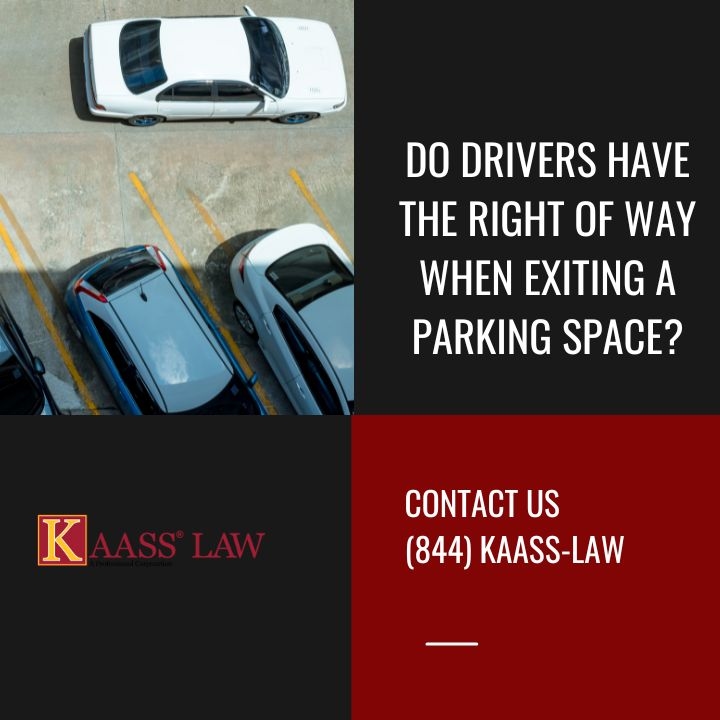
When exiting a parking space, drivers must yield right of way to passing vehicles and pedestrians. If they collide with a pedestrian or another vehicle while backing out, they will almost always be held accountable. There may be exceptions, such as when the oncoming vehicle was speeding or the pedestrian was particularly careless.
Do Drivers Have the Right of Way When Exiting a Parking Space?
Vehicles that have been parked and are pulling out of a parking space do not have the right of way. They must yield to vehicles moving through the parking lot. They must also yield to pedestrians. However, parking lots are notorious for having a lot of activity. They are also densely packed with parked cars, resulting in poor visibility and numerous blind spots. This can make seeing oncoming traffic through the other parked cars difficult. Nonetheless, drivers backing out of a parking spot have a legal obligation to do so safely. They are usually liable if they hit another car or a pedestrian. They can be made to compensate the parking lot accident victim. There are, however, exceptions.
What Are Some Examples of Driver and Third-Party Negligence?
In a case involving an auto accident, disregarding certain driving regulations can serve as proof of negligence. The finding of negligence may significantly impact the assessment of responsibility for the incident. If the driver or pedestrian who was hit was acting inappropriately, their share of the blame may be greater than that of the driver pulling out of the parking spot. Their carelessness can manifest itself in a variety of ways, including:
- DUI at the time of the crash
- Pedestrians who saw you backing out and intentionally hit you
- Drivers speeding and being negligent of other drivers in their parked vehicles, leaving them little time to see other drivers coming
- People running through the parking lot ignorantly
- Drivers driving through vacant parking spaces rather than the lane between them
The person hit by the car pulling out may have contributed to the accident in these cases. If they hire a car accident lawyer to file a personal injury lawsuit against the driver who pulled out, shared fault rules, such as comparative negligence, may reduce or eliminate their compensation.
Who has the Right of Way, and who is the Liable Party?
Usually, both parties are at fault when two vehicles back out simultaneously in different directions and collide. If acceleration and impact were striking at high speeds, it is possible for both drivers to get injuries. However, injuries may vary. In any case, it is crucial to contact your attorney and find out if you are able to receive compensation for your loss. Those in parking spaces must yield to those in the main lanes, meaning the driver coming from the traffic flow has the right of way. In other words, the driver in the main lane has priority over individuals exiting parking spaces. On the traffic flow, alternatively, this hierarchy is based. When pulling out of a parking space, parked automobiles yield to moving vehicles. Moving cars in the main lane of traffic must yield to stationary vehicles during the time of traffic. All cars, however, have to stop for pedestrians. Parking lots are always one-way for pedestrians. They can still cause an accident, though, by acting inappropriately. In parking lots, there is a standard regulation for the speed restriction. This aims to give drivers ample time to brake and avoid an accident in a parking lot. Certain parking lots have their own right-of-way guidelines. These must be clearly visible on street signs or painted on the pavement. These might, for instance, lower the speed limit or change who gets the right of way. Parking lots can be especially dangerous for children and pedestrians. According to the National Highway Traffic Safety Administration, thousands of pedestrians are injured each year due to driver inattention and poor visibility in areas like parking lots.
How Common Are Parking Lot Collisions?
Parking lot collisions happen frequently and can be incredibly serious. A tendency to drive while distracted in a parking lot is a major contributing factor to the large number of these accidents. Driving with any distraction can lead to serious or even fatal injuries, especially to vulnerable victims. Many victims in parking lot accidents are children. Because of their short height, even an attentive driver backing up from his or her parking spot is often unable to see young kids. Additionally, children frequently run through parking lots, making it difficult for drivers to predict their location. The family of the victim may bring a wrongful death claim if there has been a tragic parking lot collision involving a vehicle or a pedestrian. In order to obtain compensation from the party at fault if you were injured in a busy parking lot, you might think about creating an attorney-client relationship with a personal injury lawyer. If you have been involved in a collision in a parking lot, call Kaass Law at 310.943.1171.

When your property is damaged due to someone else’s actions, you have the right to seek compensation under California law. But timing is everything. If you wait too long, you may lose the opportunity to recover damages entirely. Understanding the legal timeline and how it applies to property damage claims is crucial for protecting your rights.
In this article, we’ll break down the types of property damage, relevant deadlines, and exceptions under the California Code of Civil Procedure. If you're facing a situation involving damage to your property, this guide will help you take the next step.
Types of Property Damage Recognized in California
There are two main categories of property damage under California law:
1. Damage to Real Property
This refers to damage involving land or anything permanently attached to it, such as:
- Residential or commercial buildings
- Fences and landscaping
- Driveways or sidewalks
For example, if someone drives a vehicle into your home or illegally builds on your land, it falls under real property damage.
2. Damage to Personal Property
This includes movable items not permanently affixed to land or structures. Common examples are:
- Vehicles
- Jewelry
- Electronics
- Furniture
If a neighbor backs into your car or someone intentionally smashes your laptop, this would be considered damage to personal property.
California's Statute of Limitations for Property Damage Claims
Under California Code of Civil Procedure Section 338, the law sets a clear deadline to file most property damage lawsuits. You typically have three years from the date the damage occurred.
Here’s how the statute applies:
- Trespass or Injury to Real Property
You have three years to sue if someone unlawfully enters or damages your home, land, or another structure. - Damage to Personal Property (Goods or Chattels)
You also have three years to file a lawsuit if your personal belongings—such as a vehicle or electronics—are harmed, stolen, or detained without your permission.
This deadline applies regardless of whether the damage is part of a larger legal claim or an independent lawsuit.
What Happens If You Miss the Deadline?
If you attempt to file a lawsuit after the three-year statute of limitations has expired, the defendant will likely file a motion to dismiss your case. In most situations, the court will grant this dismissal, meaning you lose your right to recover compensation, unless a valid legal exception applies.
Exceptions to the Property Damage Statute of Limitations
California law allows for certain situations in which the statute of limitations may be paused or tolled. Below are a few notable exceptions:
1. Defendant Was Out of State
If the person responsible for the damage was out of California for part of the three-year period, the timeline may be paused. The statute doesn’t count the time the defendant was unreachable or absent from the state.
2. Minor or Legally Incapacitated Plaintiff
If you were under the age of 18 or were not legally capable of making decisions (due to illness or disability), the three-year period may not begin until you reach legal adulthood or recover mental competency.
Why Timing Matters in Property Damage Cases
Waiting too long to file your claim can lead to more than just the dismissal of your case. Evidence can disappear, memories fade, and witnesses may be harder to locate. Filing early helps preserve critical documentation such as:
- Repair bills
- Expert appraisals
- Photographs of damage
- Police or incident reports
- Witness statements
The longer you delay, the harder it becomes to build a strong case.
When Should You Speak with a Property Damage Lawyer?
If you're unsure whether the three-year deadline has passed—or whether an exception may apply—it's important to speak with a knowledgeable California attorney as soon as possible.
At KAASS LAW, our experienced legal team can review your case, determine applicable deadlines, and help you pursue the compensation you deserve. We offer legal services in Glendale, Los Angeles, and throughout California, handling both real estate and claims.
Learn more about our personal injury and civil litigation services
Don’t Miss the Deadline and contact KAASS LAW today!
If your home, land, or personal items were damaged due to another person’s actions or negligence, you have a limited time to act. Under California Code of Civil Procedure Section 338, most lawsuits must be filed within three years. Missing the deadline could mean permanently losing your right to compensation.
Whether the damage was accidental or intentional, involving a neighbor, a driver, or a stranger, understanding your legal rights and the time limits is crucial. If you're in doubt about how much time you have left—or whether your case qualifies for an exception—reach out to a trusted California property damage lawyer today.
Call KAASS LAW at (310) 943-1171 for a free consultation about your property damage case.
