Riding a Motorcycle Without California License VC 12500
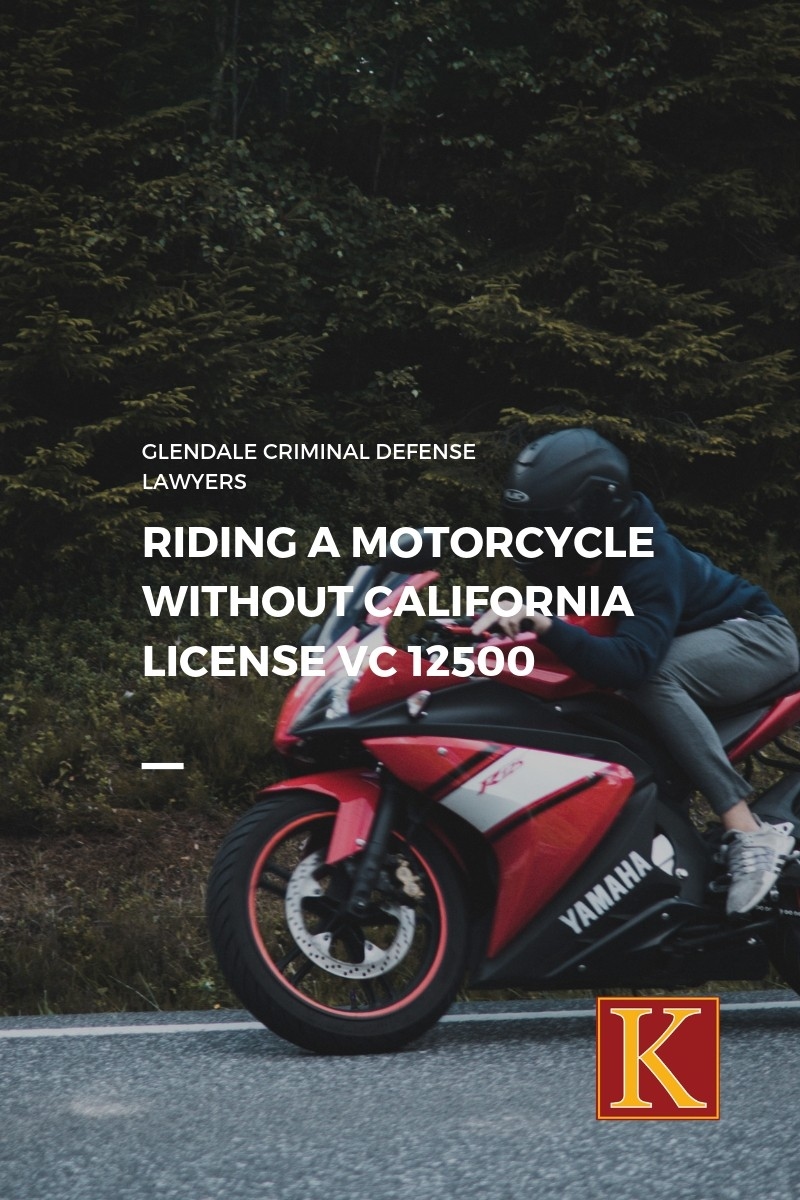
VC 12500 Driving a Motorcycle in California Without a License
California Vehicle Code § 12500 It is illegal in California to drive a motorcycle or any motor-driven or motorized cycle. You would need to have a valid driver's license to do so. However, a driver's license doesn't need to be the only thing that is applicable in California. Nonresidents of California can drive in California as long as they are over the age of 18. Also in their possession is a valid driver's license from the jurisdiction in which they reside. According to California Vehicle Code § 12503, if the jurisdiction in which the individual resides does not require a driver's license, then the individual can drive in California without a driver's license, but not to exceed 30 days.
What Does "State of Domicile" Mean?
According to California Vehicle Code § 12505, an individual’s place of residence can be a determination by their “state of domicile,” which is the state where a person can show a fixed, and permanent home and principal residence and to which he or she can return when absent. An individual is domiciled in the state in which they intend to live for an indefinite amount of time. If the individual came to California from Nevada with the intent to stay for a month and then return back to their home in Nevada, then their domicile, and residency, is in Nevada. Courts will typically look at evidence such as: where an individual can register to vote; where an individual pays taxes; and whether the individual pays resident tuition at a university in order to establish an individual’s state of residency.
What is Vehicle Code § 12500 et seq.?
Under California Vehicle Code 12500(a), a person may not drive a motor vehicle upon a highway, unless the person then holds a valid driver's license issued under this code, except those persons who are expressly exempted under this code.
What Are The Penalties for VC 12500 Driving a Motorcycle in California Without a License?
VC 12500(a) driving without a valid license can be charged as either a California infraction or a California misdemeanor. The misdemeanor penalties for driving without a license can include:
- Up to six (6) months in county jail and/or
- A fine of up to one thousand dollars ($1,000)
What Does the Court Need to Prove Under VC 12500?
In order for the court to prove that you are guilty of driving without a valid license, they must establish two elements:
- You drove on a street or highway, and
- At the time you drove, you did not hold a validly issued driver's license.
Motorcycle Accident: No Motorcycle License and No Insurance: Proposition 213 Uninsured Motorist
Under California law, it is a requirement for drivers to carry liability insurance when operating a motor vehicle on a public road. If you got into an accident, due to the fault of another, while operating a motor vehicle without liability insurance, you likely fall under “Proposition 213”.Under California law, uninsured motorists involved in traffic collisions within the State of California, whether or not the collision was the cause by the uninsured motorist, they cannot recover general damages such as pain and suffering. KAASS Law may be able to help you either dismiss or reduce your VC 12500 charges to a less-serious infraction. If you were involved in a motorcycle accident you were both unlicensed and uninsured at the time of the collision, we further invite you to call our Los Angeles Motorcycle accident lawyer at (310) 943-1171 any time! Our law firm is dedicated to getting our clients the compensation they deserve. Get in touch with our law firm now or sign up online for a free consultation and case review. We speak English, French, Spanish, Russian, and Armenian. [contact-form-7 id="5673" title="KAASS LAW Contact Form"]
Related Articles
View All Posts
Illinois limits private equity influence in law firms, reinforcing attorney independence, client confidentiality, and professional judgment.
A Downtown Los Angeles fatal stabbing and vehicle incident raises questions about wrongful death, negligence, and potential civil liability.
What Are California's Clean Car Rules?
Clean Car rules refer to California's vehicle emission standards aimed at reducing air pollution and greenhouse gases. These rules come from the California Air Resources Board (CARB). They require automakers to cut tailpipe emissions and produce zero-emission vehicles like electric or hydrogen-powered cars.
California's program is stricter than federal rules. Over a dozen other states have adopted these standards under Section 177 of the Clean Air Act.
Legal Challenge to Clean Car Standards Gains Traction
Recently, the U.S. Supreme Court allowed a lawsuit against California’s Clean Car rules to move forward. This case was brought by Republican-led states and industry groups. They claim that California's authority to set its own emission rules is unconstitutional.
The main argument revolves around the federal Clean Air Act. It allows California to request a waiver to impose stricter standards. The plaintiffs argue that these waivers create confusion and impose unfair burdens on car manufacturers. Automakers must then meet both federal and California standards.
Supreme Court Declines to Block the Case
The Supreme Court did not rule on the lawsuit’s outcome. Instead, it simply allowed the case to continue in lower courts. This reverses earlier decisions that blocked the case on jurisdictional grounds.
California Attorney General Rob Bonta has promised to defend the rules. Environmental groups also support the Clean Car program, citing public health and climate benefits.
What This Means for Automakers and Consumers
If the challenge succeeds, California might lose its power to enforce stricter emissions rules. Automakers would likely reduce investments in zero-emission vehicles for the California market.
Consumers could see fewer Clean Car options and increased vehicle emissions. If California wins, the state could continue shaping national clean vehicle policy and technology.
Environmental and Health Impacts
Clean Car standards are about more than climate change. They address serious public health concerns. Vehicle emissions worsen smog and trigger asthma and heart conditions, especially in cities.
California suffers from some of the worst air pollution in the U.S. Areas like Los Angeles and the Central Valley are most affected. Clean Car rules aim to reduce the harm caused by millions of vehicles.
To learn more about vehicle pollution and public health, visit the Environmental Defense Fund.
Legal Battle Over State vs. Federal Power
This lawsuit raises big questions about federalism. Should California be able to set stricter rules than the federal government?
The Clean Air Act gives California the right to apply for waivers. That’s because the state has struggled with air pollution for decades.
Opponents argue these waivers give California too much control over national markets. Supporters say they drive innovation and protect public health.
The Trump administration revoked California’s waiver. President Biden later restored it. The back-and-forth has led to legal uncertainty.
Clean Car Standards Drive the Electric Vehicle Future
No matter how this case ends, the shift toward electric vehicles (EVs) is underway. Automakers like Tesla, Ford, and GM are heavily investing in EVs.
Clean Car rules helped build charging infrastructure and encouraged EV adoption. Weakening these rules might slow progress. But market forces and climate goals will likely keep the EV transition moving forward.
KAASS LAW’s Legal Insight
At KAASS LAW, we closely track cases like the Clean Car challenge. Environmental laws affect businesses, consumers, and government entities alike. Our attorneys are ready to help you understand and respond to these legal changes.
Visit our Business Law page to learn how we assist clients with compliance and litigation. We also handle Lawsuits and Litigation in various sectors, including environmental matters.
What Happens Next?
The case returns to lower courts for full litigation. Both sides will present their arguments. A final decision may take years.
Until then, Clean Car standards remain active. Automakers, regulators, and environmental groups will be watching closely. The ruling could reshape national clean air policy.
Conclusion
The Supreme Court’s action allows a high-stakes lawsuit against California’s Clean Car rules to move forward. The outcome will affect state powers, public health, and the auto industry.
Whether you’re a business, consumer, or policymaker, the decisions made in this case could impact you. Contact KAASS LAW to learn how we can help you navigate these evolving legal landscapes.