Jet Ski Accidents: Understanding Liability on California Waterways
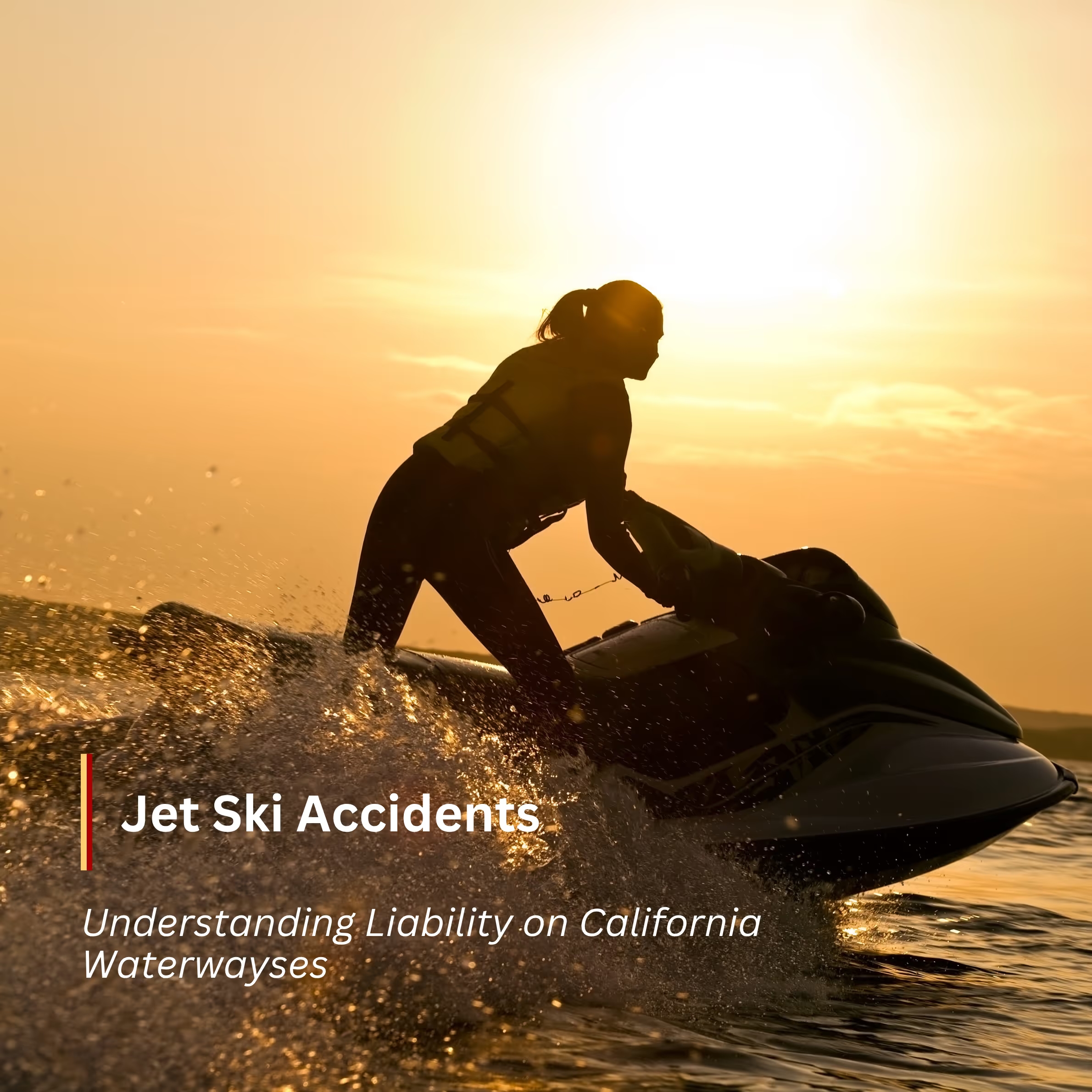
Jet skis are a great way for friends and families to get together, especially during the summer. These vehicles may be operated on lakes, rivers, and other coastal areas, often bringing a sense of joy and fun. However, jet ski accidents can also cause serious injuries that may be life-threatening at times. Riders who lose control, are not aware of their surroundings, or are speeding on the water may pose serious threats to themselves and other individuals around them. Understanding the risks that come along with jet skis and the necessary precautions when an accident occurs is important for the future.
Understanding California’s Laws: Jet Skis
Under California law, jet skis are considered vessels that are required to follow boating safety requirements. Operators have a responsibility to use their watercraft in a reasonable and careful manner. Violating boating rules does not automatically determine the outcome of every civil claim. However, evidence that an operator disregarded an applicable safety requirement may be relevant when evaluating negligence and responsibility for an accident.
How Does a Jet Ski Accident Happen?
Jet ski accidents can happen for many reasons. The following factors may contribute to a jet ski accident.
- Excessive speed
- Operator inexperience
- Distracted operation
- Alcohol or drug impairment
- Following another vessel too closely
- Unsafe turns or maneuvers
- Failure to maintain a proper lookout
- Crowded waterways
- Poor weather or visibility
- Mechanical or equipment failures
- Failure to use required safety equipment
California requires these vessels to carry appropriate wearable flotation devices for individuals. Safety-equipment requirements may become relevant when investigating how an accident occurred and the severity of resulting injuries.
Jet Ski Operator
A jet ski operator may potentially be responsible when negligent conduct causes another person to suffer an injury. For example, an operator may collide with another jet ski because they were traveling too fast. A negligence claim usually involves analyzing whether the operator owed a duty of reasonable care, whether that duty was breached, and whether the conduct contributed to the victim’s injuries and damages.
Evidence such as witness statements, photographs, video recordings, accident reports, boating citations, GPS information, and medical records may help determine what happened during the accident.
Jet Ski Owner
The operator and owner of a jet ski are not always the same person. An owner may allow a friend, relative, guest, or another individual to operate the vehicle. Depending on the circumstances, questions may arise regarding whether the owner knew or reasonably should have known that the individual was not capable of safely operating the vessel.
For example, liability issues may arise if an owner knowingly allows an inexperienced or impaired individual to use the jet ski.
Who is Responsible after a Jet Ski Accident?
When an accident involves a rented jet ski, the rental agreement and the company's actions may become important. Depending on the circumstances, an investigation may consider whether the rental company maintained its equipment, provided required safety information, followed applicable rental requirements, or rented equipment that had a dangerous mechanical condition.
Product Liability Claims
Sometimes an accident may involve a mechanical or product defect instead of the operator’s behavior. Potential issues could involve steering systems, throttles, engine cutoff mechanisms, fuel systems, or other components. When defective equipment is suspected, parties involved in the design, manufacture, distribution, maintenance, or repair of the watercraft may need to be investigated.
In addition, preserving the jet ski in its original condition after the accident is important. Repairs or disposal of the equipment could make it more difficult to determine whether a mechanical problem contributed to the incident.
California’s Comparative Negligence Laws
California follows a comparative negligence approach. This means responsibility may be distributed among the parties based on their percentage of fault in the initial accident. Comparative negligence makes it especially important to avoid assuming that responsibility belongs entirely to one person before the circumstances have been investigated.
Types of Injuries
Since riders have little physical protection, jet ski accidents can cause significant injuries. A rider may be thrown from the watercraft, struck by another vessel, or collide with a fixed object. Potential injuries that may occur after a jet ski accident include but are not limited to the following.
- Head injuries
- Traumatic brain injuries
- Lacerations
- Internal injuries
- Shoulder and knee injuries
- Spinal injuries
- Drowning-related injuries
The nature and extent of an injury can affect the medical evidence and damages considered in a personal injury case later on. As a result, documentation of emergency treatment, follow-up care, rehabilitation, missed work, and continuing symptoms may become important.
Speaking to a Legal Professional
Seeking legal guidance in support after suffering injuries from a jet ski accident may be beneficial when determining potentially liable parties and understanding your rights throughout your personal injury claims. A jet ski accident can pose serious threats and be dangerous to families and loved ones. These types of incidents may also cause various legal and insurance questions, leaving individuals unsure of what to do next. A legal professional may be able to review your case and help you understand your rights throughout the legal process.
The Legal Team at KAASS LAW
Our qualified personal injury attorneys are determined to help victims who have suffered injuries from a jet ski accident. Understanding who may be held responsible can be a challenging and complicated process, leaving victims unsure of the steps to take moving forward. Our legal team at KAASS LAW is ready to help those involved in a jet ski accident understand their rights throughout their case. Call KAASS LAW today to learn more.
Related Articles
View All Posts
Learn about shopping mall accidents, property owner liability, injured visitors' rights, and legal options available under California law.
Learn who may be responsible for elevator accidents caused by poor maintenance, how liability is determined, and what injured passengers can do next.
Learn who may be responsible for injuries caused by uneven sidewalks in California and how liability may depend on property control and local laws.