
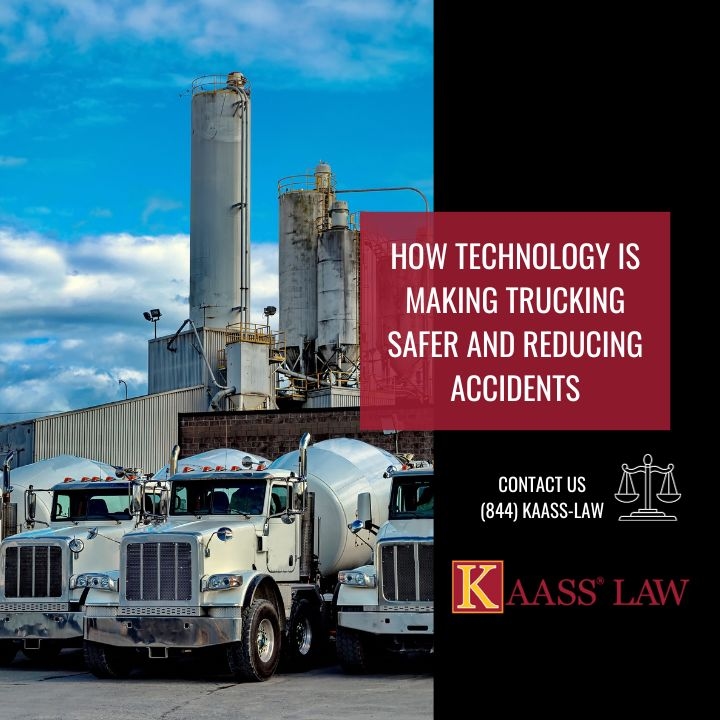
In the world of transportation, the trucking industry serves as a backbone for the movement of goods across the country. However, with the sheer volume of trucks on the road, safety concerns have always been paramount. The good news is that technology is playing a pivotal role in making trucking safer and reducing accidents. In this blog, we'll explore the innovative technologies that are transforming the trucking industry and contributing to a safer road environment.
One of the most significant advancements in trucking safety technology is the implementation of collision avoidance systems. These systems use sensors and cameras to monitor the space around a truck, detecting potential collisions and warning the driver in real-time. Some advanced systems can even automatically apply the brakes to prevent or mitigate a collision. By providing an extra layer of protection, collision avoidance systems are instrumental in reducing rear-end collisions, a common type of trucking accident.
The implementation of Electronic Logging Devices (ELDs) has brought about a fundamental shift in the trucking industry. ELDs electronically record a driver's hours of service, ensuring compliance with federal regulations. By replacing traditional paper logbooks, ELDs not only improve accuracy but also help prevent driver fatigue, a leading cause of accidents. This technology ensures that drivers adhere to mandatory rest periods, promoting safer driving practices.
Telematics and fleet management systems use GPS and onboard sensors to collect and transmit real-time data about a truck's location, speed, and various mechanical parameters. Fleet managers can monitor driver behavior, vehicle maintenance needs, and adherence to safety protocols. This technology allows for proactive intervention, addressing potential issues before they escalate into safety hazards. By promoting responsible driving habits and regular maintenance, telematics contribute to overall road safety.
Advanced Driver Assistance Systems encompass a range of technologies designed to assist drivers and enhance overall safety. These systems may include lane departure warnings, adaptive cruise control, and automatic emergency braking. ADAS technologies work together to create a safer driving environment, reducing the likelihood of accidents caused by human error. They serve as an extra set of eyes and tools for drivers, particularly in challenging driving conditions.
Trucks have notorious blind spots that can make lane changes and merging hazardous. Blind spot detection systems use sensors to monitor these blind spots and alert drivers when there is a vehicle in their vicinity. This technology is invaluable in preventing accidents caused by a lack of visibility, especially during lane changes on highways.
Proper load monitoring and weight distribution are critical for truck safety. Overloaded or improperly loaded trucks are more prone to accidents, especially during braking or turns. Load monitoring systems use sensors to ensure that the weight is distributed evenly and within legal limits. By preventing issues related to imbalanced loads, these systems contribute to safer driving conditions.
Emergency braking systems are designed to automatically engage the brakes in the event of an imminent collision. This technology helps mitigate the severity of accidents or, in some cases, prevent them altogether. By providing an additional layer of protection, emergency braking systems are reducing the impact of rear-end collisions, a common occurrence in the trucking industry.
Predictive analytics leverage data from sensors and monitoring systems to predict when a truck or its components are likely to require maintenance. By identifying potential issues before they cause a breakdown or failure, trucking companies can proactively address maintenance needs. This not only prevents unexpected roadside breakdowns but also reduces the likelihood of accidents caused by mechanical failures.
Driver monitoring systems use cameras and sensors to assess driver behavior and attention levels. These systems can detect signs of fatigue, distraction, or impairment, providing real-time alerts to the driver and, in some cases, to the fleet manager. By addressing potential safety hazards related to driver behavior, these systems contribute to accident prevention.
While still in the early stages of development and testing, autonomous trucks represent a potential revolution in the trucking industry. These vehicles use advanced sensors, cameras, and artificial intelligence to navigate the roads without human intervention. While fully autonomous trucks are not yet commonplace, the technology holds promise for reducing accidents caused by human error, fatigue, and distraction in the future.
Technology is undeniably transforming the trucking industry, making it safer and more efficient than ever before. From collision avoidance systems to predictive analytics for maintenance, these advancements are addressing longstanding safety concerns and contributing to a reduction in trucking accidents. As technology continues to evolve, the trucking industry can look forward to an even safer and more streamlined future on the roads. Additionally, please be sure to visit our other website for more information on other potential cases we may be of assistance for.

A Downtown Los Angeles fatal stabbing and vehicle incident raises questions about wrongful death, negligence, and potential civil liability.
E-bikes are gaining popularity across California, offering an efficient and eco-friendly way to get around. But with the rise in usage, the number of e-bike injury incidents involving both riders and pedestrians has also grown. If you’ve been injured while riding an e-bike—or struck by one—you need to take swift action to protect your health and your legal rights. Here's what to do immediately after an injury accident in California
Your health should always come first. After an e-bike injury, call 911 or go to the nearest emergency room, even if you feel okay. Some injuries, such as concussions or internal bleeding, may not show immediate symptoms.
Seeing a doctor promptly not only protects your health but also creates a medical record that can be critical if you decide to pursue a legal claim.
Call local law enforcement to report the accident. In California, any collision involving injury or property damage must be documented. The responding officer will create an official police report.
Be clear and honest when giving your statement. Make sure you ask how to obtain a copy of the report. It will serve as important evidence in your case.
In any e-bike injury case, preserving the accident scene is critical. If you are physically able, avoid moving the e-bike, other vehicles, or debris until authorities arrive. This helps investigators document the scene accurately.
Take photographs or videos of:
If you're unable to take photos yourself, ask a witness or bystander to help. Never clean up or move items until the scene is documented.
Witnesses can play a key role in verifying your version of events. If anyone saw the crash, ask them for:
Eyewitness accounts are especially helpful in e-bike injury cases involving disputes over right of way, sidewalk use, or rider negligence.
Keep records of everything related to your e-bike injury, including:
Hold on to all bills, receipts, and repair estimates. This documentation will help build your case and support your claim for compensation.
After an e-bike injury, insurance companies may contact you for a statement. Don’t provide one without first consulting a lawyer. Insurers often try to minimize payouts or shift blame.
At KAASS LAW, we deal with insurance adjusters on your behalf. We make sure your rights are protected and help you pursue fair compensation.
Determining fault is key in any e-bike injury case. Liability may fall on:
A personal injury attorney can help investigate the cause, gather evidence, and identify all responsible parties.
Here are the common causes of e-bike injury for both riders and pedestrians:
If negligence was involved, you may be eligible for compensation for your injuries and damages.
California law provides legal options for victims of injury accidents. Whether you're a rider or a pedestrian, you have the right to seek damages if someone else was at fault.
Visit our Personal Injury and Bicycle Accident Lawyer pages to learn more about your rights and how KAASS LAW can help.
Don't wait to speak with a qualified attorney if you’ve suffered an injury in California. At KAASS LAW, we assist victims in gathering evidence, filing claims, and securing the compensation they deserve.
We offer free consultations and work on a contingency fee basis, meaning you pay nothing unless we win your case.
Visit the National Highway Traffic Safety Administration (NHTSA) to learn more about e-bike safety, traffic laws, and accident prevention. This reputable resource offers valuable guidance for both riders and motorists.
If you or a loved one has been involved in an e-bike injury accident—whether as a rider or a pedestrian—you don’t have to face the aftermath alone. The legal team at KAASS LAW is here to help you understand your rights, gather critical evidence, and pursue the compensation you deserve.
Our experienced California personal injury attorneys have successfully represented clients in a wide range of transportation-related accident cases. We are committed to holding negligent parties accountable and helping you get the justice you need to move forward. Call us today at (310) 943-1171 or visit kaass.com to schedule your consultation.
Clean Car rules refer to California's vehicle emission standards aimed at reducing air pollution and greenhouse gases. These rules come from the California Air Resources Board (CARB). They require automakers to cut tailpipe emissions and produce zero-emission vehicles like electric or hydrogen-powered cars.
California's program is stricter than federal rules. Over a dozen other states have adopted these standards under Section 177 of the Clean Air Act.
Recently, the U.S. Supreme Court allowed a lawsuit against California’s Clean Car rules to move forward. This case was brought by Republican-led states and industry groups. They claim that California's authority to set its own emission rules is unconstitutional.
The main argument revolves around the federal Clean Air Act. It allows California to request a waiver to impose stricter standards. The plaintiffs argue that these waivers create confusion and impose unfair burdens on car manufacturers. Automakers must then meet both federal and California standards.
The Supreme Court did not rule on the lawsuit’s outcome. Instead, it simply allowed the case to continue in lower courts. This reverses earlier decisions that blocked the case on jurisdictional grounds.
California Attorney General Rob Bonta has promised to defend the rules. Environmental groups also support the Clean Car program, citing public health and climate benefits.
If the challenge succeeds, California might lose its power to enforce stricter emissions rules. Automakers would likely reduce investments in zero-emission vehicles for the California market.
Consumers could see fewer Clean Car options and increased vehicle emissions. If California wins, the state could continue shaping national clean vehicle policy and technology.
Clean Car standards are about more than climate change. They address serious public health concerns. Vehicle emissions worsen smog and trigger asthma and heart conditions, especially in cities.
California suffers from some of the worst air pollution in the U.S. Areas like Los Angeles and the Central Valley are most affected. Clean Car rules aim to reduce the harm caused by millions of vehicles.
To learn more about vehicle pollution and public health, visit the Environmental Defense Fund.
This lawsuit raises big questions about federalism. Should California be able to set stricter rules than the federal government?
The Clean Air Act gives California the right to apply for waivers. That’s because the state has struggled with air pollution for decades.
Opponents argue these waivers give California too much control over national markets. Supporters say they drive innovation and protect public health.
The Trump administration revoked California’s waiver. President Biden later restored it. The back-and-forth has led to legal uncertainty.
No matter how this case ends, the shift toward electric vehicles (EVs) is underway. Automakers like Tesla, Ford, and GM are heavily investing in EVs.
Clean Car rules helped build charging infrastructure and encouraged EV adoption. Weakening these rules might slow progress. But market forces and climate goals will likely keep the EV transition moving forward.
At KAASS LAW, we closely track cases like the Clean Car challenge. Environmental laws affect businesses, consumers, and government entities alike. Our attorneys are ready to help you understand and respond to these legal changes.
Visit our Business Law page to learn how we assist clients with compliance and litigation. We also handle Lawsuits and Litigation in various sectors, including environmental matters.
The case returns to lower courts for full litigation. Both sides will present their arguments. A final decision may take years.
Until then, Clean Car standards remain active. Automakers, regulators, and environmental groups will be watching closely. The ruling could reshape national clean air policy.
The Supreme Court’s action allows a high-stakes lawsuit against California’s Clean Car rules to move forward. The outcome will affect state powers, public health, and the auto industry.
Whether you’re a business, consumer, or policymaker, the decisions made in this case could impact you. Contact KAASS LAW to learn how we can help you navigate these evolving legal landscapes.