Defective Smoke Detectors: When Safety Devices Fail During a Fire
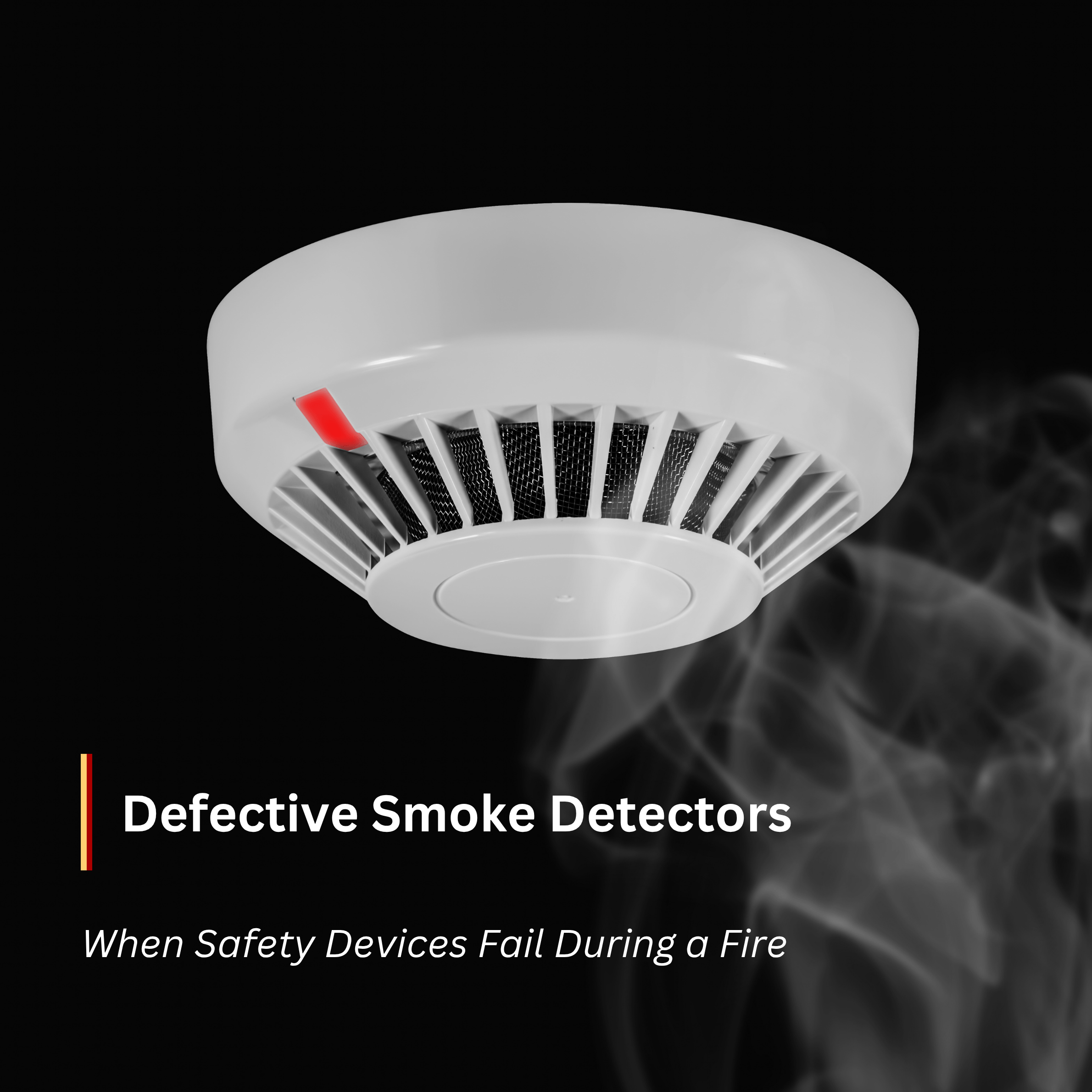
Smoke detectors are designed to provide an early warning when smoke or fire is present, giving individuals enough time to react and leave a building. When smoke detectors fail to work properly, individuals may not realize that a fire has started until smoke, heat, or flames have already spread. Understanding why a smoke detector failed and who may be responsible can be an important part of investigating injuries or losses associated with a residential or commercial fire.
Understanding the Importance of Smoke Detectors
A fire can spread quickly through a home, apartment, hotel, or other structure. Smoke may also create dangerous conditions before flames reach occupants. Smoke detectors are intended to identify signs of a fire and produce an audible warning so people have an opportunity to respond.
California building and fire-safety requirements address the installation, maintenance, testing, and replacement of smoke alarms in various types of properties. The specific requirements that apply can depend on the type and age of the building, its occupancy, and other circumstances.
Common Types of Smoke Detector Failures
A smoke detector may fail for several reasons. Determining the cause usually requires examining the device itself as well as its installation and maintenance history.
Manufacturing Defects
A smoke detector may contain a problem that occurred during the manufacturing process. Defective electronic components, sensors, wiring, batteries, or internal connections could potentially prevent the device from functioning as intended.
Design Defects
In some circumstances, questions may arise about whether the design of a particular smoke detector created an unreasonable safety risk when the device was used in a reasonably foreseeable manner.
Battery or Power Problems
Battery-powered smoke detectors depend on functioning batteries, while hardwired alarms rely primarily on a building's electrical system and may include backup batteries. Missing, depleted, improperly installed, or defective batteries may interfere with an alarm's operation.
Improper Installation
Even a functioning smoke detector may not provide adequate warning if it was installed incorrectly or placed in an inappropriate location.
Who is Liable?
Responsibility for injuries associated with a smoke detector failure depends on the facts surrounding the fire and the reason the alarm did not function properly. Potentially responsible parties may include the following individuals.
- A smoke detector manufacturer
- Distributor
- Retailer
- Landlord
- Property management company
- Installer
- Maintenance provider
- Another party involved with the device or property
It is also important to note that more than one party may potentially be involved. Identifying responsibility usually requires evidence showing what went wrong and how the failure contributed to the injuries or losses being claimed.
Product Liability
California product liability law may apply when a defective consumer product contributes to an injury. Depending on the circumstances, a claim involving a smoke detector may involve allegations concerning a manufacturing defect, design defect, or inadequate warnings or instructions.
The existence of a fire and a nonfunctioning smoke detector does not automatically establish liability. An investigation may need to determine whether the detector was actually defective, whether it was properly installed and maintained, and whether its failure was connected to the harm suffered. The following pieces of evidence may become useful.
- Detector itself
- Model and serial number
- Manufacturer information
- Recall history
- Photographs
- Fire department reports
- Installation records
- Expert analysis
- Purchase records
Landlord and Property Owner Responsibilities
Smoke detector cases may also involve premises liability. California law imposes certain smoke-alarm requirements on residential properties, including rental properties. Depending on the circumstances, owners may have responsibilities relating to installation and reported defects. Property owners generally also have a duty to use reasonable care in maintaining property in a reasonably safe condition.
If a landlord, property manager, or another responsible party knew or reasonably should have known about an unsafe condition involving a smoke detector and failed to address it, that information may become relevant when evaluating a potential claim.
Types of Injuries
When occupants are not alerted promptly to a fire, they may have less time to evacuate. Depending on the circumstances, fire-related injuries may include the following.
- Smoke inhalation
- Respiratory injuries
- Burns
- Carbon monoxide exposure
- Traumatic injuries suffered while attempting to escape
- Permanent scarring or disfigurement
- Emotional distress
- Fatal injuries
A fire may also result in substantial damage to a home, personal property, vehicles, or other belongings. The type and extent of damages that may be recoverable in a specific legal claim depend on the evidence, applicable law, insurance coverage, and individual circumstances.
Preserving Important Pieces of Evidence
Preserving evidence can be especially important after a fire because damaged property may be removed, repaired, discarded, or altered during cleanup. When reasonably possible, the smoke detector and its components should be preserved rather than thrown away. Photographs and videos of the property may document where detectors were located and the condition of the premises after the fire. Other potentially relevant evidence may include but is not limited to the following.
- Fire department reports
- Inspection records
- Communications with landlords or property managers
- Witness statements
- Insurance documents
- Photographs
- Maintenance records
Speaking to a Legal Professional
It may be helpful to speak to a legal professional when dealing with the aftermath of a defective smoke detector. Understanding your rights, responsibilities, and the necessary steps to take to receive the proper care is crucial when dealing with an incident like this one.
The Legal Team at KAASS LAW
The qualified personal injury attorneys at KAASS LAW are determined to help those who have experienced a defective smoke detector. Oftentimes, these types of incidents may require legal support and guidance, and our team is ready to help. Our attorneys may be able to review the specific facts of your case, preserve necessary pieces of information, and guide you through the legal process moving forward. Call KAASS LAW today for a confidential consultation and to learn more about your options.
Related Articles
View All Posts
In fire accidents, it's critical to comprehend a wrongful death claim in order to comprehend claims for deaths. However, someone from the estate (or a relative of the deceased) can sue the defendant for wrongful death. Legal claims like intentional torts and negligence are all included in a wrongful death claim. In spite of the fact that the original plaintiff has passed away, wrongful death claims still permit the family of the deceased to file a lawsuit.
Who May Bring a Lawsuit for Wrongful Death by Fire?
The plaintiff must have "standing" in order to bring a wrongful death claim. The concept of standing is utilized to assess whether the plaintiff has the legal right to sue the deceased. A list of different parties that may file a wrongful death lawsuit is in California statutes. These parties consist of:
- Surviving partners
- Domestic partners who live
- Descendants of the deceased (this includes stepchildren and foster children)
- Descendants of the deceased
- Others who were suitable for a share of the estate per the decedent's will
Damages in a Death Caused by Fire Accidents
In a case involving a fatal fire, the plaintiff may get compassion. Whether a claim is for fire injuries or wrongful death will determine the damages. The severity of the injuries also affects the number of damages. For example, these harms consist of:
- Previous medical costs
- Future healthcare costs
- Potential future suffering
- Loss of pleasure in life Loss of companionship
- Emotional angst
- Funeral costs
- Punitive damages, in some circumstances
What Leads to Deaths From Fire Accidents?
There are many different causes of fire-related deaths. For example, the most common causes are wildfires, products with flaws, candles, and electrical issues. In fact, in California, wildfires are the primary cause of flames. However, a faulty device, like an oven, might cause a fire that could completely destroy a neighborhood. In addition, forgotten or unattended candles run the risk of serious house fires. Also, issues with the home's electrical system could cause devastating fires that destroy the entire neighborhood.
Defendants in a Wrongful Death Claim Caused by Fire Accidents
To ascertain who would be a suitable defendant in the lawsuit, professional legal counsel is crucial. The following examples of parties that could be defendants: Electrical companies: for maintenance, wiring, and malfunctioning electrical parts. Manufacturing firms: accountable for the fire's initial cause, which was faulty products. Businesses: Companies may be held accountable for the extensive damage caused by the fire they started if they neglect to properly maintain their fire sprinkler systems. Contractors: Under the negligence theory, contractors who improperly built fireproof homes could be accountable. Property owners: Under the negligence hypothesis, homeowners in the area who didn't maintain their fire extinguishers and smoke detectors properly, may be accountable for damages to other residences. Gas and electric companies: The most typical defendants in wrongful death-related claims are electric and gas providers. Electric firms like Pacific Gas and Electric, or PG&E, might incur large losses if they fail to maintain their power line.
Glendale Attorneys
If you or a loved one has suffered from property damage and/or personal injury, it's critical to get legal counsel right away. Experienced attorneys will be better able to ascertain the origin of the fire and the identities of any prospective defendants. Further, damages must be computed against each defendant after the defendants have been identified. Contact our skilled Los Angeles attorneys immediately for a free consultation to see whether you have a viable wrongful claim against the party at fault if you or someone you know has been hurt by fires or has perished in a fire. Wrongful death cases are one of our many practices. Please dial 310.943.1171 to speak to our specialized attorneys.